Northern Cape Premier and ANC provincial chairperson Zamani Saul has denied allegations of political interference in his administration following the shock resignation of Roads and Public Works MEC Fufe Makatong.
Saul moved swiftly to reshuffle his Cabinet after Makatong’s resignation, fuelling spe...
Suspended City of Tshwane CFO Gareth Mnisi has been accused of a conflict of interest for assisting a company owned by Sergeant Fannie Nkosi’s brother with tender documentation for a tender outside the City of Tshwane.
The same company Ngaphesheya Construction and Projects, was simultaneously competing for a Tshwane Metro Police Department's R2.9 billion security tender, a process in which Mnisi was set to be one of the adjudicators as chairperson of the bid adjudication committee (BAC).
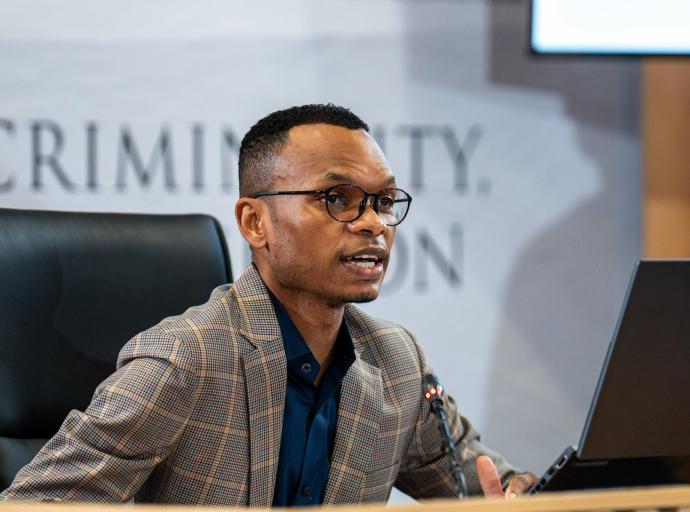
Testifying at the Madlanga Commission of Inquiry Mnisi on Monday, he said he did nothing wrong by assisting Ngaphesheya, a company linked to Nkosi's brother Bheki.
"It had nothing to do with the City of Tshwane, firstly. Secondly, I did not look at any attachments and conduct a physical assessment of what was there. I just looked at raw documents provided and responded to key areas...So, there was no conflict of interest because of that," he said.
Unimpressed by his response Justice Mbuyiseli Madlanga said: "For a chief financial officer that is a very narrow view of a conflict of interest."
He expressed concern that Mnisi assisted with the preparation of a bid document for the same entity that “is participating as a competitor in a bid process that you are going to chair, with a view to making recommendations on whether to award or not to award to the city manager".
Mnisi insisted that his action had no conflict of interest because there was no association between the bid and the City of Tshwane.
"I have no interest, whether financial or any other sort. Whether they receive or appointed in those areas in looking at the broad documentation... I stand not to benefit. I have not been promised any money...It is just for a friend who specialises in these matters to have a look at what is key for those documents," he said.
He said that even if the tender in question was advertised in Tshwane, he would still be allowed to assist tender bidders by clarifying general terms during the open application period.
"This is a matter that was further escalated to the city’s war room as a result of matters of these nature serving as a red tape, if I might put it as such - for individuals who have been disqualified for petty issues which could have been avoided had they understood the contents of the requirements of any bid," Mnisi said.
Madlanga, however, pushed back, saying: "This is totally different. This is your friend's brother's company. You assist that company for a bid, which as you say was for some other entity. It is something that you have an intimate relationship with. You have said you are a close friend of Nkosi. Based on what you are telling us you didn't even see a need for a disclosure."
Co-commissioner Advocate Sesi Baloyi suggested that Mnisi had an interest in and bias toward Ngaphesheya, even if he was not promised any financial rewards.
She said Mnisi’s actions could be viewed as illegal, amounting to participation in the corruption of a tender process already under way in Tshwane.
"The alternative is that you are promoting the financial interest of Ngaphesheya in another institution and that should have disqualified you to sit as a BAC chair in Tshwane or should have declared," Baloyi said.
The company that Mnisi assisted, Ngaphesheya, and El Shadai — one of the two Nkosi asked him to check for compliance — were among the seven companies appointed for the security tender in Tshwane.
Mnisi had earlier testified that Nkosi forwarded him a list of seven companies from suspended TMPD deputy chief Umashi Dhlamini to check for compliance.
Nkosi has been accused of conspiring with Dhlamini and Mnisi to help his brother's company secure a TMPD security tender despite the company not meeting the requirements.
Nkosi’s forwarded list of preferred tender bidders to Mnisi also read in part: "The above is from the red berets, please check with Mfowethu (Mnisi) if it is the same with his from CIC (Juju) to verify the authenticity." Mnisi flatly denied receiving a list from 'CIC Juju' who was identified as EFF leader Julius Malema.
On a different occasion Mnisi testified that he sent Nkosi a message detailing a tender for the supply, delivery and off-loading of refuse bags for the city for a three-year period, as and when required. The tender message stated that Mnisi had also sent the same message to Bheki Nkosi and that they “need to regroup on this”.
During his recent testimony Nkosi explained that he understood Mnisi’s message about regrouping to mean they should meet and that Bheki Nkosi should apply for the tender if he qualified.
Mnisi told the commission that he did not assist the Nkosi brothers to complete tender documents as he is prohibited by law.
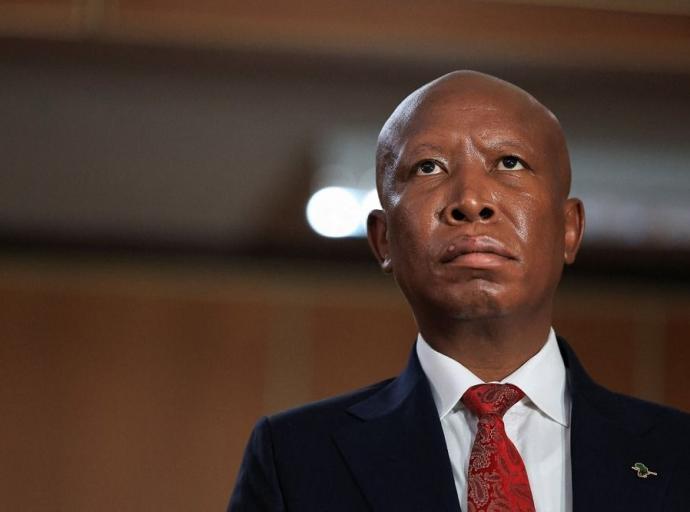
EFF leader Julius Malema’s five-year prison sentence for a 2018 incident at an EFF rally in Mdantsane has been described by legal experts as excessive, with some warning that it could be increased to as much as 10 years if a higher court finds the magistrate was “too lenient.”
Some experts say that, if a higher court reaches that conclusion, it may impose a harsher sentence on appeal.
Malema was sentenced on Thursday by Magistrate Twanet Olivier in the East London Magistrate’s Court in KuGompo City.
He was, however, released on warning after filing an immediate appeal.
The State had argued for a harsher penalty. Prosecutor Advocate Joel Cesar asked the court to impose a sentence of up to 15 years’ imprisonment, or alternatively 10 years with three years suspended, along with fines on the remaining counts.
Malema was convicted in October 2025 on five counts under the Firearms Control Act.
The charges relate to a 2018 EFF rally at Sisa Dukashe Stadium in Mdantsane, where he was seen on video firing what appeared to be a semi-automatic rifle into the air before a crowd of about 20,000 supporters.
The firearm belonged to a security company linked to his former bodyguard, Adriaan Snyman, who was acquitted due to a lack of evidence.
The court heard that Snyman handed the weapon to Malema during the event.
Malema has consistently maintained that the firearm was a prop or blank gun and not capable of firing live ammunition.
Top Durban advocate Paul Jorgenson said that wule Malema’s decision to appeal his sentence was a “no brainer” there was a strong possibility the appeal court could significantly alter the outcome.
Jorgenson said that on appeal, Malema’s five-year prison sentence could potentially be replaced with a fine or a suspended sentence. He also questioned whether the trial court fully considered alternative sentencing options, saying: “I mean did the magistrate even consider correctional supervision.”
In his view, the sentence could ultimately be set aside by a higher court. However, he cautioned that the State may also pursue a cross-appeal seeking a harsher punishment.
“That is a strong possibility,” Jorgenson said, referring to the chance of a reduced or non-custodial sentence on appeal, while noting that the legal process could still work in either direction depending on arguments presented by both sides.
Speaking to IOL News, legal expert Malesela Komape of Komape Incorporated Attorneys said the sentence was “far-fetched” and likely to be overturned or reduced on appeal.
“The defence has shown that previous authorities support a non-custodial sentence in cases like this,” he said.
“A five-year direct imprisonment is excessive, and there is a strong possibility that Mr Malema will succeed on appeal.”
Komape said the High Court would examine whether the magistrate erred in both conviction and sentencing.
He pointed to inconsistencies in the treatment of the co-accused, saying that Snyman was initially found to have a case to answer under Section 174 but was later acquitted.
While Kieswetter will soon be hanging up his robe as the country’s chief tax collector, he maintains that the work of strengthening South African institutions is far from over.
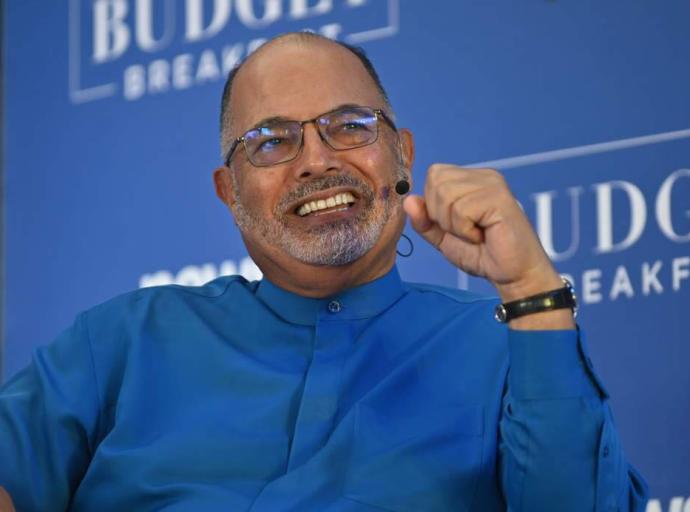
Outgoing South African Revenue Service (SARS) Edward Kieswetter said that the government has failed to get a grip on the illicit economy because its law enforcement agencies have not been working as a collective.
Speaking on the sidelines of his graduation at the Cape Peninsula University of Technology on Friday where he received an honorary doctorate in Business and Management Sciences, Kieswetter noted that this type of corruption is deeply systemic. He argued that the current transactional approach to tackling the issue is simply not working.
While Kieswetter will soon be hanging up his robe as the country’s chief tax collector, he maintains that the work of strengthening South African institutions is far from over. A primary focus of this work must remain the clampdown on the illicit economy.
"Why have we failed in addressing it? We failed because we have largely followed a transactional approach. There’s no collaboration."
The scale of the challenge is significant. New research from the University of Cape Town revealed that as much as 60% of the cigarettes sold during the height of the Covid-19 pandemic in 2021 were illegal.
Kieswetter warned that bolstering the resources of law enforcement agencies alone will not be enough to break the cycle of organised syndicates if the fundamental method of work remains unchanged.
"All of us have to work in a collaborative way to address the same phenomena," he said.
Despite the grim outlook, Kieswetter noted a potential turning point. Following discussions with the President and the Ministers of Finance, Police, and Defence, he believes there is now a genuine commitment to changing the national approach to tackling the problem.
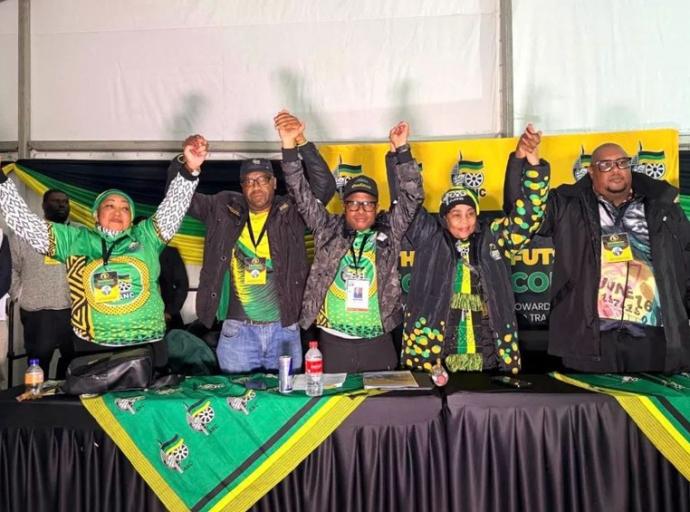
The ANC in the Thabo Mofutsanyana region has retained its entire Top 5 leadership unopposed, delivering a clean sweep that signals a show of unity at a closely watched regional conference.
The uncontested outcome follows a tense build-up marked by disputes over branch audits and delegate credentials, which had cast doubt on whether the gathering would proceed smoothly. While the result points to a consolidation of leadership and a degree of stability, concerns linger over whether underlying divisions have been fully resolved.
The conference concluded in the early hours of Sunday with the formal confirmation of the region’s top five officials. Former regional chairperson Thabo Mokoena, his deputy Conny Msibi, regional secretary Jeff Mohapi, deputy regional secretary Phoka Mofokeng, and regional treasurer Malekula Melato all retained their positions after no nominations were received from the floor.
Reacting to his re-election, Mokoena said the leadership would prioritise turning around the struggling Maluti-a-Phofung Local Municipality, acknowledging that significant work remains to improve governance and service delivery.
His remarks echo warnings from NEC deployee Dr Zweli Mkhize, who cautioned in his opening address that the party is at confronted with a risk of losing power “completely” due to political instability, incompetence, corruption, and poor service delivery.
“We are not satisfied with the state of Maluti-a-Phofung. There is still a great deal to be done in infrastructure, refuse removal, pothole repairs, and the provision of water and electricity,” Mokoena said.
The municipality recently elected a new mayor, Tumelo Thebe, following the removal of former mayor Malekula Melato through a motion of no confidence.
Weather conditions and UVB forecast in South Africa’s provinces
Gauteng
Gauteng can expect cloudy and cool with scattered showers and thundershowers. It will be warm in the extreme north.
The expected UVB Sunburn Index is High
Mpumalanga
Mpumalanga, the Place of the Rising Sun, can expect cloudy with scattered showers and thundershowers over the western Highveld, otherwise partly cloudy and cool to warm with isolated showers and thundershowers.
Limpopo
In Limpopo, partly cloudy and warm with isolated showers and thundershowers but scattered over the western parts.
North West
North West, known as Bokone Bophirima in Setswana, can expect cloudy and cool to warm with isolated showers and thundershowers, but scattered in the east.
Free State
In Free State, cloudy and cool to warm with isolated showers and thundershowers.
Northern Cape
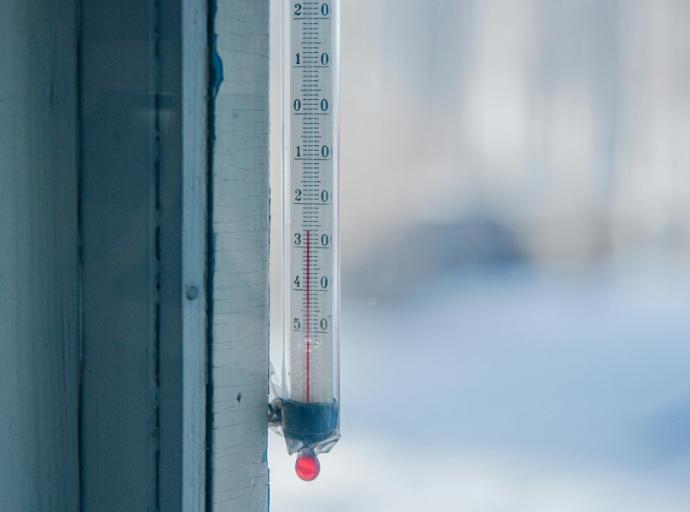
The day will start partly cloudy and cold to cool. The wind along the coast will be light northerly, becoming westerly from the afternoon
Western Cape
Cloudy and cool with isolated to scattered showers and rain in the south-west, otherwise partly cloudy. It will become fine in the west. The wind along the coast will be moderate to fresh south-westerly in the south-west in the morning, otherwise westerly to north-westerly.
The expected UVB sunburn index is Low
Eastern Cape
The Western half: Partly cloudy at first, otherwise fine and cool. The wind along the coast will be fresh to strong westerly at first, becoming moderate from late morning.
The Eastern half: Partly cloudy and cool but cold in the north. The wind along the coast will be fresh south-westerly, becoming moderate from late morning.
KwaZulu-Natal
Morning fog patches in the northern parts, otherwise partly cloudy and warm with isolated afternoon showers and thundershowers. It will be hot in places in the north-east. The wind along the coast will be moderate to fresh northerly to north-easterly in the north in the morning, otherwise southerly to south-westerly.
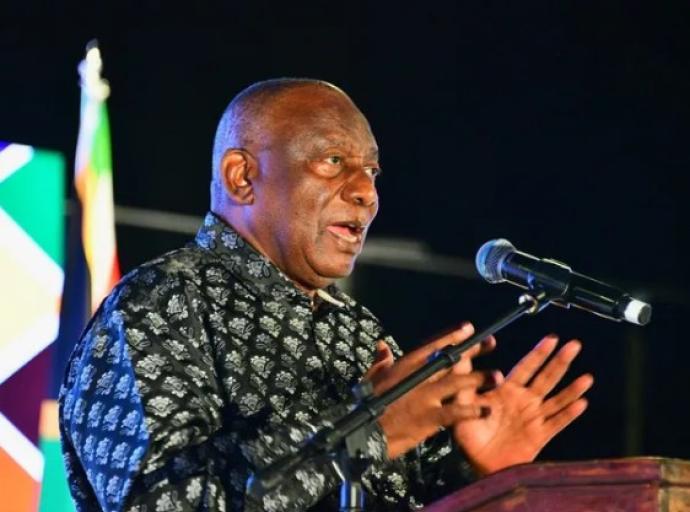
President Cyril Ramaphosa has called for urgent global action to tackle inequality, warning that it poses a direct threat to democracy and social justice worldwide.
Speaking at the “In Defence of Democracy” initiative in Barcelona, Ramaphosa addressed an audience of global leaders, including Spain’s Prime Minister Pedro Sánchez and Brazil’s President Luiz Inácio Lula da Silva, urging a united effort to confront widening disparities.
“It is essential that we intensify the struggle for equality and social justice,” Ramaphosa said.
“We are gathered not merely to defend democracy but to build democracy, but more importantly to advance democracy.”
The president emphasised that inequality remains one of the most pressing global challenges, but stressed that it is not unavoidable.
Citing findings from a global inequality report commissioned during South Africa’s G20 Presidency and led by Nobel laureate Joseph Stiglitz, Ramaphosa said: “Inequality is neither inevitable nor interminable. By the policies we adopt and the actions we take, we can end inequality.”
Central to South Africa’s proposal is the creation of an International Panel on Inequality, a body inspired by the Intergovernmental Panel on Climate Change.
According to Ramaphosa, the panel would “monitor trends and assess drivers and consequences of inequality” while evaluating policy solutions to guide governments and the international community.
South Africa, with the backing of the African Union, plans to table a draft resolution at the United Nations General Assembly later this year to formalise the panel’s establishment.
“This will ensure that inequality is placed as a critical issue on the global agenda that requires the ongoing attention of world leaders,” Ramaphosa said, calling on all UN member states to support the initiative.
The president also acknowledged South Africa’s own deep structural inequalities, describing the country as “possibly the most unequal society in the world,” a legacy of apartheid.
He reaffirmed the government’s commitment to addressing these disparities while encouraging international cooperation.
“We have the determination and the means to end inequality. Now we must act,” he said.
“This is the time for us to lead the world to address inequality.”
The address formed part of Ramaphosa’s working visit to Spain, where global leaders are engaging on strengthening democratic systems amid rising extremism and economic inequality.