Northern Cape Premier and ANC provincial chairperson Zamani Saul has denied allegations of political interference in his administration following the shock resignation of Roads and Public Works MEC Fufe Makatong.
Saul moved swiftly to reshuffle his Cabinet after Makatong’s resignation, fuelling spe...
The suspended CFO of the City of Tshwane was grilled at the Madlanga commission this week.
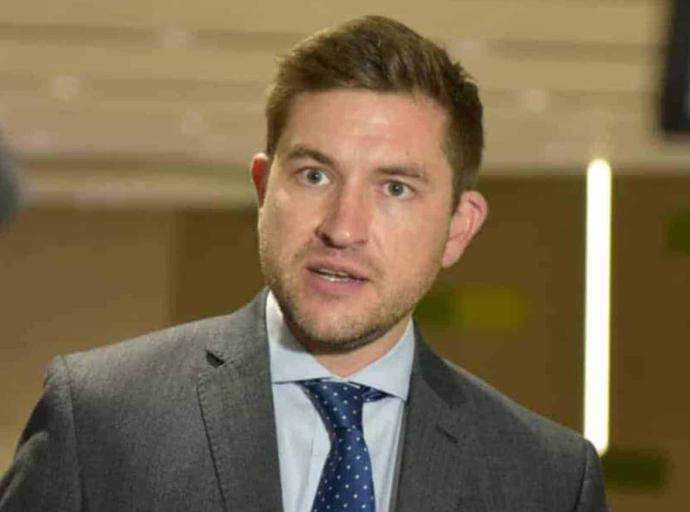
Former Tshwane mayor Cilliers Brink has hit back at ANC secretary-general Fikile Mbalula, who blamed the DA for the looting of the municipality’s coffers which has been exposed in the Madlanga Commission of Inquiry.
The Madlanga commission has uncovered widespread corruption, tender rigging and financial irregularities in the City of Tshwane, particularly within the metro police department (TMPD). The municipality’s suspended CFO Gareth Mnisi gave his testimony to the commission this week.
However, on Monday Mbalula told reporters during a media briefing in Johannesburg that the DA is to blame for the situation the City of Tshwane finds itself in.
“Look at Tshwane, who was the mayor there? Brink. He produced a debt crisis for Tshwane under the DA. They governed there for the longest time… even now Tshwane is still facing financial challenges, bankruptcy and all of that.
“Look at Madlanga and think about Tshwane. Open the TV now and see who is on the stand, the CFO of Tshwane that is unheard of,” he said
DA’s Brink points finger at ANC
Brink responded to Mbalula’s claims, blaming the ANC for the corruption and tender fraud in the metro. The DA lost power to the ANC and its coalition partners in October 2024.
“If Gareth Mnisi committed misconduct while I was the mayor, I would’ve taken action against him. The revelations at the Madlanga commission relate to his conduct after the DA-led coalition in Tshwane was replaced by an ANC-led coalition.
“Eugene Modise, the ANC regional chairman and Tshwane’s current MMC for finance, has been implicated in a forensic report as benefitting unlawfully from a contact with the city. Nothing happens to him. The ANC think that a different set of rules apply to them.
“Fikile Mbalula must sweep in his own backyard before peering his head over the wall to criticise his neighbours,” he said.
Will City of Tshwane council act?
Brink told The Citizen that the DA brought a motion to the last council meeting for a full investigation into the Madlanga commission revelations. He said the motion was not carried because the meeting was prematurely adjourned. He blamed the speaker of the council for this.
“We believe he acted in a deceitful manner in doing so. The name of Eugene Modise has come up again and again, not just at the commission but in a forensic report of the council. Mayor Nasiphi Moya is too weak and scared to act against him, but the DA won’t let her get away.
“She claims that she is waiting for a council committee to act against Modise, but in the meantime, why doesn’t she suspend him as MMC? It is the minimum precautionary measure she can take to protect Tshwane’s finances and the interests of taxpayers,” said Brink.
Meanwhile, earlier this month, the Moya committed to implementing the recommendations of the Madlanga commission regarding the City of Tshwane. But she has been accused of not acting against the coalition partners that voted for her to become the mayor.
Meanwhile, Mbalula also blamed the DA administration in the City of Ekurhuleni for corruption exposed by the Madlanga commission. He described the looting in Ekurhuleni as a “smash and grab”.
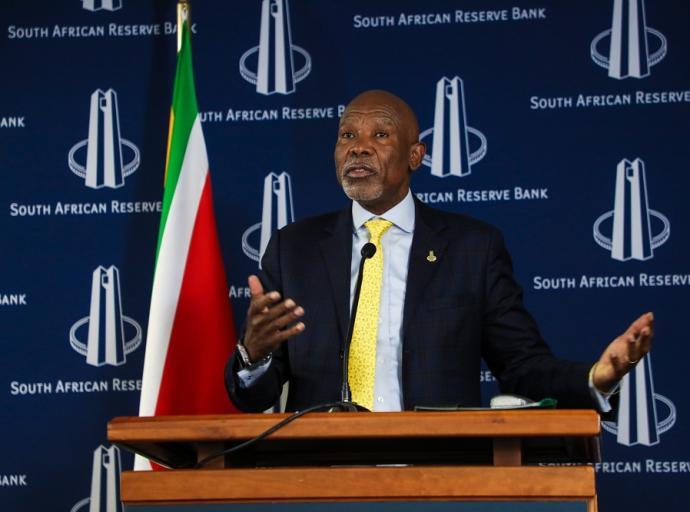
The South African Reserve Bank (SARB) Governor Lesetja Kganyago said it is still too early to determine the full impact of escalating geopolitical tensions in the Middle East.
He has warned that risks of secondary effects on inflation continue to weigh on the country's economy.
Kganyago said this could force the bank to keep inflation anchored at its 3% target.
He was speaking at the first Monetary Policy Forum of the year on Tuesday night.
“We have learnt our lesson from the previous shock of 2002. It was a costly macroeconomic lesson.”
Kganyago said that despite current global shocks, the bank will not tinker its inflation target to deal with current shocks.
This comes as central banks seek to find ways to deal with the impact of the Middle East conflict while keeping a hold on prices.
“The inflation target is 3%, and it remains 3%.”
He said the bank cannot wait before inflation is broad-based in the economy before acting.
Meanwhile, the acting head of economic research at the central bank, Theo Janse van Rensburg, said there are renewed concerns about global stagflation.
He said the trajectory of monetary policy has become increasingly uncertain amid the ongoing conflict.
“The impact is still uncertain as the conflict is evolving.”
He said markets are now anticipating central banks to hike interest rates in response.
FOOD PRICE INFLATION LIKELY TO RISE
The SARB said multiple pressures could push food inflation higher as fertiliser and diesel costs and the impact of foot-and-mouth disease put a strain on food prices.
It added that weather-related risks, including the possibility of a strong El Niño effect, may further disrupt agricultural output.
On Wednesday, Statistics South Africa will release the latest inflation numbers, which are expected to show a moderate uptick in food inflation.
Janse van Rensburg said the start of the conflict in the Middle East has sharply increased oil prices.
This, together with increased fertiliser prices, has seen global food prices rise for a second consecutive month in March, since September last year.
“To plant and to harvest, you need a lot of fuel. That’s going to raise the cost of food production, but also fertilisers are going to be more expensive, and because of that, we’re likely to see food prices rising going forward.”
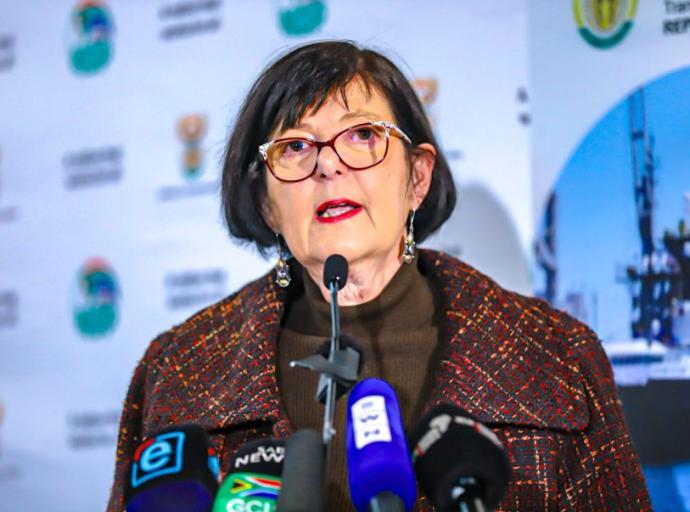
Minister of Transport Barbara Creecy has warned that the national airline, South African Airways (SAA), is still a long way from being a profitable entity.
Creecy also said it’s "unacceptable" that the national carrier has received two consecutive disclaimers from the Auditor General (AG), the worst possible audit outcome.
Creecy and SAA’s top management and board briefed Parliament’s Transport Committee on Tuesday about the airline's annual report for 2024/25 as it continues to struggle financially.
SAA came out of business rescue five years ago, but it’s still struggling to get back to its days of profitability and having large control of the local market share.
The AG said SAA remains a “going concern with material uncertainties” after achieving yet another audit disclaimer.
SAA made a R150 million profit in the year under review after selling its Heathrow Airport slot, but Creecy said the entity is still far from being profitable.
“While there were some improvements in passenger numbers and in passenger revenue, I think that we’re still a long way from being a profitable entity, which is where we would want to be.”
The AG said that SAA's subsidiary, Air Chefs, improved from a disclaimer to a qualified audit outcome, but overall, other SAA entities remain stagnant.
The National Student Financial Aid Scheme has confirmed the disbursement of April 2026 allowances to over 200 000 Technical and Vocational Education and Training (TVET) students.
In a statement this week, NSFAS said a total of 203 653 qualifying TVET students received their allowances on April 17, with payments amounting to R621 million.
“This disbursement was executed in line with planned timelines and forms part of NSFAS’s ongoing commitment to efficient and reliable funding support that enables uninterrupted teaching and learning across institutions,” the scheme said.
The payment comes amid continued efforts to ensure that students dependent on financial aid are not disrupted in their academic programmes due to funding delays.
However, NSFAS revealed that approximately 12 000 student records were excluded from this payment cycle due to verification issues.
“As part of standard verification processes, approximately 12 000 student records were identified as non-qualifying for inclusion in this specific payment run,” NSFAS noted, adding that the exclusions were due to “data inconsistencies identified during the usual data exchanges between NSFAS and Colleges.”
To address the issue, NSFAS has moved to work closely with institutions to resolve discrepancies and ensure that qualifying students are not left behind in future disbursements.
“NSFAS has shared the affected student records with the respective Colleges,” the scheme said. “Institutions are requested to review and correct the identified discrepancies.”
It added that a dedicated intervention team has been deployed to speed up the process: “NSFAS has dedicated a team led by senior managers, to support Colleges with this process.”
Colleges have been urged to act swiftly to correct data errors and align submissions with funding requirements to avoid further delays.
“Colleges are encouraged to prioritise the review of submitted data to ensure alignment with NSFAS funding conditions and to facilitate the inclusion of eligible students in subsequent payment processes.”
Despite the setbacks affecting a portion of students, NSFAS reiterated its broader commitment to improving payment efficiency and data accuracy across the TVET sector.
“NSFAS remains committed to working collaboratively with all TVET Colleges to ensure the accuracy of student data and the timely disbursement of allowances,” it said.
Cooperative Governance and Traditional Affairs Minister Velenkosini Hlabisa has amended a determination issued in December that could have seen municipal managers in some of the biggest municipalities earning up to more than R4.4 million a year.
The determination issued on December 18, 2025, made provision for 91 municipalities that adopted unfunded budgets for the 2025/26 financial year to remunerate their senior managers with pay scales at a higher level until such a time they were no longer on the list of municipalities that adopted unfunded budgets.
In addition, the determination also lowered the maximum total remuneration package a municipal manager can be paid from about R4.25m to R3.66m.
Hlabisa stated that any council resolution, remuneration adjustment, or other administrative decision lawfully implemented in reliance on the December 2025 determination prior to the publication of his amendment notice a week ago and which was lawful and in compliance with the notice, shall remain valid.
The minister said his decision took into account the need to prioritise service delivery to communities and to sustain viable local government and the fiscal capacity of different categories of municipalities, which provides a strategic framework for remuneration of senior managers across all municipalities.
“The development of this notice took into consideration the core reward principles aimed at ensuring an appropriate remuneration mix and sought to ensure that the remuneration of senior managers is cost-effective, consistent, internally equitable, externally competitive, and aligned to the achievement of the objectives of municipalities while providing a uniform remuneration framework for local government,” reads the amended notice dated April 14.
According to the notice, the upper limits constitute an integral part of the human resource value chain in building resilient administrative institutions underpinned by the intent to enable municipalities to attract, appoint, and retain suitably qualified and competent senior managers necessary for effective performance of their functions.
“To strengthen the capacity of municipalities, this notice reinforces the statutory obligation binding on municipalities to appoint senior managers who meet the minimum prescribed competencies, higher education qualifications, work experience, and knowledge,” it explained.
The lowest paid municipal manager will earn R1.42m, while senior managers directly accountable to municipal managers will be paid between R1.1m and R2.75m.
Municipalities have been warned to remunerate their senior managers only within the framework of the Municipal Systems Act (MSA) and the notice, setting out the upper limits of the total remuneration packages payable to senior managers.
Any remuneration paid to a senior manager other than in accordance with MSA or any benefit is an irregular expenditure and the municipality must recover that remuneration and benefits from the senior manager concerned.
“A municipality that remunerated a senior manager in contravention of the criteria governing the offer of remuneration on appointment, and in the absence of a waiver granted by the minister, must correct the total remuneration package and recover any resultant overpayment in accordance with Section 32 of the Municipal Finance Management Act and other applicable legislation and legal principles governing the recovery of debts,” declared the notice.
Meanwhile, Acting Department of Public Service and Administration Director-General Willie Vukela announced that Public Service and Administration Minister, Inkosi Mzamo Buthelezi, has determined that salary scales that applied in the 2025/26 financial year, which ended on March 31, will be adjusted by 4% for 2026/27 across all salary levels with effect from this month after the National Treasury confirmed projected consumer price inflation for 2026/27 at 3.4%.
The 4% increase applies to employees in national and provincial government departments on salary levels one to 12, and those covered by the occupation specific dispensations who are appointed in terms of the Public Service Act.
In 2025/26, public servants received salary increases of 5.5%, in terms of the agreement reached at the Public Service Coordinating Bargaining Council in January last year.
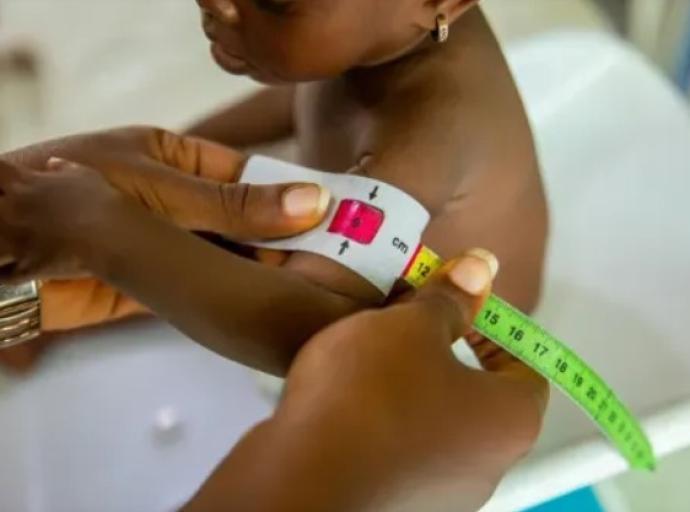
South Africa’s commitment to phase out childhood stunting by 2030 is facing persistent structural and implementation challenges, according to new research released by Stellenbosch University.
The findings follow President Cyril Ramaphosa’s State of the Nation Address, where he reaffirmed the government’s focus on the first 1,000 days of life and targeted nutrition support for pregnant women with stunted infants.
Despite this commitment, researchers from Stellenbosch University say progress has been limited.
“South Africa has one of the highest rates of stunting among upper-middle-income countries globally, with little change in the last three decades despite the government’s efforts to tackle poverty and expand access to social grants,” the report states.
In South Africa, more than a quarter of children under five experience stunted growth, largely due to chronic malnutrition that often begins before birth.
Professor Ronelle Burger of Stellenbosch University said the economic argument for action is clear.
Burger added: “Without addressing stunting first, beginning in utero and when children are very young, we dilute the impact of the money spent downstream on early childhood development centres, schools, and clinics because we reach children too late.”
The findings are published in a special issue of Development Southern Africa, bringing together 10 peer-reviewed papers on causes, interventions, and governance failures linked to stunting.
“South Africa’s nationally representative surveys have produced stunting estimates ranging from around 20% to over 30% for the same period,” the report notes, adding that “it makes it difficult to know whether the problem is getting better or worse.”
On governance, the research is equally direct.
“Responsibility for reducing stunting is spread across government departments of health, social development and education, meaning no single department is clearly accountable,” it states.
Liezel Engelbrecht, Nutrition Lead for the Hold My Hand Accelerator, said coordination remains a major gap.
On Ramaphosa's stated goals, she said "this requires political commitment, which we are now seeing, but it also needs a clear national plan with targets. This is especially important considering that the National Food and Nutrition Security Plan has lapsed".
Researchers are calling for a dedicated government stunting strategy with clear accountability, district-level targets, and regular public reporting.
They also recommend the establishment of a Food and Nutrition Security Council to oversee implementation.
Although regulations on infant formula marketing have been in place since 2012, researchers say enforcement remains weak and “industry self-regulation has not been sufficient”.
The findings were released with support from the DG Murray Trust.