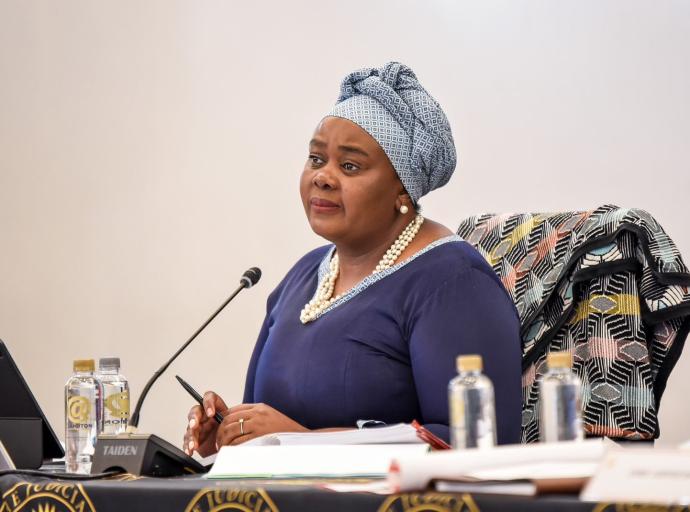
Northern Cape Premier and ANC provincial chairperson Zamani Saul has denied allegations of political interference in his administration following the shock resignation of Roads and Public Works MEC Fufe Makatong.
Saul moved swiftly to reshuffle his Cabinet after Makatong’s resignation, fuelling spe...
Mid-month projections from the Central Energy Fund (CEF) continue to paint a grim picture for South African motorists, with another significant fuel price increase expected in May.
CEF data shows that the expected increase remains substantial.
Ongoing market volatility linked to the Middle East war is the key driver.
According to the latest projections, petrol prices are building an under-recovery of R2.63 for 95-octane and R2.29 for 93-octane per litre.
The wholesale price of diesel faces a staggering under-recovery of R8.05 per litre for 0.05% and R8.06 for 0.005%.
This will likely push the price of wholesale diesel to about R35 per litre.
Illuminating paraffin is projected to see another significant increase of R6.52.
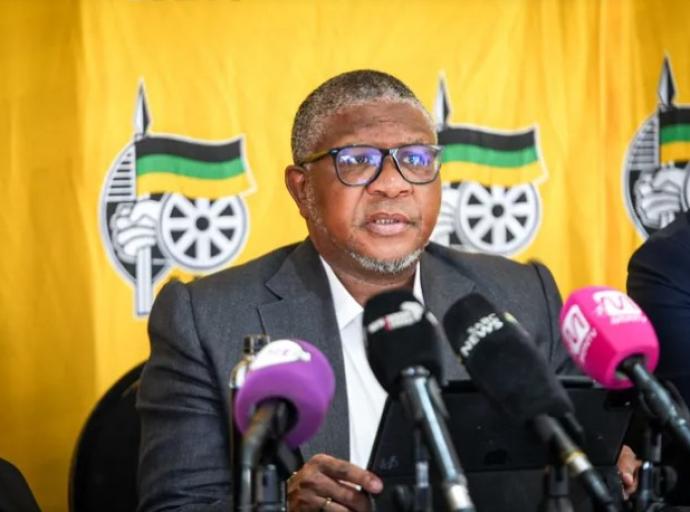
The African National Congress (ANC) said it will be going on a roadshow to metro municipalities to showcase the work it has done to improve service delivery as it gears up for the local government election campaign.
ANC secretary general Fikile Mbalula has suggested service delivery failures, particularly in Johannesburg, began when the city started being governed by a coalition of parties.
Mbalula said the ANC’s campaign in the upcoming elections will focus on winning an outright majority and not to govern with other parties.
The ANC said it’s not its preference to govern with other parties, and the instability in Johannesburg, with six mayors since the 2021 elections, has led to the many service delivery problems.
Mbalula maintains that under the mayorships of Parks Tau and Amos Masondo, Johannesburg was well-governed.
He said the party is in favour of a legislative proposal to introduce a threshold for smaller parties to enter councils.
“We have made people in this country with one seat, mayors. Do we have a choice? We don’t, we have to sing along. Even if we know we have capabilities, but for us to govern, we need that person.”
The party said interventions it has introduced as part of its campaign to fix municipalities, including removing mayors, have already led to better outcomes.
It will now go on a road trip to highlight the impact.
“Everywhere where you are in charge, people judge you on the standards of what you have done and your good intentions through your manifesto of what you say you can do, and on the basis of that, people make up their mind.”
Mbalula said the ANC is unfussed by the Democratic Alliance (DA)’s Helen Zille drawing attention to service delivery failures in Johannesburg through quirky videos, saying he considers those to be a public relations stunt, rather than an electoral campaign.
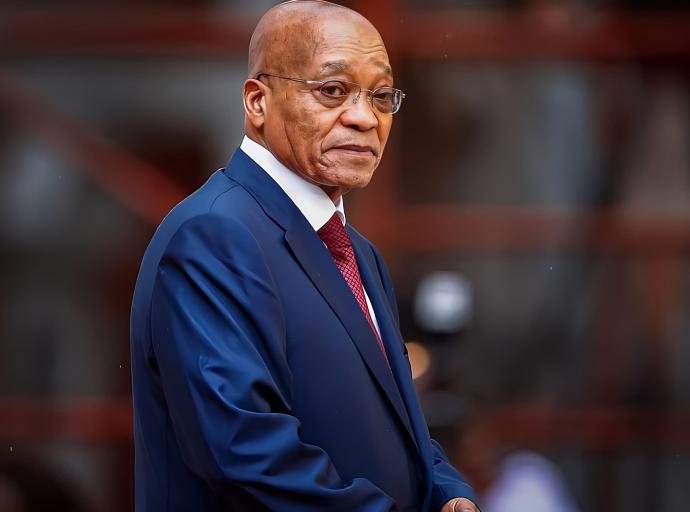
Umkhonto weSizwe Party (MKP) leader and founder Jacob Zuma said his party is contemplating making a push for the postponement of the local government elections until the party’s disputed 2024 general election case against the Electoral Commission of South Africa (IEC) has been finalised.
Addressing the party’s eThekwini consultative forum on councillor candidate selection on Sunday evening, Zuma spoke at length about the alleged rigging of the 2024 elections that his party was challenging, questioning the IEC’s rationale in preparing for another election while his party was still challenging the previous elections legitimacy.
Zuma asked why the party members were not demanding that before any new election, the electoral body must first deal with the party’s dispute.
“We were robbed in the previous elections. We might call for the postponement of the upcoming elections. You can’t organise another election while you have not resolved the previous one. For me we must be talking with one voice, asking why you bring another election before solving our case first.
"We must speak out in numbers and tell them we are not in the new elections yet and we still need to know what happened to our votes that were stolen. I would be happy if we can all ask, here in KwaZulu-Natal, what happened to our votes. Let’s tell them that we don't want a new election because they have not solved the issues of the previous one,” said Zuma.
He further told the meeting that he has met the party’s legal team and was preparing for the sitting of the case which was expected to be heard early next month by the Electoral Court.
Zuma, called on his party members to double down and win the eThekwini municipality at this year's elections and eventually the province by 2029.
In the 2024 national and general elections, the MKP received 400,000 in eThekwini, becoming the largest party and ending the ANC’s historical dominance. The party was currently holding consultative forums throughout the province as part of a councillor candidate selection process. Although communities participated in the selection process, it is the party's leadership that appoints councillors.
After the announcement of the 2024 elections results by the IEC, the MKP claimed that there was widespread rigging of the elections which it claimed it had won. However, in August the same year the party withdrew its case in court but later revived it. The party cited technical glitches which saw the results disappearing for two hours from the national results dashboard and claimed that this was done deliberately 'in order to steal the party’s votes'.
The IEC has already indicated that this year’s local government elections will take place between November and January 2027 and was just waiting for President Cyril Ramaphosa to promulgate the date.
In 2024, the MKP became the third biggest party with 14,58% of the vote nationally. It also became the biggest party in KwaZulu-Natal with 45% - just short of the majority needed to form the provincial government.
The IFP formed a Government of Provincial Unity (GPU) with the DA, ANC and NFP leaving the MKP as the official opposition. As a result, the MKP assumed the role of the official opposition in the provincial parliament.
Alleged criminal mastermind Vusimuzi 'Cat' Matlala will remain in custody at the Kgosi Mampuru Maximum Security Prison until next month.
Matlala appeared in the Pretoria Magistrate's Court on Monday, where the court ruled that he will remain at the facility until May 13 for consultations.
Earlier this year, Matlala was transferred to the Ebongweni Super Maximum Correctional Centre, in Kokstad. At the time, Correctional Services Minister Pieter Groenewald said officials followed Standard Operating Procedures when he was relocated. IOL reported that Matlala was relocated from Kgosi Mampuru on December 21, 2025, to Kokstad, a move that prompted him to seek relief from the Johannesburg High Court amid challenges in conducting proper consultation with his legal team.
Matlala was arrested on charges of fraud and corruption relating to a police tender, valued at R360 million, awarded to him in 2024.
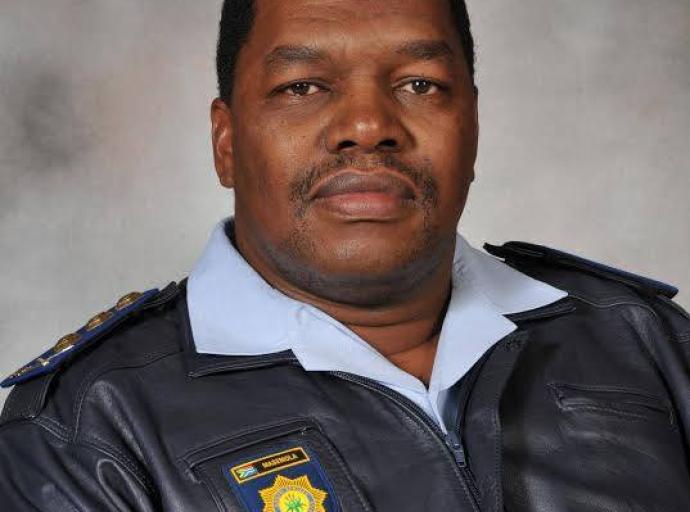
National Police Commissioner Fannie Masemola is due to appear in the Pretoria magistrate's court on Tuesday in relation to the R360-million health tender that was awarded to tender tycoon Vusimuzi “Cat” Matlala.
The contract was awarded to Matlala’s company, Medicare24, in 2024, but was later cancelled after serious irregularities surfaced.
Masemola now faces criminal charges linked to alleged breaches of the Public Finance Management Act (PFMA). He was served a summons in March.
Cyril Ramaphosa has acknowledged the case, saying any action will follow due legal process, while stressing the need for stability within SAPS.
At the same time, the pressure is intensifying. Suspended Mpumalanga police commissioner Daphney Manamela has accused Masemola of protecting corrupt officers and interfering in investigations.
She claims she was sidelined for acting against extortion and corruption, and that a key crime-fighting unit was disbanded soon after.
Manamela has also alleged a multi-million rand bribe linked to a high-profile case. Masemola has denied the claims.
Police say the allegations are serious and under investigation.
The Minister of Justice and Constitutional Development, Mmamoloko Kubayi announced that she would be instructing all State Attorney Offices to establish stakeholder forums in their respective areas where they will meet quarterly to discuss issues such as the allocation of briefs to the legal fraternity.
This followed an outcry on Monday by several legal practitioners that the Office of the State Attorney routinely allocates legal work to established and mostly white legal practitioners, while overlooking smaller black firms.
The minister and her deputy, Andries Nel engaged with legal practitioners as part of ongoing efforts to strengthen collaboration and advance transformation within the legal sector.
This engagement provides a platform for constructive dialogue with legal practitioners on matters relating to transformation and the empowerment of previously disadvantaged professionals within the legal sector.
Various members of the legal fraternity as well as representatives of legal bodies were outspoken about the fact that black lawyers are overlooked, especially when it came to the State Attorney allocating work in high-profile cases.
Others said while they followed procedures as set out by the State Attorney’s Office to simply get any work, they have been overlooked. This caused frustration for many, as some had to close their offices due to financial constraints.
The acting Solicitor-General, Felix Mbeki, gave an overview during the proceedings, including statistics as to how work is being allocated and which processes had to be followed to be considered. He also painted a positive picture on how practitioners called upon to do work for the State are paid within the stipulated 30-day payment frame.
This sparked an emotional outcry from many of the lawyers present, who said these were simply wrong and that these figures did not represent the plight of the smaller black firms who are being overlooked.
Mbeki gave the assurance that since the establishment of the Office of the Solicitor-General, a structured and policy-driven approach has been implemented to promote fairness, transparency, and inclusivity in the allocation of state legal work.
One of the lawyers present at the engagement, however, said he had a legal bill taxed in 2023 for R31 000 after doing work for the State, which has not been paid up to today.
Another said she has never been briefed for work as small black firms are simply being overlooked. “We don’t have money for rent…Receiving a brief depends on how close you are to someone in the State Attorney’s Office,” she said.
Advocate Myron Dewrance, who leads Advocates for Transformation, also questioned how transformation is achieved while overlooking black and women lawyers.
He said these practitioners are being failed and this results in them not being able to economically sustain themselves and their practices. According to Dewrance, it is not only being briefed but also being paid for the work done if briefed. He pointed to a practitioner who has to use her home as an Airbnb and who has to live in her car with her child as she cannot make ends meet.
Dewrance said in most instances white firms are being briefed. He also questioned the system and said several government entities brief outside the State Attorney’s system, such as Sars, Eskom, and the Reserve Bank, who have their own preferential law firms. This is where the high-value work is, he said.
“Without this, we cannot talk about transformation. Please don’t sell us a pipe dream,” Dewrance said.
Minister Kubayi gave the assurance that the concerns will be addressed. She said while they are valid, the worst off in this sector are black female practitioners.
She emphasized that transformation does not need replacing white faces with black faces. But she acknowledged that there are briefing patterns which favour white males and said this cannot be ignored.
She is actively defending the Legal Sector Code (LSC) against legal challenges from major law firms. She said the LSC is crucial for transformation.
The code aims to increase participation of black legal practitioners, youth, and women and to reflect the country’s demographics.