Northern Cape Premier and ANC provincial chairperson Zamani Saul has denied allegations of political interference in his administration following the shock resignation of Roads and Public Works MEC Fufe Makatong.
Saul moved swiftly to reshuffle his Cabinet after Makatong’s resignation, fuelling spe...
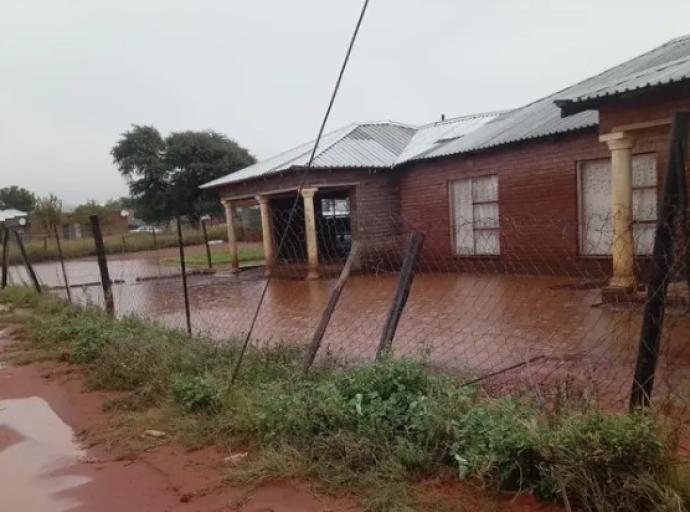
Residents of Seven Miles village in Kuruman, Northern Cape, say they live in fear every time it rains as flooding has plagued the area for over a year, and authorities have done very little to alleviate the situation.
They claim that water remains trapped in their yards and around their homes, posting serious health and safety risks to community members.
“Our houses are still surrounded by water. Even after the recent rains, nothing has been done. We are suffering,” said community member Christopher Keehang.
He said the situation had persisted since last year, with recent Good Friday rains worsening the flooding.
Residents stated that although funding had previously been approved through SOIC, progress has stalled, allegedly due to disputes involving the local municipality.
Keehang further claimed that political interference and administrative delays have prevented meaningful relief and infrastructure work.
“We were told there is funding, but our municipality wants to be involved, and nothing is happening. It feels like processes are delayed for the wrong reasons while people continue to suffer,” he said.
Although humanitarian groups, including the Red Cross, have visited the area, their presence has not resulted in lasting relief, according to residents.
They are now appealing for urgent intervention from authorities and independent organisations.
“When it rains, we are scared. We have to think about finding somewhere else to stay for safety. We cannot keep living like this,” Keehang added.
“We are asking for help from anyone who can assist us without politics. Our situation is not improving, and we need urgent action,” he concluded.
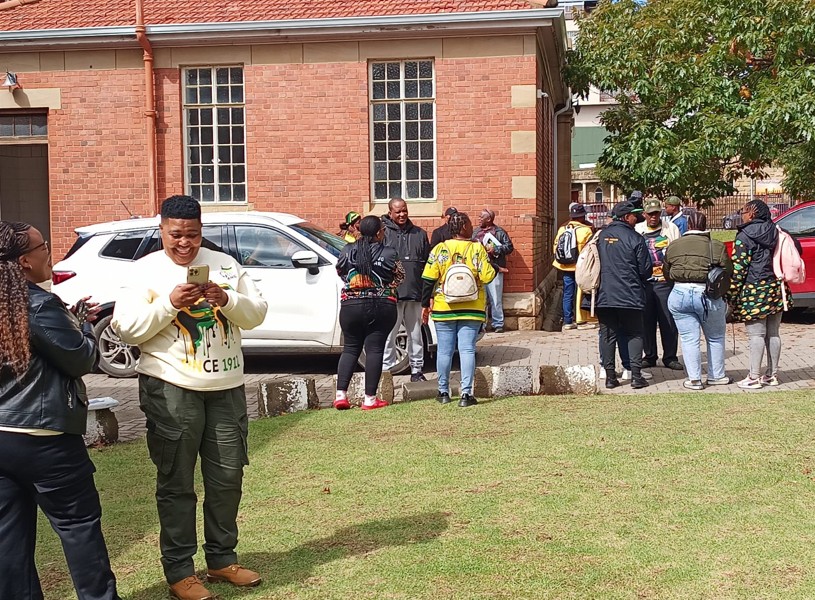
Following a one-and-a-half-day delay to the start of the Mofutsanyana regional conference, African National Congress (ANC) Deputy Chairperson Toto Makume has assured members that all logistical and organisational issues have been resolved and that the gathering will proceed as planned today.
Speaking to Journal News on the side-line of an officials’ meeting between the regional leadership and the provincial delegation—led by himself and Deputy Provincial Secretary Dibolelo Mance—Makume urged delegates to engage constructively. He noted that the outcomes of the conference will play a key role in shaping the region’s future direction.
The conference, which was initially scheduled to begin on Friday morning, was delayed due to a number of disputes.
It is expected that current Regional Chairperson Thabo Mokoena and Regional Secretary Jeff Mohale will be re-elected unopposed, as no challengers have emerged.
“What caused the glitch yesterday was the reopening of nomination packages for delegates and candidates contesting positions today,” said Makume.
He emphasised that with the arrival of Mance, proceedings are now running smoothly.
“Remember, the Office of the Secretary must sign off on all delegates and nominees, and that process has now been concluded,” he said.
With disputes resolved and proceedings back on track, the conference now moves into its decisive phase—one that will determine the region’s leadership and political trajectory.
The South African Revenue Service (SARS) has announced that it will begin enforcing administrative penalties for trusts that fail to submit their income tax returns from May 4.
This comes after a consultation process in which stakeholders raised concerns about the complexity of trust tax compliance and requested additional time to resolve outstanding tax matters.
The revenue service said that the implementation date had been deferred to allow trustees to regularise their tax affairs, including submitting all outstanding returns and updating relevant information before penalties take effect.
"The Commissioner for SARS approved this request, and an additional two months were approved to enable trustees to regularise these matters.
The imposition of the first admin penalties for tax non-compliance by trusts has been deferred to 4 May 2026, being the first business day of May. Accordingly, no admin penalties will be imposed prior to this date," the revenue service said.
"This deferral provides additional time for trustees and their representatives to regularise the required tax affairs, including to submit all outstanding tax returns and to update any other details where applicable".
The revenue service also added that trusts which have been deregistered or no longer meet registration requirements must first complete all outstanding tax obligations.
"If a trust was deregistered with its regulatory authority or no longer meets the requirements to remain registered (non-resident trusts only), a formal deregistration process with SARS must be initiated. These trusts must finalise all outstanding tax obligations before requesting deregistration from income tax".
The deregistration process includes:
Submitting all outstanding tax returns;
Settling any outstanding tax liabilities; and thereafter
Providing supporting documentation confirming the termination of the trust
SARS also "encouraged all stakeholders to resolve all outstanding trust tax compliance matters and to submit deregistration requests on time.
"Failure to submit tax returns timeously and to deregister trusts for income tax may result in outstanding tax compliance obligations and, once the deferral period has lapsed, the imposition of admin penalties in cases of continued non-compliance".
South Africa’s arts and culture sector is facing one of its most turbulent periods in recent years, as a wave of funding cuts under Sports , Arts and Culture Minister Gayton McKenzie leaves some of the country’s most recognisable festivals and organisations scrambling to survive.
At the centre of the storm is the Department of Sport, Arts and Culture’s (DSAC) decision to either withdraw or withhold funding from several long-standing institutions, many of which have, for decades, formed the backbone of the country’s creative economy.
Speaking to IOL, a source on condition of anonymity revealed the harrowing reality that many creatives find themselves in.
The source explained that without the tax rebate system, productions aren't coming to South Africa anymore. Rebates for the film industry in South Africa effectively stopped functioning between March 2023 and March 2024, leading to a severe ongoing crisis as of early 2026.
The Department of Trade, Industry, and Competition (DTIC) has maintained that the incentive was open, but no new applications were approved, and adjudication meetings stopped in March 2024, leaving hundreds of millions of rands in payments unpaid.
“We had Canadian producers that literally said they don't want to come and do work in South Africa because there's no rebates. They also gain from the rebate system and with these productions or anything that happens in South Africa, for every rand that's spent, five rand is generated,” revealed the source.
The Department of Trade, Industry and Competition administers three types of film and television incentives: Foreign Film and TV Production and Post-Production Incentive. SA Film and TV Production and Co-Production and The South African Emerging Black Filmmakers Incentive (SA Emerging Black Film).
“Gayton's actually hurting not just the arts community or the film and entertainment, because when they have the event, they are staying in hotels, they're ordering catering, they are getting transport.
“There are so many other service providers that are involved in the entire value chain and people are just struggling.”
Play Video
In recent months, there have been several productions that have made headlines for not fulfilling their payment obligations to actors and crew members. The source reveals just how dire the situation is.
“A lady who owns an animation studio, she told me she had to get help from her family to bankroll her, essentially, because the money's just not coming in.”
The film industry is then faced with a dilemma of not having distribution channels for its films. Multichoice, now a Canal+ company, has many production contracts not being signed, leaving many people idling.
The public broadcaster is not better with murmurs of corruption mounting at the SABC. “The corruption! It’s a dirty, dirty industry, and so much politics going on.”
Minister McKenzie has defended the department’s funding decisions in a series of public statements, media briefings, and social media posts, arguing that the arts budget needs to be redistributed to ensure broader access and transformation in the sector.
When asked why he decided to defund the iconic festivals, McKenzie shifted things back to festival organisers making them seem as though they are entitled.
"The problem that we are having in this country is the culture of 'we are going to get money no matter what we do'," he said.
He has argued that the shift is aimed at “opening up opportunities” in the creative economy, with a stronger focus on new entrants rather than repeatedly funding the same legacy institutions.
The Democratic Alliance has previously lambasted McKenzie's unjustifiable withdrawal of funding to iconic festivals across the country such as the Cape Town International Jazz Festival, the National Arts Festival, the Suidoosterfees, the KKNK, the Woordfees, Open Book Festival, Innibos, Aardklop and the Vrystaat Kunstefees.
"Cultural festivals are not luxuries, they are vital platforms for preserving our diversity, supporting the creative economy and contributing billions to local and national growth," said MP Leah Potgieter.
While millions are being stripped from cultural festivals, they are being poured into sporting events such LIV Golf, which took place in March and will be returning in 2027.
“The Minister is grandstanding and has turned the department into his own private company or fiefdom. He is abusing public power and public funds at the expense of youth empowerment, job creation, and arts development,” said South African Roadies Association (Sara)'s president, Freddie Nyathela.
However, critics in the arts sector argue that while the intent may be transformation, the execution risks destabilising the ecosystem that sustains the very artists the policy seeks to uplift.
The National Arts Festival, the Cape Town International Jazz Festival, and several other major festivals have all publicly raised concerns about the long-term sustainability of the sector under the new funding approach.
Minister McKenzie has defended the department’s funding decisions in a series of public statements, media briefings, and social media posts, arguing that the arts budget needs to be redistributed to ensure broader access and transformation in the sector.
When asked why he decided to defund the iconic festivals, McKenzie shifted things back to festival organisers making them seem as though they are entitled.
"The problem that we are having in this country is the culture of 'we are going to get money no matter what we do'," he said.
He has argued that the shift is aimed at “opening up opportunities” in the creative economy, with a stronger focus on new entrants rather than repeatedly funding the same legacy institutions.
The Democratic Alliance has previously lambasted McKenzie's unjustifiable withdrawal of funding to iconic festivals across the country such as the Cape Town International Jazz Festival, the National Arts Festival, the Suidoosterfees, the KKNK, the Woordfees, Open Book Festival, Innibos, Aardklop and the Vrystaat Kunstefees.
"Cultural festivals are not luxuries, they are vital platforms for preserving our diversity, supporting the creative economy and contributing billions to local and national growth," said MP Leah Potgieter.
While millions are being stripped from cultural festivals, they are being poured into sporting events such LIV Golf, which took place in March and will be returning in 2027.
“The Minister is grandstanding and has turned the department into his own private company or fiefdom. He is abusing public power and public funds at the expense of youth empowerment, job creation, and arts development,” said South African Roadies Association (Sara)'s president, Freddie Nyathela.
However, critics in the arts sector argue that while the intent may be transformation, the execution risks destabilising the ecosystem that sustains the very artists the policy seeks to uplift.
The National Arts Festival, the Cape Town International Jazz Festival, and several other major festivals have all publicly raised concerns about the long-term sustainability of the sector under the new funding approach.
THE US-Iran war has exposed, once again, the fundamental asymmetry of global power. As major state actors openly fight for influence over energy corridors, regional hegemony and military positioning, the African continent is being left to manage its most severe food crisis in a generation.
Today, while Washington, Tehran, Moscow and Beijing manoeuvre for advantage in the Middle East, Africa is faced with a humanitarian crisis — a crisis directly exacerbated by the resource wars that have fuelled instability from the Niger Delta to the Great Lakes.
While America, Iran, China, and Russia profit from the chaos in the Middle East, whether through elevated energy revenues, expanded military footprints, or strengthened negotiating positions, a different playbook is being written across the African continent.
African nations, particularly those dependent on food and fuel imports, are disproportionately exposed. A joint report from the African Development Bank, African Union Commission, and United Nations agencies warns that the war could reduce the continent's GDP by 0.2 percentage points if it extends beyond six months, a seemingly modest figure that translates into millions of people pushed deeper into poverty.
The war in the Middle East, the closure of the Strait of Hormuz, and the sudden removal of nearly 20% of global oil supply from the market have created a crisis that is reshaping energy markets, inflating costs, and exposing every nation’s vulnerabilities.
It follows the Russia‑Ukraine war, African economies had no choice but to absorb the shocks. Import bills ballooned as global commodity prices spiked, currencies came under sustained pressure as capital fled to safer havens, and inflation ate into the real incomes of households already struggling with stagnant wages and limited social safety nets.
Meanwhile, developed nations, armed with strategic petroleum reserves, domestic production capacity, and industrial policies planned long before the crisis, are in a better position. They were able to cushion the blow and even turn the situation to their advantage.
As of April 2026, more than 87 million people across East and Southern Africa are facing acute hunger. In West and Central Africa, another 52 million are projected to be food insecure by mid-year. Across the continent, 31 African nations now require external food assistance to avert catastrophe.
These figures, drawn from the World Bank, the World Food Programme, and the Food and Agriculture Organisation, describe a humanitarian emergency of staggering scale. Yet the crisis is unfolding largely beyond the gaze of global news cameras, eclipsed by the intensifying conflict in the Middle East that has consumed diplomatic bandwidth and media attention alike.
The numbers tell a story of systemic failure. In Zambia, a brutal El Niño cycle has obliterated 70% of the national maize harvest; in neighbouring Zimbabwe, the figure stands at 80%. Five countries, Lesotho, Malawi, Namibia, Zambia, and Zimbabwe, have declared national disasters over the drought and resultant hunger.
In Malawi, the government faces a funding shortfall for its national relief programme, leaving millions of families dependent on the uncertain goodwill of international donors.
The Horn of Africa is faring no better. Four consecutive failed rainy seasons have scorched crops and decimated livestock across Djibouti, Eritrea, Ethiopia, Kenya, and Somalia.
The World Food Programme has warned of “catastrophic shortfalls” in Somalia, where it urgently requires $95 million to sustain operations between March and August 2026. In West and Central Africa, the outlook is equally grim.
The World Food Programme warns that 10.4 million additional people could be pushed into acute food insecurity if the Middle East conflict persists, adding to the 52 million already projected to face crisis-level hunger by the June-to-August lean season.
Burkina Faso, already grappling with years of armed conflict and political upheaval, has launched a national humanitarian response plan targeting 4.4 million vulnerable people at a cost exceeding 769 billion CFA francs, a staggering sum for a nation where many households are now subsisting on a single meal per day.
It is in this crisis that India's humanitarian aid has arrived on the continent. In recent weeks, New Delhi has dispatched 1 000 metric tonnes of rice to drought-stricken Malawi, 1 000 metric tonnes to Burkina Faso, and 500 metric tonnes plus relief supplies, including tents, hygiene kits, and medicines to Mozambique.
The shipments themselves are modest in scale relative to the continent’s immense needs. But their significance lies not in volume but in timing and framing. India’s Ministry of External Affairs has explicitly characterised the aid as “humanitarian assistance” aimed at “supporting food security for vulnerable communities and internally displaced persons”, describing the gesture as reflecting “India’s continued commitment as a reliable developmental and HADR (Humanitarian Assistance and Disaster Relief) partner to Global South countries.”
India’s rice and food shipments alone cannot reverse a continent-wide food crisis. But they represent something increasingly rare in contemporary geopolitics: a gesture of solidarity in a world obsessed with taking sides and unwilling to analyse the real cost of conflict on the most vulnerable.
In a year when 31 African nations require external food assistance and global attention is fixed elsewhere, that may be the most valuable export New Delhi can offer.
The Middle East war will eventually end. Its geopolitical winners will count their spoils. But for millions of Africans who never fired a shot, the true cost will be measured in inflation, lost harvests, malnourished children, and a future made narrower by forces entirely beyond their control. India, at least, has chosen to notice.
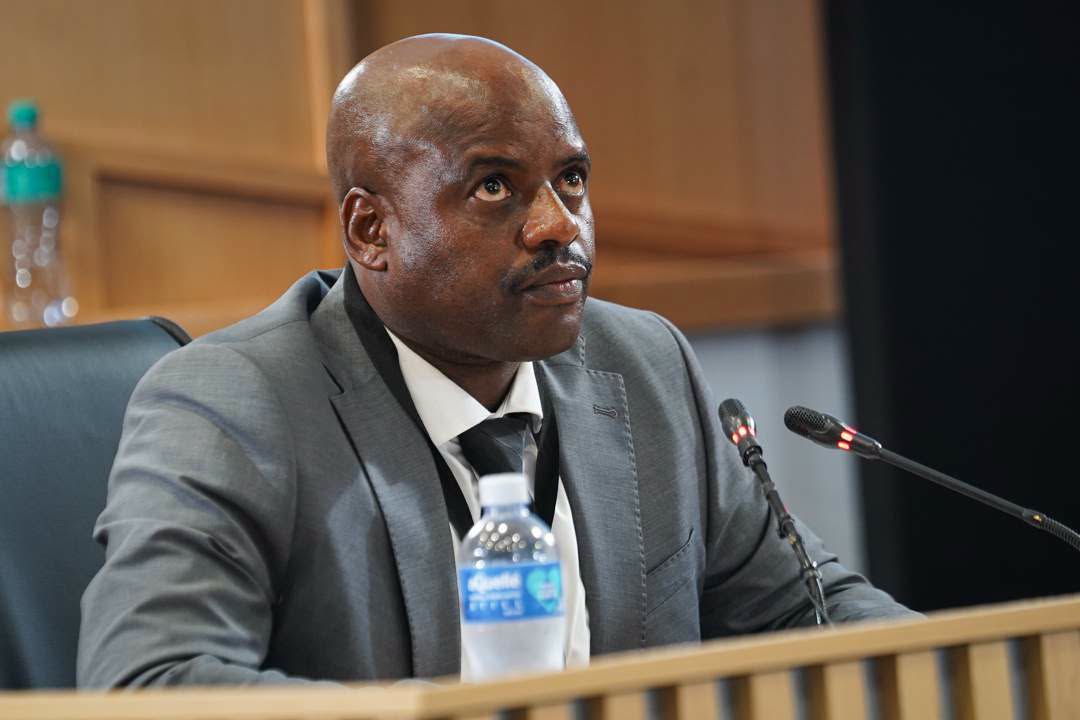
Suspended Ekurhuleni Metro Police Department (EMPD) deputy chief Julius Mkhwanazi has been arrested by the South African Police Service's (SAPS) Madlanga Task Team.
Police confirmed on Saturday that a 50-year-old senior municipal official has been arrested in Gauteng as part of an ongoing corruption probe linked to the Ekurhuleni Metro Police Department (EMPD).
The arrest was carried out by the SAPS Madlanga Task Team at the suspect’s home earlier on Saturday morning. The official is facing charges of fraud, corruption, and defeating and/or obstructing the ends of justice.
“The SAPS' Madlanga Task Team has arrested a 50-year-old senior municipal official for fraud, corruption and defeating and/or obstructing the ends of justice,” police spokesperson Brigadier Athlenda Mathe said.
Authorities indicated that the arrest is part of a broader investigation into alleged corruption within the EMPD, with more suspects potentially facing arrest.
“The Task Team is still searching for other suspects linked to the case,” Mathe said.
Police declined to provide further details on the allegations, citing the ongoing nature of the investigation.
“These arrests emanate from an ongoing investigation into corruption within the Ekurhuleni Metro Police Department (EMPD)," said Mathe.
"No further comment will be provided on the merits of the case at this stage.”
The suspect is expected to appear before the Boksburg Magistrate’s Court on Monday, April 20, 2026.