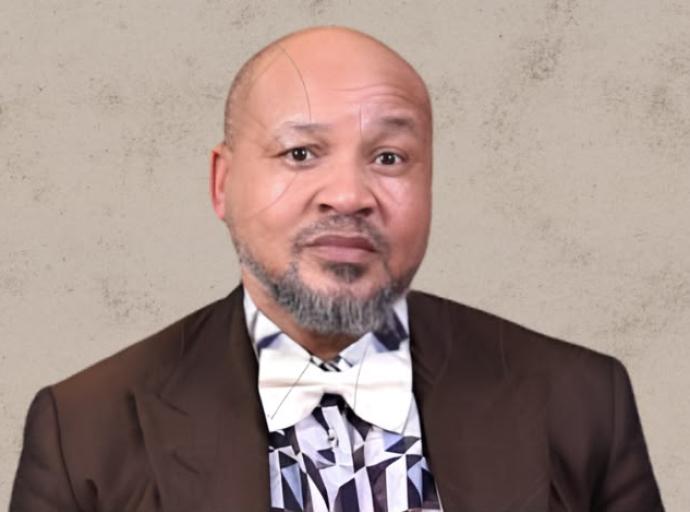
Prominent Mangaung businessman Ben Moseme has strictly distanced himself from growing political speculation suggesting he intends to stand for the executive mayoralty of the metro.
The founder of the Cultural Urban Festival Africa (CUFA) issued a formal statement dismissing claims that he holds any...
Prominent Mangaung businessman Ben Moseme has strictly distanced himself from growing political speculation suggesting he intends to stand for the executive mayoralty of the metro.
The founder of the Cultural Urban Festival Africa (CUFA) issued a formal statement dismissing claims that he holds any political ambitions within the region.
Moseme confirmed that several political entities had recently approached him to discuss potential alignment.
These organisations included the Patriotic Alliance (PA), the National Service Delivery Forum (NSDF), and ActionSA.
“I wish to state categorically and without hesitation that there is absolutely no truth to these rumours,” he said in the statement.
The local enterprise leader emphasised his intention to remain entirely focused on commerce, culture, and sports development.
He highlighted plans to elevate his existing festival brand while also driving broader regional economic revitalisation projects.
“My focus remains single-mindedly fixed on economic development, social revitalisation, and civic contribution through business and culture,” Moseme continued.
Specific targets include restoring the historic Mangaung African Cultural Festival (Macufe) and supporting efforts to revive local football club, Bloemfontein Celtic.
His future initiatives will focus on job creation across Mangaung, the broader Free State, and Matjhabeng Local Municipality.
“Politics is not my calling; economic empowerment and community upliftment through enterprise are,” said the local entrepreneur.
The announcement comes directly after the conclusion of the ten-day festival which ran from 1 to 10 October 2026.
Moseme extended gratitude to all financial supporters, operational partners and local revellers who contributed to the staging of the event.
“The triumph of CUFA 2026 stands as a monumental achievement, and it serves as a critical springboard as we look ahead to elevate and expand the CUFA brand into an even greater cultural and economic powerhouse in the years to come,” Moseme stated.
READ FULL STATEMENT BELOW:
FOR IMMEDIATE RELEASE:
A Message of Gratitude, Vision and Clarification from Ben Moseme
As we reflect on the incredible energy and success of the past few weeks, I am filled with immense pride and gratitude. The recently concluded Cultural Urban Festival Africa (CUFA), which ran over 10 unforgettable days from 1 to 10 October 2026, was nothing short of a resounding success.
First and foremost, I want to extend my deepest, heartfelt gratitude to all our esteemed sponsors, partners, stakeholders, artists and, above all, the people of Mangaung and the broader Free State. Without your unwavering belief, generous support, and overwhelming attendance, an event of this scale and calibre would not have been possible.
The triumph of CUFA 2026 stands as a monumental achievement, and it serves as a critical springboard as we look ahead to elevate and expand the CUFA brand into an even greater cultural and economic powerhouse in the years to come.
In light of recent public media speculation and commentary surrounding my personal and professional future, I feel it is necessary to address these matters directly and unequivocally.
It has come to my attention that there are persistent rumours suggesting I intend to contest or stand for the position of Executive Mayor of the Mangaung Metropolitan Municipality.
I wish to state categorically and without hesitation that there is absolutely no truth to these rumours.
As an established businessman and a grounded family man, I have worked tirelessly to carve out a successful career and profile within the business sector.
I take great pride in my journey and also as a beneficiary of Broad-Based Black Economic Empowerment (B-BBEE). My life’s work, passion and personal ethos are rooted in enterprise, economic empowerment, and family - not politics.
I firmly and unreservedly distance myself from any assertion, rumour, or speculation suggesting that I harbour political ambitions or interests of any kind.
To set the record entirely straight, I do confirm that I was formally approached by representatives from various political organisations, including the Patriotic Alliance (PA), the National Service Delivery Forum (NSDF), as well as ActionSA.
I further deny any affiliation, membership or alignment with any of these political parties or any other political entity.
My focus remains single-mindedly fixed on economic development, social revitalisation, and civic contribution through business and culture. Therefore, my ambitions are anchored on the following:
● Taking our cultural festival, CUFA, to world-class heights and drawing visitors as well as investors to our province
● Working towards restoring the vigour and splendour of the historic Mangaung African Cultural Festival (Macufe) to its rightful place as an iconic institution on the African continent
● Supporting efforts to bring back the pride and heritage of our beloved football club, Bloemfontein Celtic and restore the spirit of ‘Siwelele’ to the local sports economy.
● Driving tangible investment, job creation and economic opportunities across Mangaung, the broader Free State, and specifically Matjhabeng Local Municipality in the Lejweleputswa District - the place I proudly call my home.
Politics is not my calling; economic empowerment and community upliftment through enterprise are. My commitment to the people of the Free State remains steadfast, and I look forward to working side-by-side with all sectors of society to build a prosperous future for our communities.
Thank you once again for your continued support and belief in our shared vision.
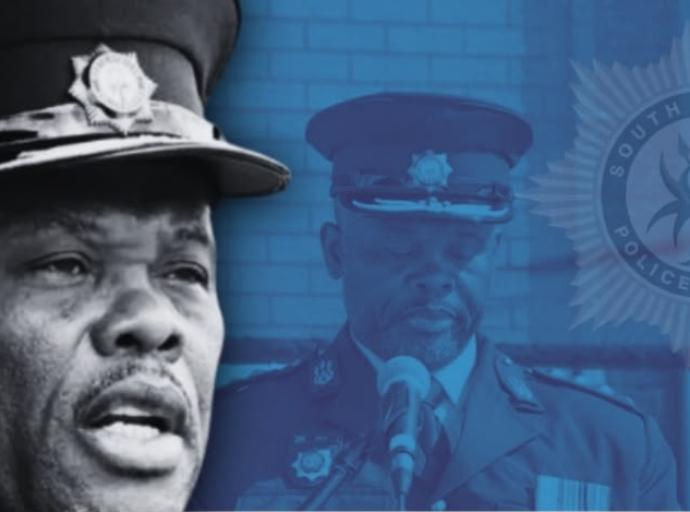
The South African Police Service (SAPS) has confirmed that Lieutenant-General Shadrack Sibiya is no longer an employee with effect from today, 12 October 2026.
His immediate termination follows swift developments during formal disciplinary proceedings convened earlier in the day.
An official SAPS media statement announced earlier today that Sibiya tendered his immediate resignation through his legal representative shortly after the hearing commenced.
“As the former senior officer had an ongoing disciplinary case against him at the time of his resignation, his departure from the Service is therefore regarded as a dishonourable discharge,” the statement said.
The police service confirmed that the formal proceedings had just sat this morning when the surprise resignation was announced and finalised.
Journal News Network (JNN) has been reliably informed that the Constitutional Court is going to deliver a ruling in favour of the African National Congress (ANC) in the ongoing legal dispute regarding candidate nominations submitted on 28 August 2026 at 17:00.
A source close to the proceedings currently unfolding at the apex court has revealed to this newspaper that the court will establish that the internal electronic requirements of the Independent Electoral Commission (IEC) cannot be used to disenfranchise voters.
The deadline of 17:00, according to the source, served as the primary determining factor in the legal challenge, further noting that the necessary information was fully uploaded by the ANC and therefore present on the system at the required time.
The source further revealed that the ConCourt will find that the commission exceeded its statutory powers by attempting to enforce the additional step of pressing a button.
“The requirement of pressing a button is not a legal requirement. The compliance requirement is uploading, which is submission.”
The source further explained that the explanatory notes regarding button pressing are not contained within official election regulations, adding that the system used by the commission is merely an administrative tool designed for convenience rather than a legal mandate.
Moreover, the source pointed out that neither the commission nor the Democratic Alliance (DA) can rely on abstract legal cases to support their arguments.
“These are some of the many critical points they conceded. It means they can't support their case to exclude the candidates.
“The unanimous view of the bench will be that the internal requirement of the convenience of the IEC cannot be used to disenfranchise the voter. Therefore the pressing of the button outside the law is wrong,” stated the mole.
Earlier today during the court’s proceedings, Justice Rammaka Mathopo also highlighted how the Local Government - Municipal Electoral Act (Act No. 27 of 2000) empowers the IEC to make regulations regarding matters that must be prescribed.
However, he also emphasised that such binding regulations must follow proper legal formalities - such as being officially published in the Government Gazette - rather than being established merely through unlegislated internal guidelines, manuals, or digital system requirements.
“Regulation 4 89(4) says: ‘If you want to make regulations regarding any matter that may be prescribed in the regulations, that must be published in the Gazette’,” noted Mathopo.
He continued: “At the end of the day, as this court we have to explain to the community that this court’s judgement as the as the electoral code will disenfranchise the voters people will not participate in the forthcoming elections because of one added requirement which now becomes an extra legal rule.
“How will this court then be able to convey its expression to the communities that would say: ‘But I have a right you've told me that we have a right in terms of Section 19 of the Constitution. What happens to my right why is my right now diluted by that software button?’ Mathopo argued.
The pending full bench decision by the highest court in the land will therefore allow the affected candidates to remain on the official ballot for the local government elections on 4 November 2026.
Meanwhile, the IEC will on Wednesday host a media briefing on Wednesday, 14 October 2026, on the outcomes of special votes applications as well as its readiness for the upcoming elections.
Higher Education and Training Minister, Buti Manamela, has called for an urgent, evidence-based account of concerns at Northern Cape Urban TVET College, warning that forensic investigations must not be delayed where they are warranted.
Addressing Parliament’s Portfolio Committee on Higher Education and Training during its consideration of the department’s 2025/2026 Annual Report, Manamela said the college’s situation required urgent attention, including consideration of whether a further independent investigation was necessary.
“I have also heard the concerns about Northern Cape Urban TVET College. We need an urgent, evidence-based account of the work already undertaken and the further independent investigation required.
“Where forensic investigation is warranted, it must proceed without avoidable delay. Learners, records, and public resources must be protected while these matters are addressed,” Manamela added.
The minister’s comments formed part of a broader warning that recurring weaknesses across the post-school education and training sector could no longer be allowed to continue without consequences.
The department must move beyond simply acknowledging findings raised by the Auditor-General of South Africa and ensure that agreed corrective measures are actually implemented.
"Corrective action must begin when weaknesses are identified, not when the next audit approaches. Where management has repeatedly been informed and agreed actions remain unimplemented, we must establish responsibility for that failure," Manamela continued.
Repeated findings, agreed corrective actions, and inadequate implementation have raised fundamental questions about accountability across the entire portfolio.
Accountability will extend directly to the department’s leadership, boards, councils, administrators, and chief executives, as well as decisions taken by the ministry.
“Accountability cannot apply only to people below us,” the minister said.
Manamela also singled out the Construction Education and Training Authority, stating that an institution under administration should demonstrate stronger governance rather than operate under a different standard of accountability. He further confirmed he would require a clear account of the implementation of forensic recommendations at the authority, particularly regarding disciplinary processes, procurement, and possible conflicts of interest.
While acknowledging improvements in some areas of departmental performance reporting and modest improvements in TVET college audit outcomes, Manamela noted that these gains did not offset persistent control weaknesses elsewhere.
Previous concerns around vacancies, information systems, certification, performance evidence, and consequence management remain firmly on the department’s oversight agenda.
Manamela and the Deputy Ministers will determine immediate corrective measures and longer-term reforms while overseeing their comprehensive implementation.
“For the public, the question is straightforward: what will change because these matters have been brought before Parliament?” he asked.
Students waiting for allowances, graduates waiting for certificates, and communities relying on functioning colleges need institutions that fulfill their responsibilities, rather than another explanation.
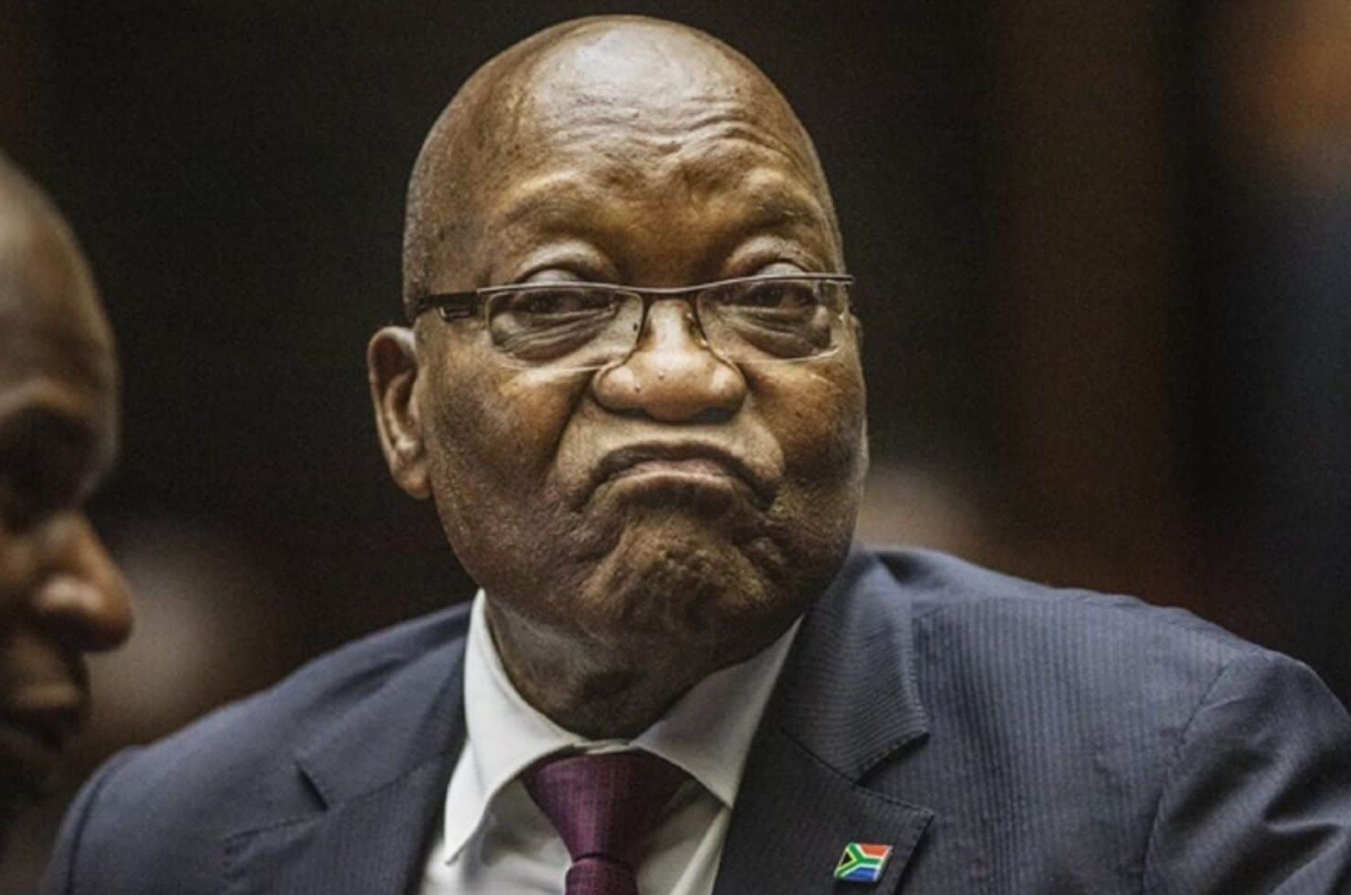
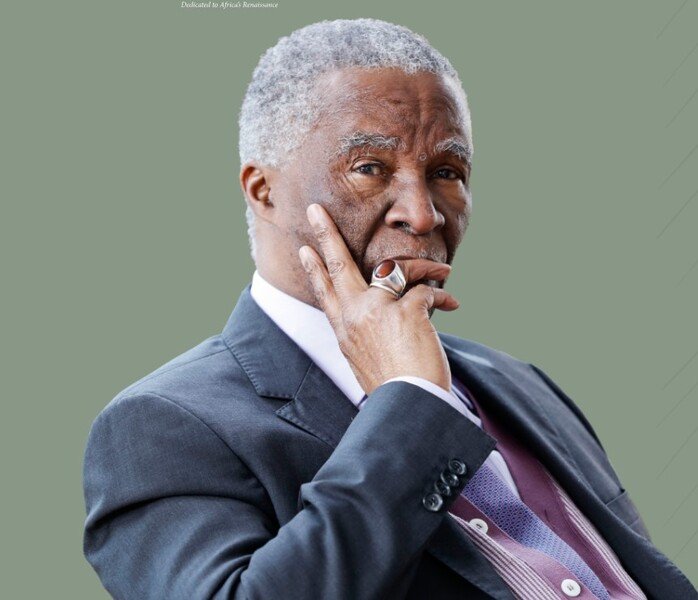
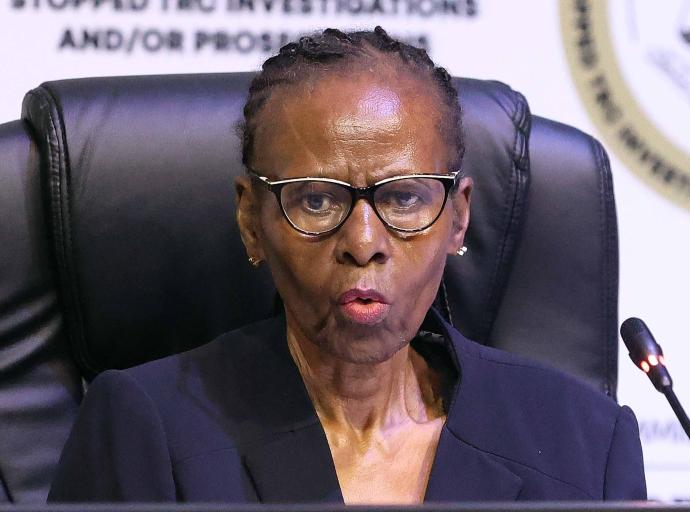
Former Presidents Thabo Mbeki and Jacob Zuma are scheduled to appear before the Judicial Commission of Inquiry into Truth and Reconciliation Commission cases in just under two weeks.
The looming historic appearances follow a joint failed legal bid by the two former heads of State to remove the commission’s chairperson, retired Constitutional Court Justice, Sisi Khampepe. Mbeki and Zuma had initially launched two separate bids to get Khampepe to step down, but later joined forces claiming that she could not be impartial due to her past positions in government.
On 31 August 2026, the Constitutional Court handed down a ruling that dismissed the review application. Through a narrow 5-4 majority split, the court ruled that Khampepe’s past institutional roles did not create a reasonable apprehension of bias to disqualify her from chairing the inquiry. Mbeki is now scheduled to present his testimony across two days on 19 and 20 October 2026, while Zuma, who is reportedly in hospital, is set to follow with an appearance on 22 October 2026.
The judicial commission was established by President Cyril Ramaphosa to investigate allegations of executive and political interference in the post-apartheid justice system. Specifically, the inquiry focuses on claims that state officials deliberately delayed, halted, or suppressed the criminal investigation and prosecution of hundreds of gross human rights violations originally identified by the Truth and Reconciliation Commission.
Advocacy groups representing anti-apartheid victims have long maintained that political pressure was applied to the National Prosecuting Authority to shield high-profile suspects. The scope of the inquiry is therefore to examine why judicial inquiries into the disappearances and deaths of activists were stalled or abandoned during the respective presidential terms of Mbeki and Zuma, both of whom have denied any involvement or knowledge of political interference.
Mbeki and Zuma’s legal objections centered on Khampepe’s extensive history within South Africa’s post-apartheid legal transition, noting she previously served as a Truth and Reconciliation Commission Commissioner on the Amnesty Committee and subsequently held the position of Deputy National Director of Public Prosecutions (NDPP).
The former presidents argued that holding senior roles in both the entity that recommended prosecutions and the state agency tasked with executing them constituted a structural conflict of interest, while Zuma additionally cited past adverse judicial rulings authored by Khampepe as evidence of potential prejudice.
The legal challenge reached its conclusion when the apex court issued its narrow split decision, with the majority ruling determining that institutional expertise and past legal roles do not legally equate to personal bias. Conversely, four dissenting judges noted that an objective observer could perceive a conflict given her unique historical involvement.
The dismissal of the recusal application removed the final legal obstacle preventing the commission from summoning the former heads of state. The inquiry is mandated to submit its final findings, evaluations, and recommendations to Ramaphosa by 18 December 2026, with Mbeki and Zuma’s public testimonies expected to be the final high-profile proceedings before the commission concludes its investigation
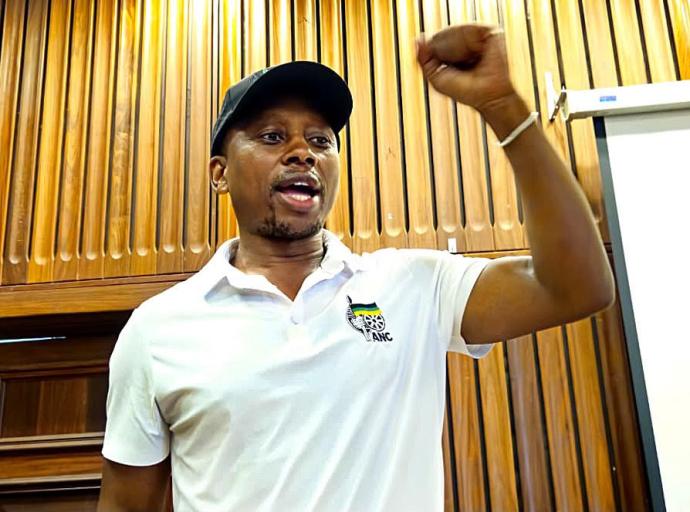
The African National Congress (ANC) has issued a scathing rebuke against senior national executive committee (NEC) member, Andile Lungisa, declaring unequivocally that deployment is not an entitlement.
The strongly worded response follows an urgent legal challenge brought before the High Court of South Africa in Johannesburg by Lungisa, who targeted the party, its leadership, and its Secretary-General, Fikile Mbalula, after being dropped from candidate lists ahead of the upcoming 4 November 2026 local government elections.
The ANC expressed deep dismay that a leader of Lingisa’s stature within the movement chose to meet his comrades across a courtroom in lieu of utilising internal dispute resolution mechanisms established by the movement. “It is a sorrowful thing for a movement of this age to meet a comrade across a courtroom over a matter that our own structures were established to resolve,” the ANC statement reads. Whilst rebuking the notion of self-interest by the former ANC Youth League (ANCYL) deputy president, the party also revealed that initial reports from vetting agencies showed that Lungisa had not attended that process - which includes the taking of biometric prints necessary to complete criminal record assessments.
These checks subsequently set off questions regarding Lungisa’s eligibility for mayoral candidacy, pointing directly to his public conviction and sentence that was confirmed on appeal by the Supreme Court of Appeal (SCA). Lungisa was found guilty by the Gqeberha Magistrate Court in April 2018 for a physical attack on the Democratic Alliance (DA) Councillor, Rano Kayser, during a heated council meeting in the Metro’s council chambers in October 2016.
He was sentenced to two years direct imprisonment. Invoking the historic philosophy of Through the Eye of the Needle, the ANC emphasised. that its renewal program applies without fear, favour or exception. “However popular an individual may be, and however long their service, this movement was founded on servant leadership and not on entitlement to government position,” the statement continued. Having opted for the courts instead of exhausting internal party procedures, Lungisa has potentially set himself up for a possible internal party disciplinary hearing after the local government polls.
His party membership may possibly be on the line depending on how this potential disciplinary process unfolds. Meanwhile, The ANC national working committee is in the Eastern Cape to engage with its structures, in the province and conduct general assessments of their election work and preparations ahead of the November polls. The NWC programme runs from today, 4 October, until Wednesday, 7 October 2026.