Northern Cape Premier and ANC provincial chairperson Zamani Saul has denied allegations of political interference in his administration following the shock resignation of Roads and Public Works MEC Fufe Makatong.
Saul moved swiftly to reshuffle his Cabinet after Makatong’s resignation, fuelling spe...
The Northern Cape’s gambling and liquor law is heading to the Constitutional Court to confirm that it is unconstitutional because the legislature didn’t hold a proper public consultation process.
In addition, the Kimberley court stated that the notice of a hybrid consultative meeting was sent just six days prior, while the ruling also noted that the provision in 2024’s Northern Cape Gambling and Liquor Act for longer trading hours was problematic.
“Needless to say, the respondents must be acutely aware of the harmful effects of alcohol abuse. They do not dispute this,” said the ruling.
The Act made provision for selling alcohol between 10:00 and 02:00, Monday to Sunday.
List of respondents
The case was brought by the DG Murray Trust, which challenged both the process followed in passing the law and aspects of its content.
It took several entities to court, including the speaker of the Northern Cape Provincial Legislature, the gambling and liquor board, the premier, as well as other politicians at both provincial and national levels. In total, 22 parties were cited as respondents.
In declaring the law unconstitutional, the judge said that there wasn’t enough public consultation. “It is declared that the Northern Cape Provincial Legislature failed to comply with its constitutional obligation to facilitate public involvement,” the court found.
The ruling added that “public participation constitutes a fundamental component of participatory democracy and the legislative process. It serves to enhance the legitimacy of legislation by ensuring that the voices and interests of the public are duly considered.”
Flawed process
At the centre of the ruling was how the legislation was adopted.
The court found that a revised version of the Bill, which contained significant changes, was never properly published for public comment. Instead, it was circulated only to selected stakeholders.
Public participation was also limited. The key public hearing that was held with just six working days’ notice was conducted largely online, effectively excluding many rural and vulnerable communities without reliable internet access.
The legislature also failed to widely advertise the process through mainstream channels such as radio, social media or newspapers. Even the respondents acknowledged shortcomings in the process, conceding that they could not say with certainty whether it met constitutional standards.
The court found these failures undermined the principles of transparency, openness and inclusivity required in a constitutional democracy.
Irrational provisions
Beyond procedural flaws, parts of the law itself also came under scrutiny. The court found that one provision relating to traditional beer licences was so poorly drafted that it effectively allowed trading outside prescribed limits.
The clause “defies logic,” the court said, noting that it appeared to permit trading beyond regulated hours and did not provide reasonable certainty to those affected. This lack of clarity meant the provision failed to meet constitutional standards.
Citing other case law, the judge said “the doctrine of vagueness is founded on the rule of law, which, as pointed out earlier, is a foundational value of our constitutional democracy. It requires that laws must be written in a clear and accessible manner. What is required is reasonable certainty and not perfect lucidity”.
Other sections of the law were also found to be irrational, particularly where trading hours deviated from national norms without clear justification.
Off to the ConCourt
While the court found that regulating alcohol sales is a legitimate function of government, it emphasised that laws must still be passed in a constitutionally compliant manner and be rational in their design.
The judgment and order will now be referred to the Constitutional Court for confirmation, as required in cases involving declarations of invalidity. “It follows that any declaration of constitutional invalidity made by a court other than the Constitutional Court does not take effect unless and until it has been confirmed by that Court,” the judge said.
The judge added that “in these circumstances, a suspension order would serve no purpose. For that reason, such an order is not only unnecessary but also incompetent”.
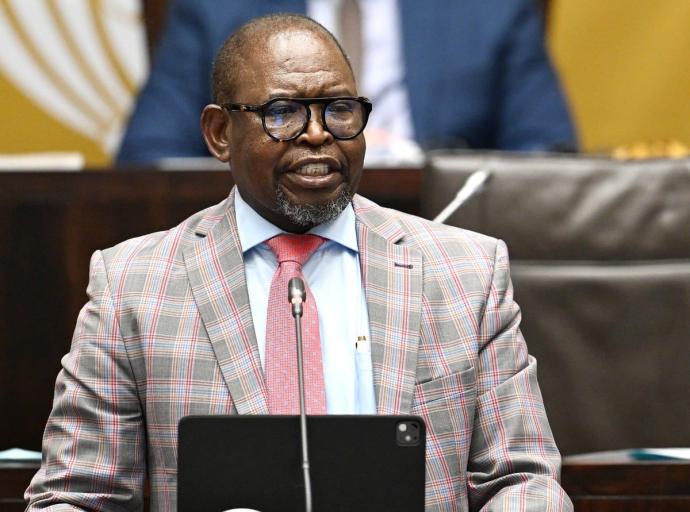
Finance Minister Enoch Godongwana on Tuesday defended the Special Appropriation Bill, saying he did not make any back door allocations as claimed by some parties.
Speaking during the debate on the 2026 Special Appropriation Bill in the National Assembly, Godongwana said the Public Finance Management Act empowered him to inform the national legislature when no resources could be found for specified projects but, he could come back once the resources were available.
“When you mention something in the Budget, you are not putting back door as some members try to suggest. You are being transparent to Parliament to say within the available resources, I could not fund the following priorities, but should resources be available, I am to come back to Parliament. That is what I have done. It is not back door,” he said.
In February, Godongwana had indicated when he tabled the 2026 Budget that the 2025 Medium-Term Budget Policy Statement included R8.5 billion that was added to the contingency reserve.
He had said the Special Appropriation Bill tabled on Tuesday also included, among others, R5.8 billion for Passenger Rail Agency of South Africa’s (Prasa) rolling stock fleet renewal programme, R1 billion for South Africa’s share subscription to the International Finance Corporation, and R700 million for the Department of Communications and Digital Technology.
In its report, the Standing Committee on Appropriation welcomed the R13.5 billion expenditure approved as part of the contingency reserve.
It also noted the R2 billion for the rebuilding of Parliament, R1.1 billion for the 2026 local government elections, R1 billion for the purchase of shares in the International Finance Corporation, and R8.3 billion to the Development Bank of South Africa Infrastructure Fund for the North Corridor Reinstatement Project and the Iron Ore Corridor.
The committee also notes the R5.7 billion for Prasa’s rolling stock fleet renewal programme, which included R1.8 billion to meet its obligations under an agreement with service provider Gibela to pay for 35 locomotives in a year and R889 million to Sentech.
ANC MP Nonceba Gcaleka-Mazibuko said the Special Operation was supporting the Operation Vulindela in its initiatives on rail, freight, and ports.
“We agree that an important transport sector is commuter rail. It is the most affordable source of transport for the working-class workers,” she said.
“The Special Appropriation is about allocating funds to support areas already prioritised by the government of the period ending 2025 and 2026. The ANC fully supports the special appropriation because of the improving budget conditions, which required spending on priority areas,” Gcaleka-Mazibuko said.
However, MK Party MP Thulani Gamede said the Special Appropriation report was asking Parliament to rubber stamp continued mismanagement of public funds than a bold stimulus.
“It is emergency band aid for self-inflicted wounds,” Gamede said.
He said the Bill failed to address the living realities of the majority.
“The MK can’t in good conscience support a Bill that treats the National Revenue Fund like a petty cash drawer for state entities that refuse to be accountable and a donation box to international bankers,” said Gamede.
EFF MP Nonhlanhla Mkhonto rejected the Bill, saying it reflected the government’s inability to plan, account, and govern in the interest of the people.
Mkhonto noted that when the refurbishment of Parliament begun, the initial cost was estimated at R2.2 billion.
“We must add another R2 billion and there is still not certainly on the final costs. This is unacceptable.”
Mkhonto said the Bill exposed contradictions in the government, as the state was building infrastructure to hand over the rail infrastructure to the private sector for privatisation.
“We need a budgeting system that is proactive, aligned to the industrial strategy, and directs resources to transform the structure of the economy.”
DA MP Mark Burke said the Special Appropriation should be an exception than a rule.
“It should exist for emergencies,” he said.
Burke said the Special Allocation was left open to abuse and that spending was justified by mere brief mention in the Budget speech.
“We call on Parliament to tighten the appropriation to allow for emergencies. For too long power was taken from this Parliament. We cannot allow a usual process to be undermined, and lawmakers be undermined,” he said.
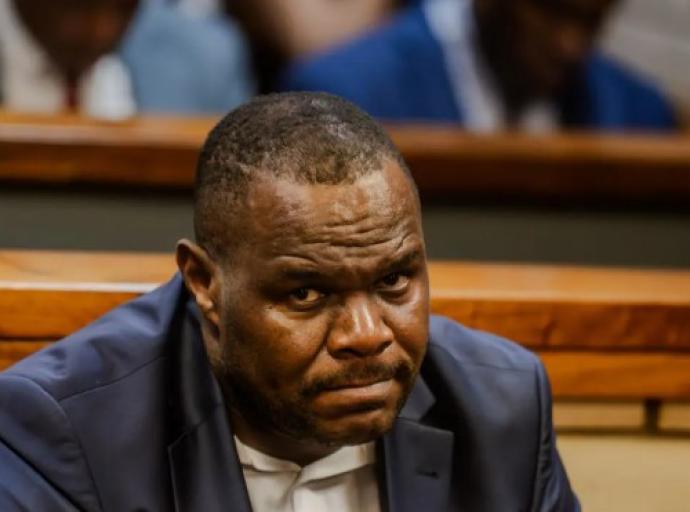
The Pretoria Magistrates Court has denied suspended police officer Fannie Nkosi bail on Wednesday.
The court ruled that Nkosi failed to prove that his release is in the interest of justice.
Nkosi brought the application after his arrest earlier in April during a raid at his home.
He faces firearm-related charges after seven guns were found at his home, and he has been charged for possessing dockets that were allegedly found in his wendy house.
Nkosi will be remanded in custody until his next court appearance in May.
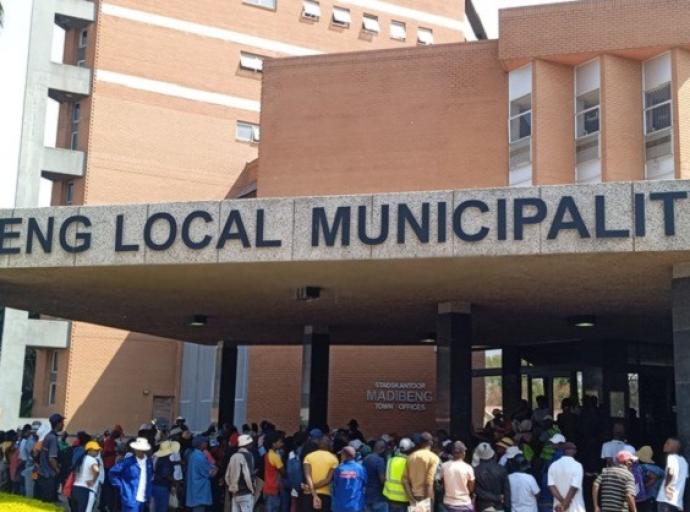
The ANC in the North West has recalled the Mayor of the Brits-based Madibeng Local Municipality, Douglas Maimane.
Spokesperson for the party in the province, Tumelo Maruping, says this decision was taken after an audio leak where Maimane allegedly colluded with opposition parties against the ANC.
“This follows a very controversial audio leak of a meeting where comrade Maimane participated with members of the opposition in an attempt to oust the party in the Madibeng Local Municipality. Over and above that, the ANC has also taken the decision to remove the Chief Whip of the same municipality, Comrade Phadi, back as an ordinary councillor. A replacement for the two councillors will be communicated within 48 hours.
Maimane earlier called for the authentication of the audio, stating that it was a character assassination designed to advance factional politics.
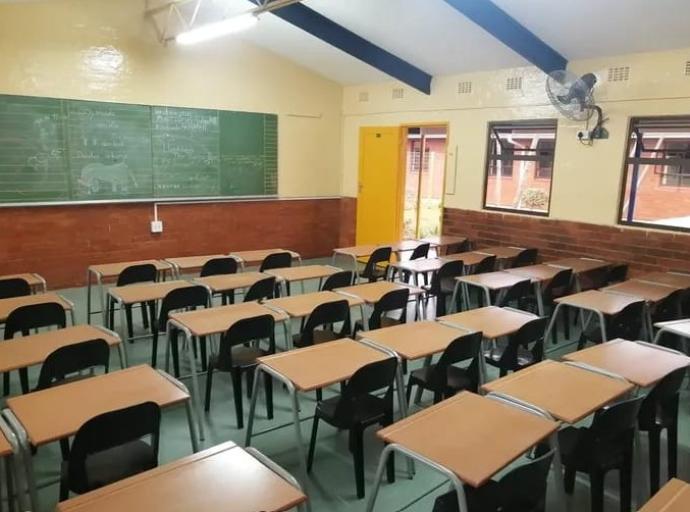
With the online application system for school placement now open, the Northern Cape Department of Education is calling on parents across the province to act swiftly and apply for children who will be doing Grade R, Grade 1, and Grade 8 in the 2027 academic year.
This is to ensure that parents do not struggle to find placement for their children in January.
Spokesperson for Education, Geoffrey van der Merwe says this will give parents a better chance of finding a placement for their children at their preferred schools.
He says the online system method makes it easier for families who are far from the offices to be able to apply for their children from the comfort of their homes.
“The 2027 online learner admissions system for Grade R, Grade 1 and Grade 8 officially opened on Monday, at 09:00 and will close at midnight on Friday, 29 May 2026.
“Parents must complete the entire process through on www.ncdoeadmissions.org.
“Parents and guardians must apply during this time to avoid last-minute rushes and reduce the risk of learners being left without placement.
“Early applications will also ensure that children are able to be placed at schools that are near them and also give the department a chance to plan for a new academic year, Van der Merwe said.
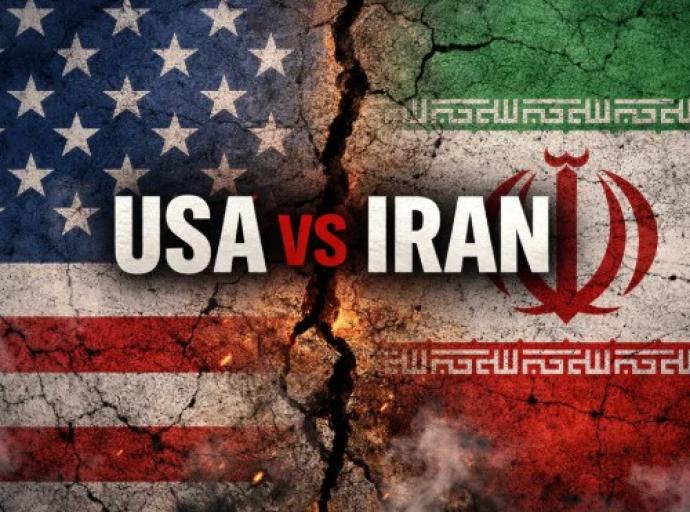
The United States and Iran each warned they were ready for war as the clock ticked down Tuesday on a ceasefire, with uncertainty on talks that President Donald Trump had announced would resume in Pakistan.
The White House said Vice President JD Vance was ready to fly back to the Pakistani capital Islamabad, which was preparing for a second round of talks on ending the war that has engulfed the Middle East and shaken global markets.
But Tehran's cleric-run government declined to confirm that it would participate and accused the United States of violating the truce through its blockade of Iranian ports and seizure of a ship.
"By imposing a blockade and violating the ceasefire, Trump wants to turn this negotiating table into a surrender table or justify renewed hostilities, as he sees fit," said Iran's powerful parliament speaker Mohammad Bagher Ghalibaf, who headed the delegations to talks two weeks ago in Pakistan.
"We do not accept negotiations under the shadow of threats, and in the last two weeks we have been preparing to show new cards on the battlefield," he wrote on X.
Iran's Revolutionary Guards warned of targeting any vessel attempting to pass through the Strait of Hormuz without permission.
Trump has similarly accused Tehran of violating the truce by harassing vessels in the key strait, the transit passage for about a fifth of the world's oil that Iran had all but shut in retaliation for the war launched February 28 by the United States and Israel.
The channel in peacetime sees around 120 daily transits, according to Lloyd's List, a shipping industry intelligence site.
On Tuesday, the site reported that more than 20 Iranian so-called "shadow vessels", had transited past the US blockade.
In one of a series of posts on his Truth Social platform, Trump insisted that the blockade was "absolutely destroying" Iran and said it will not end "until there is a 'DEAL'," in which the United States is pressing for Iranian concessions on its contested nuclear programme.
'AGREED' TO ATTEND TALKS
Trump told PBS News that Iran was "supposed to be there" at the talks in Pakistan.
"We agreed to be there," he said, warning that if the ceasefire expired "then lots of bombs start going off".
He separately told Bloomberg News it was "highly unlikely" he would extend the two-week truce.
Based on its start time, the truce theoretically expires overnight Tuesday, Tehran time, although in his comments to Bloomberg, Trump said the end was a day later, on Wednesday evening Washington time.
Oil prices fell on Tuesday while most stocks rose on lingering hopes for a deal to end the US-Iran war and reopen the Strait of Hormuz, even as Tehran said it had not decided whether to attend peace talks.
Despite some normalcy of life returning to Tehran during the ceasefire, city residents who spoke to Paris-based AFP journalists said the situation was far from rosy.
"Let's see what happens by Tuesday," one 30-year-old doctor said on condition of anonymity.
Saghar, 39, said there was little hope for Iranians squeezed by the government and the war's impact, adding that the "economy is horrible".
NEW ISRAEL-LEBANON TALKS
A separate ceasefire agreed between Israel and Lebanon was announced on Friday and included Hezbollah, whose rocket fire in support of Iran drew Lebanon into the war.
Israel and Lebanon, which have no diplomatic relations, will hold a second round of talks on Thursday in Washington, a State Department official told AFP.
Sporadic violence continued and Israel's military warned civilians against returning to dozens of villages in southern Lebanon, claiming Hezbollah's activities were violating the truce.
The UN Security Council condemned on Monday the killing of a French peacekeeper in Lebanon, whose death France blamed on Hezbollah.
The Frenchman was killed and three others wounded when their unit was ambushed on Saturday as it headed to a UN Interim Force in Lebanon (UNIFIL) outpost cut off from the fighting between Hezbollah and Israel.
Hezbollah lawmaker Hassan Fadlallah told AFP that his group would work to break the "Yellow Line" that Israel has established in the south, even as he said it wanted "the ceasefire to continue".
Israeli attacks on Lebanon have killed at least 2,387 people since the start of the war, a Lebanese government body said in its latest toll.
Another major issue in the US-Iran negotiations has been Tehran's stockpile of enriched uranium, which Trump said on Friday it had agreed to hand over.
But Iran's foreign ministry has said the stockpile, thought to be buried from US bombing in last June's 12-day war with Israel, was "not going to be transferred anywhere".
Spokesman Esmaeil Baqaei said handing over uranium was "never raised as an option" in talks with US negotiators.