Northern Cape Premier and ANC provincial chairperson Zamani Saul has denied allegations of political interference in his administration following the shock resignation of Roads and Public Works MEC Fufe Makatong.
Saul moved swiftly to reshuffle his Cabinet after Makatong’s resignation, fuelling spe...
A 7,500-hectare land rehabilitation programme set to create 700 green jobs is at the heart of a bold economic shift unveiled by Free State MEC for Agriculture, Rural Development and Environmental Affairs, Elzabé Rockman.
Tabled as part of the department’s 2026/27 Budget Vote, the plan marks a decisive pivot from treating environmental management as a compliance exercise to positioning it as a catalyst for economic recovery and long-term sustainability.
At its core is a simple but often overlooked reality: without functioning ecosystems, economic growth cannot endure. In a province increasingly strained by land degradation, failing waste systems and water risks, the budget reframes environmental repair as the foundation for rebuilding the economy.
Rockman’s approach is notably pragmatic. Rather than broad commitments, it draws a direct link between restoration, infrastructure investment and job creation. The rehabilitation project aims to restore soil health, curb erosion and boost agricultural productivity in rural areas where unemployment remains high.
The programme forms part of a broader allocation of R1.089 billion for 2026/27, rising to R1.139 billion in 2027/28 and R1.170 billion in 2028/29. Of this, R159.5 million is dedicated to Environmental Affairs, now elevated to a core programme—underscoring its growing economic role.
The timing is significant. With South Africa’s economy under pressure and municipalities struggling to maintain infrastructure, environmental decline has become a direct drag on growth. In the Free State, these pressures are particularly acute.
The budget responds with an infrastructure-led recovery model. Beyond the flagship project, R54.2 million has been allocated through the Infrastructure Enhancement Allocation, while R19 million is earmarked for disaster management, Foot-and-Mouth Disease response and waste management. Conditional grants total R286.3 million, reinforcing land care and agricultural sustainability.
At municipal level, efforts are focused on stabilising basic environmental systems. Plans to audit 34 landfill sites and conduct 280 compliance inspections aim to shore up waste management—an often overlooked but critical pillar of economic stability.
The province is also tackling the long-term impact of environmental disasters. In Jagersfontein, where a tailings dam collapse left soil sodium levels up to 80% above normal, a pilot project using gypsum is underway to restore soil quality—signalling a shift toward science-based recovery.
International support is bolstering these efforts. In partnership with North West, the province has secured about R100 million over five years from the Global Environment Facility to advance land restoration and sustainable development.
Meanwhile, the Foot-and-Mouth Disease outbreak—now with 443 confirmed cases affecting nearly 189,000 animals—continues to strain the agricultural sector. Although R26 million has been allocated, spending has been slow due to vaccine supply constraints. To strengthen biosecurity, mobile quarantine facilities are being developed along the 485km Lesotho border.
The broader message is clear: economic recovery in the Free State will hinge as much on restoring environmental systems as on reviving traditional industries.
However, risks remain. Municipal capacity constraints and procurement delays continue to threaten implementation, and the gap between budget allocations and actual spending raises concerns.
Even so, the strategy signals a meaningful shift. In a province battling deep environmental degradation and high unemployment, Rockman’s plan offers a practical, measurable path forward—one that ties ecological repair directly to economic renewal.
Free State Human Settlements MEC Saki Mokoena has unveiled a R1.18 billion plan to fix chronic housing delays, placing a strict “Beke le Beke” week-by-week monitoring system at the centre of efforts to fast-track delivery, tighten accountability, and restore dignity in struggling communities.
Tabling the department’s 2026/27 budget, Mokoena framed the approach as a decisive shift from years of inefficiencies, stalled projects, and weak oversight. The department, he said, is now focused on rebuilding state capacity and ensuring that both officials and contractors deliver consistently and on time.
At the core of this shift is the “Beke le Beke” model—meaning “week by week”—which introduces continuous monitoring of housing projects, informal settlement upgrades, and municipal performance, replacing slow and often ineffective reporting cycles.
The department’s R1.189 billion allocation reflects a 7.1% decrease from the previous financial year, largely due to national fiscal pressures and reduced conditional grants. The Human Settlements Development Grant has been cut to R777.1 million, while the Informal Settlements Upgrading Partnership Grant drops to R112.8 million. Despite these reductions, Mokoena insists delivery will be accelerated through tighter coordination and improved implementation.
A key priority is the replacement of ageing two-roomed houses with Breaking New Ground (BNG) units. R30 million has been allocated for projects in Ipopeng (Fauriesmith), Dark City (Mangaung), Bronville (Matjhabeng), and Extension 2 (Dihlabeng). An additional R2.567 million has been set aside under the Expanded Public Works Programme to support skills development in trades such as plumbing and plastering, aimed at boosting employment while improving construction quality.
Performance in the past financial year has been mixed. The department delivered 1,816 serviced sites in greenfield developments and exceeded informal settlement upgrading targets, completing 2,873 sites against a target of 1,062. However, BNG housing construction lagged, with only 41.5% of the 1,663-unit target achieved. In response, contractor panels have been reopened to expand capacity and improve delivery.
Infrastructure upgrades remain central to the strategy. In Hani Park, 261 houses have been connected to water and sewer systems, with full completion expected once pump station upgrades are finalised. In Nala Municipality, 97% of a 429-site bulk services project has been completed. In Matjhabeng, additional sites have been allocated in Nyakallong to relocate households affected by mine water risks. Progress is also being made in Community Residential Units, with 270 units completed at G-Hostel and 130 units ready for occupation in Mangaung’s Dark and Silver City, pending bulk service connections.
Large-scale catalytic projects are driving spatial transformation across the province. In Bethlehem, the Bakenpark Integrated Development is back on track with new contractors and 90 BNG houses already under construction. In Sasolburg, the Vaal River City project is advancing, with thousands of serviced sites nearing completion. In Moqhaka, most of the planned 5,300 residential sites already have water and sewer connections, with alternative bulk infrastructure solutions being explored to accelerate the remaining work.
The province continues to face a significant informal settlement challenge, with 189 settlements housing more than 84,000 households. Mokoena said the department is prioritising in-situ upgrading while identifying relocation sites where necessary. He cautioned against objections that delay development, warning that housing delivery must not be stalled by administrative or politically driven resistance. Restoring ownership and dignity remains a key focus. The department has already registered 1,319 title deeds and is working to ensure every completed house is transferred with full ownership documentation. This includes converting old permits and deed grants into formal title deeds, particularly for historically disadvantaged groups.
Mokoena also outlined institutional reforms aimed at decentralising decision-making to the district level while strengthening oversight and accountability. He acknowledged ongoing challenges, including corruption, procurement irregularities, and capacity constraints, but said corrective measures are being implemented.
Closing his address, Mokoena made it clear that the department’s direction is firmly set—faster delivery, stricter oversight, and a housing programme that not only builds homes but restores dignity and begins to reshape spatial inequality across the Free State.
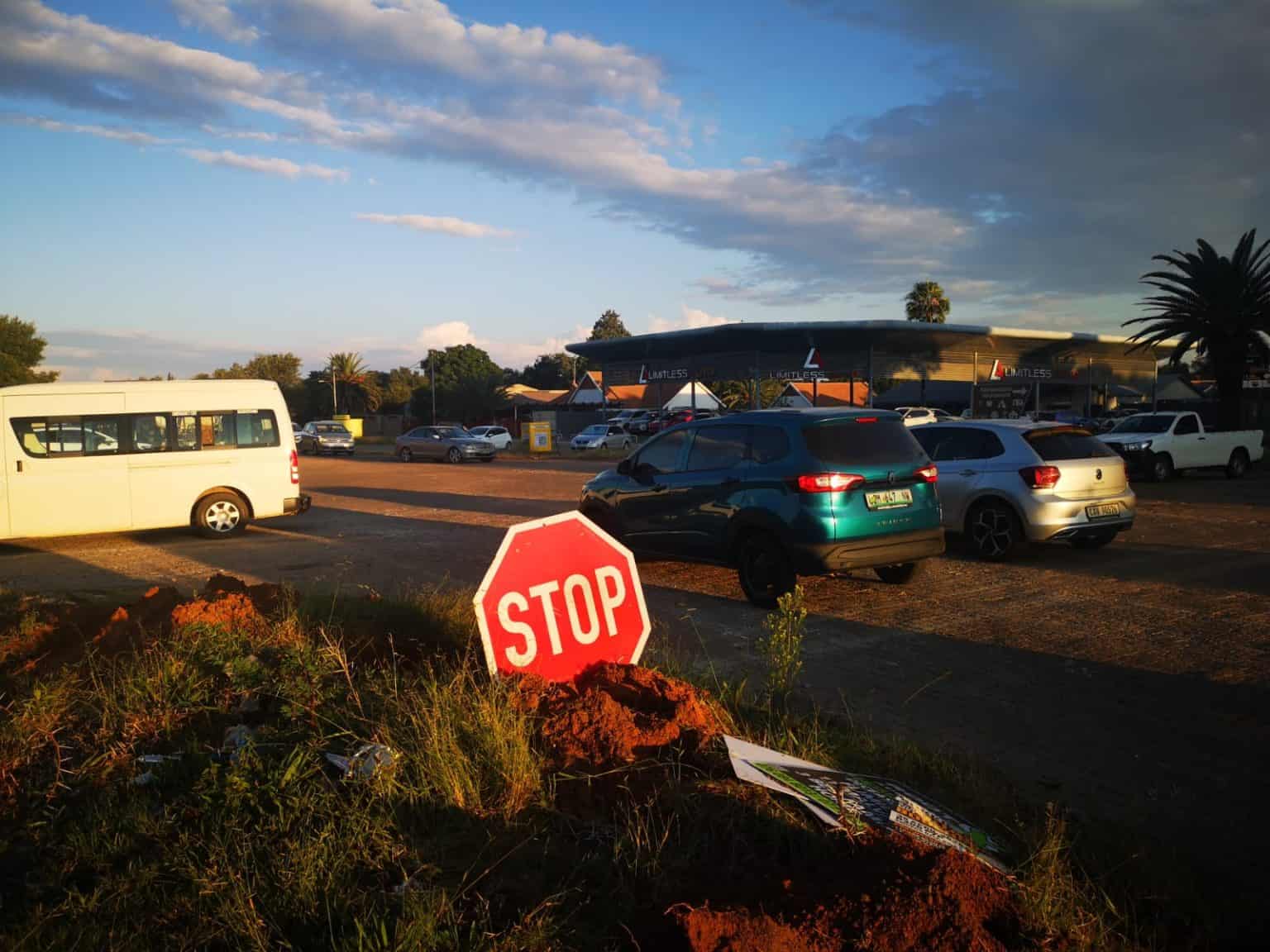
AfriForum has challenged the Matlosana Local Municipality to prioritise life-threatening road conditions at a major Klerksdorp intersection.
The civil rights group formally notified the Acting Municipal Manager regarding the intersection of Jan van Riebeeck Road (R30), Leemhuis Street, and Ian Street.
Residents frequently pass the site and report unsafe conditions caused by non-functional traffic lights and missing road signs.
AfriForum District Coordinator for the Mooi River, Alta Pretorius, described the current state of the R30 as an unacceptable risk to road users.
“This situation exposes road users to unacceptable risks on a daily basis. The R30 is an important route with heavy traffic; without proper traffic control, collisions and injuries are inevitable.”
The organisation stated that the municipality’s failure to maintain the site is a sign of gross negligence, while further arguing that authorities have a legal obligation to manage traffic control measures in terms of the National Road Traffic Act.
While the formal complaint focused on one intersection, many other parts of the town are reportedly riddled with deteriorating markings.
Pretorius pointed to a systemic failure in infrastructure maintenance that forces residents to navigate dangerous streets alone.
“It is clear that there is a systemic failure in the maintenance of infrastructure. Residents are being left to their own devices while their safety is compromised.”
AfriForum has urged the municipality to urgently repair the traffic lights and install correct signage to alert motorists of upcoming hazards. The organisation further warned that the local government could be held liable for any future damage, injuries, or loss of life.
President Cyril Ramaphosa travelled to Lesotho to join His Majesty, King Letsie III, and Lesotho Prime Minister, Samuel Matekane, for the official opening of the Senqu Bridge in Mokhotlong.
The ceremony, which took place on Wednesday, marked a significant milestone under Phase II of the Lesotho Highlands Water Project.
According to the Presidency, the Senqu Bridge project has created employment for over 1 200 people - most of them Basotho - and prioritised local expertise to ensure regional development.
“The project has employed local engineers, technicians, and professionals from both our countries.” The Presidency said in a statement.
The landmark bridge was built to endure extreme conditions considering that it is located more than 2 500 metres above sea level.
Officials also emphasised that the bridge tells a story of determination in the face of technical complexity.
“It will serve many generations to come. Together with the two other bridges being constructed to span the Polihali reservoir, this bridge will improve travel across this part of the country, making transport easier and cheaper for communities, businesses, and visitors.
Ramaphosa thanked the Basotho nation for making water resources available to South Africa, whilst conceding that South Africa is a water-scarce country that relies on such partnerships.
He also announced South Africa’s intention to provide Lesotho with humanitarian assistance worth R30 million. The funding will be facilitated through the African Renaissance Fund.
“As a reaffirmation of our desire to further deepen cooperation, I am pleased to announce that South Africa will provide humanitarian assistance to the Kingdom of Lesotho to the value of R30 million from our African Renaissance Fund,” Ramaphosa stated
This contribution will help Lesotho strengthen its national response to HIV and tuberculosis. These efforts come at a time when international humanitarian assistance levels are dwindling globally.
“As the current interim Chair of SADC and Chair later this year, South Africa will continue to promote and champion regional initiatives to accelerate trade, investment, and integration and to deepen people-to-people links,” said Ramaphosa.
This collaboration between Lesotho and South Africa helps both countries realise the vision of an economically integrated Africa as espoused by the African Union’s Agenda 2063.
The project is also one of the most ambitious and successful transboundary water initiatives in the world and is currently the largest investment South Africa has ever made outside its borders.
The MEC for Finance, Economic Development, and Tourism, Ketso Makume, delivered his department’s budget vote succesfully on Tuesday, despite surviving a near fatal car accident two days prior.
The department confirmed in a statement that Makume and his protectors hit a kudu on the N5 road between Paul Roux and Senekal on their way back from the ANC Thabo Mofutsanyane Regional Conference in Bethlehem on Sunday night.
The spiral-horned antelope was hit unexpectedly when it attempted to cross the road under the dark skies, leaving the driver with little to no chance of avoiding the imminent collision.
Despite this near-fatal collision, Makume ascended the podium at Harry Gwala Sports Complex, in Sasolburg, and presented the 2026/2027 Departmental Budget Vote - although with a neck-brace for neck support.
While questions of where the kudu actually comes from remain unanswered, it is largely believed that it probably escaped from one of the game farms in the area.
It would also be safe to assume that the kudu was one of the resident wildlife population found at the nearby Holhoek Hiking Trail which is located just 18km from Paul Roux.
Meanwhile, road safety in the province remains a growing concern, with fatal animal-related accidents estimated to be roughly around 10 000 in South Africa each year.
While costs around Makume’s accident will be covered by the taxpayer, it is estimated that around R83 million is paid out annually in insurance claims, specifically for vehicle collisions with wild animals.
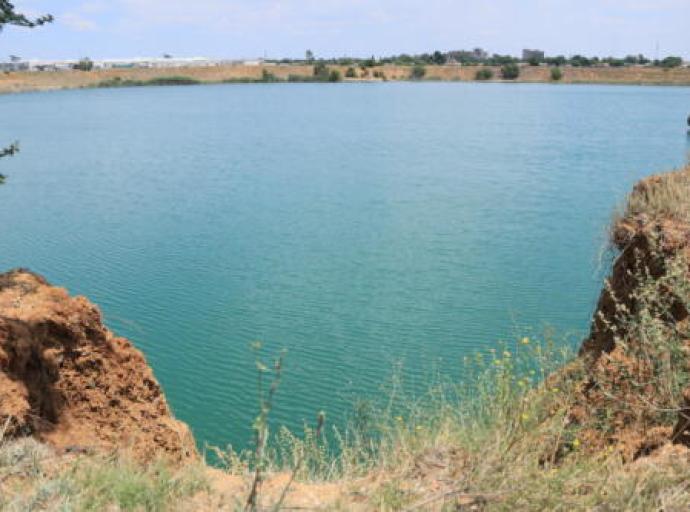
A lack of coordinated accountability across government departments is at the heart of ongoing safety and compliance concerns at the controversial Heidedal Quarry site, according to Mangaung Ward 16 councillor Logan Kruger.
Kruger who also serves as MMC for Safety and Traffic at the Mangaung Metropolitan Municipality, outlined a complex web of responsibility that has left the site in limbo, with critical rehabilitation and safety measures still unmet.
When questioned about whether the quarry site has a valid environmental impact assessment and complies with its conditions, Kruger clarified that such matters fall outside municipal authority.
“Environmental impact assessments fall under the Department of Science, Technology and Innovation (DSTI). It is not within municipal jurisdiction.
“However, the quarry issue is not confined to a single authority but spans multiple departments.
“This matter is multidisciplinary. Environmental compliance lies with DSTI, mining closure certificates with the Department of Mineral Resources, and bylaw enforcement with the municipality,” she said.
At the centre of the controversy is what Kruger describes as a premature issuance of a mine closure certificate by the Department of Mineral Resources.
“The certificate was granted based on promises made by the owners — to fence, rehabilitate, and secure the land — but there was no follow-up to ensure those commitments were met,” she said.
She says a temporary closure certificate with strict conditions and timelines should have been issued instead.
“There should have been a monitoring period of at least three years before granting a permanent certificate and that is where the system failed..
The result is a dangerous accountability vacuum.
“Once that certificate was issued, the department effectively removed itself from responsibility, shifting the burden elsewhere.
“The land is privately owned and as a municipality, we cannot simply spend public funds on private property without facing legal and financial repercussions.
“We have instructed the owner to comply, as they accepted responsibility for rehabilitation when acquiring the land from the mining company.
“The land may have appeared cheap, but the real cost was the obligation to rehabilitate it.
“We understand the risks, especially with reports of people drowning. That is why enforcement remains critical, said Kruger