By Lerato Mutlanyane
Hailing from Bloemfontein, the City of Roses, Palesa “Lisa S” Sentso is stepping into her own spotlight — and bringing a sound that refuses to be boxed in. First known as part of the duo Harmonic Squared, which made waves on the Bloem music scene in 2018, Lisa S has since evol...
Suspended deputy police commissioner, Shadrack Sibiya, will not be appearing at the Madlanga Commission after he called in sick, commission spokesperson, Jeremy Michaels confirmed to IOL.
Michaels said Sibiya was scheduled to testify on Thursday but he's informed the commission that he was ill, and therefore cannot testify.
“Sibiya was served with a subpoena to appear before the commission this Thursday, December 4.
“He has called in sick… So of course his testimony will have to stand over until next year, 2026, because this is the last week of the commission's hearings,” he said.
According to Michaels, Sibiya was served with rule 3 informing him of serious allegations against him.
Several witnesses have accused Sibiya of orchestrating the disbandment of the KZN Political Killings Task Team (PKTT).
According to testimony already before the commission, Sibiya allegedly pushed for the team to be shut down and subsequently demanded that all PKTT dockets be transferred to his office.
About 121 dockets were reportedly moved under his instruction — only to be quietly returned to KZN months later, with no clear explanation of what had happened while they were under his control.
What the commission heard was that the dockets gathered dust at the national office.
The commission has also heard disturbing claims about Sibiya’s alleged proximity to powerful criminal figures, including Gauteng tycoon Vusimuzi “CAT” Matlala and alleged underworld businessman, Katiso “KT” Molefe.
Last month, Witness C testified that Matlala allegedly delivered cash to Sibiya through Sergeant F. Nkosi, a police officer under Sibiya’s supervision.
According to the witness, Matlala would hand over bundles of cash to Nkosi, who in turn allegedly passed the money to Sibiya - payments described as routine, informal and undisclosed.
The commission via its evidence leaders and Sibiya’s legal team will decide on the new date.
Meanwhile, Sibiya has denied any wrongdoing in the matter and also dismissed claims that he was in cahoots with the criminals.
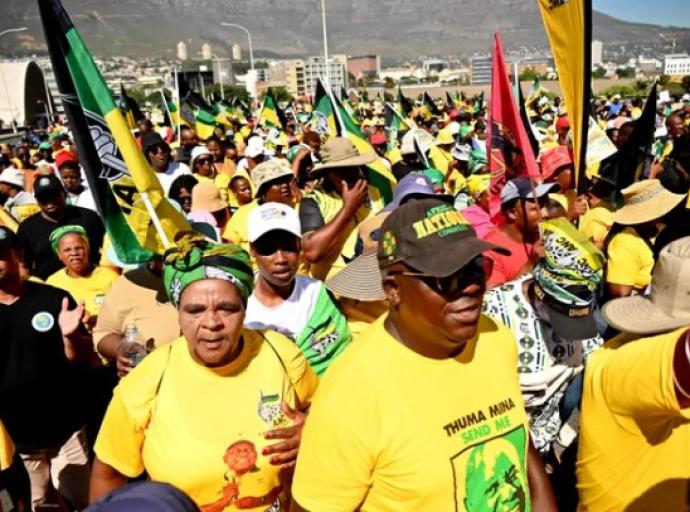
ANC Secretary-General Fikile Mbalula has announced that the preparations for the party's 5th National General Council (NGC) are going smoothly.
The ANC's 5th National General Council (NGC), set to take place from December 8-12, 2025, will focus heavily on organisational renewal and ethical leadership.
This agenda was announced by ANC Secretary-General Fikile Mbalula on Monday at a media briefing to discuss the party's readiness for the important gathering of NEC members.
The NGC is a vital forum for assessing the ANC's progress and its future strategic direction.
The five-day event will be held at the Birchwood Hotel and Conference Centre in Ekurhuleni, where the party's top brass is expected to map out some of its key policies flowing from the last ANC elective conference.
It comes at a time when some of the regional structures are preparing for their regional conference, with some key regions yet to hold their conferences.
At the weekend, Mbalula indicated that all regional structures have been directed to conclude their conferences before the NGC, with Johannesburg and Tshwane set to hold theirs from Wednesday to Friday.
On Sunday, regions and branches met in Cape Town to discuss their report to the NGC, after the party's NEC reconfigured the Western Cape's provincial leadership in an attempt to offset further electoral decline ahead of the next local government elections.
Mbalula said the party has improved its coordination between various local and provincial structures, which has contributed to smooth preparations.
"Preparations for the NGC are at an advanced stage with all logistical arrangements aligned to the directive of the National Executive Committee. The ANC is fully ready to host the delegates, stakeholders, and observers... Coordination between national and provincial structures has improved significantly," he said.
Mbalula, flanked by the party's national spokesperson, Mahlengi Bhengu-Motsiri, addressed the media after a one-day ANC NEC meeting, saying the upcoming five-day NGC will prioritise the party's renewal and governance issues.
According to Mbalula, the NGC's agenda includes evaluating the progress of organisational renewal, government performance, socio-economic reconstruction, and the execution of key resolutions adopted at the 22nd national conference. He emphasised that "A special focus will be placed on governance, especially local government interventions and economic strengthening of the ANC in communities."
The ANC, through Mbalula, expressed encouragement following President Cyril Ramaphosa's Sunday address, which reported on the recent G20 Summit.
"We welcome the president's address to the nation last night, particularly its focus on renewal and stability," Mbalula stated.
He added that Ramaphosa's message is consistent with the spirit in which the ANC is approaching the NGC and "reinforced confidence in the country's direction and the ANC leadership role in ensuring a better life for all."
The NGC logistics have been simplified, according to Mbalula, due to the party's recently improved financial health. This improvement follows a prolonged period of financial difficulty, which had led to various issues, including repeated delays in paying employees.
Mbalula affirmed: "As previously stated, the ANC has stabilised its financial situation and is making significant strides in meeting its operational obligations. The organisation's finances are getting better, bolstered by stronger systems, better compliance, and renewed donor confidence."
Lucky Montana, the former CEO of the Passenger Rail Agency of South Africa (Prasa) has shed some light on why he resigned as a Member of Parliament for the Umkhonto we Sizwe Party (MKP).
Montana announced on his X account on Monday that he had informed the party's parliamentary leadership earlier this year of his intention to vacate his seat.
Montana stated that he wrote to the now-suspended MKP deputy, Dr John Hlophe, and the party Chief Whip, Colleen Makhubela, confirming his resignation.
“Today my resignation takes effect,” he wrote.
In a follow-up post on X, Montana shared the letter that he sent to the party's leadership and confirmed that he had not resigned from the party but only as an MP.
In the letter, Montana states that his resignation is due to personal reasons without elaborating further.
“This serves to inform you of my intention to step down as a Member of Parliament a t the end of the 4th Term of Parliament. This is for personal reasons. I had previously raised my intention to s with the Chief Whip, Honourable Colleen Makhubela. Whilst I resign from Parliament, I remain a disciplined and dedicated member of the Umkhonto We Sizwe Party.”
He also thanked party leader and former president Jacob Zuma for the opportunity to serve in the part in Parliament.
“I am inspired by the extraordinary revolutionary President Zuma continues to lead. President Zuma is not only a giant of our liberation struggle, a true son of Africa and internationalist but a champion of the rural and urban poor. Msholozi remains an inspiration the younger generations, to millions in our country, the African Continent and the world.”
Montana's resignation was confirmed in a statement by MK Party spokesperson Nhlamulo Ndhlela saying the party has accepted it.
The resignation comes after Zuma's daughter Duduzile Zuma Sambudla announced last week that she is resigning as a MP for the party. Her resignation came after she was linked to the alleged trafficking of South Africans to Russia to fight on behalf of that country in the Ukraine conflict.
Ndhlela said: “Montana has served the MK Party with steadfast objectivity, constructive guidance and principled contributions that have strengthened our caucus and sharpened our collective political effectiveness...
“Although his departure from Parliament has been accepted, the MK Party takes comfort in knowing that he remains part of the continued struggle for the total emancipation of the black child,” read the statement.
Meanwhile it has been recently reported that Montana is locked in a bitter dispute with the SA Revenue Service (SARS) over an alleged R55 million tax liability.
He has previously told the media that he rejects SARS' assessments claiming he only owes R8 million in unpaid taxes, a small portion of what SARS says he owes.
SARS has in turn detailed Montana’s alleged non-compliance, including multiple years where they said he failed to submit tax returns or required documentation despite numerous extensions.
The tax authority defended its R55 million claim as “lawful and based on audit findings”.
New study on mopani worms warn about their threatened future.
Mopane worms, a protein-rich delicacy commonly harvested across Southern Africa, are more than just a sustainable food source—they are crucial to local livelihoods and cultural practices. However, new research is shedding light on the need for conservation efforts amid warnings of rising environmental threats and overharvesting.
Researchers from Stellenbosch University, in collaboration with the South African National Biodiversity Institute and other institutions, recently published a pivotal study in the journal Conservation Genetics, focusing on the genetic diversity and population distribution of mopane worms in Namibia and the Limpopo River Basin, which spans South Africa and Botswana. Their findings reveal alarming trends that could jeopardise the future of this vital species.
Known for containing three times more protein than beef or chicken, as well as rich levels of calcium, iron, and zinc, mopane worms are typically boiled or fried to be enjoyed as a snack or incorporated into meals. While their nutritional value supports local communities, the study underscores an urgent need to understand the genetic health of these populations due to reported overharvesting across Botswana, Namibia, South Africa, and Zimbabwe.
Lead author Dr Barbara van Asch, from the Department of Genetics at Stellenbosch University, explained, “We offer the first look at how mopane worm populations are related and distributed across Namibia and the Limpopo River Basin. Genetic data can help guide wildlife conservation by showing how different populations are related, how big they are, and how they move or connect with one another.”
The researchers analysed the DNA from both adult moths and caterpillars gathered from a variety of trees at different life stages across the three countries. Dr Van Asch notes significant genetic differentiation, with mopane worms in South Africa displaying the highest levels of genetic diversity compared to those found in Namibia and Botswana. In particular, half of the sampling areas exhibited a singular genetic ‘fingerprint’, signifying low diversity in the critical Limpopo River Basin region.
Potential conservation efforts: Mopane worms from southern sampling areas present a higher genetic diversity and could be targeted for conservation as they are not situated in protected spaces.
Diminishing diversity: Mopane worms in Botswana show the lowest genetic diversity of all regions studied, potentially limiting their ability to adapt to environmental changes.
Population stability: While populations in Namibia appear to have expanded over time, those in South Africa and Botswana have remained stable, raising concerns over their sustainability.
The urgent need for effective conservation strategies becomes even more critical given the impacts of climate change, habitat loss, and increasing cross-border trade valued at millions of dollars. Currently, the lack of formal record-keeping and monitoring of harvesting practices complicates conservation efforts, as a significant portion of ecological activities remains undocumented. Dr Van Asch warns, “This practice may have become unsustainable, rendering the species more vulnerable to extinction, making the species more vulnerable to extinction.”
Looking towards the future, the researchers aim to extend their analyses to mopane worm populations in Zimbabwe and Zambia, emboldening efforts across the region to safeguard this precious ecological resource. The intricate link between mopane worms and human livelihoods plays a significant role in cultural heritage, but without immediate attention to conservation, these vital ecosystems may face irreversible changes.
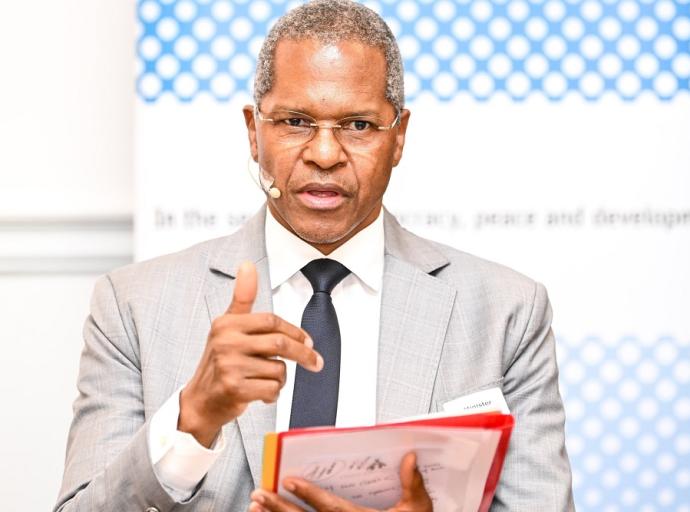
Minister of science, Dr Nzimande calls for the harnessing of science to serve the most vulnerable and marginalised
Science, technology and innovation (STI) hold immense promise for humanity to build a just and humane world.
But this can only be achieved if we deliberately harness STI to serve the most vulnerable and marginalised sections of society, said Professor. Blade Nzimande, minister of Science, Technology and Innovation (STI).
Premier science platform
Dr Nzimande was speaking during the official opening of the annual Science Forum South Africa (SFSA) 2025 underway at the CSIR Convention Centre in Pretoria.
Considered one of the premier events on the science calendar, the SFSA was held under the theme: ‘Placing Science, Technology and Innovation at the centre of Government, Education, Industry and Society’.
He said the theme was inspired by a national call adopted by his Department to ensure that all aspects of national development are driven by science, technology and innovation.
In addition, we must consistently raise the levels of public awareness about the value of science, said Dr Nzimande.
The event brings together over 6000 delegates, ranging from scientists, policy makers to youth innovators, entrepreneurs and civil society representatives.
High level panel discussions
This year’s science forum marks the ten-year milestone, since it was first held in 2015. Over the past decade the SFSA has grown from strength to strength attracting eminent scientists, politicians and experts in various scientific fields.
This year participants are taking part in over 38 side events and 91 high level panel discussions on topics including science diplomacy, inclusive innovation, disruptive technologies, science journalism, the African Union’s Science Technology and Innovation Strategy for Africa (STISA 2034).
The event also includes an exhibition where exhibitors will engage with the public and display their products and services. The key feature of the science forum is the South African Tech Challenge 2025, which aims to identify high-potential SMMEs whose technologies address social challenges.
The geopolitical and economic climate
Dr Nzimande also reflected on the current geopolitical and economic climate, saying “we are living through one of the most paradoxical moments in human history”.
Dr Nzimande said while there has been the emergence of latest technological innovations in human history such as AI, robotics, and biotechnology, there has also been alarming levels of social inequality emerging across the globe.
These inequalities, he argued, are accompanied by “unprecedented levels of wealth acquisition by a small number of people who monopolise much of the world’s income and wealth”.
He said these are some of the conundrums that science must tackle if we are to create a fairer, more humane, and stable world.
The minister added that scientists should look into how they can use technology and innovation to promote social inclusion and social justice.
Dr Nzimande said the science community must find ways in which they can position science diplomacy to ensure science is accessible to all, especially the most marginalised citizens.
He also expressed disappointments that some of the “digital revolutions” have resulted in instances where the latest technology innovations such as AI have been deployed to commit genocide in places like Palestine, Congo, and Sudan.
Sovereign research agenda for Africa
He also highlighted the need to for Africa to forge a radically different future. He said African countries should refrain from depending on the generosity of external donors, regardless of their benign intentions.
“We need to be more forceful about extricating the African continent from the legacies of neo-colonialism and dependent ‘development. To enable this fundamental shift, we believe Africa desperately needs what I call a Sovereign Research Agenda for Africa”, said Dr Nzimande.
In addition, the continent should have a research agenda that is designed, funded, and directed on the basis of African priorities and concerns, he explained.
Building capacity to fulfill Africa’s science objectives
To fulfill this goal, according to the minister, African countries have to do the following:
Build a robust science infrastructure and regional networks that are accessible to all scientists and researchers across the continent and enable individual African countries to produce the required number of young and women scientists and researchers.
Create institutional and policy mechanisms to reverse the loss of critical skills and intellectual property by creating conducive working environment for scientists and researchers.
Develop the capacity to process and beneficiate the mineral wealth and reduce illicit outflows. The continent loses substantial amounts of tax revenue to illicit outflows that could be used to fund education, health care other critical services.
Develop closer articulations between science, technology and innovations, and industry and economic networks to enable tech-commercialisation and support for technology-driven SMEs.
Ensure a coherent strategy is developed to use AI and other emerging technologies to enable the implementation of STISA 2034.
Build robust pandemic readiness capacity to address Africa’s burden and in particular the threat of pandemics. This aligns with the AU’s objective of ensuring that by 2040, at least 60% of all vaccines used in Africa are produced within Africa’s own borders.
Improve the quality of maths and science education in public schools; and
Ensuring African countries significantly increase their expenditure on research and development as a percentage of GDP.
Achieving critical milestones
According to Dr Nzimande, the DSTI, has achieved several milestones driven by its Decadal Plan for Science, Technology and Innovation (2022-2030.
He said their strategy is based on the National Development Plan 2030, which guided his department to make strategic and targeted investment in critical areas.
Some of these milestones include, among others; hosting the world’s largest radio astronomy project Square Kilometre Array (SKA) and the Southern African Large Telescope, Biovac getting approval from the South African Health Regulatory Products Authority to begin clinical trials of its Oral Cholera Vaccine, and African Institute on Indigenous Knowledge Systems (AIIKS), being designated by UNESCO as a category II centre.
South Africa’s G20 Presidency
Dr Nzimande said the conference takes place soon after the country’s G20 Presidency, saying he is particularly excited by paragraph 107 of the summit’s declaration on science, technology and innovation.
The declaration welcomes the second convening of the G20 Research and Innovation Working Group and also re-affirms the significance of promoting vibrant international partnership in science, technology, and innovation.
To ensure that science continues to serve society particularly the under-served communities, scientists should act collectively and in solidarity, argued Dr Nzimande. “Let us all join hands in harnessing the power of science to build a just and humane world,” concluded the minister.
About ten people are facing charges of murder, malicious property damage, and contravention of the Health and Safety Act in relation to the September 22 Jagersfontein disaster that tragically killed three people and left hundreds destitute.
The Department of Water and Sanitation and Kopanong Local Municipality have opened a case with the South African Police Services against Jagersfontein Development (Pty) LTD
This follows an explosive report investigated by the Universities of Pretoria and Witwatersrand which reveals that the diamond mine collapse could have been prevented.
Issued to the small Free State mining town community by the Deputy Ministers of Water and Sanitation, David Mahlobo and Sello Seitlholo on Friday, the findings of the report reveal that long-term engineering failures were ignored and that signs of a looming mine collapse were visible.
The report also states that the mine's owner may have been aware of the impending disaster.
According to the report, the visible signs include, the instability of the southern wall of the dam, construction of the tailings was based on a conceptual design, and no detailed designs were done.
It also states that there was no construction supervision by a registered engineering professional and the Southern wall was constructed on a weak foundation which drastically contributed to the collapse.
“The technical investigation by the two universities found that among others, the owner of the tailings dam, Jagersfontein Development (Pty) Ltd, may have been aware of the instability of the storage facility along the southern wall of the dam tailings from as far back as 2019, and at the time added large volumes of material to stabilise the slope, which was not effective, but continued to raise the dam wall and deposit more tailings into the dam.
“The construction and raising of the tailings storage facility was based on conceptual designs and no detailed designs were done to enable the safe construction of the facility, there was no construction supervision by a registered engineering professional, and that part of the southern wall of the compartment was constructed over a pre-existing tailings dump of low strength. Which is what largely resulted in the failure of the TSF where the breach occurred,” the report states.
In addition, the report finding shows that in March 2022, a small crest failure was observed and reported as an early sign of the collapse which happened six months later.
While addressing the community, Mahlobo said he was confident that the court judgment would be in favor of the residents and against the mine company.
“We obviously cannot get into the merits of the case because it is in court, safe to say that we have strong evidence and it is a winnable case,” he said.
The delegation also included Free State Premier MaQueen Letsoha-Mathae and the Mayor of Kopanong Local Municipality Xolani Tseletsele.
Letsoha-Mathae expressed her satisfaction with the report
“We promised the people of Jagersfontein that we would pursue this matter and we are.
“This government, has witnessed the devastation of the disaster caused by the collapse of the mine dam, we laid a case with the police, and we are happy that the matter is currently in court.
“The investigation that led to the report was not done by the government, but by institutions of higher learning, and it was a transparent investigation,” she said.