Northern Cape Premier and ANC provincial chairperson Zamani Saul has denied allegations of political interference in his administration following the shock resignation of Roads and Public Works MEC Fufe Makatong.
Saul moved swiftly to reshuffle his Cabinet after Makatong’s resignation, fuelling spe...
As South Africa marks its 32nd Freedom Day since the dawn of democracy in 1994, commemorations are unfolding across the country from official state ceremonies to grassroots activism, political reflections and faith-based gatherings.
This year’s programme stretches beyond April 27 itself, with events beginning as early as Saturday, reflecting both celebration and contestation over what freedom means today.
Here’s a look at some of the key events shaping the national moment:
1. National Freedom Day celebration in Bloemfontein
At the centre of this year’s commemorations is the official government event, where President Cyril Ramaphosa is expected to deliver the keynote address in Bloemfontein.
Hosted at the Dr Rantlai Petrus Molemela Stadium on Monday, April 27, the celebration is held under the theme "Freedom & the Rule of Law — 30 Years of Democratic Citizenship".
The event remains the symbolic centrepiece of Freedom Day, reflecting on three decades of constitutional democracy while acknowledging ongoing challenges around governance, equality and access to justice.
While the state celebrates democratic milestones, social movements are using the weekend to spotlight what they describe as the "unfinished business of freedom".
Organised by Abahlali baseMjondolo, UnFreedom Day discussions will take place across three provinces: on Saturday, April 25 in Johannesburg, followed by Sunday, April 26 gatherings in Shakaskraal and Perdekop.
These gatherings are expected to focus on land access, housing insecurity, unemployment and the impact of proposed changes to eviction laws, with organisers arguing that millions remain excluded from the promises of 1994.
3. Afrika Mayibuye Movement’s ‘No Freedom Day’ in Soweto
In Soweto, the Afrika Mayibuye Movement will host a "No Freedom Day" community meeting on Sunday, April 26 at the Orlando Community Hall.
The event, led by Floyd Shivambu, is positioned as a platform to reflect on what organisers describe as the absence of "true freedom" for the majority, while also proposing solutions for economic and social reform.
4. IFP rally calls for governance reform
The Inkatha Freedom Party (IFP) will mark the day with its own commemoration in Westonaria.
Party leader Velenkosini Hlabisa is expected to use the platform to call for stronger accountability, ethical leadership and improved service delivery, framing Freedom Day as both a moment of remembrance and political mobilisation.
5. Faith leaders gather for anti-corruption pledge
In Cape Town, the South African Council of Churches will host a Freedom Day service at St George's Cathedral.
The service will include the signing of an Anti-Corruption Covenant by church leaders, underscoring the role of civil society and faith institutions in promoting ethical governance and accountability.
6. Housing conversations take centre stage in Cape Town
Also in Cape Town, urban activists and policy experts will gather for "10 Ways to Unlock Affordable Housing", hosted by Ndifuna Ukwazi and partners at their offices found at 125 Buitengracht Street.
The event will explore practical solutions to one of South Africa’s most persistent challenges, access to affordable housing, linking spatial inequality directly to the broader meaning of freedom in post-apartheid cities.
Just 1 day to go before the ANC Lejweleputswa Region gathers at Aldam Resort for its highly anticipated 9th Regional Conference — where leadership, renewal, local government challenges and the future of economic transformation take centre stage.
Aldam Resort, Lejweleputswa 26–27 April 2026
All eyes on Lejweleputswa as delegates prepare for crucial discussions set to shape the region’s political direction. #ANC #LejweleputswaConference #FreeStatePolitics
WHEN Stimela asked: Where Did We Go Wrong? it was not a nostalgic lament aimed at a lost past. It was a moral audit. A demand that societies interrogate the precise moment judgement was abandoned and direction surrendered. It was an insistence that decline must be explained, not merely endured.
South Africa confronts that question again today, following the cautionary suspension of the National Commissioner of the SA Police Service (SAPS) General Fannie Masemola, after findings by a magistrate’s court on charges brought by the Investigating Directorate against Corruption (Idac).
This development should not be misunderstood as closure or resolution. It is neither. It is a disclosure, and a late one.
Moments such as these test whether institutions are capable of learning or merely skilled at surviving scandal. When consequences appear only after intervention by courts and external bodies, accountability arrives by default rather than by design.
That reality should trouble us far more than the fate of any individual office bearer. What stands exposed is not simply misconduct but an institutional crisis of recognition — the inability to distinguish acid from water.
Acid and water can look identical. Both may be colourless, contained in similar vessels, and poured with equal confidence. The danger lies not in their appearance, but in their effect. Institutions collapse not because poison announces itself, but because the habit of testing what is being consumed quietly disappears.
In Whispering in the Dark, I argued that public disclosures by senior police officers were symptoms of institutional collapse rather than acts of insubordination. When internal accountability structures are perceived as compromised, truth migrates outward. Whistleblowing becomes an act of institutional self-preservation, not rebellion.
The present moment confirms that diagnosis. When judicial processes are required to intervene where internal oversight should have acted earlier, the institution’s corrective capacity has already failed. Courts and investigative bodies are safeguards, not substitutes for ethical command.
A credible police service resolves its contradictions internally before judges are forced to do so publicly. Once accountability is externalised, the institution continues to function procedurally, but its moral authority erodes.
We went wrong when blind loyalty replaced professional judgment as the organising logic of authority. Loyalty has a legitimate place in disciplined institutions. But when loyalty to individuals eclipses loyalty to law, ethics, and reason, it becomes corrosive.
Commands are followed not because they are just or lawful, but because questioning them is framed as betrayal. Silence is rewarded as cohesion. Competence is subordinated to allegiance.
In such an environment, acid flows freely as water, not because no one suspects danger, but because raising concern becomes professionally hazardous. We went wrong when rank came to function as immunity rather than responsibility.
Authority was mistaken for virtue, and seniority for credibility. Yet institutional history is unequivocal: power unchecked does not preserve systems; it distorts them. When questioning command becomes taboo, truth retreats.
We went wrong when ethical dissent was punished in practice, even as policies claimed to protect it. Those who raised concerns found themselves isolated, marginalised, or labelled difficult, while compliance was praised as discipline. Over time, the organisation learned not to see what it did not wish to confront.
And finally, we went wrong when accountability was outsourced. Oversight drifted from internal mechanisms into the hands of journalists, courts, and commissions. When this happens, institutions lose moral agency. They react only when compelled, not when conscience demands.
A Test of Institutional Judgement
Nowhere is the crisis of recognition more visible than in the conflicting responses to the appointment of Dimpane to senior leadership responsibility within SAPS. Supporters of the appointment argue that continuity matters in moments of institutional strain. They contend that experience, operational familiarity, and institutional memory are stabilising assets.
From this perspective, appointing a senior insider is framed as pragmatic, a means of preventing organisational paralysis while legal and disciplinary processes unfold. To them, criticism of the appointment reflects a broader cynicism toward the institution itself, rather than an objective assessment of competence.
Critics, however, raise a fundamentally different concern. They argue that the appointment reflects precisely the organisational reflex that brought SAPS to this moment: recycling authority within the same closed command ecosystem, without sufficiently interrogating culture, allegiances, or historical proximity to dysfunction.
To these critics, the issue is not personal culpability but structural judgement. The question is not who Dimpane is, but what her appointment symbolises, an institution struggling to imagine leadership beyond familiar networks.
These conflicting interpretations are not trivial disagreements. They expose the fault line between procedural legality and moral legitimacy. An appointment can comply with formal rules and still fail the deeper test of institutional credibility. Conversely, rejecting an appointment on symbolic grounds alone risks collapsing governance into optics.
The real failure lies elsewhere. The institution lacks trusted, transparent criteria through which such appointments can be evaluated beyond factional loyalty or defensive rationalisation.
As long as SAPS remains unable to convincingly demonstrate that leadership decisions are filtered through independent ethical and professional scrutiny, every appointment will be contested, and every defence will sound self-protective. This is how acid continues to be poured as water, not because leaders are malicious, but because the testing mechanism is compromised.
The Limits of Symbolic Accountability
The cautionary suspension of a National Commissioner may reassure some that consequences exist. But reassurance must not be confused with reform. If this moment is treated as an ending, the system will learn the wrong lesson, that accountability is episodic, externally imposed, and survivable through silence.
Acid is not removed from water by belief or hope. It is removed through testing, structure, and refusal to consume what has not been verified. The challenge before South Africa is therefore not
merely to remove contaminated leadership when exposure becomes unavoidable, but to rebuild the system’s capacity to detect, resist, and neutralise toxicity early.
Cleaning the System: Four Corrective Measures
If SAPS is to regain public trust and institutional credibility, reform must focus on authority, culture, and procedure. Personality-based change will not suffice. The system itself must be rebuilt.
Break the Loyalty–Promotion Pipeline: Senior command appointments must be insulated from internal factional allegiance. SAPS should establish externally verified promotion and appointment processes for senior ranks, incorporating independent judicial, academic, and civilian oversight. This is not an attempt to weaken command but to restore legitimacy to leadership. Loyalty to process must outweigh loyalty to persons.
Restore Internal Detection Capacity: No ethical institution relies solely on whistle-blowers. SAPS must create a protected internal professional dissent mechanism — confidential, no punitive, and structurally insulated from command retaliation. Reports through this channel must trigger mandatory, time bound review procedures.
End Rank-Based Immunity: Authority must command accountability, not exemption. Senior officers should be subject to routine, independent ethics and competence audits, with findings reported institutionally rather than politically. Water is not safe because it comes from a high tap. It is safe because it is tested.
Redefine Blind Loyalty as Fidelity to Ethics: SAPS doctrine must be explicit: blind loyalty to unlawful or unethical instruction is misconduct. Refusal to comply with such instruction is not defiance; it is duty. Training and disciplinary systems must reflect this inversion.
Choosing Between Learning and Repetition
Stimela’s question endures because societies avoid answering it honestly. Where did we go wrong? We went wrong when familiarity replaced verification, when loyalty eclipsed judgment, and when silence masqueraded as stability.
The suspension of a police commissioner, or the contestation around a senior appointment, must not become symbolic full stops. There should be pauses long enough to rebuild institutional clarity.
A credible police service is not one without scandal. It is one capable of recognising danger early, correcting itself without compulsion, and distinguishing what sustains from what corrodes. Clear does not mean clean. Blind loyalty detached from truth is not water. It is acid.
The choice before us is simple but difficult: either this moment becomes another chapter in a long cycle of institutional decay, or it becomes the point at which South Africa relearns how to test what it is being asked to drink.
* Prof Jacob Tseko Mofokeng is a professor of criminology at Unisa and an NRF-rated researcher. He is a recipient of the Unesco University of Connecticut Award for his contribution to human rights and global solidarity. The views expressed are his own and do not necessarily reflect those of Unisa or the official policy or position of Unisa.
* The views expressed here do not reflect those of the Sunday Independent, Independent Media, or IOL.
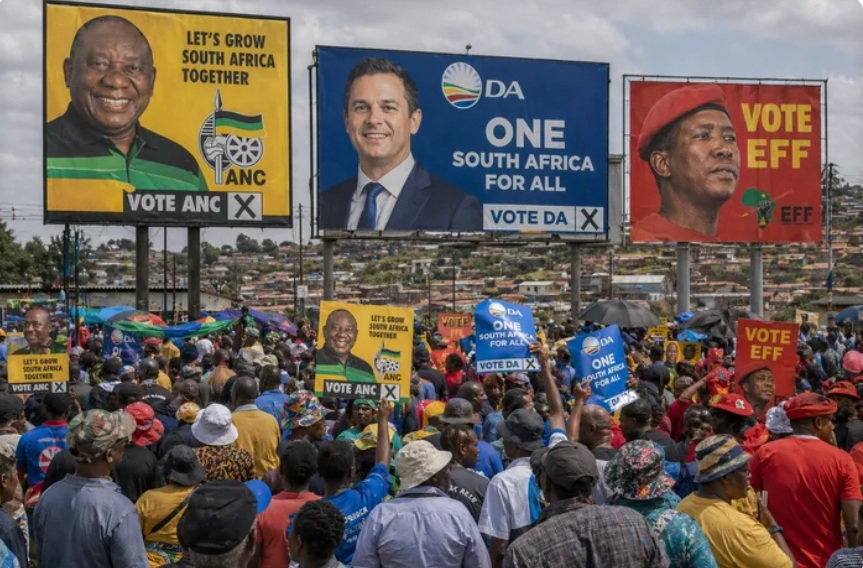
FREEDOM Month couldn’t have come at a more convenient time. Right on cue — just as election season begins to heat up — we are reminded of 27 April 1994, of democracy, and of the power of our vote.
Yet, as South Africa is celebrating freedom, many of its people are still desperately searching for it. For millions, freedom has become something strenuously negotiated in the realms of inequality, injustice, and survival.
As we conclude Freedom Month — we look forward to the revered long weekend, culminating in Freedom Day. This is a prime opportunity to really crack down on our progress as a nation, particularly considering the upcoming elections.
As we draw deeper into our election season, our government has been consistently churning out the same-old line: “27 April marks not only the birth of a democratic nation but also stands as a testament to South Africans' unwavering commitment to justice, equality, and human dignity, in the hope of building a better, more inclusive future for all.”
This is, honestly, a hard pill to swallow. In fact, many would argue that our post-apartheid “democracy” is an absolute fallacy — the exact opposite of the reality of modern-day South Africans.
Today, our nation is severely ravaged by injustice. Human dignity is haphazardly sacrificed every single day. And of course, ours is still — over three decades into democracy — the most unequal society in the world.
But the government was right about one thing: “Freedom Day is not simply a date in history books. It is a continuous and ever-changing process that is prevalent within the day-to-day struggles for justice and equality…”
And this is something many South Africans have failed to understand: Freedom wasn’t just a moment frozen in history. Freedom is a continuous mission. It’s ever-evolving. It is shaped by the needs and conditions of South Africans today — their challenges, geopolitical dynamics, economic conditions, and lived realities. All of these shape how freedom is experienced and defined. And that is why it’s so important — especially in our nation — to know what freedom instinctively and subjectively means to you.
Because the truth is this: not many South Africans understand what freedom means. Not really. And this is alarming, as we near another election.
In fact, elections in our nation have been reduced to popularity contests amongst leading political parties. Everyone seems to focus on who to vote for, instead of why they’re voting in the ways that we are.
The government claims to “believe that true freedom is incomplete without justice and reconciliation in the world.” They claim to “support those who are still fighting for their freedom — whether it be economic, social, political, environmental, or psychological.” But we all know this is a bunch of poppycock. This is not the reality we face.
Furthermore, in the public eye, we always maintain a moral high ground. From being the first nation in the world to chastise the Israeli genocide of Palestinians in Gaza to our calls for the United Nations to reassert itself in global affairs, we boldly call for reform in global governance institutions — yet fail to wrangle the perverse corruption in our own governance.
Yes, there are conflicts in the world. There are wars happening in our neighbouring nations. And yes, these conflicts affect us, often whether we like it or not. But they are not what Freedom Day is about. Freedom Day is about us — our nation, our people. It has little to do with geopolitical tensions and more to do with South Africans’ freedoms in our own homes, streets, schools, workplaces, and public institutions.
This is about the persistently poor service delivery we contend with across the nation, on a weekly or daily basis. This is about the consistent challenges with corruption — stealing the funds meant to maintain our neighbourhoods, schools, hospitals, roads, and so much more. This is about the same bubblehead figures being paraded around, spewing the same empty promises every election season while lambasting one another for what the other has “not” been doing.
And this is the issue with our political climate. It still seems rooted in that apartheid-era tendency of disinformation, blame-shifting, and blatant competition for power. It’s purely focused on presentation rather than practical transformation. Hence, this is a prime opportunity to re-educate citizens on the value of your vote — particularly in a nation where unimaginable deaths were suffered just to secure the right and privilege of voting.
In that sense, our vote should be amongst the most sacred processes we undergo in this fragile democracy. Yet now more than ever, despite our so-called Government of National Unity, election season is still just an array of parties putting on a show.
This is where we are now: a democracy that demands participation, but rarely demands understanding. And if we are not careful — if we keep voting without asking what freedom actually means in practice — then we will keep electing versions of the same disappointment. What’s clear is that it is not democracy that is broken — it is intention. And that breakdown is beginning to define us more than anything else, even our hard won “freedom”.
Yes, we can go back to history. However, freedom is not sustained by memory alone, but also by meaning. We can even track the exact progress of the “empty promises” that these parties regurgitate every election season. But if we’re not voting with knowledge and intention, we’re in deep trouble — or as the youth say, we are absolutely “cooked.”
* Tswelopele Makoe is a gender and social justice activist and editor at Global South Media Network. She is a researcher, columnist, and an Andrew W Mellon scholar at the Desmond Tutu Centre for Religion and Social Justice, UWC.
** The views expressed here do not reflect those of the Sunday Independent, IOL, or Independent Media.
The National Prosecuting Authority has blamed a lack of sufficient evidence from police for its decision not to prosecute the man who shot and killed a motorist in a road rage incident in Emmarentia, warning that taking the case to court prematurely could mean he walks free for good.
A 58-year-old man was arrested on Sunday after he allegedly shot and killed Faisal ul Rehman, 48, on Barry Hertzog Avenue in Emmarentia following a minor collision between their two vehicles.
Gauteng police spokesperson Colonel Dimakatso Nevhuhulwi said the confrontation turned deadly after Rehman's wife, Tehseen, retrieved a firearm from their vehicle.
"It is alleged that a female passenger, suspected to be the wife of one of the drivers, went to get a firearm from the car, and the second driver also pulled out his firearm, resulting in a shooting which claimed the life of the husband, leaving the other driver and the female passenger injured," Nevhuhulwi said.
Rehman was shot dead and Tehseen was hit in the hand and shoulder, all of it unfolding in full view of the couple's two young children. See the full timeline of the incident in the sidebar at the end of this article.
"Both firearms are licenced," Nevhuhulwi said, adding that Rehman's firearm was registered in his name.
NPA spokesperson Kaizer Kganyago told IOL on Thursday that the NPA had not dropped the case, but that the evidence in the police docket was not enough to secure a successful prosecution at this stage.
"When the docket came to us, when we looked at the evidence that was in the docket for us to prosecute, we could not continue to put the matter on the roll, because the evidence that is in the docket is not enough for a successful prosecution," Kganyago explained.
He said the case had never been placed on the court roll, which means it can still be enrolled once police provide sufficient evidence.
"It is not like it was put on the roll and then removed," he said.
"We couldn't continue with it," he said. "Once the investigation gives us enough evidence, we will put it on the roll."
Kganyago warned that rushing to prosecute could backfire.
He said if the matter were placed on the roll and the state lost, the suspect could never be tried again.
"We've got to be careful not to put things in a rush on the roll and then we lose the case, because we can't come back and restart the case. They call it double jeopardy," he said.
"You cannot prosecute somebody twice for the same thing."
He said the NPA's role was not to investigate but to assess the evidence brought to it by police and decide whether there was enough to prosecute.
"All that we need is for the police, who are doing the investigation, to investigate further, give us enough information in terms of the evidence that we can use," Kganyago said.
Asked whether police had done a poor job gathering evidence, Kganyago would not be drawn.
"It's not my place to say," he said.
"All that we are saying is, we don't believe that with the evidence that we have, we can have a successful prosecution."
He also made the point that the NPA does not conduct its own investigations except in corruption matters handled by the Investigating Directorate Against Corruption.
"When it is any other matter, it's done by the police, and they bring the docket to us," Kganyago said.
"People need to make that distinction."
Nevhuhulwi said: "Investigations on the case are ongoing. Should there be an update, it will be communicated accordingly."
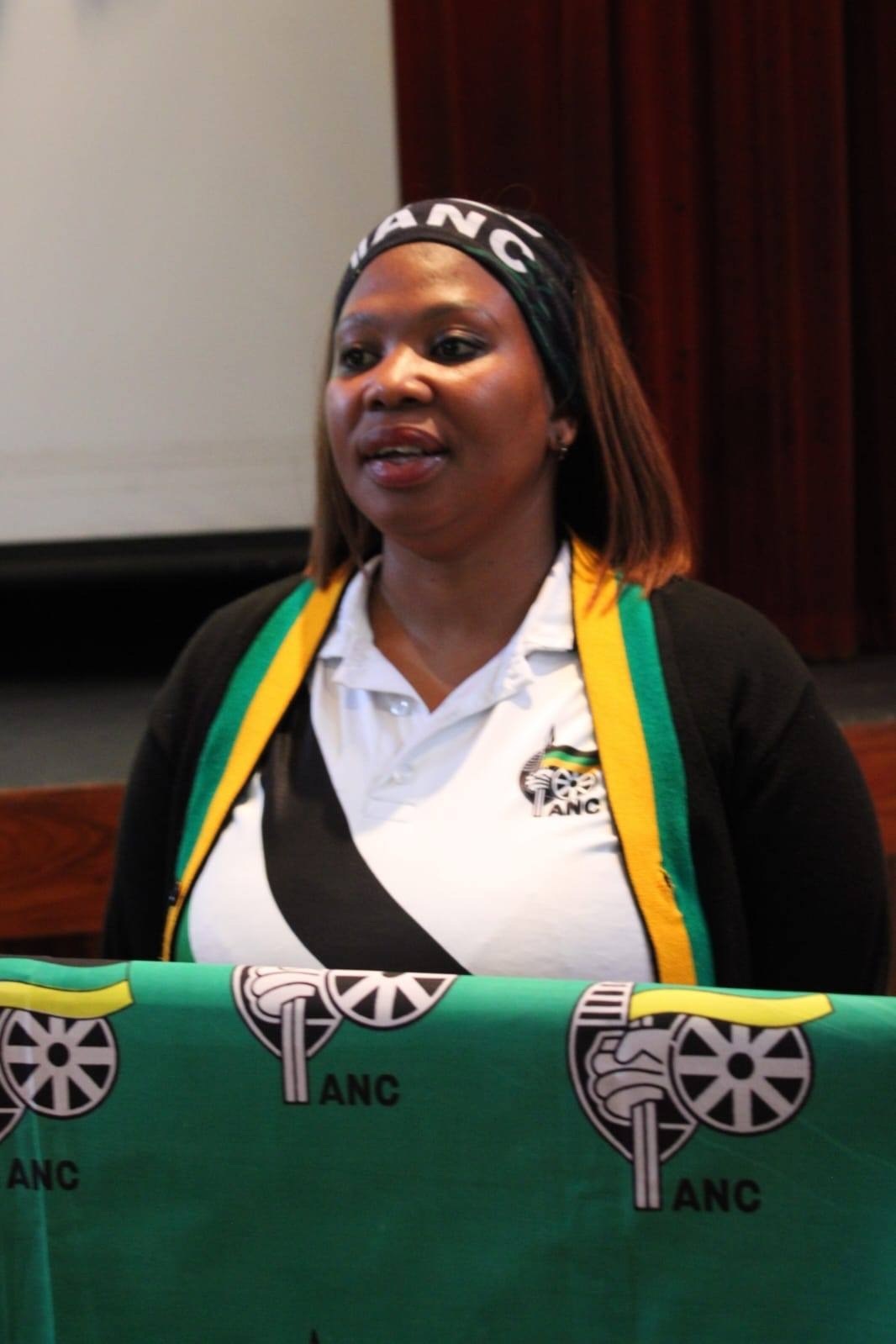
It’s all systems go for the African National Congress’s (ANC) 8th regional elective conference in the Fezile Dabi region, with delegates finalising registration ahead of the proceedings.
The gathering is set to begin later today at Woodlands Lodge in the tourist town of Parys in the northern Free State.
According to the organisation’s regional spokesperson Mongamotse Tsotetsi, 208 branch delegates will deliberate on key organisational reports, with voting for new regional leadership expected to take place on Sunday.
Ngwathe Local Municipality mayor and ANC Regional Convenor Victoria De-Beer Mthombeni is vying for the position of regional chairperson. She faces strong competition from Lloyd Rabodila, who is said to command notable support.
Of the ANC’s 74 branches in the region, 51 have qualified to participate in the conference.
“A total of 54 branches initially qualified for the conference. However, following dispute resolution, three branches were disqualified and ordered to rerun. The final number of qualified branches is now 51,” said Tsotetsi.
This leaves 208 accredited delegates eligible to vote for a new leadership structure that will serve the region for the next three years.
Mthombeni is expected to officially open the conference later today, with proceedings likely to run until midnight as internal organisational matters are addressed.
Regional insiders have positioned her as the frontrunner in the race.
“I can confidently say that comrade Mthombeni will emerge victorious on Sunday as regional chairperson, as she enjoys overwhelming support from branches,” said one insider.


 Aldam Resort, Lejweleputswa
 26–27 April 2026