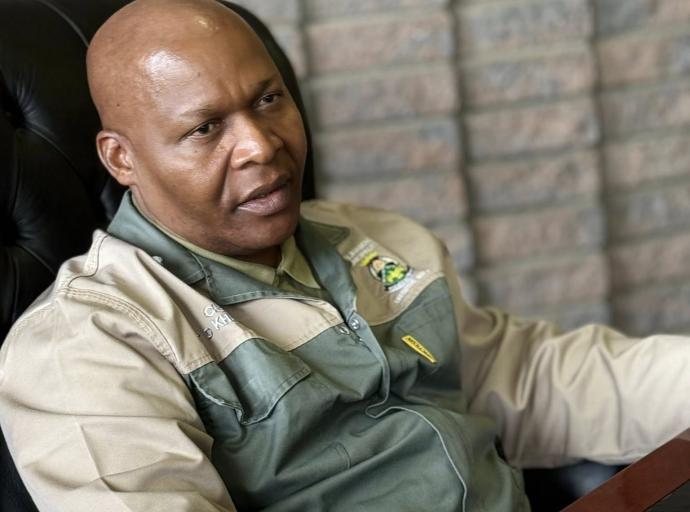
Northern Cape Premier and ANC provincial chairperson Zamani Saul has denied allegations of political interference in his administration following the shock resignation of Roads and Public Works MEC Fufe Makatong.
Saul moved swiftly to reshuffle his Cabinet after Makatong’s resignation, fuelling spe...
An instant crackle of vinyl at the drop of the beat, followed by a Rhodes piano chord that lingers like cigarette smoke. By the second beat, you’re no longer in your living room—you’re at a rooftop party at 3 a.m. Six years into the industry, 27-year-old Lefu Jus t ice Lekoeneha, originally from Lesotho and now based in the Free State, is carving out a name as an all-round creative. He describes his sound as refined yet rebellious—a fusion where mash-ups, lounge textures and mature grooves meet streetwear sensibilities and sharp visual storytelling. More than just a DJ, authenticity defines him. “I’ve always been drawn to unique things—stuff that not your regular individual is into. Whether it was fashion or my music taste, everything always stood out,” Lekoeneha shared. For him, DJing is far from random. It’s a craft. “People don’t treat DJing with the same amount of respect and honour as other art forms. Mixing, song selection, crowd reading, timing—all of those are a combination of art,” he said. His distinct sound—a blend of lounge and soulful instrumentation—came to him almost by accident. “I would randomly listen to music, then one day I stumbled upon this sound. I had no idea how to define it. One afternoon, while playing at a fashion market, someone suggested lounge music—and everything clicked. I realised, this is it. This is me,” he said. Looking ahead, Lekoeneha’s ambitions stretch far beyond local stages. “In five years, I see myself as an established and respected DJ, known for delivering unique and memorable sets at major events across provinces and internationally. I see myself performing on big stages, including iconic platforms like the Cape Town International Jazz Festival, sharing my sound with mature audiences,” he said. “I’m not just playing music—I’m curating experiences, building a brand, and connecting people through sound.” Through his event platform, JUST US, Lekoeneha is also making waves—hosting high-quality gatherings that spotlight cutting-edge DJs and creative culture. The platform doubles as a listening session space, bringing together a community that appreciates fresh, boundary-pushing sounds. “Through consistency, growth and passion, I’ve built a name that represents authenticity and excellence in the DJ industry,” he emphasised. Something out of the ordinary—Justice doesn’t just play music. He sets the tone.
A deepening financial crisis at the Matlosana Local Municipality, with debt soaring to R2.5 billion, has triggered decisive provincial intervention as authorities move to prevent a total collapse of governance and service delivery.
The North West Departments of Cooperative Governance and Traditional Affairs (CoGTA) and Treasury have stepped in, unveiling a revised Provincial Mandatory Financial Intervention and Support Strategy at an official gathering on Thursday, 2 April 2026.
The intervention is aimed at restoring financial stability and administrative control in the struggling municipality. The embattled municipality—covering Klerksdorp, Orkney, Stilfontein, and Hartbeesfontein—was on the brink of being placed under full provincial administration after the ruling party’s provincial leadership called for the invocation of Section 139(1)(b) of the Constitution.
The call followed what has been described as a collapse in governance, financial management, and service delivery. ANC Provincial Secretary Louis Diremelo said the intervention was unavoidable.
“This intervention is both political and administrative in nature. It is intended to restore effective governance, ensure service delivery, and safeguard the interests and dignity of the people of Matlosana,” Di remelo said.
For years, Matlosana has battled deteriorating infrastructure, erratic water supply, recurring electrici ty outages, mounting debt, and ongoing instability in leadership. The ANC has positioned the intervention as part of a broader push to stabilise local government across the province.
“As the governing movement, we remain unwavering in our commitment to ethical leadership, cooperative governance, and constitutional accountability across all spheres of government,” Diremelo added.
Intervention Strategy Reinforced. While initial calls were made to place the municipality under Section 139(1)(b), the provincial government has instead opted to strengthen an existing mandatory intervention under Section 139(5). Lerato Gambu, spokesperson for the MEC of CoGTA, confirmed that the decision followed several failed attempts to stabilise the municipality.
“The decision to place Matlosana under Section 139(1)(b) remains subject to approval by the Provincial Executive Council. However, this follows numerous unsuccessful interventions aimed at turning the municipality around,” Gambu said.
MEC for Cooperative Governance, Human Settlements and Traditional Affairs, Gaoage Oageng Mola pisi, explained that the province would reinforce the current intervention rather than replace it.
“Our considered view was to place the municipality under Section 139(1)(b), taking over full powers. However, after consultation with the Minister and careful deliberation, we resolved to strengthen the existing intervention under Section 139(5),” Molapisi said.
He noted that legal considerations under the Municipal Finance Management Act influenced the decision, particularly that the municipality did not meet the criteria required to terminate the current intervention.
Tightened Oversight and War Room Approach. The strengthened intervention will expand the powers of the provincial executive and intensify oversight of the municipality’s finances and operations. Molapisi outlined a series of immediate measures, including strengthening the intervention team with additional expertise in governance, legal, technical, and financial management.
“We are amending the terms of reference and reinforcing the intervention team with capacity in critical areas such as service delivery, governance, legal and technical support,” he said.
A quarterly “technical war room” will also be established to monitor progress on the implementation of the Financial Recovery Plan (FRP) and other priority areas. “We want the municipality to move decisively towards improvement. These war room sessions will ensure accountability and track progress,” Molapisi added.
Political engagement will also be intensified, with provincial authorities set to engage municipal leadership to clarify expectations and ensure alignment between the intervention team and council. Treasury Backs Intervention North West MEC for Finance Kenetswe Mosenogi stressed that the intervention is grounded in law and necessity, warning that failure to act decisively would worsen the crisis.
“We are not acting out of our own accord—we are acting within the legal framework. Both provincial and national assessments have shown that previous interventions have failed,” Mosenogi said. She emphasised that the municipality is now under a mandatory financial recovery framework, which will require strict adherence to a revised Financial Recovery Plan.
“If we do not take full ownership of this intervention, we risk total failure. The municipality must now implement a structured and enforceable financial recovery plan,” she said. Mayor Welcomes Move Despite the severity of the situation, Executive Mayor of the City of Matlosana, Fikile Mahlophe, welcomed the intervention, expressing optimism that it would stabilise the municipality.
“We welcome this decision in good spirit. It will bring stability, restore effective administration, and fast-track service delivery,” Mahlophe said. Turning Point for Matlosana The reinforced intervention marks a critical turning point for Matlosana, as provincial authorities move to regain control over a municipality that has long struggled under financial strain and governance failures.
With enhanced oversight, strengthened technical capacity, and a renewed focus on accountability, the province hopes to restore basic services, rebuild infrastructure, and put Matlosana back on a path to financial sustainability.
Whether the intervention succeeds will depend on strict implementation, political will, and cooperation between all spheres of government—but for now, the message from the province is clear: decisive action can no longer be delayed.
As South Africa receives its first shipment of a groundbreaking HIV prevention injection, health officials believe the country could be entering a decisive new phase in its decades-long battle against AIDS. The arrival of 37,920 doses of Lenacapavir — a long-acting jab administered just twice a year — signals more than a medical milestone; it represents a fundamental shift in how HIV prevention may be delivered in a country still carrying the world’s heaviest burden of the virus. For a fight long defined by daily pills, fragile adherence and overstretched clinics, this moment offers something rare: a simpler, more realistic approach to protection — and, potentially, a turning point in the effort to end new infections.
For decades, the battle against HIV has shaped South Africa’s public health story — fought in clinics, classrooms and communities against one of the most devastating epidemics of the modern era. Now, that fight may be changing shape. The Department of Health has confirmed that the shipment landed via OR Tambo International Airport last week, marking the first time Lenacapavir will be available in the country. For health authorities, this is more than a delivery. It is a shift. From daily burden to twice-yearly protection.
Unlike traditional HIV prevention methods that rely on daily tablets, Lenacapavir requires just one injection every six months — a difference experts say could be transformative. In a country where adherence remains one of the biggest barriers to effective prevention, reducing HIV protection to two clinic visits a year offers something the system has long struggled to achieve: consistency. “This is about expanding choice,” health officials say — particularly for people who face barriers to daily medication, including stigma, unstable living conditions or limited access to healthcare.
The drug is expected to play a key role in reaching populations most vulnerable to new infections, including adolescent girls and young women, sex workers, and men who have sex with men. A system under pressure — and the promise of innovation. The breakthrough arrives within a healthcare system still under strain. Overcrowded clinics, long queues and staff shortages remain a daily reality for many South Africans. That is where health officials say new approaches — not just new medicines — are critical. FreeProvincial spokesperson Mondli Mvambi points to the rollout of six-month multi-month dispensing (6MMD) as part of a broader strategy to ease pressure on facilities. “Patients who are stable and consistent can receive a six-month supply of their treatment,” he explained.
“That means fewer clinic visits, shorter queues, and more efficient use of resources.” The model is designed to reward adherence — and free up capacity for those who need care most. In that context, Lenacapavir forms part of a wider shift: moving HIV care and prevention away from rigid, facility-based systems toward more flexible, patient-centred approaches. “In the long term, this will assist us,” Mvambi said. “If we prevent new infections among at-risk populations, we reduce the burden on the entire system.”
The parallel battle: misinformation. Yet alongside medical progress, another battle continues — one not fought in laboratories, but in communities: misinformation. Health officials are increasingly concerned about voices — including some community and religious leaders — who discourage people from using scientifically tested medication. National Department of Health spokesperson Fos ter Mohale has issued a clear warning. “When a medicine has been scientifically proven to be safe and effective, why would you believe someone who tells you otherwise?” he said. He described such messaging as “dangerous and misleading,” particularly when it deters people from accessing life-saving prevention and treatment.
“Taking scientifically tested medication prevents disease and saves lives. That is the reality.” Not a vaccine — but a breakthrough.Officials stress that Lenacapavir is not a vaccine. It is a preventive medicine designed to stop HIV infection before it occurs — but in terms of impact, experts say it could be just as significant. Globally, it is being hailed as one of the most promising developments in HIV prevention in years, not only because of its effectiveness, but because of its practicality.
And in South Africa, practicality matters. The country still carries the largest HIV burden in the world, with an estimated eight million people living with HIV. While more than six million are receiving antiretroviral treatment, new infections continue — particularly among young women and vulnerable communities. The challenge has never been the absence of medicine. It has been debated whether people can realistically use it. Phased rollout, long-term ambition.
The Department of Health has confirmed that Lenacapavir will be introduced through a phased rollout, with priority given to high-incidence districts and vulnerable populations. An official national launch is expected in the coming weeks, led by President Cyril Ramaphosa in consultation with Health Minister Dr Aaron Motsoaledi. Government says the rollout aligns with the Global AIDS Strategy for 2026–2030, aimed at reducing new infections and sustaining long-term HIV prevention systems. But beyond strategy and timelines, the arrival of Lenacapavir carries symbolic weight. It signals a shift — from managing the epidemic to trying to end it. South Africa’s HIV response is already among the most extensive in the world.
AIDS-related deaths have dropped by more than 60% since 2010, while new infections have declined significantly. Lenacapavir does not begin that story. It builds on it. A continuation shaped not by crisis, but by progress — by science, adaptation and persistence. Still, no breakthrough exists in isolation. Medicines require trust. Systems require capacity. And prevention requires behaviour change. The arrival of 37,920 doses may seem small against the scale of the epidemic, but its significance lies elsewhere.
In what it represents. A shift toward simpler prevention. A move toward patient-centred care. And a renewed push to outpace a virus that has shaped generations. Because change does not always arrive in sweeping declarations or historic speeches. Sometimes it arrives quietly — in the form of a shipment, in the routine of a clinic, in a single injection.
And if this moment holds, Lenacapavir may one day be remembered not as just another medical advance, but as the point where the tide finally began to turn.
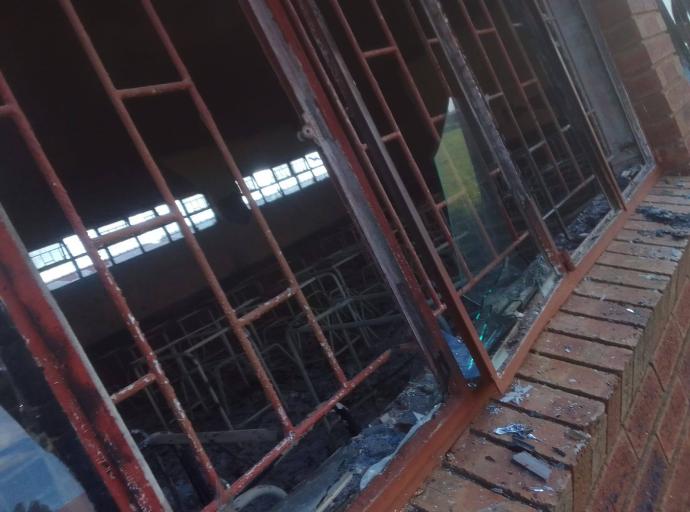
Across South Africa, school fires are leaving classrooms in ashes, education disrupted, and government coffers drained. In North West province alone, a string of fires since 2018 — from Boitseanape Technical High to FM Ramaboa Technical School — has destroyed classrooms, edu cational resources, and infrastructure, even claim ing the lives of three children at the North West School for the Deaf. Schools are meant to be sanctuaries — yet in North West, desks are turning to charcoal and chalkboards to cinders. The Department of Edu cation describes the fires as “barbaric,” and every blaze is a setback to progress in infrastructure and learning outcomes. Research into fire safety management in special needs schools shows a troubling pattern: learners, management, and stakeholders are not sufficiently engaged in fire safety programs. Limited implemen tation of fire safety protocols and poor adherence to legislation have left schools vulnerable, while community vandalism and protests exacerbate the risk. The practical impact is devastating: lessons halt ed, final exams disrupted, and maintenance pro jects delayed, leaving long-term scars on learners’ education. Earlier this week, FM Ramaboa Technical School in the Itsoseng Region was hit by another fire. MEC for Education Viola Motsumi condemned the inci dent in the strongest terms: “On behalf of the Department, I wish to condemn in the strongest terms this barbaric incident, which seeks to destroy learners’ education. I call on the South African Police Service to get to the bottom of this incident and arrest whoever is responsible. Such culprits need to be given the harshest sen tence to show others that destroying educational assets is unacceptable.” The North West Education Department is work ing to restore order and prevent further damage. Spokesperson Vuyo Mantshule noted that while many schools have 24-hour surveillance and func t ional fire-alarm systems, gaps remain, especially in townships and villages where funding is limited. Safety audits are inconsistent, and fire-extinguish ing equipment is not always maintained. “Yes, this is a huge setback in terms of infrastruc ture,” Mantshule said. “Three schools have burned down this financial year alone — two in Bojanala and one in Ngaka Modiri Molema Districts. We are conducting workshops and training to ensure that staff and communities know how to respond and prevent future incidents. We are working hand in hand with SGBs, community forums, and the police to monitor schools day and night.” Experts warn that these fires are not just in frastructure problems — they are a threat to the future of education. Each blaze erases more than buildings; it steals learning resources, disrupts studies, and fractures the sense of safety that schools are meant to provide. For North West learners, the cost of these fires goes far beyond repairs. Each destroyed classroom is a lost lesson, each scorched textbook a stolen op portunity, and each fire a stark reminder that the battle to protect South Africa’s schools is far from over.
International youth federation partnership targets investment, skills development and job creation in key sectors
Matjhabeng Local Municipality is poised to benefit from a new international partnership aimed at unlocking economic development and attracting much-needed investment into the re gion. The collaboration is expected to open doors for infrastructure expansion, skills development and job creation, as the municipality works to reposition itself as a competitive destination for global investors. Municipal leaders say the move signals a strategic shift towards leveraging international expertise and funding to revive key sectors of the local economy, including mining, manufacturing and small business development. While full details of the agreement are still emerg ing, officials are confident it will fast-track develop ment initiatives and restore investor confidence in Matjhabeng. According to Executive Mayor Thanduxolo Khalipha, the initiative follows a high-level engagement earlier this week with a delegation from the China South Af rica Youth Federation, led by its President, Luyanda Jonas. The meeting focused on fostering long-term collaboration between the Federation and the munic ipality. “Key sectors identified for potential collaboration include manufacturing, agriculture, renewable energy and property development. These sectors are expect ed to play a critical role in stimulating local economic growth, creating employment opportunities and en hancing the overall socio-economic landscape of the municipality,” said Khalipha. He added that the China South Africa Youth Fed eration serves as a dynamic platform promoting co operation between South African and Chinese youth through dialogue platforms, cultural exchanges and skills development initiatives. The Federation also highlighted scholarship op portunities for deserving students, with Matjhabeng earmarked as a potential beneficiary for study pro grammes in China. “This initiative is expected to open doors for local youth to access international education and acquire critical skills that will contribute meaningfully to the development of the municipality,” Khalipha said. As part of its community outreach, the Federation, in partnership with the municipality, is also set to visit two local schools to donate personal care products in a bid to support learners and promote dignity. The engagement follows an invitation extended by the Executive Mayor to the Federation during the South Africa Investment Conference 2026 held in Sandton, led by the President of the Republic. It forms part of ongoing efforts to position Mat jhabeng as an attractive destination for both local and international investment. The Federation has further extended an official in vitation to Khalipha and his delegation to visit China — a move expected to deepen ties and unlock even greater economic opportunities for the municipality.