Northern Cape Premier and ANC provincial chairperson Zamani Saul has denied allegations of political interference in his administration following the shock resignation of Roads and Public Works MEC Fufe Makatong.
Saul moved swiftly to reshuffle his Cabinet after Makatong’s resignation, fuelling spe...
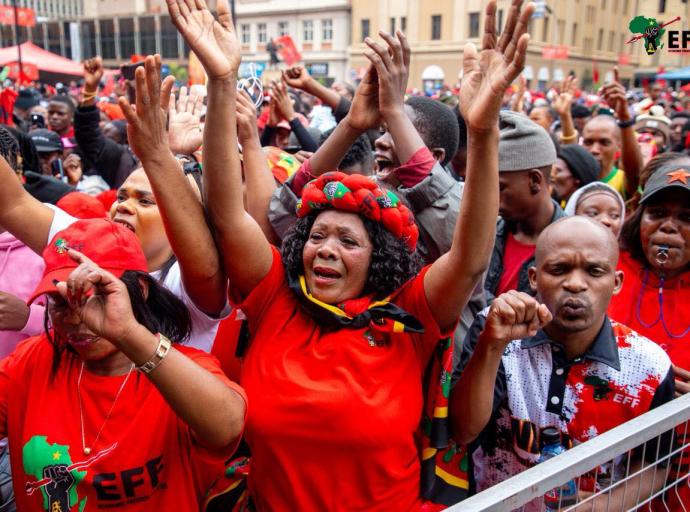
The EFF will take its push for accountability to the steps of the Constitutional Court of South Africa on Wednesday, calling for the release of the long-awaited judgment in the controversial Phala Phala scandal.
In a fresh escalation, the party’s Gauteng leadership has announced a picket at Constitutional Hill in Braamfontein, accusing the apex court of an unjustified delay in a case it says cuts to the core of transparency and the rule of law.
Gauteng provincial chairperson Nkululeko Dunga said the judgment has been withheld for more than a year and five months, raising serious concerns about accountability within the judiciary.
“The EFF remains unwavering in its commitment to transparency, accountability, and the defence of the rule of law,” Dunga said, calling for the immediate release of the ruling.
The demonstration is set for 10am outside the Constitutional Court precinct, where party members and supporters are expected to gather.
The protest follows a letter from EFF leader Julius Malema to Chief Justice Mandisa Maya, in which he demanded clarity on what the party described as an “unacceptable delay”. Malema warned that the prolonged wait risks eroding public confidence in the judiciary and weakening constitutional accountability at the highest levels of government.
At the centre of the dispute is the case Economic Freedom Fighters v Speaker of the National Assembly and Others, which deals with how Parliament handled the Phala Phala matter involving President Cyril Ramaphosa.
The case has become one of the most closely watched constitutional matters in recent years, given its implications for executive accountability and parliamentary oversight.
The Phala Phala saga, linked to allegations at Ramaphosa’s private farm, has remained in the political spotlight since it first emerged. It has raised persistent questions around executive conduct, foreign currency dealings, and the handling of related investigations.
Although parliamentary and legal processes have attempted to address the issue, the absence of a Constitutional Court ruling has left a gap that opposition parties argue is damaging public trust in key institutions.
The matter was heard in November that year, but more than 12 months later, judgment is still pending.
“This matter has now become one of the most delayed judgments in the modern history of the Constitutional Court,” Malema wrote.
He noted that more than 480 days have passed since the hearing, far exceeding the judiciary’s own guideline that judgments should be delivered within three months, unless exceptional circumstances apply.
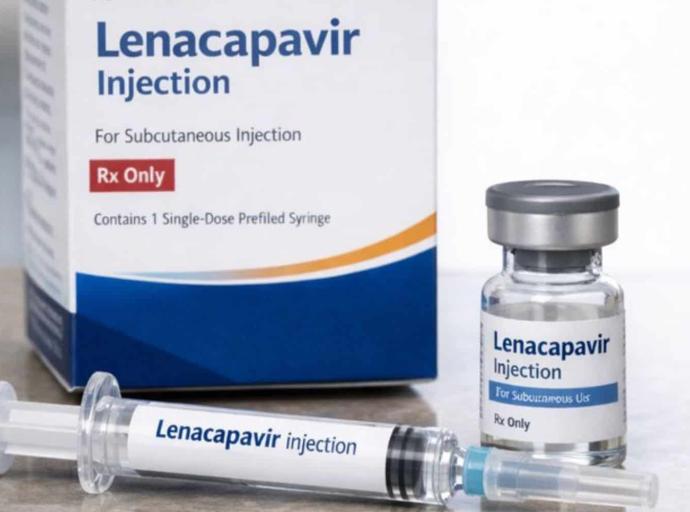
South Africa has received its first batch of the HIV prevention medicine Lenacapavir, consisting of 37 920 doses.
The Department of Health made the announcement on Tuesday.
HIV Prevention
Health Department spokesperson Foster Mohale said the medicine, a six-monthly injectable, is part of the country’s integrated and people-centred HIV prevention strategy, aimed at reducing new infections and sustaining the HIV response in line with the Global AIDS Strategy for 2026-2030.
“This is part of integrated, differentiated and people-centred HIV prevention services which offer new hope for people who face barriers to existing HIV prevention methods.
“Lenacapavir will boost the country’s efforts to reduce new HIV infections to end AIDS as a public health threat by 2030,” Mohale said.
Six-monthly
Mohale said this six-monthly injectable arrived in the country last Thursday.
“It is expected to expand HIV prevention choices, improve adherence, especially amongst the most vulnerable priority groups, including adolescent girls and young women, sex workers, Men having sex with men, among others.
“The department will, in the next few weeks, announce the official launch of this game[1]changer, where the phased implementation plan will be outlined. Lenacapavir is preventive medicine, not a vaccine, considered one of the most exciting HIV prevention advances in years,” Mohale said.
Roll out
Mohale said that the Minister of Health, Dr Aaron Motsoaledi, is “very excited about this development.”
“He will, in consultation with the president, announce the date for the launch to be led by the president.”
What is Lenacapavir
The South African Health Products Regulatory Authority (SAHPRA) officially registered Lenacapavir (branded as Sunlenca) on 27 October 2025.
This landmark approval makes South Africa the first country in Africa to authorise this twice-yearly injection for HIV prevention.
Lenacapavir is a groundbreaking, twice-yearly subcutaneous injection used for HIV-1 prevention (PrEP) and treatment.
It is highly effective, nearly eliminating new infections in trials. Primarily used for individuals at high risk (over 35 kg), it offers a long-acting alternative to daily pills.
Former Municipal Manager of the City of Tshwane Dr Moeketsi Mosola has been appointed as the new Chief Executive Officer of the Maluti-A-Phofung Special Economic Zone just outside Harrismith in Free State.
Free State Premier MaQueen Letsoha-Mathae in a media statement issued this afternoon emphasized that Mosola’s experience and knowledge are critical for building a capable, ethical, and developmental state.
“He brings nearly three decades of leadership experience across both the public and private sectors, including positions as City Manager of Tshwane, Chief Executive Officer of South African Tourism, and senior executive roles in major corporate and national institutions,” the statement said.
The appointment was also welcomed by Dr Molefinyana Phera, the Director-General of the Free State Provincial Government.
Mosola’s appointment reflects the Free State Provincial Government’s ongoing commitment to develop the province by placing qualified individuals in key positions that will foster advancement.
“I am committed to collaborating with the province's leadership, stakeholders, and the people of the Free State to promote inclusive growth, strengthen institutions, and ensure that the government meaningfully improves the lives of our citizens,” said Mosola.
The Northern Cape Department of Co-operative Governance and Traditional Affairs has given the Sol Plaatjie Municipality 14 days to explain why it should not be placed under administration.
The move follows the municipality’s failure to meet a deadline set for April 2, 2026, to address governance failures.
The province says ongoing council instability, leadership disputes and poor service delivery have raised serious concerns.
Residents have also indicated plans to petition the national government for intervention.
Department spokesperson Tebogo Monyo says the MEC is considering the next steps.
“We are concerned as the department about what is going on at the municipality, so MEC Vass is currently applying his mind as to what the way forward should be in terms of law and applicable legislation. As a way forward, I am sure MEC Vass will primarily take the next steps and the next decisions he will take will be to ensure good, sound administrative governance at the municipality so that ultimately the municipality can provide good services,” said Monyo.
The department says a decision will be taken after the municipality’s response is received.
Animal welfare organisation Four Paws is sounding the alarm over South Africa’s growing stray pet population.
The group said more than four million dogs and cats are homeless, making up 22% of the country’s estimated 18 million household pets.
Four Paws warns that the crisis affects not only animals, but communities too, with an increased risk of dog bites and disease transmission.
Director Fiona Miles is urging the government to introduce legislative measures to ensure humane and effective population control.
"Humane solutions like sterilisation, microchipping, and vaccination are proven to work, and we need these principles embedded in law. Together, we can protect both people and animals."
The ongoing conflict in the Middle East could heighten risks to global food security, particularly for countries heavily dependent on imported food, fertilizer and fuel, Maximo Torero, chief economist of the Food and Agriculture Organization of the United Nations (FAO), has said.
In a recent interview with Xinhua, Torero said the crisis is exposing the vulnerability of countries with limited domestic production and a heavy reliance on external supply routes.
"The real dividing line is not simply between rich and poor countries," he said.
"It is between those with domestic buffers and those without." The FAO warned in a recent report that disruptions around the Strait of Hormuz, a key route for global oil, gas and fertilizer trade, could drive up costs across the agrifood system and put additional pressure on vulnerable economies.
Torero noted that some Gulf countries are highly exposed despite their wealth, as they rely heavily on food imports and seaborne trade. Financial resources may provide short-term relief, he said, but cannot replace disrupted supply routes.
He also pointed to South Asia and parts of sub-Saharan Africa as areas of concern. In these regions, shocks to fertilizer and energy supplies could quickly affect agricultural production, particularly during planting seasons. Countries with limited fiscal space would face greater difficulty absorbing higher import costs or making emergency purchases, he said.
"For low-income countries already using very limited agricultural inputs, even small supply cuts can cause disproportionately large production losses," Torero said.
The warning comes as the FAO continues to monitor global food markets. Torero said governments should not rely solely on food prices as an early signal of stress, but also monitor fertilizer prices, gas supplies to fertilizer plants, shipping flows and maritime insurance costs. He highlighted sulfur as a critical but often overlooked factor.
hough less discussed than oil or gas, sulfur is essential for producing phosphate fertilizers, and supply disruptions could have far-reaching effects beyond the conflict zone.
"Agriculture runs on biological deadlines," Torero said.
"If key planting windows are missed, later interventions cannot fully reverse the damage."
He also warned that reduced fertilizer use does not necessarily lead to a proportionate decline in output, noting that in fragile farming systems even modest cuts can result in much sharper yield losses.
As the conflict continues to affect energy, fertilizer and shipping markets, early action will be needed to mitigate the risk of broader stress on global food systems, he said.