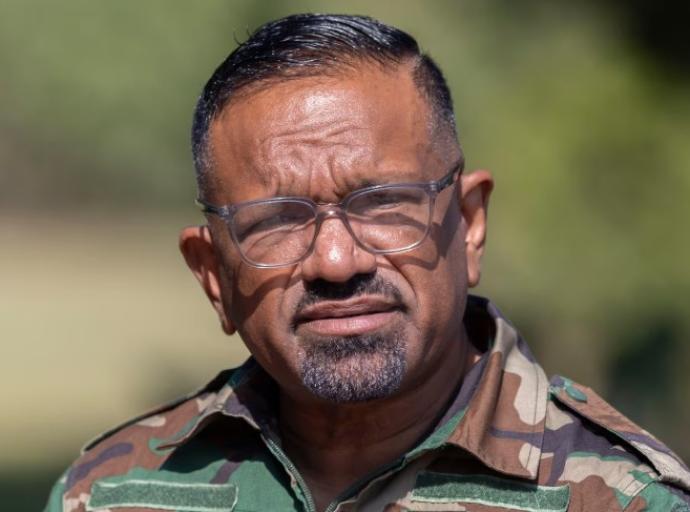
Northern Cape Premier and ANC provincial chairperson Zamani Saul has denied allegations of political interference in his administration following the shock resignation of Roads and Public Works MEC Fufe Makatong.
Saul moved swiftly to reshuffle his Cabinet after Makatong’s resignation, fuelling spe...
I was recently insulted by some young lads in a WhatsApp group and my crime was daring to disagree with what has now become a wholesale obsession among sections of young people with blue lights and the trappings of power without so much as a footnote to a coherent political programme.
Now, I could have responded. I could have descended into the mud, ready to prove a point to strangers whose thumbs move faster than their thoughts. But I decided to ignore the young lads. Not out of weakness, but out of principle. Because, truth be told, not every person who can afford a smartphone and data is intellectually deserving of a serious conversation.
Well, at least age has taught us that access to social media is no qualification for decent and sound political discourse. Having 2GB of data does not automatically upgrade one into a revolutionary thinker. Some of our people enjoy typing things longer than their understanding of basic issues. You will find a young man, sitting comfortably in his mother’s house, typing “we deserve cabinet positions” while his biggest leadership responsibility is deciding what to watch on DSTV after supper.
And yet, beneath the noise and the insults, we must acknowledge that calls by the African National Congress Youth League for representation in Cabinet are not, in themselves, misplaced. In fact, they are correct.
Young people are the majority in this country. They are the ones who will live the longest with the consequences of the decisions we take today. When our government fails, it is the youth who inherit that failure in the form of unemployment, inequality, substance abuse and hopelessness. When the government succeeds, it is the youth who must carry that success forward. So, when they demand representation, they are not asking for a favour; they actually are asserting a democratic truth.
But here is where the real problem begins, proper representation cannot be reduced to a birth certificate. You are not progressive simply because you are young, nor are you reactionary simply because you are old.
This binary thinking is both foolish and deeply reactionary. It is the kind of thinking that believes wearing skinny jeans automatically qualifies one to run a department and that knowing the latest amapiano track somehow translates into an understanding of macroeconomic policy. Life does not work like that.
History teaches us something far more serious. When the youth of 1944, led by Anton Lembede, Ashby Peter Mda and Nelson Mandela, confronted the leadership of the African National Congress, they did so because they had a solid political programme. They were dissatisfied with polite appeals to a violent apartheid regime, and they proposed mass action, defiance and a more militant political direction.
Their youth was not their argument; their ideas were.
In the democratic reality, when Julius Malema was re-elected in 2011, the rallying cry of “economic freedom in our lifetime” gave young people something to organise around. You may question the messengers, you may question their real intentions, but you cannot deny that there was at least a political programme anchoring that moment.
Today, what do we have?
A generation that wants blue lights for their own sake.
We have young people who find the sound of a siren more attractive than the content of a policy document. Young people who think governance is a photoshoot; you arrive, adjust the suit, take pictures and leave the hard thinking to someone else.
Quite honestly, a VIP convoy does not solve unemployment and fix service delivery. And blue lights, no matter how bright, cannot illuminate an empty mind.
This is not an argument against youth representation. On the contrary, it is an argument for a better, more serious form of it. We need well-crafted young people in government. Young people who have read, who have thought, who have engaged with the complexities of our society. Young people who can enter Cabinet not as passengers, but as drivers of a clear and transformative agenda.
The fact of leading a structure, on its own, does not qualify anyone to lead society. Leadership is not candyfloss; it is rather a burden of ideas and responsibility.
The youth must demand space, but they must also prepare themselves to fill that space with substance. Otherwise, we will produce a generation of leaders who are very good at switching on blue lights, but completely incapable of switching on the economy. And that, comrades, would be the real tragedy.
Let us do better, we can do better.
*Tshediso Mangope is an ANC member in Mangaung and writes in his personal capacity…
** The views expressed do not necessarily reflect those of this publication (Journal News).
The National Prosecuting Authority (NPA) has used the conviction of uMkhonto we Sizwe (MK) Party Member of Parliament Visvin Gopal Reddy to send a strong warning about the dangers of political rhetoric, stressing that even words alone can carry criminal consequences.
Reddy was sentenced in the Durban Regional Court after pleading guilty to incitement to commit public violence, in connection with remarks he made during a March 2024 political rally in Shallcross, south of Durban.
But beyond the sentence, a R30 000 fine or ten months’ imprisonment, half suspended, the NPA emphasised a critical legal principle: that incitement is judged not by whether violence actually occurs, but by what could reasonably happen as a result of the words spoken.
In his plea, Reddy admitted that his statements, in which he warned of “civil war and anarchy” if the MK Party did not appear on the ballot, were unlawful and intentional.
He further conceded that “his words could reasonably have the consequence of members of the public engaging in violent conduct,” acknowledging the broader responsibility carried by political leaders.
The NPA highlighted that Reddy accepted he “bears a heightened responsibility to ensure that his speech does not encourage unlawful conduct,” adding that the case underscores the legal risks tied to inflammatory public statements.
Importantly, prosecutors noted that no violence ultimately followed the remarks, but said this did not lessen the seriousness of the offence.
“He also accepts that although no violence ensued, the legal test has regard for foreseeable consequences of the words spoken,” the NPA spokesperson Natasha Ramkisson-Kara.
He added that their appointment comes at a symbolic time for the country.
“They join the Constitutional Court in the year in which we mark 30 years since the adoption of our democratic Constitution. This anniversary is a significant moment for our nation and serves as an inspiration for our Constitutional Court to sustain the entrenchment of our national values and the supreme law that underpins them.”
The appointments are expected to bolster the Constitutional Court as it continues to play a central role in safeguarding South Africa’s constitutional democracy.
The authority pointed to Reddy’s subsequent conduct as a mitigating factor, including multiple public apologies and calls for non-violence in the lead-up to the 2024 elections.
“Shortly after making the utterances, Reddy published numerous videos on social media… apologising for the words spoken and advocated for non-violence during the elections,” the Ramkisson-Kara.
The court also took into account that Reddy had already been sanctioned by the Electoral Court over the same incident, where he received a suspended R150 000 fine for breaching provisions aimed at ensuring free and fair elections.
Despite these factors, the NPA made it clear the case should serve as a broader warning to public figures and ordinary citizens alike.
“The offence of incitement to commit public violence, whether in person or on any platform, is a serious criminal offence,” Ramkisson-Kara said.
“Members of society, particularly those who hold public positions, are reminded that there are consequences for inciting words spoken, and that the NPA will not hesitate to hold them accountable.”
Reddy’s sentence includes a five-year condition that he not be convicted again of incitement to commit public violence, reinforcing what prosecutors say is a clear deterrent message in an increasingly charged political climate.
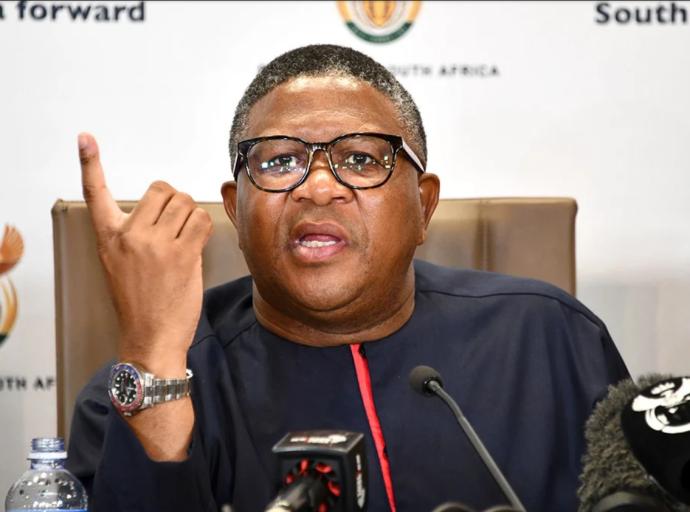
ANC secretary-general Fikile Mbalula says the party plans to ‘headhunt’ mayoral candidates and allow communities to propose names ahead of the 2026 local government elections.
Mbalula made the remarks on Friday during a media briefing at Birchwood Hotel and Conference Centre.
The ANC’s top leadership convened a special National Executive Committee (NEC) meeting to address tensions with the South African Communist Party (SACP) following its decision to contest elections independently.
He confirmed that branch general meetings (BGMs) for the 2026 local government election candidate selection process began on April 1, 2026.
Mbalula said the branches are expected to proceed with nominations in line with party guidelines, ensuring broad participation, transparency and organisational discipline.
“To further the transformation of developmental local government, the ANC in this election is taking extraordinary steps to ensure leadership deployed to municipalities is capable, ethical, disciplined and accountable,” Mbalula said.
He said the party was reconfiguring its councillor and mayoral candidate selection processes, combining internal democracy with strategic deployment.
At councillor level, Mbalula said the ANC reaffirmed the role of branches as the basic units of democracy and community organisation.
He said candidate selection would be rooted in branch general meetings, supported by structured community engagement allowing residents to assess and express confidence in prospective ward councillors.
“This process ensures that candidates emerge not only through organisational processes, but through community legitimacy, guided by clear criteria of integrity, capability, political commitment and service to the people,” he said.
Mbalula said the party’s electoral committee, provincial list committees and vetting structures would ensure candidates met requirements including qualifications, ethical standing and organisational discipline.
He said the approach marked a break from “gatekeeping, manipulation and narrow interests”, and reaffirmed that public representatives must be both products of the movement and servants of the people.
On mayoral candidates, Mbalula said the ANC was launching a centralised, competency-based selection process for executive leadership in key municipalities.
He said the system would be coordinated through the office of the secretary-general, supported by a dedicated secretariat and working with local government intervention structures to ensure consistency across provinces.
The ANC would also embark on a national headhunting process to identify capable mayoral candidates from across society, he said.
This would include experienced public representatives, professionals, community leaders, government veterans and others with proven governance experience.
Mbalula said the party would also open a window for public submissions, allowing communities and stakeholders to propose individuals they believed were suitable for mayoral positions.
He said the process would be complemented by consultation with provincial and regional structures to ensure candidates reflected both national priorities and local conditions.
According to him, a rigorous assessment process would follow, including competency-based interviews, verification of qualifications, background checks and lifestyle audits where necessary.
“These measures are designed to ensure that candidates are not only politically grounded, but possess the technical capability, administrative competence, ethical integrity and leadership capacity required to manage complex municipalities,” he said.
Mbalula said deployment was “not an entitlement, but a responsibility”.
He said following the process, the ANC national officials will finalise and ratify mayoral candidates based on credibility, competence and governance ability.
He said selected candidates would undergo structured training, including programmes at the OR Tambo School of Leadership, and would be required to develop local programmes aligned to the ANC’s 2026 manifesto.
The process will cover eight metropolitan municipalities and 22 secondary cities.
Mbalula said all ANC mayors would be required to sign binding mayoral delivery agreements setting out performance targets, timelines and measurable outcomes, with ongoing monitoring and consequences for underperformance, including possible recalls or reconfiguration of leadership.
“This marks a decisive shift towards a culture of consequence management and delivery,” he said.
“It is not enough to deliver; the people must experience, recognise and trust that delivery is taking place.”
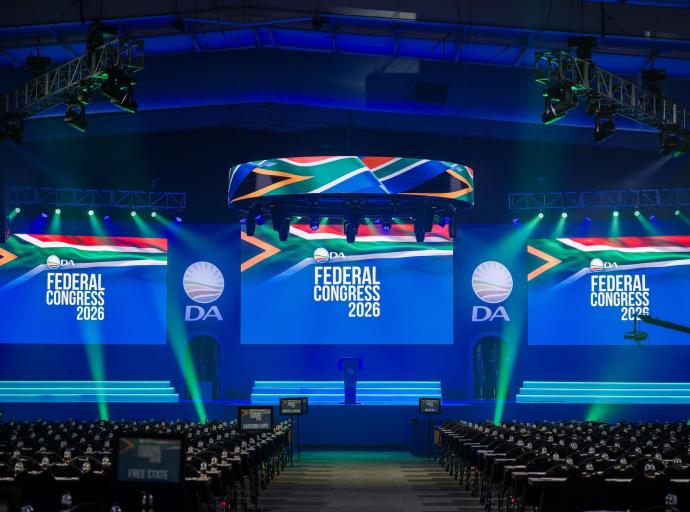
The Democratic Alliance (DA) says its federal congress, which will be held this weekend, will not only be its biggest yet, but also its slickest.
Besides electing a new party leader, the congress will also grapple with the highest number of policy proposals ever submitted to it.
On Thursday, voting began for positions within the Federal Council, the body that oversees the governance of the party, and which will see one of the party’s most well-known leaders, Helen Zille, replaced by one of three candidates.
The presiding officers for the federal congress said they are satisfied that all is on track for the party’s most important event, which comes around every three years.
Before it elects a new party leader, it will grapple with constitutional amendments and vote on resolutions.
The bulk of the just under 2200 delegates will come from Gauteng and the Western Cape in line with the party’s electoral outcome at the last national election.
Presiding officer Werner Horn says the congress is a fair representation of the party’s members across all branches and provinces.
"Our federal constitution determines that no fewer than 45% of all delegates must represent branches, so that would mean they may not be public representatives of the party."
Horn is also running to replace Zille as Chairperson of the Federal Council, along with Neo Mokoena and Ashor Sarupen.
At least ten representatives at the congress will represent the DA's support base abroad.
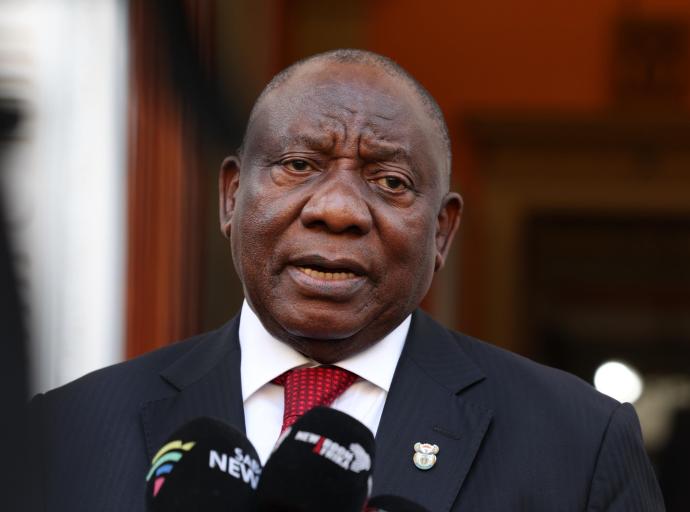
President Cyril Ramaphosa sidestepped questions regarding the Independent Police Investigative Directorate’s (IPID) findings into the conduct of his lead personal protector, who is alleged to have covered up the theft of foreign currency at his farm.
A recently declassified report by the police watchdog recommends disciplinary action against Major General Wally Rhoode, the head of the Presidential Protection Unit.
Although the report was declassified last month after previously being held as "Top Secret," it was only made public on Friday.
IPID’s investigation focused specifically on the conduct of police officers following the 2020 burglary at Ramaphosa’s Phala Phala farm, where approximately 580,000 US dollars was stolen.
The report reveals that Ramaphosa personally informed Rhoode about the theft shortly after it occurred. However, despite the high-stakes nature of the crime, a formal case was not opened until two years later.
The watchdog alleges that Rhoode bypassed official channels to lead an "off-the-books" operation to recover the stolen cash.
The report suggests that he utilised police resources for this unauthorised mission and failed to report the matter to the National Police Commissioner at the time.
When asked to comment on the damaging findings on Friday, Ramaphosa maintained a distance from the investigative process.
"The IPID report is what you would have read. I have nothing to do with it. It’s part of the process, and as I’ve always said, processes must play themselves out."
While IPID has recommended accountability for the Major General, the final outcome remains contested.
In September last year, Acting Police Minister Firoz Cachalia informed Parliament that Rhoode had since been cleared of the allegations.
Livestock is vanishing, farmers are under strain, and security agencies are battling to keep pace as stock theft tightens its grip on the Free State’s agricultural heartland.
What was once sporadic rural crime has escalated into a coordinated, syndicate-driven operation, raising alarm over the province’s economic stability and food security. Farmers, police and civil organisations warn that the scale and sophistication of livestock theft is rapidly intensifying.
A breakthrough came on 30 March 2026, when police in Thaba Nchu recovered 17 stolen cattle and a vehicle at a residential property, leading to multiple arrests. While welcomed, such successes remain rare. Farmers argue that most interventions come too late, after significant losses have already occurred.
“This isn’t petty crime anymore — it’s organised,” says Free State farmer Johannes van der Walt, who recently lost over 100 cattle. Nationally, hundreds of thousands of animals are stolen each year, costing the sector millions and destabilising rural economies.
The networks behind the theft range from cross-border syndicates moving livestock into neighbouring countries to local groups selling stolen animals through informal markets. Authorities have urged better livestock marking, improved reporting, and stronger collaboration with Stock Theft Units, especially along vulnerable borders like Lesotho.
However, enforcement is widely viewed as reactive. Many cases go unreported due to slow police response, low recovery rates and weak conviction outcomes. Critics, including AfriForum’s Hennie Bekker, argue that official statistics understate the crisis and have called for investigations into alleged corruption within law enforcement.
Compounding the crisis is the ongoing Foot-and-Mouth Disease (FMD) outbreak. Stolen, unvaccinated animals risk spreading the disease, threatening both local herds and export markets. Government has intensified vaccinations and movement controls, stressing biosecurity and traceability.
For farmers, the combined pressure of theft and disease is devastating. “We often recover livestock ourselves while waiting for police,” says Rabanyane Sechaba of the Young Farmers Association.
As 2026 unfolds, the Free State faces a dual threat — organised stock theft and disease — placing livelihoods, rural stability and the agricultural economy at risk.