Northern Cape Premier and ANC provincial chairperson Zamani Saul has denied allegations of political interference in his administration following the shock resignation of Roads and Public Works MEC Fufe Makatong.
Saul moved swiftly to reshuffle his Cabinet after Makatong’s resignation, fuelling spe...
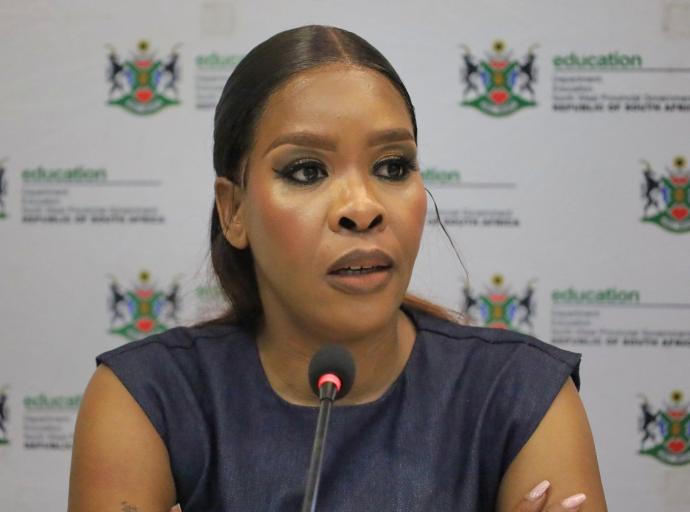
The North West Department of Education, Viola Motsumi convened an accountability meeting with Departmental Senior Managers of the Department at Royal Marang on Friday, 10 April 2026.
The purpose of the session was to closely monitor and evaluate the performance of each Directorate within the department. Such meetings are aimed at strengthening oversight, improving service delivery and ensuring that strategic education goals in the province are being effectively implemented.
The managers presented their 2025/2026 Fourth Quarter achievements: Expenditure Report as of 31 March 2026, Post Audit Action Plan (PAAP) Report as at 31 March 2026, Infrastructure Progress Report, Progress Report on Filling of Posts, Status of Security in Schools and Presentation of the Status of Schooling in the Province, since the Reopening of the Schools for Term 2 (08 April 2026).
The MEC for Education, Viola Motsumi firmly questioned Senior Managers about their inability to meet performance targets during the accountability meeting.
“Why are we not able to reach our targets? For the Department to perform, I must convene monthly accountability meetings. There must be consequence management for those Directorates which fail to reach their annual targets, and this is totally unacceptable.
“Work cannot be done only when I have requested it, officials should be able to do their work without being told to do so. Directorates should not wait until the end of the quarter to compile their reports, reports should be compiled monthly”, said MEC Motsumi.
MEC Motsumi further stressed the importance of financial accountability, by stating that all those who owe the Department must pay back the money. She emphasized that Senior Managers should lead by example in this regard, reinforcing a culture of integrity, responsibility and consequence management within the department.
*This article was first published by the North West Department of Education
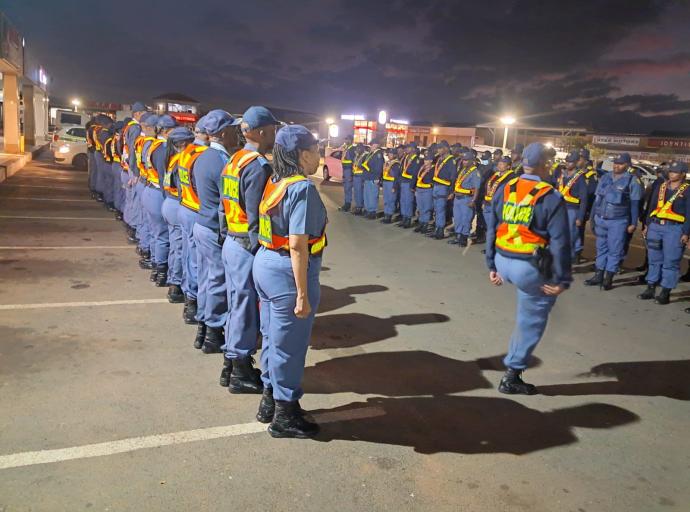
The nine police officers arrested for the murder of four people, including a police officer, in the Free State are expected to appear in the Bultfontein Magistrate’s Court on Monday.
The group was arrested by members of the Independent Police Investigative Directorate (Ipid) on Saturday, April 11.
The suspects are attached to the Bultfontein Public Order Policing (POP) Unit and hold the ranks of sergeant and constable.
Ipid spokesperson, Phaladi Shuping, said the officers were arrested for an incident that took place on Sunday, September 22, 2024.
“On the day in question, Public Order Police members responded to a call of a domestic dispute in Phahameng township, Bultfontein in the Free State, where family members were allegedly involved in a fight. It is further alleged that as police officers tried to apprehend them, they locked themselves inside the house and barricaded all access points into the house,” Shuping said.
The police officers allegedly executed a tactical entry into the house during which they discharged their firearms.
“Three civilians and one police officer, Constable Mojalefa Borole, who was on duty, died at the scene, and 43 empty cartridge cases were collected from the crime scene,” Shuping said.
Ipid’s investigation revealed that all the deceased, the three civilians, all members of one family, and one officer died from gunshot injuries.
The nine officers face four counts of murder and are currently being detained at the Welkom holding cells.
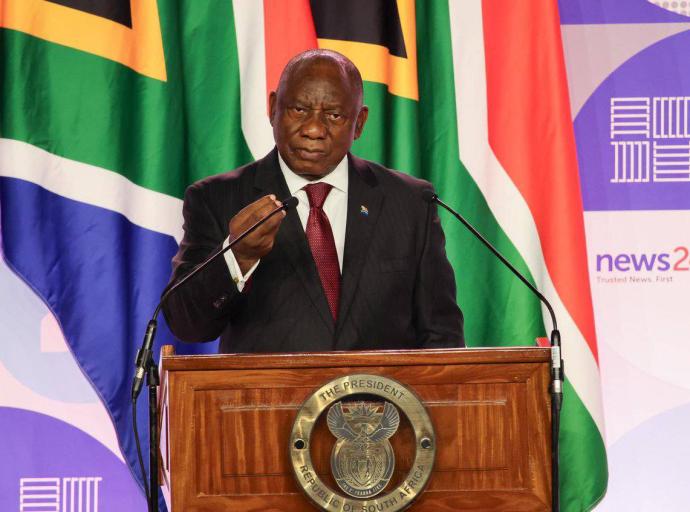
The African Transformation Movement (ATM) is awaiting a response from Parliament Speaker Thoko Didiza after formally requesting the start of impeachment proceedings against President Cyril Ramaphosa.
This follows a damning report by the Independent Police Investigative Directorate (IPID) into the alleged cover-up of the Phala Phala farm theft involving members of the Presidential Protection Service.
While the report makes no findings against Ramaphosa, it is highly critical of Major General Wally Rhoode and Constable Hlulani Rekhoto, citing evidence that they breached police rules and legal obligations.
The ATM said the president is now irreparably compromised, describing the matter as a full-blown constitutional crisis.
ATM spokesperson Zama Ntshona said the party wants the implicated to be suspended and prosecuted.
“The establishment of a parliamentary ad-hoc committee through the Portfolio Committee on Police, urgent intervention by the Joint Standing Committee on Intelligence into the unlawful intelligence style of operating.”
In December 2022, impeachment proceedings against Ramaphosa failed after Parliament rejected a panel report that had indicated potential misconduct in the Phala Phala matter.
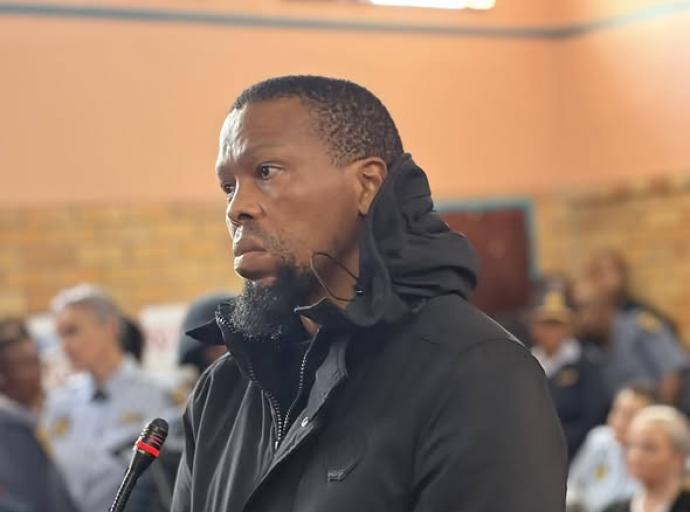
A man accused of killing Marius van der Merwe, who was known as Witness D at the Madlanga Commission, is set to return to the Brakpan Magistrate’s Court on Monday.
Matipandile Sotheni, 41, will appear as proceedings continue, allowing his new legal representative to take over the case after his previous lawyer withdrew.
Sotheni, a former member of the South African Police Service (SAPS) Special Task Force, has denied any involvement in the murder.
Last month, he was expected to apply for bail, but the matter was postponed to May 14. He first appeared in court on March 16 following his arrest.
Police allege Sotheni acted as the gunman in a drive-by shooting that killed Van der Merwe outside his Brakpan home on December 5, 2025.
He faces charges of conspiracy to commit murder, premeditated murder, three counts of attempted murder, and unlawful possession of ammunition.
In court, Sotheni denied all charges.
“The allegations levelled against me, I deny them fully. I have nothing to do with this crime,” he said. “I wish to state under oath. I want to state in English, Your Worship, because I wish to assist the court.”
He also expressed dissatisfaction with his legal representation, saying the lawyer present had not been instructed by him.
“It’s the first time I’ve seen him today. He has not been given instruction by me. He did not even take my statement,” Sotheni said.
National police spokesperson Brigadier Athlenda Mathe previously alleged that Wiandre Pretorius, a police informant linked to the Madlanga Commission, was also implicated in Van der Merwe’s murder. Pretorius died by suicide at a petrol station in Brakpan.
Police allege Pretorius drove the Suzuki Swift, later traced to Sotheni’s girlfriend.
Mathe said Sotheni joined SAPS in 2005 and the elite Special Task Force in 2010.
He resigned in 2019 and moved into the private sector.
“This gives some insight into how Sotheni allegedly operated,” she said.
“She alleged that he would execute and eliminate Witness D on the spot because of the training that Special Task Force members receive, and that he would have been the best person for the job.”
Mathe described the arrest as a setback for SAPS.
“It is quite an unfortunate day for us, having a former member arrested on a very serious charge in relation to the murder of Witness D,” she said.
“When you look at the cost of training a Special Task Force member, each costs more than R1 million. It’s quite a loss for SAPS. But at the same time, it is good that we rid our organisation of corrupt and criminal elements that do not deserve to be in a blue uniform.”
She said investigators have also interviewed two other people in connection with the murder.
Pretorius had previously survived a shooting in which his car was reportedly hit 16 times.
He was also allegedly linked to the murder of Emmanuel Mbhense, whose body was found at Duduza Dam in Nigel in April 2022.
Van der Merwe, a former EMPD officer and security specialist, testified before the commission in November last year, alleging misconduct within the EMPD and acting as a whistleblower in Mbhense’s murder.
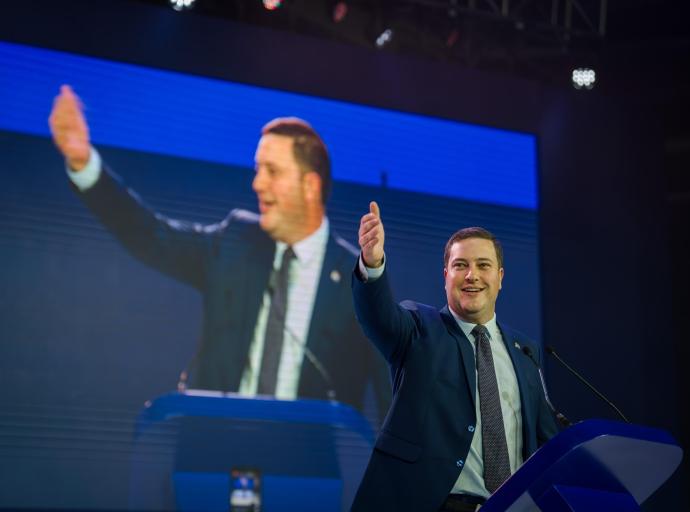
Newly elected party leader Geordin Hill-Lewis has outlined an ambitious plan to grow the DA into South Africa’s largest political party, declaring that the party’s next goal is to lead the national government.
Speaking shortly after his election at the DA’s Federal Congress, Hill-Lewis said the party was entering a “new chapter”, shifting its focus from opposition and governance at the local level to competing for national power.
“The question is whether the DA can lead the country… whether we can become the largest party in national government,” he said. “My answer is a resounding yes.”
Hill-Lewis said his leadership would be defined by a singular mission: expanding the DA’s electoral base and positioning it to take control of national government in the coming years.
Central to his address was a four-part strategy aimed at strengthening the party’s electoral prospects.
First, Hill-Lewis emphasised the need for the DA to continue demonstrating governance capacity where it is already in power. He said the party’s track record in municipalities, including his tenure as Cape Town mayor, shows that “the basics work” under DA leadership, citing functioning institutions, responsible budgeting, and service delivery.
“When we do the basics well, it is the poor who benefit the most,” he said, pointing to improvements in sanitation, public transport, and community infrastructure in DA-run areas.
Second, he acknowledged the need to broaden the party’s support base by connecting with voters who have not previously backed the DA. This, he said, would require a more grounded and community-driven approach.
“We must earn trust the old-fashioned way, community by community, street by street, conversation by conversation,” Hill-Lewis said, adding that the party must listen more and be more visible in local communities.
Third, Hill-Lewis addressed the DA’s role within South Africa’s Government of National Unity (GNU), describing it as a “complex and fraught” arrangement, but one that reflects voters’ rejection of instability.
He said the DA would remain a “strong and principled partner” in government, while continuing to oppose policies it believes undermine economic growth or constitutional principles. This includes opposition to what he described as “crony enrichment schemes” and policies that threaten property rights or merit-based appointments.
Finally, Hill-Lewis stressed the importance of political messaging rooted in optimism and belief in the country’s future.
“We will not listen to the naysayers… I believe deeply in [South Africa’s] future,” he said, positioning the DA as a party of action rather than rhetoric.
Hill-Lewis identified crime as the country’s most urgent crisis, placing law and order at the centre of his policy agenda.
Describing widespread fear among ordinary South Africans, he said restoring safety and rebuilding the criminal justice system would be his top priority.
“Bringing law and order to South Africa must be our top priority. Not one priority among many,” he said.
He called for sweeping changes to policing, including tackling corruption within the South African Police Service and dismantling criminal syndicates.
According to Hill-Lewis, addressing crime is a prerequisite for economic growth, arguing that investment and job creation cannot take place in an environment of insecurity.
Hill-Lewis also used his speech to rally party structures ahead of the upcoming local government elections, identifying key metros such as Johannesburg, Tshwane, Ekurhuleni, Cape Town, Nelson Mandela Bay and Durban as battlegrounds.
He said success at the local level would be a critical stepping stone towards the 2029 national elections, where the DA aims to transition from a coalition partner to leading government.
“I am not satisfied with being a junior partner in a government of national unity. Our ambition must be to lead the national government,” he said.
While acknowledging the challenges ahead, Hill-Lewis called on party members to intensify their efforts, stressing discipline, organisation, and grassroots engagement as key to winning voter support.
“The journey ahead will not be easy. Sometimes it will feel that, for every person we win over to our cause, there will be another who falls to the cynicism and division of our opponents,” he said.
The DA’s leadership change comes at a pivotal moment in South African politics, with coalition governance reshaping the national landscape and opposition parties seeking to convert growing support into electoral dominance.
The African National Congress (ANC) stands at a defining moment as it prepares to select candidates for upcoming elections, with analysts warning the process could either rebuild public trust or deepen internal divisions. The party’s move to headhunt candidates while inviting community input has sparked debate about transparency, renewal, and accountability.
Experts say how the ANC balances these competing pressures will not only shape its electoral prospects but also test its commitment to democratic principles amid growing public scrutiny.
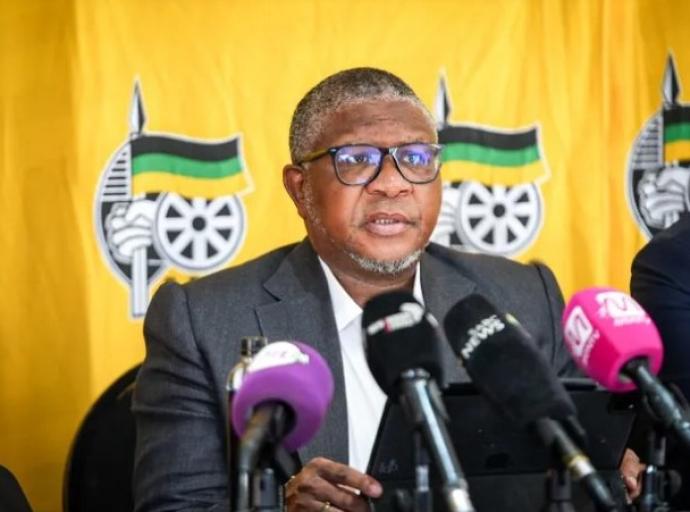
Addressing media on Friday at Birchwood Hotel and Conference Centre, ANC Secretary-General Fikile Mbalula said the party will be shopping around for suitable mayoral candidates to contest the upcoming local government elections and the decision to headhunt candidates followed an assessment of poor municipal performance that had eroded public trust.
He said, given persistent and systemic challenges in local government, the party would take extraordinary steps to ensure leadership deployed to municipalities is capable, ethical, disciplined, and accountable.
"The ANC will embark on an intensive national process of identifying and headhunting capable mayoral candidates from across society. This includes experienced public representatives, professionals, community leaders, veterans of government, and individuals with proven leadership track records and governance capability," said Mbalula.
However, speaking to Journal News on Saturday, political analyst Prof Sethulego Matebesi - Associate Professor and Academic Head of the Department of Sociology - said the move is politically meaningful, but its credibility will depend on whether the party is willing to sacrifice powerful but underperforming or corrupt incumbents when evidence is clear.
“Without that, the extraordinary measures language risks devolving into a familiar pattern of high-sounding rhetoric with limited operational enforcement,” he said.
He added that while Mbalula’s pledge is significant in rhetorical terms, it must be judged against the party’s track record over the past two decades.
“The new 2026 candidate-selection rules introduce tighter screening, lifestyle audit provisions, and more centralised oversight, creating a formal architecture for accountability. The introduction of binding ‘mayoral delivery agreements’ that mayors must sign upon assuming office is another signal that leadership wants to tie expectations to concrete performance indicators,” he said.
Matebesi noted that while the approach is not entirely new—having been outlined in the 2001 discussion document Through the Eye of a Needle—the current process introduces a more centralised, competency-based mayoral selection framework.
“If taken seriously, this could reduce the power of local elites and factional operators who have historically used decentralised systems to entrench loyalty over capability. However, the real test, is whether the national centre enforces standards or simply rationalises top-down control while preserving existing networks,” he warned.
The party will also invite communities to nominate candidates to lead local councils. However, similar efforts in the past have drawn criticism, with residents feeling consulted but not genuinely empowered when party preferences prevailed.
Matebesi said the 2026 rules represent a modest improvement, but stop short of making community choices decisive.
“Given the ANC’s entrenched internal power structures and the centrality of cadre deployment, this is a moderate shift toward grassroots engagement rather than a radical break. While the process may be more transparent, there is still a high risk that national and regional leadership will retain the final say, especially in key municipalities. Whether this deepens local democracy will depend on how firmly leaders are held accountable when they override community preferences,” he said.
He concluded that the party is under pressure, and only time will tell whether voters will see genuine reform in local government or more reformist rhetoric.