Prominent Mangaung businessman Ben Moseme has strictly distanced himself from growing political speculation suggesting he intends to stand for the executive mayoralty of the metro.
The founder of the Cultural Urban Festival Africa (CUFA) issued a formal statement dismissing claims that he holds any...
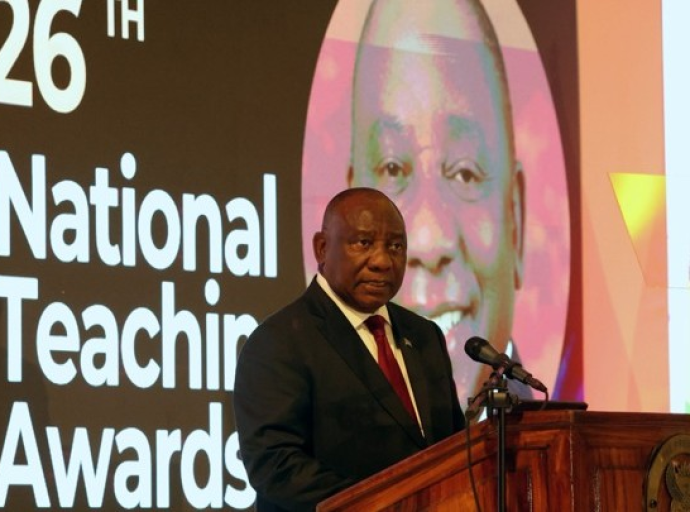
President Cyril Ramaphosa has emphasised that South Africa’s educational transformation hinges entirely on empowering educators, declaring that better learning outcomes require creating conditions where teachers can focus singularly on teaching.
Addressing the 26th National Teaching Awards at the Birchwood Hotel and Conference Centre in Ekurhuleni on Thursday, the President noted that classrooms remain the primary crucible where the nation’s future is shaped. He underscored that teaching must be restored to its rightful standing as one of society’s most respected professions through targeted structural backing, safe infrastructure, and a reduction in administrative burdens.
“If we want better educational outcomes, we must invest in better teaching. We must attract talented young people into the profession. We must support new teachers as they enter the classroom. And we must enable experienced teachers to continue developing their skills,” President Ramaphosa said.
Reflecting on his own formative years, the President shared a personal tribute to his former school principal, Mr Ntsandeni, who intervened to protect him from expulsion when his inquisitive nature clashed with rigid school rules.
Highlighting how the principal looked beyond initial friction to recognize his potential, Ramaphosa stressed the profound, enduring impact of mentorship. “He gave me the opportunity to continue learning, to develop and to become the person I am today,” Ramaphosa said, adding that he would have liked to present his late mentor with a National Teaching Award “not only for what he did for me, but for understanding what lies at the heart of teaching: seeing the promise in a young person and giving that promise the opportunity to flourish.
That is what great teachers do.” The event, held under the theme “Uniting for Excellence: Elevating Achievement, Empowering Educators to Shape South Africa’s Future,” also spotlighted foundational literacy, numeracy, and the growing intersection of technology in education. While acknowledging that digital tools and artificial intelligence can expand access to resources, Ramaphosa cautioned that human empathy cannot be digitised.
“Artificial intelligence may be able to provide an answer, but a teacher helps a learner understand the question. Technology can transmit information, but it cannot replace the encouragement, discipline, empathy and human connection that a good teacher provides. The teacher remains essential,” he stated.
Furthermore, the President called on educators to champion school safety and actively combat gender-based violence and femicide. Addressing behavioural norms from early childhood development through to high school, he stressed that schools must foster mutual respect and constructive conflict resolution.
Marking the 50th anniversary of the 1976 Soweto Uprising, Ramaphosa also paid homage to educators who suffered persecution, imprisonment, and exile during the anti-apartheid struggle.
Concluding his address, he lauded the resilience of finalists across categories such as Grade R instruction and mathematics, reaffirming that South Africa's collective progress relies on teachers who refuse to give up on a child.
Around R42.4-million in cash, properties, pensions, and investments linked to about R100-million in alleged bribes paid to officials at Tembisa Hospital has been secured by the Special Investigation Unit (SIU).
The alleged bribes were reportedly paid by businessman, Stefan Joel Govindraju, to secure procurement deals worth approximately R600-million. The Special Tribunal granted the SIU a preservation order last month preventing the disposal of assets belonging to Zacharia Tshisele, his wives, and entities and associates linked to the corruption network.
The order also prevents payments and dealings by companies and individuals allegedly involved in the network, including Joseph Fhumulani Muthaphuli and former Tembisa Hospital Area Manager, Ernest Monnakgotla. “Tshisele and Monnakgotla allegedly worked together to siphon funds from Tembisa Hospital’s coffers into two major syndicates.” The first was the Govindraju syndicate, which used 75 companies to trade with the hospital and received approximately R600-million.
The second was the Mazibuko syndicate, operated by Rudolf Mduduzi Mazibuko, which used 17 companies and received approximately R283-million. The SIU said both syndicates relied on the cooperation of hospital officials to facilitate unlawful procurement. Tshisele, appointed operational manager of the hospital’s theatre in 2017, allegedly abused his position by initiating supply chain processes and confirming the receipt of goods.
The investigation found that he was directly involved in transactions worth approximately R15.9-million, with each transaction kept below the R500 000 threshold to avoid competitive bidding. “Some of the transactions were for unnecessary goods, while others involved goods that were not delivered or were only partially delivered.”
The Tribunal also froze two properties linked to Tshisele and his wives. A Birchleigh North property in Kempton Park registered in the names of Tshisele and his wife Phumudzo is valued at approximately R1.3-million. A second property in Delmore Park, Boksburg, registered in the name of his customary wife, Fulufhelo Lineth Tshililo, is valued at approximately R820 000.
Tshisele’s pension, valued at R1.09-million, has also been frozen. “Money from the Govindraju syndicate was channeled through Create 10, which was co-directed by Tshisele, Monnakgotla and Muthaphuli.” The money was allegedly used to finance properties, mining ventures, and a film project.
The SIU found that Tshisele and Monnakgotla invested R17.5-million in Manngwe Mining and Solmag Mining, while R15.5-million was advanced through Time Bomb towards the production of The Bad Bishop. A further R1.5-million was transferred into the account of Tshisele’s nine-year-old daughter.
In 2025, Tshisele signed an Acknowledgement of Debt with the SIU and agreed to repay money allegedly obtained unlawfully. He has since repaid R13.53-million in four installments, while Manngwe Mining also agreed to repay R17.5-million over 36 months. In May, the SIU obtained an order freezing a R6.4-million luxury property in Midstream Estate and R1.8-million in pension benefits belonging to former Tembisa Hospital official Duduzile Nobungwana.
The SIU said the preservation orders and payment agreements involving Tshisele and Nobungwana bring the total value of preserved cash and assets to approximately R42.4-million. Neither Tshisele nor Nobungwana is challenging the SIU’s actions. The SIU has further referred evidence of alleged criminal conduct uncovered during its investigation to the National Prosecuting Authority for further action.
The referral led to Govindraju’s arrest last month on multiple charges linked to the alleged procurement of medical supplies and equipment at Tembisa Hospital. He faces 70 counts including fraud, theft, money laundering, and corruption-related offences.
The government of national unity (GNU) is totally ineffective.
These are the general sentiments of Freedom Front Plus leader, Corné Mulder, who has asserted that the coalition arrangement has disintegrated due to months of inactivity and a lack of collective direction.
In an interview with the Sunday Times newspaper, Mulder noted that party leaders have neglected their agreement to meet monthly, thus rendering it futile. “The last time we sat around the table was November 2025,” Mulder stated.
He stressed that this situation is damaging the nation. “It’s bad for South Africa because the government of national unity isn’t united; it’s not chasing a clear goal or motivating the country. “We’re like a car running on two flat tyres.
Don’t expect that car to win any race,”said Mulder. With the 4 November 2026 local government elections looming, it is clear that the FF+ is anchoring their campaign on discrediting the makeshift governance arrangement, while also positioning the party as an alternative solution.
The African National Congress (ANC) has issued a scathing rebuke against senior national executive committee (NEC) member, Andile Lungisa, declaring unequivocally that deployment is not an entitlement.
The strongly worded response follows an urgent legal challenge brought before the High Court of South Africa in Johannesburg by Lungisa, who targeted the party, its leadership, and its Secretary-General, Fikile Mbalula, after being dropped from candidate lists ahead of the upcoming 4 November 2026 local government elections.
The ANC expressed deep dismay that a leader of Lingisa’s stature within the movement chose to meet his comrades across a courtroom in lieu of utilising internal dispute resolution mechanisms established by the movement. “It is a sorrowful thing for a movement of this age to meet a comrade across a courtroom over a matter that our own structures were established to resolve,” the ANC statement reads. Whilst rebuking the notion of self-interest by the former ANC Youth League (ANCYL) deputy president, the party also revealed that initial reports from vetting agencies showed that Lungisa had not attended that process - which includes the taking of biometric prints necessary to complete criminal record assessments.
These checks subsequently set off questions regarding Lungisa’s eligibility for mayoral candidacy, pointing directly to his public conviction and sentence that was confirmed on appeal by the Supreme Court of Appeal (SCA). Lungisa was found guilty by the Gqeberha Magistrate Court in April 2018 for a physical attack on the Democratic Alliance (DA) Councillor, Rano Kayser, during a heated council meeting in the Metro’s council chambers in October 2016.
He was sentenced to two years direct imprisonment. Invoking the historic philosophy of Through the Eye of the Needle, the ANC emphasised. that its renewal program applies without fear, favour or exception. “However popular an individual may be, and however long their service, this movement was founded on servant leadership and not on entitlement to government position,” the statement continued.
Having opted for the courts instead of exhausting internal party procedures, Lungisa has potentially set himself up for a possible internal party disciplinary hearing after the local government polls. His party membership may possibly be on the line depending on how this potential disciplinary process unfolds.
Meanwhile, The ANC national working committee is in the Eastern Cape to engage with its structures, in the province and conduct general assessments of their election work and preparations ahead of the November polls. The NWC programme runs from today, 4 October, until Wednesday, 7 October 2026.
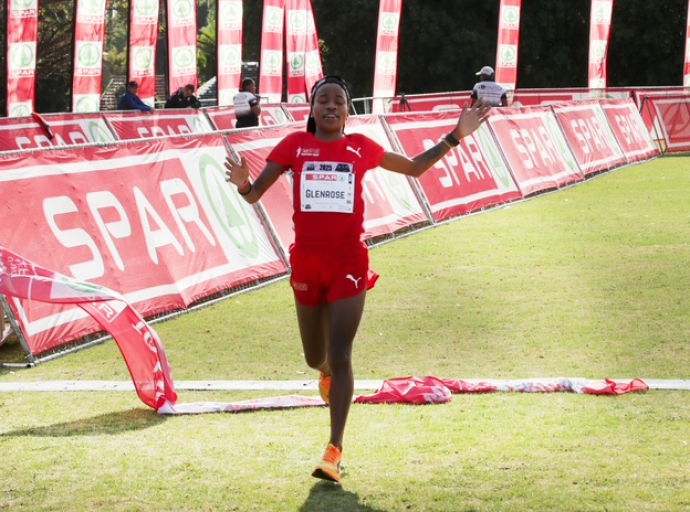
Reigning SPAR Grand Prix champion Glenrose Xaba is on the brink of securing her fourth title at the final race of the series at Marks Park in Johannesburg on Sunday morning. Xaba enters the Jozi SPAR Women’s 10km Challenge in scintillating form after winning the Gqeberha leg last weekend in 31:17 minutes.
She faces stiff competition from Boxer teammates Cacisile Sosibo, Karabo More, and Karabo Mailula, alongside Ethiopian Nedbank runner Salam Gebre and junior debutant Dirbe Dogne.
Ultra-marathon star, Gerda Steyn, will also compete and lead a moment of silence for the SPAR End Gender-Based Violence initiative. “Something must be done about the horrific levels of GBV in South Africa. These have been highlighted by the spate of killings in Ekurhuleni. “Women should be able to go about their daily lives without fear and if they want to run, they should be free to do so without wondering whether they will get home safely,” said Steyn.
The technical one-lap course takes runners through Emmarentia, Greenside, Linden, and Parkview, passing the Johannesburg Botanical Gardens and Melville Koppies. Race Director, Brad Glasspoole, noted that multiple athletes remain in contention for podium finishes alongside Xaba.
SPAR National PR, Communications and Sponsorship Manager, Mpudi Maubane, emphasised the brand’s ongoing advocacy. “On Sunday, we will ‘Celebrate Her’ by honouring and remembering the countless women and girls who have lost their lives to gender-based violence. We will stand together, raise our voices, and send a clear and united message enough is enough.”
What was supposed to be a normal traffic check routine in April 2021 turned the life of a seasoned traffic officer into a nightmare that resulted in her spending a few nights in jail.
Recounting what happened on the day in question, Retshidisitswe Tshwanyane narrated one of the most traumatic experiences she has ever encountered in her 19 years as a public servant. “While I was patrolling, I saw a car causing obstruction without a driver.
I stopped my vehicle to inspect; I was then approached by the driver, who was a foreign national, who said he was not aware where he parked; it was considered danger and obstruction (sic),” she told Journal News Network (JNN). Upon further inspection, Tshwanyane told this newspaper that she found that the car did not have both number plates and a (licence) disc. “He told me he bought it at an auction.
I instructed him to follow me to the office (traffic department),” she added. According to Tshwanyane, when they arrived at the office, she requested papers from the driver to issue tickets and realised that his licence was not clear. She subsequently impounded the car and consulted with her supervisor to check whether she had followed due procedure or not in this regard.
The driver came back the following day to present the required legal documentation as proof that the car was indeed bought at an auction. Tshwanyane revealed that the driver started offering her a bribe in front of the security. She also discovered that the foreign national’s asylum documents had also expired.
After duly serving the driver with a traffic ticket, Tshwanyane revealed that she once again consulted with her supervisor to make a final decision. After the driver paid for the penalty, Tshwanyane then furnished the supervisor with the served traffic tickets as well as the proof of payment for the contravention.
The supervisor subsequently signed the vehicle out. Later in the day, while preparing for a roadblock, Tshwanyane and her colleagues were approached by members of the Hawks investigating illegal car impoundments. “As we were about to get into the vehicles, we were approached by people who said they were from the Hawks, and they told us why they were there. They instructed me to get out of the car and leave everything inside, and I complied.
They also asked to search my private car, but found nothing,” she continued. Tshwanyane detailed how she was thoroughly searched and how the Hawks officials claimed they had found around R560 by her supervisor, whilst alleging that an initial payment of R1 100 had been paid by the driver in question. As a result, the supervisor was detained for three days, while Tshwanyane, on the other hand, was arrested the following Monday on Monday, 26 April 2021.
She was detained and then released two days later, Wednesday, 28 April 2021, on R2 000 bail. With no evidence to support the spurious charges, Tshwanyane was eventually acquitted. She has decided to push back and press charges herself against her accusers following the harrowing experience and the reputational damage she continues to endure.
Tshwanyane stressed that internal disciplinary processes should have been followed if any grievances existed, adding that the ordeal subjected her to severe threats and insults within her church community where she serves as a pastor. “As a leader, this is sensitive even spiritually because you have children, married people, and women who look up to you,” said Tshwanyane.
The intense stigma deeply affected her marriage, her professional reputation, and her family's financial stability while her daughter was studying nursing in Europe. She concluded by advising others facing similar ordeals to fight hard for their reputations and refuse to let others dictate their narratives.