Prominent Mangaung businessman Ben Moseme has strictly distanced himself from growing political speculation suggesting he intends to stand for the executive mayoralty of the metro.
The founder of the Cultural Urban Festival Africa (CUFA) issued a formal statement dismissing claims that he holds any...
African National Congress (ANC) National Executive Committee member David Makhura has launched a blistering attack on the political instability in Metsimaholo Local Municipality, warning that ongoing infighting among political parties is undermining effective governance and leaving residents to bear the cost.
Makhura also called on residents to give the ruling party full control of the municipality in the upcoming local government elections.
Speaking at the party’s regional manifesto launch at the Harry Gwala Multipurpose Centre in Sasolburg on Saturday, Makhura said repeated political turmoil in the Free State municipality was distracting leaders from their core responsibility of delivering basic services.
He said coalition government was not working for the residents of Metsimaholo.
Metsimaholo became the first municipality in the Free State to be governed by a coalition following the ANC’s loss of electoral support in 2016.
Makhura said the ANC had visited various areas under the municipality to assess whether the coalition government was working for residents and found that it was not.
“We come to you today as the ANC because the community saw for themselves that in 10 years that Metsimaholo was in coalition, nothing has been working and it has gone into a worse situation than before 2016 when it was under the ANC,” said Makhura.
He added that coalition governance was not working because decisions had to be discussed and agreed upon by different political parties, which often caused delays when the parties failed to find common ground.
Makhura further claimed that the ANC had developed and expanded most of the areas under the municipality during its tenure, including the construction of RDP houses, roads and the provision of water and electricity to the majority of residents.
“We have the numbers that will support this, which shows that before the ANC took over Metsimaholo, only 41% of residents had access to water. The ANC increased that number to 73%,” said Makhura.
His sentiments were echoed by regional chairperson Victoria De Beer Mthombeni, who said it was difficult to improve residents’ lives under a municipality governed by other political parties.
“The people of Metsimaholo need proper services and only the ANC can provide them with that. We need to take full control of the municipality on November 4 and restore dignity to the people of Metsimaholo, who have suffered for too long under a coalition government,” said Mthombeni.
Both Makhura and Mthombeni urged residents not to blame the ANC for the failures of the coalition government, but instead to put their trust back in the organisation, which they said had residents’ best interests at heart.
“We come to you today as the ANC because the community saw for themselves that in 10 years that Metsimaholo was in coalition, nothing has been working and it has gone into a worse situation than before 2016 when it was under the ANC,” said Makhura.
He added that coalition governance was not working because decisions had to be discussed and agreed upon by different political parties, which often caused delays when the parties failed to find common ground.
Makhura further claimed that the ANC had developed and expanded most of the areas under the municipality during its tenure, including the construction of RDP houses, roads and the provision of water and electricity to the majority of residents.
“We have the numbers that will support this, which shows that before the ANC took over Metsimaholo, only 41% of residents had access to water. The ANC increased that number to 73%,” said Makhura.
His sentiments were echoed by regional chairperson Victoria De Beer Mthombeni, who said it was difficult to improve residents’ lives under a municipality governed by other political parties.
“The people of Metsimaholo need proper services and only the ANC can provide them with that. We need to take full control of the municipality on November 4 and restore dignity to the people of Metsimaholo, who have suffered for too long under a coalition government,” said Mthombeni.
Both Makhura and Mthombeni urged residents not to blame the ANC for the failures of the coalition government, but instead to put their trust back in the organisation, which they said had residents’ best interests at heart.
Ngwathe Local Municipality has secured a major financial breakthrough after the Department of Water and Sanitation (DWS) confirmed a debt write-off of more than R84 million, strengthening the municipality’s efforts to restore financial sustainability and redirect resources towards essential service delivery.
The breakthrough follows Ngwathe’s participation in the DWS Debt Relief Scheme, which commenced on 1 July 2025 and provides municipalities with an opportunity to have qualifying capital debt written off when they meet strict payment and compliance conditions.
Upon entering the scheme, Ngwathe was required to settle all invoices relating to the 2024/25 financial year to qualify for the first one-third debt write-off. The municipality successfully met this requirement, paving the way for further relief.
The second phase required the municipality to maintain regular monthly payments towards its DWS obligations during the 2025/26 financial year. Ngwathe has continued to meet this condition, with DWS subsequently confirming further debt write-offs.
In recent correspondence and engagements with the municipality, DWS confirmed that more than R84 million in debt has been written off under the subsequent phase of the programme.
The municipality is continuing to settle its DWS invoices every month as it works towards qualifying for the final debt write-off. It has also committed to maintaining its payment obligations beyond the conclusion of the three-year DWS Debt Relief Scheme.
At the same time, Ngwathe is pursuing a similar solution to its Eskom debt. The municipality is engaging with Eskom, National Treasury, the South African Local Government Association (SALGA) and the national Department of Cooperative Governance to explore a debt-relief arrangement in line with the provisions of Section 78 of the Municipal Systems Act.
Municipal Manager Dr F.P. Mothamaha said the combined interventions were aimed at placing Ngwathe on a stronger and more sustainable financial footing.
“All these efforts will collectively ensure that the municipality becomes financially sustainable in the medium term, while continuing to contribute positively to our municipal service delivery programmes.”
Dr Mothamaha said the debt relief would enable the municipality to channel more resources towards critical priorities, including road maintenance and water provision across all towns within Ngwathe Local Municipality.
The R84 million write-off therefore represents more than a reduction in municipal debt—it provides Ngwathe with additional financial breathing room to strengthen its operations and accelerate service delivery while continuing its broader efforts to achieve long-term financial sustainability.
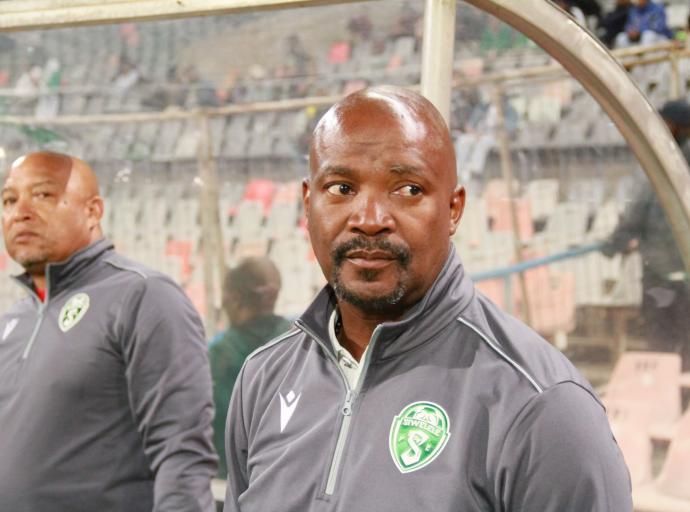
Poor performances and results in the opening quarter of the 2026/2027 season have set off the seasonal local football custom of dismissing coaches. Siwelele FC and Marumo Gallants are the recent club to fire their respective coaches in Lehlohonolo Seema and Phuti Mohafe, following hot on the heels of Sekhukhune United who initiated the coaching exodus by firing Cedric Kaze.
Kaze was shown an early exit by Sekhukhune United after recording four defeats and three wins in seven matches. In an official statement, the club confirmed the technical changes while stressing the need for internal solidity.
This week Siwelele became the latest team to depose their manager, handing Lehlohonolo Seema and his assistant their pink slips following a 3-2 defeat to Kaizer Chiefs last Sunday in Dobsonville.
Siwelele chairman, Calvin LeJohn, stressed that supporters deserve better outcomes after a rocky start to the campaign.
“This has been a challenging period for the club, and our supporters deserve better than what they have seen so far this season,” he said.
Gallants also relieved Mohafe and his assistant of their duties after a winless start yielded just two points from five matches.
Bahlabane Ba Ntwa, as they are affectionately known, confirmed the departures through an official media release while declining further commentary.
“The Club will not be commenting further on the circumstances surrounding the decision or engaging on the merits of the matter,” the statement read.
Early managerial changes are not new, with Sekhukhune and Gallants previously demonstrating a willingness to make swift technical adjustments. Babina Noko dismissed Peter Hyballa during the 2024/2025 pre-season, while Gallants parted ways with Dylan Kerr around the same period.
This pattern reflects the rising pressure placed on coaches by club management, supporters, and key stakeholders. Attention now turns to how the affected clubs rebuild, as remaining Premiership managers remain fully aware that consistent results are essential for job security.
With less than two months to go before the local government elections, the Journal News Network sat down with Democratic Alliance (DA) Mangaung mayoral candidate Werner Pretorius to discuss his readiness to lead the metro should the party win on 4 November.
As a former Mangaung councillor, what would you do differently for the people of the metro?
We must be very clear that, under a DA government, we will not neglect the smaller towns outside Bloemfontein.
I have visited Soutpan, Thaba Nchu, Wepener, Van Stadensrus, Dewetsdorp and Botshabelo, and there is a sense in some of these communities that they have been forgotten by the ANC-led administration.
We must ensure that the same level of services is delivered across all the towns that form part of Mangaung. We also need to revisit the budget and formulate a truly pro-poor budget.
Currently, only 41% of indigent households, according to National Treasury standards, are registered as indigent in Mangaung. That means there is a massive pool of people who still need to be registered so that the municipality can access grant funding and ensure that the poorest of the poor have access to basic services, water and electricity.
One of the major challenges, particularly in Botshabelo and Thaba Nchu, is the state of the roads. The road conditions are terrible and must be addressed.
The DA often points to the City of Cape Town as an example of good governance. Why do you believe that model can work in Mangaung?
Firstly, the DA is a party that can be held accountable. In the DA, if people do not perform, heads will roll.
My head will roll as mayor if I fail to deliver for the people of Botshabelo and Thaba Nchu. My own party will hold me accountable.
We will work tirelessly, as we have done wherever we govern, to ensure that the mandate of local government is delivered. Every cent of grant funding received for upgrading bulk infrastructure must be utilised for its intended purpose.
Look at our track record across South Africa. Where we govern, we are upgrading bulk infrastructure, delivering housing and creating opportunities.
If you look at jobs created over the past five years, nine out of 10 jobs in South Africa were created in areas where the DA governs. That demonstrates that the DA understands local government. When local government works, people work.
You have spoken extensively about the DA's record. What would be your priorities if Mangaung voters give you the mandate?
The challenges facing Mangaung can be fixed, and we can grow the economy in a way that allows the metro to function as it should.
One of my priorities will be economic growth. But you cannot have economic growth when your roads are not functioning. When roads work, people work.
We also need to look at what has happened to factories and industries, particularly in Botshabelo, where many businesses have closed.
Mangaung's tariff structure for commercial and business premises is quite high. The Financial Recovery Plan by National Treasury has indicated that the metro must consider reducing tariffs for businesses.
I visited the Botshabelo Industrial Park and, since then, we have received many direct messages from young entrepreneurs and small businesses asking for assistance. They want to grow, employ more people and contribute to the economy, but they need access to suitable business premises.
You appear to be placing particular emphasis on Botshabelo and Thaba Nchu. Why, and what are you promising residents in these areas?
The people of Botshabelo and Thaba Nchu have immense potential.
We must go back to National Treasury and make the case for more funding because we want to invest more in these areas. We want to upgrade roads, improve bulk infrastructure and see these towns become economic hubs.
Thaba Nchu has immense potential. Botshabelo has immense potential. What they need is a stable government that delivers the basics and provides a foundation for people to build their lives, families and wealth.
Our message to voters in Thaba Nchu and Botshabelo is simple: give the DA an opportunity on 4 November.
We want to see Mangaung working so that people can find employment, earn a living, live with dignity and be proud of their cities and towns.
As the DA's provincial chairperson, do you believe good governance should focus only on Botshabelo and Thaba Nchu, or Mangaung as a whole?
Mangaung must become an example of good governance for the entire Free State.
Municipalities such as Matjhabeng, Metsimaholo, Ngwathe, Kopanong and Mohokare must be able to look at Mangaung and see what is possible.
If Mangaung does not work and set the example, if it does not achieve clean audits, progress economically and demonstrate what good governance looks like, I do not believe the Free State will work.
Mangaung must set the example and be ready for that challenge.
What we need now, on 4 November, is the support of the electorate. Give us your vote and hold us accountable. We will not shy away from accountability.
Unemployment remains one of the biggest challenges in Mangaung and across South Africa. What strategy does the DA have to reduce unemployment significantly?
We are fortunate in Mangaung to have two academic powerhouses: the Central University of Technology and the University of the Free State.
We have experts and institutions that can help us find solutions. There has already been a call from the university for stronger cooperation with local government.
We need to establish a forum involving the private sector, all three spheres of government and tertiary institutions to ask: as Mangaung is located at the centre of South Africa, where can we invest heavily and what makes economic and scientific sense?
We cannot continue spending public money on projects that are set up to fail from day one. Local government investment must be based on data, evidence and science.
I believe there is massive potential in the health sector. We have major hospitals and specialists, and people already travel from the Northern Cape and Eastern Cape to access healthcare services in Mangaung.
We need to explore how we can expand that sector and position Mangaung as a centre of medical expertise.
Tourism is another area with huge untapped potential. We need to ensure that our heritage sites are properly maintained and accessible to the public, while bringing local entrepreneurs and businesses into the sector.
But all of this must be evidence-led.
Ultimately, the most basic thing Mangaung can do is deliver basic services. If people have water in their taps, a stable power grid, reliable refuse collection and functioning roads, we will attract investment and encourage local businesses to expand and employ more people.
That is the fundamental responsibility we must fulfil in government.
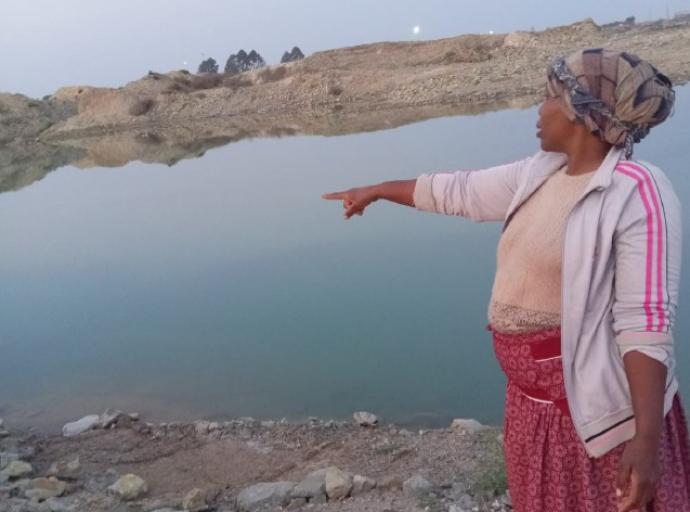
Two young boys aged eight and nine have died in two separate drowning incidents at unsecured dams on Harmony Gold Mine premises near Nyakallong township in Allanridge. This unfortunate double tragedy unfolded on 29 August 2026 after a group of four children went for a swim in the unattended water bodies.
Divers recovered the body of Thabo Diloko Jeremiah (9), on the day of the incident after a passer-by failed to pull him from the deep water.
The second boy, Lethabo Duncken Abraham (8), is believed to have disappeared later on that same day after, but his body was only found and retrieved from an adjacent dam the following day. Lethabo’s death remains shrouded in mystery as police continue their investigations.
Representatives from the Pule Maile Foundation visited both grieving families to offer support and to also help facilitate discussions regarding accountability.
Foundation spokesperson, Shima Mahlatsi, confirmed that while the mining company assisted with burial expenses, further engagements remain pending.
“If (on) Tuesday they don’t come, (then) at 2:00 pm Tuesday we will meet with the two families, then map a way forward of legally challenging the negligence on the side of Harmony,” said Mahlatsi.
The families granted the mine until 15 September 2026 to engage them directly before initiating potential legal action over alleged negligence. Foundation leadership emphasised that allowing the families space to mourn remained the immediate priority.
Allanridge police registered two separate inquest dockets to investigate the drowning incidents. Police spokesperson, Sergeant Palesa Thabana, outlined the scope of the ongoing law enforcement inquiry.
“Allanridge police have registered two separate Inquest dockets,” Thabana said.
Investigators are determining whether security failures occurred at the site and if criminal liability exists.
Police further confirmed that post-mortem results are pending and questioning mine management forms part of the investigation.
“Further investigations will be conducted to determine whether any criminal liability or negligence exists,” she added.
Local authorities and community leaders urged parents to supervise children strictly around dangerous bodies of water such as neglected mine dams and quarries. Furthermore, police appealed to residents to ensure individuals swim only in designated and supervised facilities.
ANC Secretary-General Fikile Mbalula has launched a fierce counterattack against internal critics calling for his removal. Addressing a packed press briefing at Luthuli House, the defiant administrator went on the offensive following intense fallout over the party's election registration administrative lapses.
Mbalula delivered an uncompromising warning to anonymous party members feeding critical leaks to weekend newspapers.
“I will not conduct the movement’s business through unnamed comrades in the Sunday papers,” insisted the SG.
He made it explicitly clear that he would not yield to public pressure or step down on account of these unnamed whisperers, while reasserting his stature at Luthuli House.
“There have been suggestions from within the movement of deliberate wrongdoing. I say to every comrade at every level, if you hold evidence, the movement's structures are open to receive it.
“What the ANC will not do is try its own comrades in the press ... It is the movement using its own employees as cover and I will not permit it as the Secretary-General and the boss of the ANC,” he continued.
Mbalula went on to pour cold water on public criticisms levelled against him by senior National Executive Committee (NEC) member, Mondli Gungubele.
Despite the latter publicly describing the registration issues as a scandalous failure through social media, Mbalula appeared to sideline the challenge by maintaining a calm posture.
It remains open whether Mbalula is taking a superior moral high ground or strategically blind-siding a prominent political rival to neutralise the attack.
“Accountability in the African National Congress follows a report through the structures. It does not follow a weekend news cycle.
“If there are errors, they will be accounted for internally through the formal processes of the National Executive Committee and the Electoral Committee, not on social media or in public squabbles,” Mbalula continued.
Throughout the press conference, Mbalula repeatedly asserted his authority as the supreme administrative chief of the governing party.
Observers consider this aggressive projection of raw institutional power a calculated message to his growing list of detractors, considering that he is increasingly being punted as a serious contender to succeed Cyril Ramaphosa as ANC president.
Demonstrating total authority at Luthuli House, therefore, not only flexes power but also serves as essential reassurance to his supporters that their man is still standing.
“They say, ‘What kind of boss is this Mbalula who cannot submit a complete list of candidates?’ Those are nonsensical people who do not know what they are talking about.
“I’m the secretary-general. I’m the first stop of everyone who wants to blame someone, but I’m unfazed; it comes with the job,” he insisted.
Mbalula remains resolute that the party’s internal dispute processes will run their course without succumbing to external narrative pressure. His combative performance makes it clear that he will fight back against any internal campaign to unseat him before the next elective conference.
Meanwhile, the Electoral Court will hear a legal challenge by the ANC against the Independent Electoral Commission (IEC) on 15 September 2026.
The governing party is fighting to overturn the IEC’s alleged exclusion of more than 2 000 of its ward and municipal candidates from registering before 17:00 on 28 August 2026.
The IEC has, however, rejected the ANC’s claims that its members have been excluded, maintaining that its online candidate nomination system remained fully operational throughout the prescribed registration window.