Northern Cape Premier and ANC provincial chairperson Zamani Saul has denied allegations of political interference in his administration following the shock resignation of Roads and Public Works MEC Fufe Makatong.
Saul moved swiftly to reshuffle his Cabinet after Makatong’s resignation, fuelling spe...
South Africa’s High Commission in India recently hosted a high-profile diplomatic event, attended by over 400 government, business, and diplomatic figures, to celebrate South Africa’s 32nd Freedom Day and the 30th anniversary of its Constitution. The event reaffirmed the strong partnership between the two nations, notably by honouring individuals who have strengthened South Africa’s international ties.
Major businesses were present, many sponsoring the event, which was also used to showcase South African products, like wines and fruits.
India’s Minister of State for Power and New and Renewable Energy, Shri Shripad Yesso Naik, delivered the keynote address on behalf of the Indian government, while South Africa’s High Commissioner to India, Professor Anil Sooklal, delivered the keynote address on behalf of the South African government.
The celebration began with the Bluebells School International band playing the South African and Indian national anthems, “Shosholoza”, two other isiZulu songs, and one English song.
SA-India relations
“Freedom Day is an important celebration for us, and to see the passion with which the Indians still relate to South Africa was a wonderful reminder of the strong partnership and friendship we enjoy not just with the government but across the spectrum of Indian society,” Sooklal said.
“For us, this celebration is also to thank our partners here in India with regard to the support we received during our struggle days and also to reaffirm the strong partnership we enjoy not just with the Indian government but the cross-section of Indian society, as was demonstrated by the high turnout.”
Honorary consul of SA in Nepal, Pradeep Shresta, being felicitated by High Commissioner Professor Anil Sooklal.
“We honoured our honorary consuls from Bangladesh (Solaiman Alam Seth) and Nepal (Pradeep Shresta), who have served South Africa for a number of years,” Sooklal said.
“We had a plaque, with our national emblem and wording showing appreciation, and Minister (Ronald) Lamola had issued a letter of appreciation for the services they provide as honorary consuls to South Africa. That letter was framed and presented to them.”
Dr Shashi Tharoor, Parliamentary Committee on External Affairs chair and former deputy secretary general of the United Nations, South Africa’s High Commissioner to India, Professor Anil Sooklal, and his wife, Dr Nelistra Sooklal Singh.
Sooklal said that Vikramjit Singh Sahney, who served for about 15 years but left after joining the Indian parliament, also received a plaque for the time he served South Africa as honorary consul for North India.
Also receiving a plaque was former Minister of Commerce in India, Dr Anand Sharma, who was at the forefront of leading the anti-apartheid struggle during the days of apartheid in India, Sooklal said.
“We also thought it was right for us to recognise the contribution he made in supporting our freedom,” Sooklal said.
Former SA cricketer Jonty Rhodes, Dr Nelistra Sooklal Singh, and High Commissioner Professor Anil Sooklal.
Sooklal said former South African cricketer Jonty Rhodes was a special guest, who also received a plaque.
“We also presented him with a plaque in appreciation for the role he played in strengthening relations between our two countries,” Sooklal said.
As part of South Africa’s Constitution’s 30th-anniversary celebrations, a painting was commissioned from local artist Aashima Malhotra, with Martin Luther King, Nelson Mandela, and Mahatma Gandhi.
“My wife and I thought it would be very appropriate to have in one frame the three most iconic figures of recent times who symbolise peace, human rights, fundamental freedom, and global cooperation,” Sooklal said.
“We thought it was appropriate given the values of our Constitution, and the message these three global icons left for humanity, which is so relevant today, given all the wars that we are experiencing and the global challenges; we draw inspiration from these three figures. Both Mandela and Martin Luther King were influenced by Gandhi’s non-violent philosophy, and Mandela also drew on Martin Luther King’s civil rights movement struggle.”
Sooklal reported a high turnout of African and other regional ambassadors.
“Interestingly, the ambassador of the USA attended and the ambassador of Iran. Someone commented that it is only South Africa that would be able to have one under the same roof, the USA ambassador and the ambassador of Iran, given the current global tensions between these countries,” Sooklal said.
“I think it’s also symbolic of the moral standing of South Africa and our ability to be friends with everyone in the world. It was also significant that during this time of difficulties, we had diplomatic representation from across the world.”
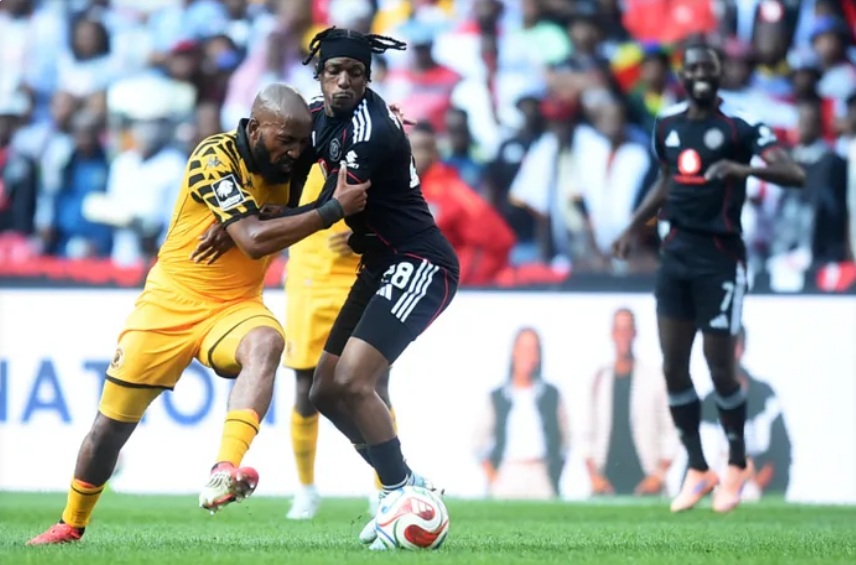
Kaizer Chiefs dealt a significant blow to Orlando Pirates’ Betway Premiership title charge as the second Soweto derby of the season ended in a tense 1-1 draw at the FNB Stadium on Sunday afternoon.
Goals from Pule Mmodi and Kamogelo Sebelebele ensured the sides could not be separated, but the implications stretch far beyond the final whistle. Pirates remain top of the table, but only by two point’s ahead Mamelodi Sundowns — having played two games more. With the Brazilians still to play later, momentum in the title race may have quietly shifted.
The match itself unfolded with all the tension expected of a derby.
Following a chaotic build-up that included a delayed kick-off and pre-match scuffles, Chiefs emerged the sharper side early on. Their intensity unsettled Pirates, who struggled to impose their usual attacking rhythm in the opening exchanges.
Pirates thought they had found an early breakthrough when Oswin Appollis finished neatly, but the effort was ruled out for offside — a sign of the fine margins that would define the afternoon.
The first half was scrappy and physical, with frequent stoppages disrupting any sense of flow. Chiefs, however, looked more comfortable in the chaos, their defensive structure holding firm while Pirates searched for openings.
Goalkeeper Brandon Petersen proved crucial before the break, producing two sharp saves to deny Pirates and keep the contest level. The game finally sprang to life in the 62nd minute.
Wandile Duba ignited the move with a burst of pace down the flank, gliding past challenges before delivering a precise ball across goal for Mmodi, who tapped in at the far post to give Chiefs the lead.
That goal sparked a response from Pirates. With urgency injected into their play, they began to stretch Chiefs more effectively, and their pressure paid off in the 75th minute.
A strike from Deon Hotto was parried by Petersen into the path of Sebelebele, who reacted quickest to slot home the equaliser.
The closing stages carried the weight of the occasion, but neither side could find a decisive moment.
For Chiefs, it was a display of resilience and growth — a marked improvement from their heavy defeat in the previous derby meeting. For Pirates, however, it may feel like an opportunity missed.
In a title race where every point carries weight, this was a moment that demanded control and conviction. Instead, they were held — and with Sundowns waiting in the wings, the balance of power may yet shift again.
Voters are fed up with corruption, crime, unemployment, poor service delivery and are demanding enforced accountability, evidenced by the removal of incompetent leaders.
They say that the current political leaders in both local and national spheres lack the will to serve the public’s interests and improve service delivery.
Among the concerns raised by voters is that some ward councillors disappear from communities once elected to power, making it difficult for the public to access them.
Research conducted by the Human Sciences Research Council (HSRC) in 2023, revealed that deep discontent with democratic and leadership performance and harsh views of core political institutions, are significant factors that keep voters away.
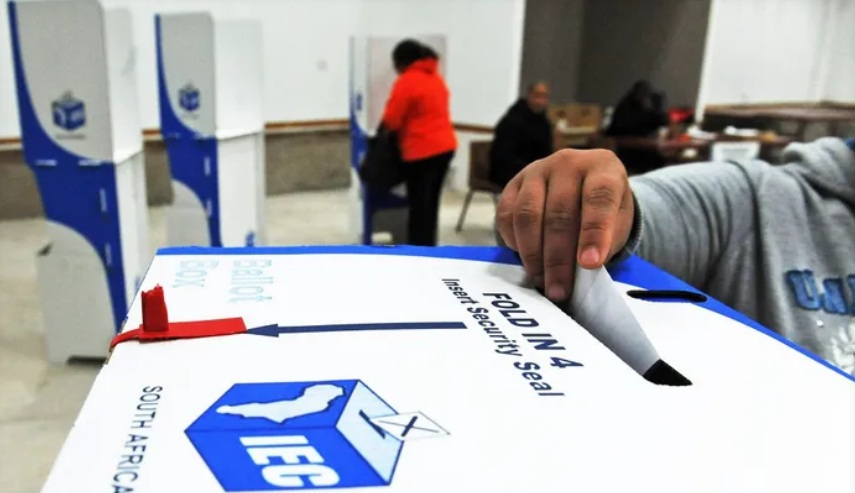
The issue of discontent is again in the public discourse with political parties around the country intensifying their campaigns ahead of the 2026/2027 Local Government Elections. The country has, over the years, faced a steady decline in voter turnout in local government elections, with previous turnout (2021) dipping an all-time low of 45.86%.
Combrink said that while communities are struggling with basic service delivery, unemployment, and daily survival, political leaders continue to engage in debates that do not translate into meaningful change on the ground.
“The problems we face are not because solutions don’t exist — they are the result of failed leadership and a system that has been weakened by corruption. When those entrusted with power act in their own interests instead of serving the people, even the best systems collapse. What we are seeing is not just inefficiency, but a serious lack of accountability and consequence for wrongdoing,” she said.
Combrink also called for accountability to be enforced with real consequences, where leaders who fail to deliver or are implicated in corruption are removed from power, not protected.
“There should be stronger mechanisms for communities to hold leaders directly accountable, including the ability to recall them. Transparency should not be optional. It must be mandatory, with clear reporting and visible outcomes,” she said.
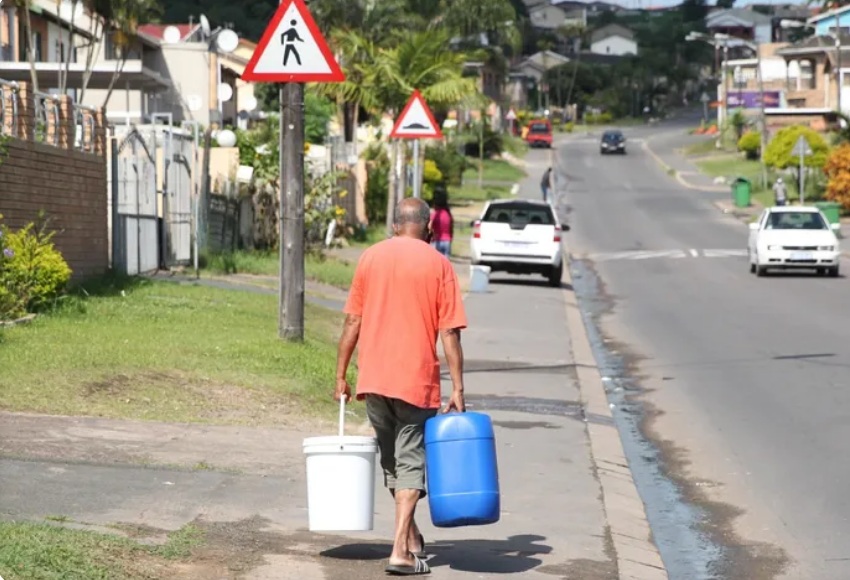
Samuel Madire, a resident of Tshwane, said communities still struggle with basic service delivery, such as water and electricity.
“Our political parties are not serving the public’s interests. Our issues are infrastructure development, quality education, job creation, and improved overall service delivery.
He said the never-ending, unfulfilled promises by politicians to the voters appear as if they (politicians) do not know what they are doing.
“As South Africans, we suffer from an allergy to politicians’ lies. We all know that councillors only come to us when they need our votes. I wish we could have multiple Nelson Mandelas. He was always speaking in the true interest of the public. However, politicians nowadays just want to occupy political office, and when we need services, they are nowhere to be found,” Madire said.
He highlighted the need to implement lifestyle audits for everyone in public office or anyone who has access to the public purse.
“You cannot earn R50 and then live a lifestyle of R200. Where is the other money coming from? The tender system needs to be transformed or eliminated because it is being misused by self-serving individuals to the detriment of the public,” Madire said.
Sharon Olivier, a resident of Westbury in Johannesburg, said over the last decade, crime has increased, from daily robberies, hijackings, shootings of people, drug abuse, and unemployment.
"Everything is just getting worse by the day."
She said when she looks back to last year (2025), when there was a request from Westbury community members for the army to come in and assist with the gangsterism, drug lords, etc, this is done in the belief that “the justice system is failing us.”
“A lot of people have unanswered questions about certain cases within our area. I stay in Westbury, and we have a lot of social ills in our community, from unemployment to gangsterism to drugs and alcohol. So for us, it feels like we have a government that doesn’t care about the marginalised area or the marginalised race in our country. They are more worried about other people instead. We try to hold them (the government) accountable, but we are not getting any joy from all of this,” Sharon said.
Communities are demanding stronger mechanisms to hold leaders directly accountable, including the ability to recall them from office if they fail to deliver.
Ayesha Omarjee, a Durban resident, said the current political discourse is not representative of the current and future generations.
“As a lecturer at a university, I can understand the hardships of the students, who struggle to attend lectures because of no funding available to them, and their parents also don’t have money either. Some students sleep in libraries because they cannot afford to go home. This is extremely disheartening, and I think we have lost faith in these so-called political leaders,” Omarjee said.
She stated that there needs to be some form of accountability within the country’s political formations.
“Since I joined the workforce, I want to see where my tax money is going, especially when we hear allegations coming out of the Madlanga Commission, where billions are being stolen. We are hard-working citizens who ensure we put food on the table and bring our kids up in a safe and comfortable environment. Yet, we have politicians who are making us these promises, that we see nothing of,” Omarjee said.
"We need leaders who are stepping up to ensure that those found guilty face the full might of the law and not let go."
She said many of her colleagues and friends have emigrated, describing it as a brain drain because those individuals are educated, but their knowledge is now being used to benefit other countries instead of helping make a better South Africa.
Khazamula Chauke, a resident of Youth View Informal Settlement in Mamelodi (Tshwane) since 2016, said he will not vote in the upcoming local government elections, because the government is not taking people of lower status seriously and their concerns are ignored.
Chauke said his disappointment with the government started during the 2019 floods and worsened after the 2022 floods.
“We were promised relocation from Youth View Informal Settlement to a safer place, but this did not happen. In 2022, we were moved to a community hall. We stayed there for a year and a half, until we realised that nothing was going to happen; it is better that we go back to our shacks,” he said.
He added that they have not stopped engaging authorities, but it has all been in vain.
“I began voting in 1994, but after the 2019 and 2022 incidents, I chose to never vote again. Voting for me is not important anymore. We have tried everything in our power to get help from the politicians, but nothing has happened. From the time until today, we have been engaging with the authorities. They keep on promising, but nothing comes up,” Chauke said.
He added that he has come to realise that “this thing of voting doesn’t assist lower people like myself; it only works for those who are in higher positions".
Chauke said that the government must 'take our people seriously' and that councillors must help communities by listening, taking grievances to the higher-ups in the municipality, and reporting back.
“The only thing that would make me reconsider voting is if we are relocated to a place where there is service delivery, such as water and sanitation, and schools for our kids.
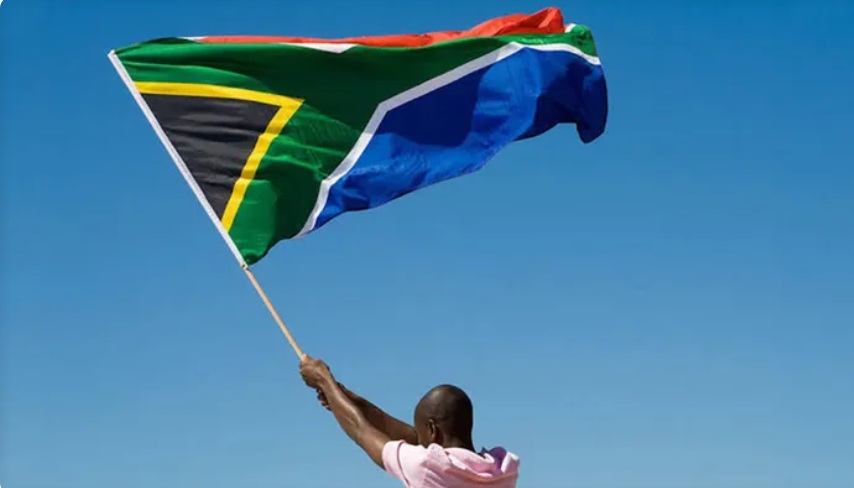
As a nation, this year, we are celebrating 32 years of Freedom Day, and while this is a significant piece of our history.
South Africa has a history filled with pain and struggles as it suffered for 46 years under the apartheid regime.
The institutionalised system of racial segregation and white minority rule was implemented by the National Party (NP) in 1948 and officially dismantled between 1991 and 1994, culminating in the first democratic elections on April 27, 1994.
ANC president Nelson Mandela smiles on April 27, 1994, as he casts his first vote at the polling station at John Langalibalele Dube’s Ohlange High School in Inanda, near Durban, in South Africa’s first democratic general elections. On his right is former minister Jeff Radebe.
What is Freedom Day?
Freedom Day marks the anniversary of the first democratic, non-racial elections held on April 27, 1994. South Africans continue to commemorate this day to celebrate their liberation from apartheid.
This was the first time in South African history that citizens of all races, 18 years and older, were permitted to vote and were treated as equal citizens.
The significance of Freedom Day also honours the first democratic election, in which Nelson Mandela was elected South Africa's president.
During the democratic elections, nearly 20 million South Africans cast their ballots, and ultimately, the African National Congress (ANC) won the election.
Freedom Day was first observed on April 27, 1995, and has since been treated as a day to reflect on the immense sacrifices made to achieve democracy, promote social cohesion, and address ongoing challenges.
There were snaking queues of South Africans eager to vote in a new government during the first democratic election in 1994.
Why celebrate Freedom Day?
Freedom Day is celebrated for various reasons, such as:
Marking the end of apartheid where over 300 years of colonialism and white minority rule.
Honouring the right to vote for all.
Remembering the struggles and sacrifices made by anti-apartheid stalwarts who fought for the nation to achieve a free and democratic society.
Celebrating unity and human dignity to affirm to all South Africans to move away from divisions, but rather promote social cohesion and uphold the human rights as entrenched in our constitution.
So, while this day marks a specific historical event, the broader meaning of this day is tied to identity, human rights, and the ongoing journey of a nation still moving forward after the wrongs of the past.
AS SOUTH Africa enters mid-2026, our democracy has reached an age that should signal maturity. Thirty-two years after 1994, the promise of freedom ought to feel settled and secure. Instead, it feels unresolved – less like a completed project and more like a draft still being contested by lived reality.
This is the uncomfortable truth of 2026: South Africa has achieved political freedom, but not yet freedom that feeds, protects and dignifies. For millions, the right to vote has not translated into the right to thrive.
Recent data from the Human Sciences Research Council lays this crisis bare. Public demand for democracy has fallen to 36% – the lowest level since liberation. Nearly one in four South Africans now admit they would consider non-democratic alternatives if it meant a job, safer streets, or a roof that does not leak. This is not a rejection of freedom itself; it is a verdict on a democracy that has failed to deliver material security.
We live with an enduring contradiction. Internationally, South Africa remains classified as “free", scoring 81 out of 100 on civil liberties. Domestically, we endure the world’s highest levels of inequality. Freedom, as experienced on the ground, has become uneven – robust for the few, brittle for the many.
Nelson Mandela warned that “to be free is not merely to cast off one’s chains, but to live in a way that respects and enhances the freedom of others”.
In 2026, that challenge feels painfully literal. How do we enhance one another’s freedom when the state struggles to protect the most basic right of all –the right to life? Nearly 80 people are murdered each day. The 2026 State of the Nation Address acknowledged this grim reality, identifying organised crime and construction mafias as grave threats to our sovereignty. When a small business cannot open without paying protection money, the constitutional promise of freedom of trade rings hollow.
Ahmed Kathrada understood that the victory of 1994 was not an endpoint but a shift in terrain.
“The Struggle for freedom and democracy is a continuous one,” he reminded us.
Today, that continuity confronts us with an unsettling diagnosis: we have become a nation of spectator citizens. We vote – though in ever-shrinking numbers – and then we withdraw. We watch councils collapse, policing fail, and corruption metastasise, while hoping the machinery of state will correct itself.
Afrobarometer surveys reveal the contradiction clearly: while over 70% of South Africans want the media to expose corruption, fewer than a third are satisfied with how democracy actually functions. We recognise what is broken, but too often feel powerless to repair it. Spectator citizenship is not abstract. It looks like empty ward committee meetings, unelected school governing bodies, neglected community police forums, and local budgets passed without scrutiny.
Democracy withers not only when institutions are captured, but when citizens stop exercising their muscle. Yet 2026 is not a dead end. It is an inflection point. The pessimism reflected in surveys exists alongside something quieter, but more hopeful: a renewed insistence on agency at the local level. In the run-up to the 2026/27 local government elections, community-based oversight bodies, ratepayer associations, school boards, and street committees are remerging – not to wait for national saviours, but to reclaim competence where people live.
This is what distinguishes the current moment from earlier cycles of disillusionment. The energy of 2026 is not concentrated in party headquarters or liberation myths, but in neighbourhoods. It is decentralised, pragmatic and impatient.
The Freedom Month theme, “Freedom and the Rule of Law”, captures this shift. Ongoing inquiries into police corruption and state capture signal that accountability, though slow and uneven, have not vanished. For the first time in years, the principle that no one stands above the law feels contested again – in courtrooms, in communities, and in public expectation. That contestation is the mark of a bruised, but maturing, democracy.
Freedom in 2026 must therefore be understood differently. It is no longer enough to defend the freedom to vote; we must demand the freedom to thrive. That means insisting that the billions lost annually to procurement fraud be redirected toward tangible opportunity – whether through skills pipelines, youth employment mechanisms, or other redistributive tools that restore stolen futures. The specific instruments may be debated; the principle cannot be deferred.
Our Constitution was never meant to be a ceremonial artefact. It is a living contract – one that assumes participation. Democracy is not a fragile vase best admired from a distance; it is a tool that requires use, pressure and maintenance. The surveys and statistics of 2026 are not a death knell. They are an audit. They tell us that South Africans still believe in the idea of freedom – they are simply tired of waiting for its reality.
As we look toward the next decade, the task before us is clear. Honour Mandela’s vision by enhancing the freedom of others in concrete terms. Honour Kathrada’s “continuous struggle” by refusing to abandon the ballot box, even when it feels heavy. Above all, move from hope as sentiment to citizenship as practice. The question of 2026 is no longer whether our democracy will survive. It is whether we are finally prepared to exercise it – daily, locally and relentlessly – until freedom moves from paper to purpose. Our liberation was won at a price we can never repay. The least we can do now is ensure that, at last, it pays dividends for all.
Neeshan Balton is the executive director of the Ahmed Kathrada Foundation.
** The views expressed do not necessarily reflect the views of IOL or Independent Media.
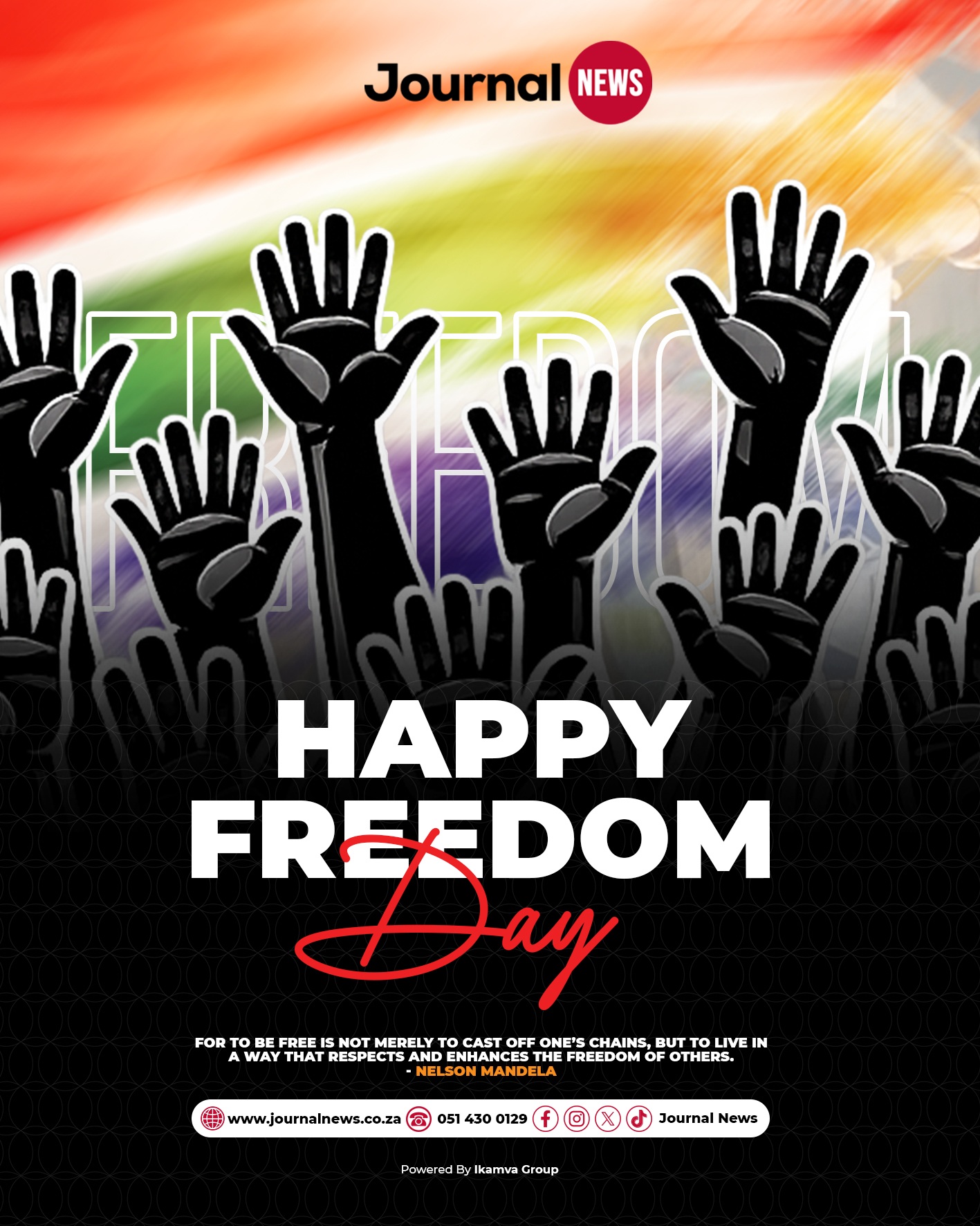
Today, we don’t just remember history — we honour the courage that shaped our democracy.
By JN Reporter
“For to be free is not merely to cast off one’s chains, but to live in a way that respects and enhances the freedom of others.” — Nelson Mandela
Freedom Day stands as a powerful reminder of the sacrifices made by countless heroes — from Oliver Tambo to Walter Sisulu, Albertina Sisulu, and the many unsung voices who refused to be silenced.
“The struggle is my life.” — Oliver Tambo “Freedom cannot be achieved unless the women have been emancipated from all forms of oppression.” — Nelson Mandela
This day, born from the historic 1994 South African general election, is more than celebration — it is a call to protect, nurture, and expand the freedoms we inherited.
celebrate culture, unity, and heritage Freedom is not finished work. It lives in how we treat one another. It grows in unity, dignity, and justice.
From all of us at Journal News — may we continue to build a South Africa worthy of the sacrifices made.