President Cyril Ramaphosa will today, 10 October 2026, officially inaugurate the transformative Free State Catalytic Investment and Industrialisation Project in Phuthaditjhaba, QwaQwa.
The massive R100-billion venture, hosted alongside Free State Premier MaQueen Letsoha-Mathae and Chinese investors...
Eight Free State government employees face immediate retribution. At the same time, a senior provincial official has been dismissed after a damning Special Investigating Unit probe exposed a multi-million-rand bursary fraud syndicate.
Free State Premier MaQueen Letsoha-Mathae confirmed that the axing forms part of decisive internal sanctions taken after the investigation exposed severe oversight failures within the Office of the Premier.
The dismissed official and his colleagues systematically bypassed established procedures, ignored regulations, and approved funding for ineligible individuals.
They allegedly enabled widespread irregularities in a bursary programme intended to give disadvantaged young people an opportunity to further their studies.
“One senior official who unlawfully awarded bursaries to himself and members of his family has already been dismissed from public office,” Letsoha-Mathae confirmed.
Beyond internal dismissals, the SIU has recommended disciplinary action against a total of 36 officials linked to the multi-million-rand scheme.
Evidence against seven individuals has already been referred to the National Prosecuting Authority for possible criminal prosecution on charges including fraud, theft, and money laundering.
The broader three-year probe examined allocations made between 2017 and 2023 during Sisi Ntombela’s tenure as the Premier of the province. The investigations revealed how millions of rands were diverted through policy violations and abuse of public trust.
Among the discoveries facilitated by the officials was that the Office of the Premier paid R34 000 to the University of the Free State on behalf of a student who had already died.
The corrupt system also allowed seven foreign nationals to receive bursaries despite provincial policy strictly limiting the funding to South African citizens residing in the Free State.
Investigators found no evidence that the required approvals were obtained by the implicated staff to justify these severe policy deviations.
The compromised oversight further allowed failing students to extend three-year qualifications for up to seven years while continuing to draw government funds.
The province also contributed almost double the agreed amount towards an international study programme, driving irregular expenditure up by approximately R8.5 million.
Acting SIU Head Leonard Lekgetho stated that the actions of the employees represented a collapse of civic duty and ethical leadership.
“The SIU's investigation has exposed not just maladministration, but a moral failure, a collapse of civic duty and ethical leadership. Officials turned opportunity into exploitation and service into self-interest. They violated the trust of the people and the vision of our democracy,” Lekgetho said.
The SIU is currently pushing to recover the lost funds, with R6.3 million already clawed back from various universities.
The decisive action against the eight employees has reignited intense public interest regarding accountability in government programmes intended to uplift vulnerable communities.
The ANC in the Free State has thrown its weight behind Letsoha-Mathae, calling for her to be given the space to implement the recommendations of the report.
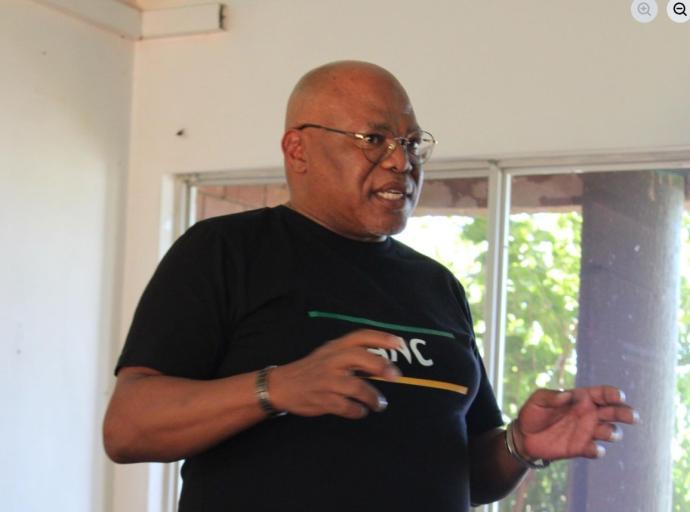
Speaking at a party media briefing on Thursday, ANC deputy provincial secretary, Dibolelo Mance, advised that the provincial administration must be allowed to manage the bursary scandal.
“The SIU report was brought to us just like you have received it as members of the media. We would really like to give the Office of the Premier space to deal with issues relating to the outcomes of the report.
“I am sure that the Premier in her own interviews has shown commitment that no stone will be left unturned and that is what we are expecting from all our deployees of government,” Mance said.
The ANC in the Free State has strongly condemned what it describes as alleged patronage practices linked to Mangaung Metro Speaker Lawrence Mathae, warning that the organisation will not tolerate the abuse of power to settle political scores or undermine party unity.
The comments follow allegations that Mathae dismissed five municipal employees for allegedly supporting his rival during the ANC’s fiercely contested Mangaung regional conference, which was later nullified.
Speaking during a media briefing at the party’s provincial offices yesterday, ANC Free State Deputy Secretary Dibolelo Mance said the organisation had taken note of the matter as it is seized with the regional leadership.
“The ANC has taken note of the matter. However, it is seized with the region at this time,” Mance said.
He reiterated the party’s opposition to patronage and factional retaliation, stressing that political preferences should never be used as a basis for employment decisions.
“The ANC has reiterated its position around this issue that patronage can never be the order of the day in the ANC. It does not mean that if somebody might not have supported you, or whatever the case might be, therefore they should be removed from office. It can never be allowed and can never be agreed to by the ANC. We do not subscribe to patronage,” he said.
Journal News previously reported that the affected employees are Dineo Motlhabane, Tsietsi Tekete, Mangi Shounyane, Tseliso Mokoai and ANC regional spokesperson Nqamile Nxangisa. They were allegedly dismissed with immediate effect after supporting Vusi Soqhaka during the regional conference, which was later abandoned and subsequently declared invalid.
The employees, who have yet to return to work, subsequently wrote to ANC Secretary-General Fikile Mbalula seeking urgent intervention.
In correspondence seen by Journal News, Mbalula instructed that the matter be treated with urgency and that a report be submitted to his office by 10 May.
The letter was also circulated to senior ANC leaders, including President Cyril Ramaphosa, Deputy President Paul Mashatile and ANC National Chairperson Gwede Mantashe, signalling the seriousness with which the party’s national leadership is treating the allegations.
In South Africa, approximately 500 000 abortions are performed each year, with over 50% of these being illegal, this according to research by the School of Public Health at the University of Witwatersrand.
Despite three decades of strong legal protections, illegal abortions disproportionately affect poor, rural, and immigrant women, as well as adolescent girls who face heightened stigma and confidentiality barriers.
The research indicates that facility-based stigma, resource constraints, insufficient provider training, and inconsistent application of conscientious objection provisions hinder equitable access to safe abortion services.
The Choice on Termination of Pregnancy Act of 1996 guarantees safe, legal abortions up to 12 weeks, and under specific conditions up to 20 weeks.
However, systemic barriers such as stigma, overcrowded clinics, lack of provider training, and poverty continue to push women into the hands of unregistered doctors and the dangerous use of pills sold through posters and social media.
Sister Malebeko Rantsho, owner of Karabo Clinic in Bloemfontein, a termination of pregnancy center that performs between 70 and 80 abortions per month, explains that the easy access to illegal facilities and abortion pills on social media is the root cause of the high number of illegal abortions.
Rantsho warns that these illegal pills can lead to fatal bleeding or permanent infertility.
“There are posters advertising these illegal abortions that provide young women easy access to these services and fake doctors, resulting in an increase in recorded illegal abortions.
“These illegal doctors give girls pills obtained from unregistered pharmacies, which sometimes do not work.
“They are highly dangerous, as women may bleed to death, she said.
Charmain Swart from the Pregnancy Crisis Centre in Bloemfontein says poverty and unemployment contribute to young women resorting to illegal abortions or abandoning their infants.
“The fear of parents and guardians plays a role, as young women are afraid to talk to them about an unexpected pregnancy,” she explains. “We need to educate parents to understand that an unexpected pregnancy is not the end of the world and that their children can still pursue their studies and have bright futures.
“Fear drives young women to take drastic measures, said Swart.
To combat this issue, the House of Hope Community Life Development Centre in Welkom has initiated the Baby Safe program, where women can safely surrender unplanned babies.
The baby box is in a discreet passageway with high walls, ensuring the privacy of women depositing their babies.
Centre manager, Tseleng Molefe, explains that once a baby is placed safely in the baby safe, the box locks automatically, and an alarm alerts ER24 and the care workers.
“The baby will then be placed in an exclusion room for a health examination by medical personnel, she said.
Molefe says, since its inception in 2021, the center has received up to ten babies through its door of hope.
“Previously, we would open a case of abandonment with the police, but they often cited insufficient information.
“Now we refer the matter to the Department of Social Development for a case to be opened.
“The box is not used as frequently as before, but we still hear about children being abandoned.
“Even though we strive to create awareness during our outreach in Thabong, we are told that abandoned foetuses and newborn babies are frequently found at dumping sites, Molefe said.
Spokesperson for the Free State Department of Social Development, Thembile Ngabeni, stated that the department offers free support services for unplanned pregnancies.
“We provide free social workers who can offer psychosocial support to women.
“Communities can also play a role by being trained and screened as temporary safe care parents.
“They should be educated about reporting procedures and raised awareness of alternative care options for babies and children when parents are unable to care for them, Nqabeni said.
The three-day Cataract Marathon, held over the weekend at Boitumelo Regional Hospital in Kroonstad, was a great success, with over 100 patients receiving treatment.
Screening was conducted last week Friday with cataract operations scheduled for Saturday and Sunday.
According to a press release from the Free State Department of Health, patient safety was prioritised, and theatre lists were finalised based on vital signs.
"Blood sugar and blood pressure were monitored on the day. If levels were found to be high, patients were scheduled for another appointment to ensure they could still benefit from these life-changing surgeries," stated Bongi Mthimkhulu, the CEO of Boitumelo Regional Hospital.
This initiative follows a pledge by Free State MEC for Health Monyatso Mahlatsi, during his department budget vote, to restore surgical capacity, reopen underutilised theatres, and improve access to specialist care in public hospitals. The province is currently facing a cataract backlog of over 1,000 patients.
The department has also confirmed plans to reopen and strengthen theatres at several facilities across the province, including Thusanong Hospital, Katleho Hospital, Albert Nzula Hospital, Mafube Hospital, Fezi Ngubentombi Hospital, Elizabeth Ross Hospital, National District Hospital, and the neonatal unit at Dihlabeng Regional Hospital.
Build One South Africa (BOSA) leader, Mmusi Maimane, has officially availed himself to chair the newly formed 31-member parliamentary committee set to consider the possible impeachment of President Cyril Ramaphosa.
According to a report by the Sunday Times, Maimane’s willingness to steer the high-stakes inquiry comes amid an intense drive by opposition political parties to block the African National Congress (ANC) from taking control of the process.
The committee is scheduled to meet for the first time to elect a chairperson and establish the roadmap for investigating the 2020 Phala Phala game farm scandal.
According to The Sunday Times opposition formations are actively leveraging their superior numbers to ensure the probe into the theft of over 580 000 US dollars (around R9.8 million at the time) remains strictly independent of executive influence.
Maimane confirmed that multiple opposition parties have already approached him to lead the multi-party panel, citing his position outside the Government of National Unity (GUN) as a key advantage.
“I have been approached by a number of political parties who have said: ‘Look, you are outside of the GNU, you have got the legal integrity, would you be available to chair this committee?’” Maimane revealed.
“And I have said yes, I am available,” he added.
The ANC finds itself in a highly vulnerable legislative position - holding a mere nine seats on the 31-member panel. The remaining 22 seats are held by opposition benches, stripping the ANC of the absolute majority it historically relied on to shield its leadership.
Furthermore, the ANC intends to nominate former deputy chief whip, Doris Mpapane, who currently chairs the portfolio committee on the Presidency.
However, opposition leaders are fiercely lobbying for a non-GNU candidate to guarantee public credibility and legal impartiality, according to The Sunday Times.
Compounding the ANC’s dilemma is the cautious stance of its primary coalition partner, the Democratic Alliance (DA), which holds five seats on the panel.
DA leaders are believed to be quite hesitant to claim the chairmanship themselves, fearing that leading the impeachment process could create a conflict of interest and destabilise the national coalition if adverse findings are made.
Meanwhile, smaller political formations are digging in their heels to ensure GNU partners do not compromise the integrity of the constitutional process.
African Transformation Movement (ATM) leader, Vuyo Zungula, whose party initiated the Ramaphosa’s impeachment calls, strongly backed the exclusion of all executive-aligned parties from the registry of potential chairs.
“The issue of Phala Phala is a parliamentary process, it's not a GNU process. The focus must be on restoring parliamentary oversight,” Zungula said, as quoted by The Sunday Times.
As the critical vote approaches, the ANC faces a daunting battle to protect its Ramaphosa within a fragmented parliamentary landscape it no longer controls.


_thumbnail.jpg)


