President Cyril Ramaphosa will today, 10 October 2026, officially inaugurate the transformative Free State Catalytic Investment and Industrialisation Project in Phuthaditjhaba, QwaQwa.
The massive R100-billion venture, hosted alongside Free State Premier MaQueen Letsoha-Mathae and Chinese investors...
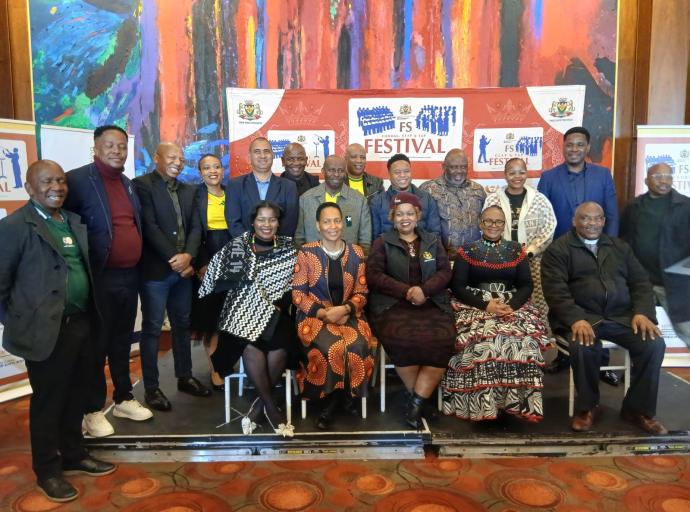
The Free State is gearing up for a vibrant celebration of music, heritage, and unity after the launch of the 2026 Free State Choral, Clap and Tap Festival, an initiative aimed at preserving indigenous musical traditions and creating new opportunities for artists across the province.
The Free State Department of Sport, Arts, Culture and Recreation, in partnership with the Mzansi Golden Economy (MGE) Programme and Ntho Ya Kasi Entertainment, officially launched the festival at the Performing Arts Centre of the Free State (PACOFS) on Friday.
The provincial cultural development initiative seeks to promote social cohesion while ensuring that indigenous music traditions continue to thrive among younger generations and communities throughout the province.
Delivering the keynote address, MEC for Sport, Arts, Culture and Recreation Zanele Sifuba said the launch comes during a year of significant historical milestones, including the 50th anniversary of the 1976 Soweto Uprising.
“As we reflect on the heroic spirit of the youth of 1976, 50 years later, we must remain conscious of the enormous impact that choral, clap and tap music has on young people. This is a programme that has historically attracted and touched the lives of many young people,” said Sifuba.
She said the province must continue strengthening youth participation as the programme enters its second year in honour of the courage and resilience demonstrated by the youth of 1976.
Sifuba also noted that last year's report showed that most participants were women, drawing a connection to the 70th anniversary of the 1956 Women's March.
“The dominance of female choral, clap and tap music lovers resonates with the 70th anniversary of the Women's Anti-Pass March that we are celebrating this year. Let us continue to intensify women's participation as we roll out the programme this year,” she said.
Ntho Ya Kasi Entertainment CEO Mbulelo Davis described the festival as a celebration of identity and cultural heritage.
“The Free State Choral, Clap and Tap Festival is a celebration of who we are as a people. It is about preserving cultural traditions that have sustained communities for generations while creating new opportunities for artists to grow, learn, and participate meaningfully in the creative economy,” he said.
He added that the initiative demonstrates the power of partnerships between government, communities, and the creative sector in building a more inclusive and sustainable future for arts and culture in the province.
The festival will be rolled out across all districts of the Free State, including Fezile Dabi, Thabo Mofutsanyana, Lejweleputswa, and Xhariep District Municipalities.
The future of South Africa's leadership took centre stage at the Bethlehem Town Hall last week as young voices from across Dihlabeng Local Municipality battled it out in a public speaking competition that celebrated democracy, youth activism, and the power of voting.
Hosted by the municipality under the theme, "Youth Voice – Know Your Government, Use Your Voice," the competition brought together Grade 9 learners from schools across the municipality.
As part of the entry requirements, learners had to submit videos that met specific technical and content guidelines. The initiative provided participants with an opportunity to showcase their public speaking skills while reflecting on the significance of the June 16, 1976 Uprising, the gains made since the dawn of democracy, and the importance of active citizenship.
Eight finalists advanced to the competition, representing LK Nhlabathi Secondary School, Thabo Thokoza Secondary School, Kganyeng Secondary School, Bethlehem Combined School, Bethlehem Comprehensive School, Mashaeng Secondary School, Taung Secondary School, and Paul Roux Intermediate School.
The young speakers impressed judges and the audience alike as they unpacked South Africa's education history. These events led to the 1976 student uprising and the role of young people in shaping the country's future through voting and civic participation. Some participants even quoted iconic leaders such as Nelson Mandela to reinforce their messages.
After a closely contested competition, Lerato Mokhoantle of Mashaeng Secondary School emerged as the overall winner. Lethabo Mohapi of Bethlehem Combined School secured second place, while Relebohile Maseko of Bethlehem Comprehensive School finished third.
Mokhoantle said winning the competition was particularly rewarding because preparing for it coincided with midterm examinations.
"I am very excited about the outcome because we put in a lot of effort and had to overcome many challenges along the way as it was during the exam period, so I was forced to multitask," she said.
She credited her success to the support she received from her family, friends, and teachers, who encouraged and assisted her throughout her preparations.
Executive Mayor Tseki Tseki congratulated all the participants and urged them to be proud of their achievements, regardless of the final results. He said participating in the competition reflected courage, confidence, commitment, and leadership potential.
"The competition showcased the talent, confidence, and immense potential of Dihlabeng's youth while honouring the enduring legacy of the young people who played a pivotal role in South Africa's struggle for freedom and democracy," said Tseki.
The event was supported by key stakeholders, including the Department of Social Development and the National Youth Development Agency, underscoring the importance of empowering young people to become informed and active citizens.
A 17-year-old was arrested for the murder of an elderly couple who were murdered days before being discovered inside their home in Sespond near Dertig, outside Makapanstad in the North West has been laid to rest as the community continues to reel from the tragedy.
The victims, Moses Saike Rafedile (76) and his wife, Tsakane Sarah Rafedile (62), were found dead earlier this week after a concerned neighbour noticed unusual inactivity at their home and requested a welfare check.
According to North West police spokesperson Anne Magakoe, a multidisciplinary team comprising members of the Brits Crime Intelligence Unit, Brits Trio Task Team, and Makapanstad detectives followed up on information that led them to a person of interest.
During the investigation, officers recovered cash believed to have been stolen from the victims, as well as a knife handle allegedly linked to the crime scene.
The teenagers appeared before the Tshwane North Magistrate’s court on Wednesday. The Police said the matter will proceed in accordance with the provisions of the Child Justice Act regarding government child offenders.
Mayor of Moretele Local Municipality George Manyike, condemned the killings and said they are “heartbreaking and unacceptable.
“The brutal killing of older members of our community is both heartbreaking and unacceptable. Our aged people deserve to live their lives in peace, dignity, and safety,” he said.
Manyike extended his condolences to the Rafedile family and welcomed the arrest, expressing hope that justice would be served. The residents of Sespont are terrified and shaken by the murder as the elderly are held with high regard in the community. “This is such a sad story to hear of our elderly being killed so horribly in a community where the elderly are most respected. I am so sad for this generation,” said Shantal Pillay, one of the residents.
When the Free State High Court ordered the dissolution of the Ngwathe Municipal Council in June 2025, many outsiders quickly concluded that our municipality was beyond redemption.
The judgment found that Ngwathe had failed to meet its constitutional obligations and called for provincial intervention under section 139. Residents of Parys, Heilbron, Koppies, Vredefort and Edenville had long felt the heavy weight of historical neglect and collapsing infrastructure.
In February 2026, AfriForum celebrated what they called a “decisive win” and insisted that dissolution was non-negotiable. They painted a picture of a completely failed municipality.
Their activism often hides behind legal language.
I am speaking as a resident and activist who has watched our municipality fight its way back from the edge of collapse.
The administration under former mayor Victoria de Beer-Mthombeni and Municipal Manager Dr Futhuli Mothamaha — whom the municipality council appointed — inherited a local government in chaos.
Basic services were failing across all five towns, senior posts stood vacant for years, financial records were in disarray, and community trust had almost disappeared. Yet instead of retreating or looking for scapegoats, this administration got to work with determination.
In the past five years, from 2021 to 2026, Ngwathe has implemented the most ambitious programme of infrastructure renewal, service restoration and governance reform in our recent history, addressing issues the court highlighted. This opinion piece offers an account of progress.
My aim is not to deny the real failures of the past but to celebrate the concrete strides made and to call on everyone — including critics — to acknowledge what has been achieved and to build on it for the benefit of all our people.
The Inheritance: A Municipality at the Graveyard
Before we celebrate the achievements, we must understand exactly what De Beer-Mthombeni’s administration inherited.
Municipalities placed under administration often suffer further collapse because appointed caretakers from outside take a long time to understand local conditions, political realities and community dynamics, and they often lack real accountability to the people on the ground. When Victoria took office, Ngwathe was on the brink of total collapse. Streets were dark at night, water seldom flowed from taps, financial records were chaotic, and critical senior posts remained vacant for far too long. As one observer rightly noted, this administration “headed this Municipality when it was already at the graveyard”, but still fought with everything they had to revive it. I take my hat off to them for refusing to surrender and for proving that visionary, committed leadership can still make a profound difference even in the most difficult circumstances.
The problems did not begin with this administration. They were the result of years of accumulated neglect, under-investment and weak governance that predated the current ANC-led council. This team took over a broken system and chose to confront it head-on rather than make excuses. That choice deserves recognition.
Addressing the Court Order’s Concerns
The High Court’s order cited failures in service delivery, leadership instability, by‑law enforcement and financial management. While those criticisms were valid at the time, the progress outlined above demonstrates that Ngwathe has acted decisively to rectify the problems:
1.Water quality and sewerage.The municipality has upgraded water and wastewater infrastructure, replaced asbestos pipes, installed bulk pipelines and secured Blue Drop corrective action approval.
2.Electricity and service reliability.Electrification programmes have connected hundreds of households, and the new Vredefort substation will connect 2 000 more. The municipal fleet expansion ensures faster responses to faults.
3.Governance.Permanent appointments of senior managers and legal advisors have stabilised administration and improved compliance. A fully funded budget and improved grant performance reflect financial recovery.
4.By‑law enforcement and public safety.The resuscitated traffic unit and appointment of security officers strengthen law enforcement.
5.Economic development and job creation.Renewable energy projects, mixed‑use developments and infrastructure upgrades are creating thousands of jobs. This growth will broaden the tax base and enhance municipal revenue.
Conclusion: Building on Progress and Protecting Our Gains
Ngwathe still faces real challenges. Financial constraints, ageing infrastructure and the deep legacy of past mismanagement will not disappear overnight. But it would be dishonest and unfair to ignore the significant progress achieved under the leadership of Executive Mayor Cllr Victoria de Beer-Mthombeni and Municipal Manager Dr Futhuli Mothamaha over the past five years. The municipality has:
• Replaced 15 km of asbestos water pipes, refurbished treatment works and built new bulk pipelines reaching 99 percent completion, including the critical Koppies to Edenville link and the 1.97 km Kwakwatsi pipeline.
• Installed boreholes and restored water to communities that had been without supply for decades.
• Upgraded wastewater treatment works, started new reservoirs and expanded sanitation networks.
• Electrified 740 households and installed new substations while restoring street and high-mast lighting across all towns.
• Purchased a full municipal fleet, including refuse trucks, a honeysucker, bakkies, TLB and cherry picker,s to improve response times and end over-reliance on outsourcing.
• Revived the Traffic Department after nearly a decade, unveiled new vehicles and created a learnership for 27 young people.
• Attracted major private investment, including the Sedibe and Damlaagte solar projects and the Parys Mega Development with its hotel, truck stop and related infrastructure in the Vaal de Grace area, creating thousands of jobs.
• Supported around 200 local entrepreneurs through the LED directorate with equipment and business development support, with a strong focus on youth and women.
• Presented fully funded budgets, filled critical senior management posts, improved financial oversight and achieved an approved Blue Drop corrective action plan.
• Launched a trained Red Cross-linked disaster management volunteer brigade and continued support for local NPOs, including the Edgar Legoale Foundation.
These achievements are not just numbers on paper. They translate into real improvements in the daily lives of our people. Children in Tumahole now drink clean water without walking long distances. Young entrepreneurs in Heilbron and Parys have access to machines and start-up support. Elders in Parys can walk down well-lit streets at night with greater peace of mind. Job seekers in Mokwallo and Vredefort are training as traffic officers or solar technicians. These changes restore dignity, create hope and lay the foundation for a more prosperous future.
With unity, continued accountability, community participation and sustained investment, Ngwathe can move from a story of struggle and failure to one of genuine rebirth, pride and shared prosperity. Let us keep the lights on, keep the water flowing, keep our streets clean and safe, and keep creating opportunities for our young people. The people of Ngwathe deserve nothing less.
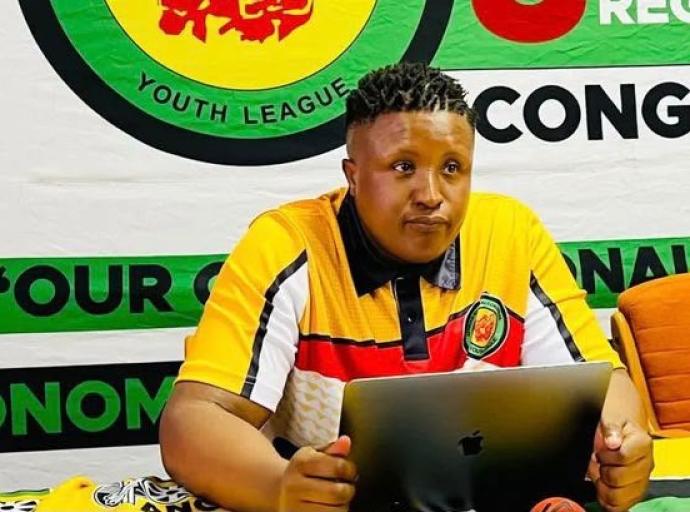
Edgar Legoale, former ANCYL Fezile Dabi Regional ChairpersonNews
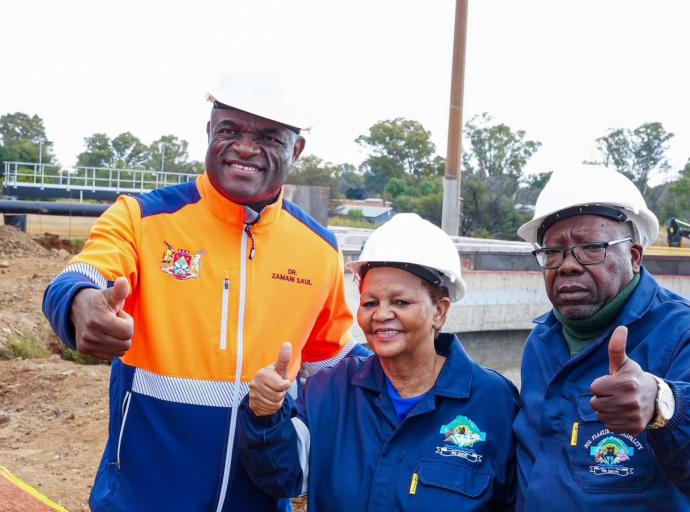
The Sol Plaatjie municipality's oversight of the R2.5 Billion Riverton Water Treatment Works yesterday, Executive Mayor Martha Bartlett says the municipality is finally emerging from years of disruption and moving towards greater stability in one of the Northern Cape’s most significant infrastructure investments.
Speaking to Journal News Network after the visit, Bartlett said political turbulence had previously affected service delivery and created frustration among residents who are paying for services but not always receiving them.
“Where there is no stability, there can be no service delivery,” Bartlett said, reflecting on periods marked by protests, labour unrest, and governance disruptions.
During the oversight, Premier Zamani Soul used the visit to call for political maturity and institutional stability, warning that internal conflict threatens the municipality’s ability to deliver on critical infrastructure programmes.
According to Bartlett, more than R1.1 billion has already been spent on the project, with implementation remaining on schedule.
She described the water intervention as one of the municipality’s most important infrastructure programmes, saying interruptions could derail years of progress.
Bartlett also acknowledged the great concerns about youth unemployment. While local employment opportunities have been created through infrastructure projects, she stressed that long-term benefits would depend on skills development.
“We want our young people to become the engineers and technical specialists of tomorrow, not only temporary workers,” she said.