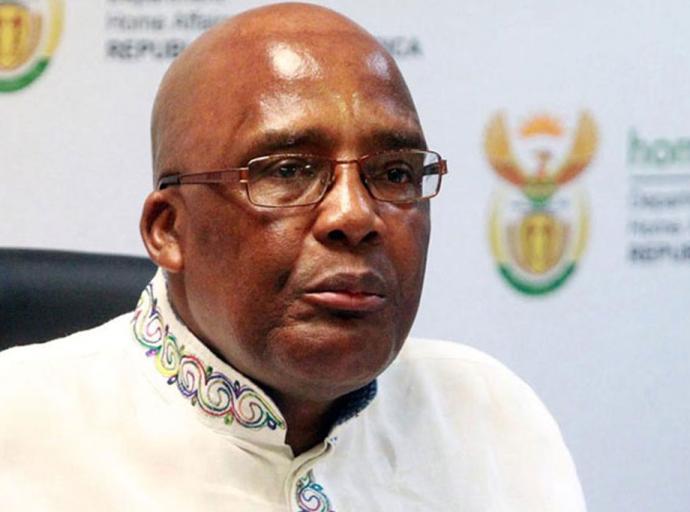
The newly elected Mayor of Maluti-A-Phofung Municipality, Tumelo Thebe, has wasted no time in setting the tone for his administration, unveiling an ambitious plan to restore dignity, improve service delivery, and rebuild public confidence in a municipality that has struggled with governance and infr...
Health Minister Aaron Motsoaledi said the Council for Medical Scheme (CMS) is seeking legal opinion on appropriate actions to take following the investigation into systematic discrimination against black healthcare providers by medical schemes.
Motsoaledi was responding to parliamentary questions posed by ActionSA MP Kgosi Letlape, who wanted to know the measures he intended to implement to hold medical schemes accountable for the racial discrimination that was uncovered by the Independent Section 59 Panel.
Letlape also asked whether the department has engaged or consulted with the CMS to ensure that sanctions were imposed on medical schemes found to have engaged in discriminatory practices.
In his response, Motsoaledi said CMS was in the process of procuring a firm of attorneys to develop a comprehensive legal opinion to advise it on appropriate actions to be implemented in response to the findings of the Section 59 investigation.
“This opinion will assist CMS in systematically considering the associated risks and determining how to act against those identified in the final report, as well as identifying mechanisms to legally protect individuals who have been negatively affected by the discriminatory practices uncovered,” he said.
Motsoaledi also said the CMS intended to collaborate with relevant stakeholders and issue appropriate guidance to support the alignment of regulatory frameworks between providers and funders, particularly within the context of the Fraud, Waste, and Abuse Tribunal.
He stated that the department has engaged with CMS since the release of the Section 59 final report.
“However, an engagement platform through a multi-disciplinary stakeholder committee is still to be established in consultation with CMS. In parallel, there is a process of establishing an internal task team to oversee the proposed action or implementation plan in line with the recommendations of the report.”
Motsoaledi also said he was in support of legislative and regulatory amendments to provide stronger oversight and enforcement powers over medical schemes engaging in discriminatory conduct.
He said some of the legislative and regulatory measures currently being explored included a collaborative structure between the CMS and the Health Professions Council of South Africa, and CMS being required to issue more regular guidance on the issues arising from the investigation and sanctioning processes.
“CMS should provide procedural certainty for medical schemes in exercising their powers in terms of the Medical Schemes Act (MSA), the remedies available to parties who feel aggrieved by the conduct of schemes, and the penalties against schemes in the event of a breach of the MSA.”
Meanwhile, Health Portfolio Committee Chairperson Sibongiseni Dhlomo told the media earlier this week that they received a briefing on a report detailing systematic discrimination against black healthcare providers by medical schemes.
He said the committee members expressed concern over the disproportionate allegations of fraud, waste, and abuse directed towards Black practitioners compared to their non-black counterparts.
“Committee members emphasised the need for accountability and sought further information on the punitive measures against medical schemes found guilty of discriminatory practices. They enquired about the department's intentions to acknowledge the harm inflicted upon black healthcare providers,” he said.
Dhlomo said the committee has made several recommendations in response to the findings of the report.
“One key recommendation was to establish an early warning system within medical schemes to alert healthcare providers to potential issues arising under Section 59 of the Medical Schemes Act. The committee believes such a system would safeguard honest practitioners from unwarranted scrutiny, while enabling timely corrective actions to mitigate financial losses.”
He added that the committee has resolved to consult with legal advisors about possible legislative amendments to improve transparency and accountability.
“It also stressed the need for a comprehensive strategy to address the backlog of complaints with the Council for Medical Schemes.”
Minister of Forestry, Fisheries and the Environment, Dion George, has signed new regulations to control offshore ship-to-ship fuel transfers in South African waters.
The rules, published under the National Environmental Management: Integrated Coastal Management Act, prohibit STS operations within marine protected areas, aquaculture zones, and within three nautical miles of the coastline.
They also introduce strict conditions for weather, pollution control, wildlife monitoring, and crew training. Specific restrictions have also been placed on operations in Algoa Bay, including seasonal limits and designated anchorage zones to protect sensitive marine habitats.
"These regulations, which will come into force once published in the Government Gazette, provide South Africa with a clear and enforceable environmental framework to manage offshore ship-to-ship(STS) transfer operations, including bunkering," George said.
Operators must now deploy hydrophone systems to monitor marine mammals and keep a close watch on African Penguins, with mandatory reporting of any wildlife sightings or incidents. Immediate response plans for oiled or injured animals are also required.
"In Algoa Bay, operations may only take place in safe conditions, with wind speeds below 22 knots and wave heights below two metres. The Minister may set conditions elsewhere".
While all crew members must receive environmental awareness training. furthermore the new rules state that operators are required to submit independent Environmental Management Plans addressing site-specific risks, which must be approved by the Minister.
The Minister also revealed that "non-compliance will be met with firm penalties: fines of up to R2 million, imprisonment for up to five years,or both".
“These regulations are a decisive step to safeguard our oceans and secure the future of our African Penguin. They set strict standards for offshore ship-to-ship transfers, ensuring that maritime activity can only proceed in a safe and responsible way.”
Mounting tensions between traditional taxi drivers and e-hailing service operators are starting to raise serious concerns about public safety in several communities across the country
Recent confrontations, some turning violent, have left commuters caught in the crossfire with local authorities consistently failing to mediate this continuous conflict that disrupts daily commuting and threatens social harmony.
This comes after an e-hailing driver was shot and burned to death in his vehicle at Maponya Mall in Soweto, Gauteng. The violence has caused a ripple effect that is now spreading to other provinces, leaving commuters caught in the middle and uncertain about which mode of transport to use.
“Everyone has a right to choose the transport they want to use because they’re spending their own money,” said Selaocoe Chwi, a student in Bloemfontein who prefers e-hailing services over conventional taxis.
“Ubers and Bolts are more convenient for some of us because they pick you up and drop you off at home—unlike taxis,” she added.
After completing his university studies in 2022, 27-year-old e-hailing driver, Athenkosi Hans, has been relying on the taxi service as his main source of income. He tells Journal News that he and other e-hailing operators in the Free State capital face consistent threats and physical violence from taxi drivers.
“I’ve experienced several incidents - some extremely serious. One of the worst was when my car was written off after a violent attack.
“The most recent incident took place at our waiting bay in Universitas. We were ambushed, some of my colleagues ended up in the hospital, and several cars were overturned and severely damaged,” said Hans.
He added that the ongoing violence has taken a toll on his mental health and also negatively impacted his family, because they constantly worry about his safety.
“Honestly, it’s heartbreaking. We go out to work not to fight. We’re just trying to earn a living like everyone else, but we’re constantly living in fear. It feels like our safety is not a priority, and we’re being left to survive in a system that offers no protection. It’s exhausting and unfair,” he added.
Hans believes that the only way to resolve the conflict and restore peace is to formalise the e-hailing industry.
Meanwhile, SANTACO national spokesperson Rebecca Phala said one of the underlying issues could be an oversupply of transport providers with limited demand. She emphasised the need for urgent government intervention and regulation of the e-hailing sector to prevent further escalation.
The transport ministry has, since the recent incident at Maponya Mall, strongly condemned the never-ending acts of violence between the taxi and e-hailing industries.
In June last year, President Cyril Ramaphosa signed into law new regulations which have been approved and are now awaiting the second official language translation for gazetting and implementation.
Under the new law, e-hailing drivers will receive official e-hailing operating licences and will no longer use charter permits and meter taxi operating licences in South Africa as currently required.
The death of a two-year-old child in Jan Kempdorp, Northern Cape, has sparked community outrage, with the Phokwane Local Municipality facing accusations of negligence and failing to protect residents.
The toddler, Amkhitha Dyalvane, is believed to have fallen into an open, water-filled trench left abandoned after sewer installation work was halted. Residents say the site had been unsecured for weeks, with no warning signs or barriers in place to prevent access.
Community members are now demanding accountability from the municipality with local community activist Maleke Montshiwagae expressing concern over the lack of safety measures at the trench site, stating that municipal oversight was severely lacking.
“It seems the safety protocols were completely neglected. The trenches have been left open without barricades or warning signs since 2024.
“As a concerned member of the community, I raised the issue with one of the ward committee members. They told me there had been a meeting with the contractor about the safety concerns, but no proactive steps were taken, nor was there any pressure from the municipality,” Montshiwagae
He further criticised what seems to be a lack of concern around Amkhitha’s unfortunate incident - with minimal reports surfacing to shine the spotlight on the matter.
“It’s troubling that there was no public awareness or reporting on what happened—it almost feels like there was an attempt to keep it quiet. Incidents like these must be brought into the public eye to highlight how smaller communities are often treated with disregard.
“The life of one child is already too many. There must be accountability from both the municipality and the contractor. The family deserves closure, especially given the trauma, emotional burden, and long-term psychological impact they are facing,” stressed Montshiwagae.
The bereaved mother, Deliwe Izell Cekisho-Dyalvane, says she wants justice for the death of her child. She expressed frustration over the apparent blame-shifting between the Phokwane Local Municipality and the company contracted to carry out the sewer project, accusing the municipality of denying any responsibility.
“It’s painful what’s happening. No one wants to take responsibility. The municipality blames the company they hired, while the company refuses to accept any accountability - allegedly claiming the municipality still owes them money to complete the work,” she said.
Cekisho-Dyalvane, who lives in Potchefstroom, was visiting friends in Masakeng with her family when tragedy struck. On the evening of 26 July, their daughter suddenly went missing - only to be found about an hour later, floating in the water-filled trench.
She said officials from the Phokwane municipality visited her days after the incident to offer condolences and handed the family R10 000 in cash. However, the gesture has raised questions, as the municipality has since denied any knowledge of the payment.
According to municipal spokesperson Kgalalelo Letshabo, claims that the municipality offered a donation or covered burial expenses for the family are inaccurate and false.
“The municipality did not provide any donation or cover any burial expenses. Therefore, this claim is inaccurate and false,” Letshabo claims.
When asked about rumours that the municipality is considering legal action against the contracted company following the incident, Letshabo declined to confirm or deny the claims.
“The matter is still under investigation and is sub judice. The municipality cannot comment further until the investigation is concluded. Once finalised, all parties will be informed of who is liable and responsible,” she told Journal News.
Letshabo confirmed that Limpopo-based company Tarcron Projects was awarded a R25 million contract in 2023. The scope of work for this project includes the installation of a bulk sewer outfall line, the refurbishment of the existing pump station, and the construction of a new pump station.
However, when contacted for comment Tarcron Projects’ project manager, Kevin Mashile, referred Journal News to the municipality, stating that they do not have the facts regarding the matter.
Police spokesperson Colonel Cherelle Ehlers confirmed that an inquest case has been opened and is currently under investigation.
As the 2026 municipal elections approach, the Executive Mayor of Dr Kenneth Kaunda District Municipality, Nikiwe Num sat down with Journal News to unpack the challenges, progress, and priorities that shape the region’s political landscape. The mayor discussed service delivery, youth unemployment, infrastructure development, and the municipality’s plans to improve transparency and community engagement.
By Abigail Visagie
Thank you for taking the time to sit with us today — we truly appreciate it and happy belated Women’s Day. I must say, your leadership portfolio is quite impressive. How long have you been serving the people of the North West?
Thank you. I’ve served the people of the North West Province in various capacities over the past 36 years - both within ANC structures and later in different government offices.
Let’s start by focusing on Women’s Month this August, as the country commemorates the role of women in our society. Given your experience as a woman in the male-dominated world of politics, what are some of the key challenges you’ve faced that your male counterparts may not have had to deal with?
There’s still quite a bit we need to do as a society, especially in spaces where women are expected to perform alongside men. The first step is acknowledging and internalising the fact that women carry multiple roles. It’s not just about stepping into the boardroom and holding your own in discussions — it’s also about stepping out and being a mother, a sister, an aunt, a daughter, all while still being expected to give your best at work.
Personally, I’ve never felt threatened in a male-dominated field. I’ve spent much of my career working alongside men who recognise potential, accept imperfections, and are willing to guide and point out areas for growth. That, to me, is what the gender struggle is really about. It’s not just about being seen as a woman — it’s about being recognised for the potential I bring, if given the opportunity. In fact, I believe women often surpass men in many ways, because we bring both tenacity and unwavering determination to everything we do.
Do you believe that women are fully emancipated, thirty years into democracy?
Over the past thirty years, significant policy achievements have been recorded, and there has consistently been a conscious effort to ensure that women are given opportunities and empowered. However, thirty years cannot undo the effects of over a century of inequality. There is still a long way to go. We also recognize that the struggle for women’s emancipation exists within the broader context of the national democratic revolution and the wider emancipation of society. As such, progress is often uneven and, in some areas, still falls short.
I hear you, Mayor. Let’s shift the focus and talk about other pressing issues — the Foot-and-Mouth Disease, which appears to be quite prominent in your district. What measures have you taken to support farmers in dealing with this?
The outbreak has dealt a serious blow to our farmers — including commercial farmers — particularly since our province contributes significantly to the country’s economy and GDP. In response, the Department of Agriculture and Land Affairs, in collaboration with local governments across the province, has implemented strategic plans to raise awareness and promote advocacy. Once the disease was officially declared an outbreak, field officers were deployed to engage both commercial and emerging farmers, helping them identify and understand the signs of Foot-and-Mouth Disease.
The Department of Agriculture has intervention programs in place, and many of our farmers have been able to benefit from these initiatives. Fortunately, the outbreak did not escalate to the level we initially feared and has been largely contained. While our farmers may not always have formal academic qualifications, they possess a deep understanding of their animals and agricultural practices. They listen, they learn, and their responsiveness has played a key role in successful interventions — particularly in remote areas where government reach is limited. We continue to monitor the disease closely and remain committed to ensuring that the department is accessible and responsive to farmers who need assistance.
Another major concern in your district is the rising number of illegal mining activities, sexual offences, and assaults. How is your office addressing these issues?
We acknowledge that, as government, we have not done enough — particularly when it comes to addressing illegal mining. We are facing significant challenges with mining shafts that were never properly decommissioned or closed, as well as with the continued influx of people who originally migrated here seeking work in the mines.
We are actively engaging the relevant departments and calling for assistance in repurposing these mines, as the ongoing activity indicates there are still resources underground that could be legally and safely utilized. Law enforcement has also been brought on board, and plans are underway to address the issue of illegal mining shafts. We believe that once these matters are resolved from a legal and structural standpoint, we will start to see a decline in related criminal activities.
There are various local municipalities under your authority. What are you doing to assist them in becoming tax compliant in line with the Auditor-General’s reports, and how are you holding them accountable for their financial management?
We operate within the framework of intergovernmental relations (IGR), which regulates cooperation between different spheres of government. Municipalities are constitutionally empowered through legislation such as the Structures Act and the Systems Act, so our role is to coordinate and support them rather than to direct.
We use the IGR framework, strengthened by the District Development Model, to facilitate collaboration. In fact, this is the only district in the province that consistently convenes joint planning sessions. Together, we assess the impact of our social programs and analyse infrastructure development needs.
As part of our support efforts, we can physically deploy teams to municipalities — we “camp” there, so to speak — to provide hands-on support. The effectiveness of these interventions, however, depends on the municipality’s willingness and capacity to absorb and sustain the knowledge and systems we help implement.
Our district takes the lead in coordinating programs, projects, and information-sharing across municipalities. For instance, we have implemented an integrated roads network plan across all three municipalities in the district. We’ve also intervened in service delivery planning, particularly in areas of Maquassi Hills and Matlosana that require urgent attention.
In addition, we have shared services models in place. For example, Maquassi Hills requested assistance to strengthen their financial management, so they now share a risk and audit committee with us. These collaborative mechanisms allow us to improve governance and accountability across the district.
What are your top three priorities in your district municipality?
Actually, as a district — in collaboration with our local municipalities — we’ve identified five key priorities that we believe are critical to repositioning and revitalizing the district:
Strengthening Governance:
Our first priority is to improve governance by ensuring that municipal structures remain functional, accountable, and aligned with our service delivery goals. Good governance is the foundation for delivering the essential services our communities need.
Unlocking Economic Potential:
We are focused on driving economic growth by leveraging key sectors such as tourism, agriculture, training and skills development, and steel manufacturing. The district has access to raw materials that could support a local steel industry, which in turn could help us improve our road infrastructure and create jobs.
However, service delivery remains inconsistent in some areas. As towns have grown and mining activity has declined, our budget has become limited — so we need an extra push to meet community expectations.
Infrastructure Development:
Upgrading and maintaining infrastructure is essential for supporting both economic activity and quality of life. This includes roads, water systems, and other basic services.
Tourism Promotion:
We aim to harness our tourism potential to attract investment and create sustainable jobs. The district has natural and cultural assets that can be better marketed and developed.
Agricultural Development:
Agriculture remains a vital sector in our district. We are working to enhance support for emerging and commercial farmers to boost food security, rural development, and economic inclusion.
With local government elections approaching, how prepared are you — and do you believe you have done enough to stand the test of time and seek a second term?
We are well prepared — collectively as municipalities — to manage the responsibilities leading up to the local government elections. Our focus is not on doing anything extraordinary just because elections are approaching. Instead, we must remain consistent in delivering services and continue to improve where necessary. When communities see consistent, tangible improvements, they recognize the value of the work being done.We have established structures that allow us to engage regularly with councillors at the local municipality level. Recently, we developed a tool to assess service delivery across all 84 wards, helping us identify which areas have been neglected over the past 15, 10, or 5 years.
This data will guide our discussions with executive mayors as we determine where infrastructure development should be prioritized. Our Integrated Development Plans (IDPs) have all been approved by councillors, but while the expectations are high, our financial resources remain limited. That is why we have identified three key focus areas moving forward:
1.Sustain and improve the areas where we are already performing well.
2. Revisit wards where minimal or no development has taken place.
3.Tackle the issue of illegal dumping by introducing sustainable waste management solutions.
We also have a responsibility to encourage civic participation. People must understand that exercising their right to vote is not just a democratic act — it is an expression of patriotism and a defence of our sovereignty. Choosing not to vote is, in essence, giving away your voice and your country.
As for myself, I remain available to serve. If the community believes I’ve earned their trust and chooses to support me for a second term, I am confident that I can continue to contribute meaningfully. With another five years, there is still much I can bring to the table to ensure that our communities are well-served and that our progress continues.