The newly elected Mayor of Maluti-A-Phofung Municipality, Tumelo Thebe, has wasted no time in setting the tone for his administration, unveiling an ambitious plan to restore dignity, improve service delivery, and rebuild public confidence in a municipality that has struggled with governance and infr...
A former branch advisor at FNB has been barred from continuing her career in the financial sector following serious breaches of integrity.
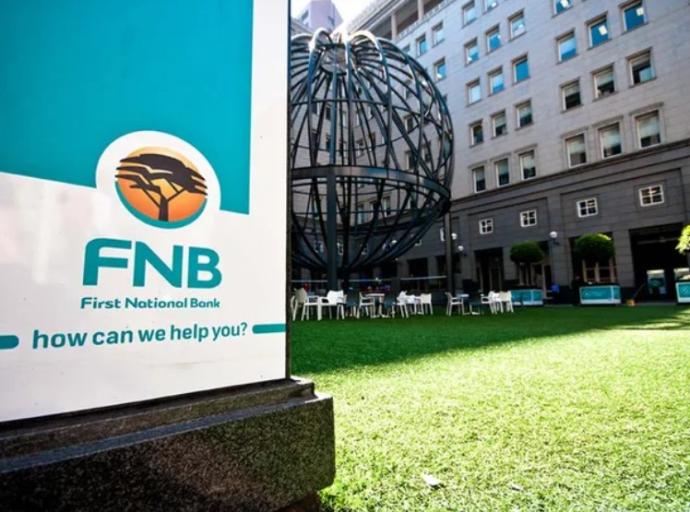
A former branch advisor at First National Bank (FNB) has been barred from continuing her career in the financial sector following serious breaches of integrity.
Kgomotso Dikobe was debarred by FNB after she altered a client’s contract without the client’s consent or signature.
As a branch advisor, she was responsible for opening customer bank accounts and concluding relevant agreement with the customers.
As part of her job description, she was required to accurately capture customers’ bank details and ensure that the relevant customer signs the relevant documents once those details have been captured.
Where a branch advisor fails to record these details properly, they are recorded as having a “KYC Fail” (Know Your Client Fail), meaning they have failed to discharge their function.
In October 2024, Dikobe assisted a customer in concluding a business customer agreement and opening a business account.
After the customer had left, Dikobe's line manager informed her that she had incorrectly captured the customer’s name on the agreement documents.
Dikobe then amended the customer agreement to rectify the error and called the customer to return and sign the amended agreement documents. However, the customer was at that time not willing to come back and sign the amended agreement. It was already after 5pm.
Thereafter, Dikobe attempted to cut and paste the client's signature which was previously provided by the customer when signing the documents. However, her line manager told her that what she was doing was prohibited conduct and was grounds for dismissal. She reminded Dikobe that the customer was required to sign the amended agreement herself.
However, Dikobe told the line manager that if she reported this misconduct, people would think she had a personal vendetta against her.
In November 2024, Dikobe attended a disciplinary hearing and did not dispute that she had amended the customer’s agreement without the customer signing for those amendments, however, she disputed that she was guilty of misconduct. However, she admitted that she didn’t want a KYC failure on her record.
She was subsequently dismissed and unsuccessfully appealed the decision.
In December, FNB notified Dikobe of intentions to debar her on grounds that she had altered a customer agreement without the client’s signature, presence, or consent. Her actions violated the bank's policies, and she had been advised against this conduct but still proceeded.
She was eventually debarred in January 2025.
Unwilling to accept her fate, Dikobe sought recourse through the Financial Services Tribunal (FST), where she attempted to clarify her methods in amending the client contract. She asserted that instead of cutting and pasting, she had created a new document with the corrected information.
FNB opposed Dikobe's application, asserting that she had been warned that her actions could lead to dismissal. Instead, she attempted to persuade her line manager to cover up the misconduct. FNB contended that this demonstrated her unsuitability to be a financial representative, as she lacked honesty and integrity.
At the tribunal, it was noted that a correct contract is an essential part of the transaction, the consequence of an altered document without authorisation could undermine the transaction should a dispute ever arise between FNB and the customer. Dikobe, however, minimised the seriousness of her actions in changing the contract, failing to understand this critical factor.
"Altering a client’s contract without that client’s consent or knowledge is undeniable dishonest and reflects a blatant disregard for the principles of integrity and good standing expected of a financial services representative," said the tribunal.
In addition, the FST said Dikobe's conduct undermines the public’s confidence in the financial services industry and creates a significant risk of harm to clients.
"The respondent’s (FNB) decision to debar the applicant (Dikobe) was, therefore, based on sound legal and regulatory principles...The tribunal finds no grounds to interfere with the respondent’s decision to debar the applicant.," said the FST.
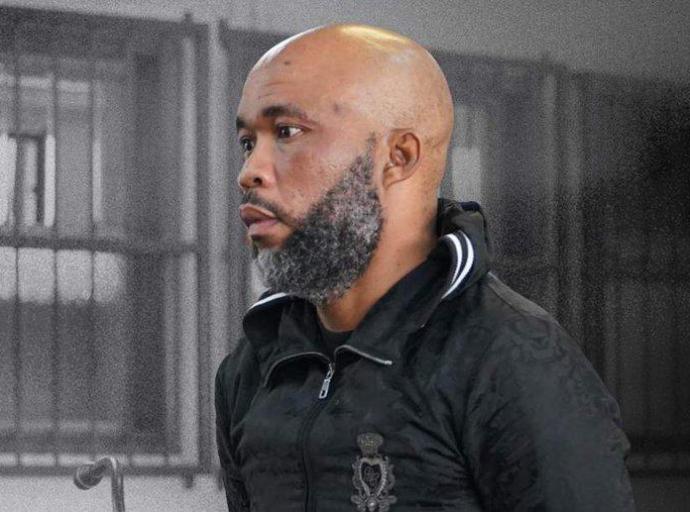
The murder case against controversial business tycoon Vusimuzi “Cat” Matlala, his wife, and two others is expected to resume at the Alexandra Magistrate’s Court, north of Johannesburg, on Tuesday morning.
He is expected to face additional charges as legal proceedings over the alleged attempted murder of socialite Tebogo Thobejane continue to unfold.
Matlala and his three co-accused appeared in court in Alexandra last month.
They face charges related to a 2023 shooting on the N1 near Sandton, during which Thobejane – known for her role in the television drama “Muvhango” – was shot in the foot. A female passenger sustained a serious spinal injury.
The state has announced plans to centralise two other pending matters – one in Pretoria West and another in Lyttelton – into the current case.
Magistrate Rennie Boshoff postponed proceedings to August 26.
“All the cases for the accused have been remanded to August 26,” Boshoff said.
During the court appearance, there was a large police presence by the members of the special task force.
Matlala, 49, appeared in shackles and was transported under heavy guard to the maximum-security C-Max unit at Kgosi Mampuru Correctional Centre.
He is accused of orchestrating a network of corruption, fraud and violence.
The co-accused include his wife, Tsakani Matlala (accused number four), Musa Kekana (accused number one), and Tiegi Floyd Mabusela, also known as Danny (accused number two).
The charges include attempted murder, conspiracy to commit murder, and money laundering.
In May, Tsakani Matlala was added to the charge sheet and granted R20,000 bail due to poor health and her role as a mother to young children.
Her bail conditions included surrendering her passport, remaining in Gauteng, and avoiding contact with witnesses or relatives of the other accused.
Matlala was arrested in Midrand on May 14, following what police described as a “high-profile investigation.”
He stands accused of orchestrating the alleged hit on Thobejane and laundering millions, including funds linked to a R360 million South African Police Service (SAPS) health services tender.
The contract, awarded to a company linked to Matlala, was cancelled in May by National Police Commissioner General Fannie Masemola, who said the firm should never have advanced past the initial bidding phase.
The contract has since been scrapped.
Once known for flaunting luxury vehicles and opulent properties, Matlala is now classified as a high-risk inmate at the C-Max unit in Kgoshi Mampuru Correctional Centre, where he is held alongside convicted killer Thabo Bester.
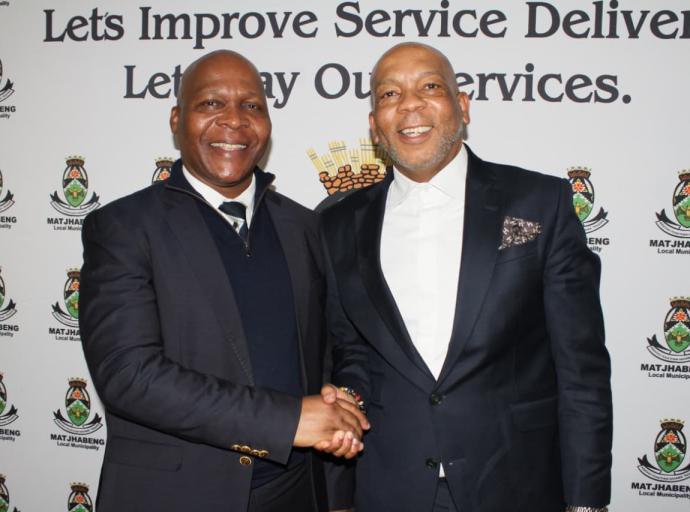
Matjhabeng Local Municipality is set to start generating its own electricity sooner than anticipated. Minister of Electricity and Energy Dr. Kgosientsho Ramokgopa confirmed there are no legal barriers preventing the move, marking a significant step towards energy independence for the region.
Speaking during his visit to the municipality on Monday, Ramokgopa stated that the initiative is part of a broader intervention aimed at achieving universal electricity access for all, regardless of their demographics.
“There are about 1.6 million households in South Africa without electricity. We need to reduce that number, even in rural or informal settlements that have since been formalised,” said Ramokgopa.
He added that he would not be deterred by the annual budget allocation when it comes to initiating Matjhabeng’s procurement of generation capacity and other related projects.
According to him, the issue is not the size of the budget, but rather how it is utilised.
Although we have a budget of R4 billion, we are currently working with the Development Bank of South Africa (DBSA) to attract additional investment. We already have seed capital, and the R4 billion is secured. This is funding received over time — the aim now is to leverage and accelerate its impact,” he said.
A delighted Executive Mayor of Matjhabeng, Thanduxolo Khalipha, said the construction work will be carried out by the municipality itself to empower local residents with skills and knowledge.
“We are preparing for our investment summit in October, which is intended to attract investors for our energy hub. The City of eThekwini already has its license — we’ll be visiting them because we want to be the first local municipality in the country to obtain that license, in the interest of our people. We want them to benefit. Construction will be done by Matjhabeng, not private contractors — we are going to empower our people,” he said.
Ramokgopa noted that Matjhabeng is home to 1,400 megawatts of Independent Power Producer (IPP) generation capacity, making the municipality a highly attractive location for energy production. He urged the municipality to begin investing in its own IPP projects rather than relying solely on the private sector.
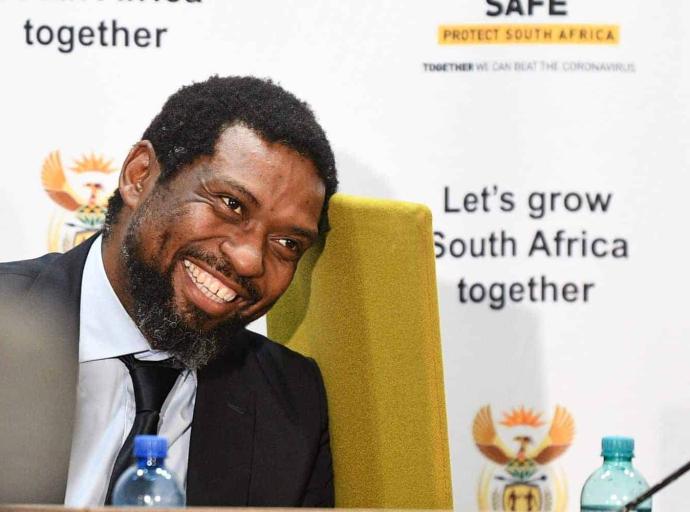
Higher Education Minister Buti Manamela has sought the services of the Public Service Commission (PSC) to vet the three administrators of the Sector and Education Training Authorities (SETAS) he appointed this week.
This comes amid pressure on Manamela to not only explain the appointment of administrators, but to reconsider and withdraw them.
According to Manamela, he has requested that the PSC conduct fit-and-proper assessments and conflict of interest vetting on Lehlogonolo Masoga, the former deputy speaker of the Limpopo Legislature, who was appointed administrator of Services SETA, Oupa Nkoane CETA, and Zukile Mvalo Local Government SETA.
“The PSC will provide its report and recommendations to the minister, who will act on them without fear or favour,” he said.
Manamela defended the appointments amid public outrage, asserting that due process was followed.
He said the process entailed “due diligence” that “carefully considered” the allegations and past controversies raised in public, and allowed each candidate to respond to the matters before the appointments were made.
“The appointments were confirmed only after the department was satisfied that the appointees could carry out the mandate of stabilising the SETAs,” Manamela said.
DA MP Karabo Khakhau said her party welcomed the investigation into the three ‘administrators’.
“Where there is smoke, there is fire,” Khakhau said.
She added that Manamela was making a huge admission of scandal by bringing in the Public Service Commission.
“No matter what the Public Service Commission finds, this is a stain on Manamela, and he could and should do the right thing and withdraw these cadre deployments instead,” Khakhau said.
EFF MP Sihle Lonzi said they were not moved by Manamela’s referral of the administrators’ appointment to the PSC.
“He is the one who took the decision. If anything, he is undermining the intelligence of the people of South Africa and of the many young people in South Africa, whom the SETAs are supposed to serve.
“If the minister wants to do what is right, he must withdraw the unlawful decision that he has taken to put three SETAs under administration without following due process,” Lonzi said.
Both Lonzi and Khakhau have raised concerns with the administrator’s appointments and the placement of the SETAs under administration.
Khakhau wrote to Manamela, urging him to reconsider the appointments.
She said Nkoane was implicated in a forensic report that details the mismanagement of R872 million in Emfuleni Municipality, Masoga was also implicated in a forensic report for backdating a communications contract worth R4.4 million as the CEO of the Musina-Makhado Special Economic Zone, and Mvalo failed at stabilising SETAs for the past eight years.
Khakhau said the appointment of administrators should be of people who are free from any and all allegations and implications of corruption.
“I, therefore, request that you withdraw the appointment of these administrators in the spirit of fostering public trust and clean and accountable governance,” she wrote in her letter.
In a letter to Khakhau on Friday, Manamela said they were aware of the matters she raised and engaged each candidate directly.
“They provided responses which, at the time, we considered satisfactory in the context of their appointments to stabilise SETAs facing systemic governance failures.”
Manamela also informed Khakhau of his decision to ask the PSC to vet the administrators.
“The PSC has been asked to provide me with a report at the earliest possible time, and I will act on its recommendations without hesitation,” he said.
Meanwhile, Khakhau wrote to House Chairperson Cedric Frolick, asking him to intervene and guide on the matter as Higher Education Portfolio Committee Chairperson Tebogo Letsie was “not acting with urgency in holding Minister Buti Manamela to account”.
Letsie told her in a letter that he had written to Manamela requesting detailed reasons for placing the three SETAS under administration.
“It will be premature to schedule the requested briefing before the minister has responded to the committee. The third term is also comprised of three weeks, and one week is already taken by the committee strategic planning workshop, and the remaining two weeks have agenda items,” he said.
Khakhau said Letsie’s request for reasons from Manamela did not nullify her request for a meeting with the minister.
Khakhau told Frolick that the committee agenda always served with flexibility, given committee members’ requests, and that committees always requested additional dates for meetings.
“Furthermore, Rule 138(2) provides that a committee may at any time summon any person to appear before it to give evidence on oath or affirmation, or to produce documents. This means the committee is not bound to wait for the minister’s correspondence before exercising its right to convene a briefing or hearing on this matter,” she wrote.
The Gauteng Department of Health (GDoH) will have to update and maintain the backlog list of cancer patients awaiting radiation oncology services in Gauteng and take all necessary steps to provide treatment to those patients, whether at public or private facilities.
This is in spite of the GDoH turning to the Supreme Court of Appeal to appeal a judgment issued earlier, in terms of which it was ordered to come to the aid of these patients.
While the pending appeal would ordinarily suspend the order, the Cancer Alliance, supported by Section27, turned to the Gauteng High Court, Johannesburg, to ask that the order remain in force pending the outcome of the appeal.
Judge Fiona Dippenaar, in ruling in favour of the Cancer Alliance, stressed that the backlog meant that patients were being denied treatment within the treatment windows required for radiation to be effective, which had “dire consequences”.
She found that patients faced “irreversible and permanent harm” that affected not only their health but also their families and loved ones, which in turn created a broader public health and societal crisis.
The judge noted that some of the irreparable harm had already occurred as patients had died while waiting for treatment, and others had seen their cancer metastasis, rendering such patients ineligible for oncology radiation treatment.
“No irreparable harm to the respondents’ (department) appeal rights would follow if the order is enforced in the interim and the appeal would not be rendered nugatory or redundant.”
Judge Dippenaar added that the department’s constitutional duties necessarily include taking necessary steps to provide radiation oncology services to patients who require them, including the patients on the backlog list.
In this regard she said: “The need to appreciate the full extent of the crisis and how many patients actually require time sensitive radiation oncology treatment is manifest, so that vulnerable cancer patients do not slip through the cracks of the public healthcare system”.
Judge Dippenaar said to direct in favour of the department that the earlier order is suspended pending the outcome of the appeal, may well be the death knell for many vulnerable cancer patients on the backlog list who have been waiting for years for life saving treatment.
“They do not have the luxury of time,” she noted.
In March this year the court declared that the GDoH’s failure to develop and implement a plan to address the oncology backlog was unlawful, unconstitutional, and in breach of various sections of the Constitution.
The judge ordered the department to update and maintain the backlog of cancer patients awaiting radiation oncology services in Gauteng and for it to take all necessary steps to provide treatment to those patients, whether at public or private facilities.
The GDoH and other respondents meanwhile obtained leave to appeal that judgment to the SCA, which subsequently caused the Cancer Alliance, through an urgent application, to apply for the order to remain in force pending the appeal.
They argued that exceptional circumstances exist in this case in that this is a matter of life and death for cancer patients who will suffer irreparable harm if the order is not immediately enforced.
It said that the government cannot delay its constitutional duties while patients’ lives hang in the balance.
In opposing the urgent application, the department forwarded technical arguments, which included that the matter is not urgent, as it was launched months after they had obtained leave to appeal.
It also submitted that the application is legally incompetent as this matter is now before the SCA and the high court’s functions regarding this matter has come to an end. Their arguments were, however, rejected by the court.
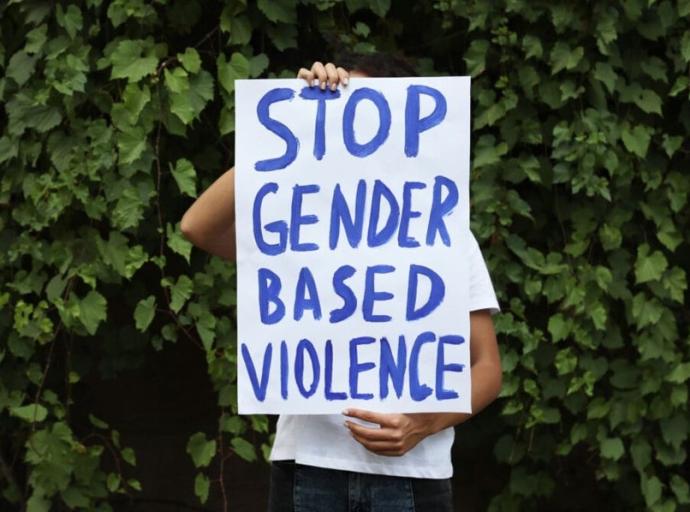
South Africa’s women continue to live under the shadow of gender-based violence (GBV) and femicide at levels likened to war zones, despite government promises and community interventions aimed at tackling the crisis.
According to the Centre for the Study of Violence and Reconciliation (CSVR), 51% of women in the country have experienced GBV, while 76% of men admit to perpetrating violence against women.
The country holds the third-highest rape statistics globally, after Botswana and Lesotho.
“South Africa remains a society profoundly marked by violence and continues to grapple with the enduring effects of decades of institutionalised racism, sexism, exclusion, structural violence, and other factors that have persistently undermined human development and positive social cohesion,” said a Human Sciences Research Council (HSRC) report.
For many women, these statistics are not numbers but a lived reality.
One survivor, Lelona Nziwani, shared her ordeal on Facebook after being brutally attacked by her ex-boyfriend, Phumlani Songxishe.
“He grabbed me forcefully and told me that he would never break up with me, and that I would stay in a relationship with him no matter what he does with anyone else, or else he would kill me,” she wrote.
“He beat me with a golf stick, hit me with a hammer and a spade handle, and also with the frame of a mirror from his room. I apologised even though I had done nothing wrong.”
Her story echoes thousands of others.
The HSRC’s baseline survey revealed that 33.1% of all women aged 18 and older have experienced physical violence in their lifetime, translating to an estimated 7.3 million women.
Women with disabilities face even higher risks.
Dr Ingrid van der Heijden, a research consultant in inclusive sexual and reproductive health, explained:
“Women with disabilities are one of the poorest populations in the world. The risk of lifetime GBV for women with disabilities increases with the severity of their disability.”
Research shows that 29.3% of women with disabilities experienced lifetime physical abuse, compared to 21.7% of those without disabilities.
Rates of sexual violence are nearly double, with 14.6% of disabled women affected compared to 7.2% of non-disabled women.
Van der Heijden emphasised the cycle of violence.
“Poverty, disability and GBV are directional and cyclic. Poverty increases the risk of GBV, and exposure to GBV leads to poor health, which exacerbates the disability.”
The CSVR found that most victims do not trust the criminal justice system. Survivors often face secondary victimisation at police stations, corruption that leads to missing dockets, and lengthy backlogs in Legal Aid.
“Our work in communities revealed bottlenecks in access to justice and the fight against impunity on GBV,” the researchers said.
Community dialogues held in Gauteng revealed widespread frustration: lack of feedback on cases, limited knowledge of procedures, and ongoing harassment.
South Africa has established 63 Thuthuzela Care Centres (TCCs) to assist survivors of sexual violence by providing integrated medical, psychosocial, legal and law enforcement services.
The National Prosecuting Authority reported a 78% conviction rate in sex crimes reported directly through TCCs, with 221 life sentences handed down in the last financial year.
But for many, justice remains elusive. Survivors must still navigate intimidation, bureaucratic red tape, and cultural stigma.
The World Health Organization estimates that 12.1 women in every 100 000 are killed by an intimate partner in South Africa each year, a figure five times worse than the global average of 2.6.
Intimate partner violence affects one in five women nationally, rising to one in three in poorer households.
Mental health consequences are severe. Communities report that stigma around mental health prevents survivors from seeking support.
Many still attribute trauma to “witchcraft” or “a lack of spiritual faith,” pushing women to seek unqualified help instead of professional services.
Justice and Constitutional Development Minister Mmamoloko Kubayi admitted that “the stories of women getting killed by their partners have become so prevalent on social media, we no longer get shocked or outraged, we just read and move on.”
“This is not acceptable, and we should not accept as a society. Remaining silent is not an option. We all have a responsibility to speak out, to report it wherever it rears its ugly head," She added.
Kubayi confirmed that the Department is expanding sexual offences courts, upgrading 100 district courts to handle domestic violence cases, and planning to publish Africa’s first Femicide Watch to track GBV-related killings.
“Survivors of GBV desire not only to see, but feel that justice was done,” she said.
“Our country adopted the Gender-Based Violence and Femicide National Strategic Plan, which now guides all efforts to fight GBV and femicide in our country.”
Despite frameworks and programmes, the gap between policy and lived reality remains wide. The CSVR stresses that without addressing social and cultural norms, including patriarchal practices, toxic masculinities, and childhood trauma, GBV will remain entrenched.
“The solution to gender-based violence lies in the whole of society approach in which all stakeholders play a role in building better communities, healthy and safe households. We believe that working together as a society we can defeat the scourge of gender-based violence,” Kubayi
For now, South African women continue to navigate daily life in a country where violence is not only widespread but expected, a state of emergency hidden in plain sight.