The newly elected Mayor of Maluti-A-Phofung Municipality, Tumelo Thebe, has wasted no time in setting the tone for his administration, unveiling an ambitious plan to restore dignity, improve service delivery, and rebuild public confidence in a municipality that has struggled with governance and infr...
It is common knowledge that traditional healers play a very important role in our society. Through their spiritual gifts and distinct knowledge of cultural herbal remedies, they have, for centuries, been providers of holistic care that encompasses physical, emotional, and spiritual well-being.
In line with global technological advancements, traditional healers have increasingly turned to social media platforms to grow their reach and recruit new customers.
While the idea of incorporating technology into the traditional healing trade is future-forward, it has also presented an opportunity for bogus traditional healers to run scams and swindle desperate ‘clients’ out of their hard-earned money.
Authorities within the traditional healing space, as well as law enforcement, have been grappling with this growing problem of bogus traditional healers swindling clients on social media.
Given the difficulties of verifying whether a traditional healer is legitimate or not and whether their remedies do indeed work, posers often get away with traditional healing scams that target desperate and vulnerable individuals.
One popular social media ‘healer’ is Gauteng-based Zimbabwean @imflowo1, who is renowned for her variety of urine-infused remedies.
With over 1.6 million followers on her platform, this practitioner occasionally recommends that they use concoctions as facewash, love potions, household cleaning products, or to attract wealth by applying it on money, amongst other extraordinary things. Some of her methods include using simple household items such as lemons, table salt and water, to name a few.
Her prominence has seen her also sell a series of her own products at her walk-in stores in Johannesburg and central Pretoria, and also on her social media platforms.
Although @imflowo1’s methods and remedies have not been verified as legitimate by the relevant authorities, she surprisingly boasts some good reviews for her products and remedies.
“As for me, I do not want to say much, but trust me, they work,” said one of her followers named Beckey on TikTok.
Several active and registered traditional healers believe that the richness and cultural significance of traditional healing should still be protected, given the prevalence of bogus healers on social media.
“The spiritual realm is deeply rooted. It’s about connecting or channelling work through spirits and providing insights to different challenges that individuals are facing – what’s working for other people might not work for you, you might have been told to drench in salt water that might temporarily work, but won’t make your problems go away because it’s just surface advice,” says Selloane Motaung, who is also a young traditional healer.
“These people are just doing it for money and a good social media following,” she adds.
Journal News also reached out to Mabodiba Thabana, a traditional healer who has 405 000 followers on Facebook, for comment, but she had not responded at the time of publishing this article.
Meanwhile, the president of the African Traditional Healers Organisation (ATHO), Dr. Orphan Oupa Moneoe, confirmed that this issue of bogus online practitioners had been quite prevalent.
“This has been ongoing for years, and people are derailing from the purpose of what traditional healing is - it is not conserved at all.
“People should refrain from falling into these traps. I would advise that people consult with registered healers so that when they fall victim, they can track back names, which organisation or traditional body they fall under, so that a formal complaint can be lodged and a case can be opened.
“These people need to be dealt with accordingly,” Moneoe concluded.
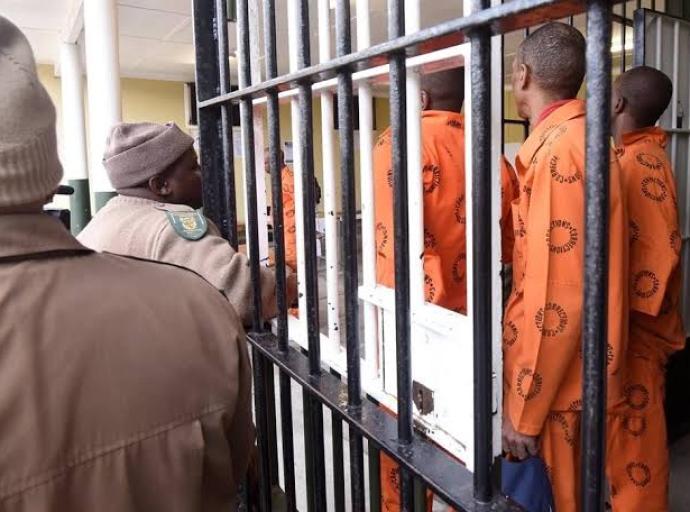
Inside the steel gates and concrete walls, life runs on a different set of rules. Inmates serving time for violent crimes live in a world defined by survival, power, and silence.
This exclusive report takes you deep into the daily reality of prison life, where danger is constant, alliances shift fast, and every choice can mean the difference between life and death.
However, Journal News has uncovered that for some hardcore criminals, and those who know how to play their cards right, prison can become a paradise and even a thriving business hub.
According to current and former inmates at the Mangaung Correctional Centre (MCC) who spoke to this publication, despite strict measures to prevent contraband from entering the prison, prohibited items still make their way past the steel gates, and rules designed to control inmate behaviour cannot suppress the persistence of individuality.
After serving 16 years in one of the maximum prison facilities in Gauteng province for the attempted murder and rape of his pregnant girlfriend, a 45-year-old parolee, known only as Mothibi to protect his identity for safety reasons, has come forward to share the hardships he endured in prison.
Mothibi was sentenced to 25 years in prison and released in 2021. However, the trauma of life behind bars continues to haunt him years after his release.
“When I was arrested and sentenced, I believed I would serve my time and come out rehabilitated. But that wasn’t the case. Life inside forced me to adapt to new rules and make difficult choices I never expected,” said Mothisi.
Mothibi revealed that, as a new inmate, his survival depended on aligning himself with a gang, followed by strict adherence to its rules - and complicity in any criminal activities that occurred in his presence.
“In prison gangs, every member has a role - messengers, enforcers, ‘safes’ who hide contraband, and others - depending on the dominant criminal enterprise within that facility,” he said. “These operations are often linked to the outside world through corrupt wardens and visitors. That’s part of what still ties me to the gang, even after my release.”
According to Mothibi, the worst fate an inmate can face is being forced into the role of a prison ‘safe’ or a ‘wife’.
“Those are the worst positions to be in. As a ‘safe,’ your body is used to hide contraband. As a ‘wife’, you are forced into sexual servitude. At one point, I was so afraid that I did not want to leave my cell because I knew I had been targeted. I was beaten, stabbed, my food was taken, and once, I was even smothered in my sleep.”
Another inmate, speaking during a telephonic interview from Mangaung Correctional Centre in Bloemfontein, echoed similar concerns. He requested anonymity out of fear for his life.
The inmate revealed that, in addition to operating illegal enterprises and enduring ongoing violence within the prison, some inmates are being used to carry out crimes beyond the prison walls - including armed robbery and murder.
“I know of several unsolved cases involving inmates,” said the prisoner.
“I’ve witnessed crimes being committed outside the prison on the orders of gang leaders. It’s just one of the many thriving criminal enterprises - a means of survival for some,” he added.
However, national spokesperson for the Department of Correctional Services, Singabakho Nxumalo, told Journal News that the department is conducting random search operations to curb the flow of contraband in prisons.
“Offenders found in possession of contraband face both internal disciplinary action and criminal charges. Ultimately, it is up to the courts, as the competent authority, to decide whether this impacts their sentences. Search operations are ongoing and unannounced to avoid predictability,” said Nxumalo.
While the Department of Correctional Services insists it is taking steps to clamp down on illicit activity behind bars, accounts from inmates paint a troubling picture of criminal networks thriving within the prison system - with consequences that extend far beyond prison walls.
As allegations of corruption and violence persist, the question remains: how secure are South Africa’s correctional facilities, and at what cost to public safety?
A 40-year-old man from Botshabelo is expected to appear in the Bloemfontein Magistrate’s Court on charges related to the attempted extortion of several businesses across the Mangaung area.
According to Hawks spokesperson, Lieutenant Colonel Zweli Mohobeleli, the suspect allegedly contacted business owners in Botshabelo, Thaba Nchu, and Bloemfontein, claiming to have information about planned robberies targeting their establishments.
“These businesses include a cash-in-transit security company, supermarkets, and a construction equipment and home improvement retail store,” said Mohobeleli. “The suspect is alleged to have demanded money in exchange for further details. As a result, several businesses increased their security measures, while police resources were also deployed in anticipation of the supposed attacks. However, the information later proved to be false.”
The Hawks were alerted to the scheme on Tuesday, prompting a sting operation that led to the identification and arrest of the suspect. Several cellphones believed to have been used in the commission of the crimes were confiscated.
The suspect faces charges of fraud, extortion, and defeating the course of justice.
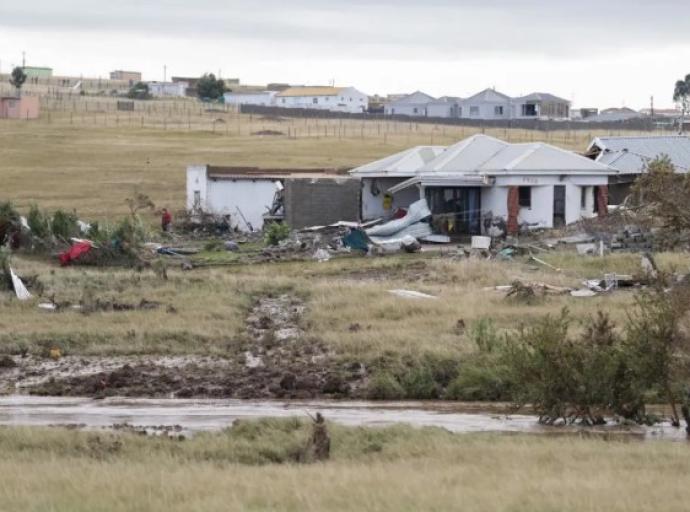
Thousands of flood survivors in the Eastern Cape are still waiting to be rehoused, with government confirming only 25 families have so far been moved into temporary units at Mayden Farm.
The June floods left more than 4,700 people homeless and destroyed hundreds of houses across the province, mainly in Mthatha.
Officials said that permanent housing remained a long-term project, with the current relocation only a stopgap measure.
The provincial government said that the 25 families moved this week were the first of many to be housed in temporary residential units — basic two-room structures designed to offer short-term relief rather than a lasting solution.
Each family will receive a R2,700 voucher from SASSA to help them settle, but authorities admitted that permanent homes would take much longer to deliver.
Spokesperson Khuselwa Rantjie: "This intervention forms part of government's ongoing commitment to ensuring the settlement, safety, dignity and well-being of communities affected by this natural disaster."
Around 120 similar units have already been occupied in Mnquma Municipality, with officials promising more construction in the months ahead.
But thousands of people remain stranded in community halls and churches, where conditions are crowded and many say they have lost everything.
*This article was first published by Eye Witness News
Patriotic Alliance (PA) leader Gayton McKenzie has dismissed suggestions that he runs an autocratic party, saying he’s empowering people to take over the reins from him.
With no elected structures in the party, McKenzie believes he’s being directed by communities as to who should represent the party in governance structures.
In a wide-ranging weekly message to supporters on Monday night, McKenzie once again expressed disdain for the country’s media, claiming unfair bias against the PA.
McKenzie said it’s a fact that his party is the fastest-growing in South Africa.
Last week, his party narrowly lost a by-election to the African National Congress (ANC) in Knysna by a mere 31 votes.
McKenzie said while his party is on the up, it’s the media who’re hellbent on bringing him down.
“They say the PA is a dictatorship. How can this be dictatorship if you tell us who you want to lead in your area? “
Instead McKenzie has taken a swipe at his political nemesis - the democratic alliance - for how it selects its leaders.
“The DA (Democratic Alliance) will make you write exams like you are back at school again. Here, the community tells us: ‘President, this is our mayoral candidate, this is our councillor. Where have you seen a party like that?’”
During September, McKenzie said he’s instructed his party’s recruiters to not only sign up new members, but to ensure they are registered with the Electoral Commission of South Africa (IEC) as he sets his sights on growing support in the Western Cape, in particular.
*This article was first published by Eye Witness New
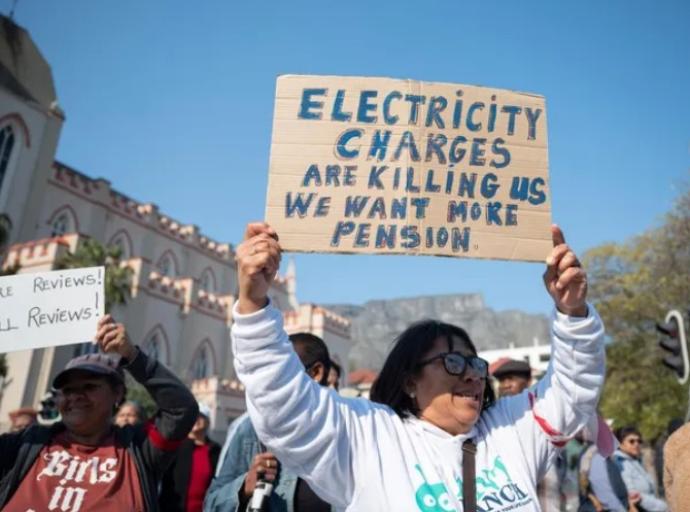
A group of pensioners and supporters marched to Parliament on Tuesday, demanding a full review of the South African Social Security Agency (Sassa), citing discrimination, poor treatment, and a system they say is failing the elderly.
Organiser Pat Lee said the protest was about more than individual cases.
“This is not for just a specific group of people, but for everybody who is a Sassa pensioner from all walks of life, colours, and creed, and we know that our voices will be heard. This is the time now to show up and to come together in unity,” Lee said.
She added that the agency needed fundamental reform.
“I think Sassa must be reviewed itself, because every person working for Sassa must reapply for their positions, and they must also have diverse cultures in these common places that serve the public because of communication problems that we have. Once we have the diverse cultural workforce that will eliminate the misunderstandings and the frustrations so that people with different languages can be understood. This is reverse apartheid,” she said.
The march began on the Grand Parade at the corner of Lower Buitenkant and Darling streets, before proceeding up Buitenkant Street and turning into Roeland Street, where participants gathered outside Parliament to hand over a memorandum.
They later returned via the same route to disperse.
Among the marchers was 68-year-old pensioner Joy Pinn, who recounted a case that left her shaken.
"I took a 92-year-old man there, a Jewish old man, and they refused to give him the grant because he’s white and they think he’s rich. They didn’t even look at his stuff. I took him three, four times, and they refused to give it. They were so rude. Unfortunately, he died, so he couldn’t tell his story," Pinn said.
She said this happened at the Sassa office in Wynberg.
"The issue people are complaining about is the money that gets deducted without consent. The reviews are illegal. They are not asked to give affidavits because children help parents, so they put money in the account so it reflects differently, and they think you’re over the threshold. That’s a problem, and they are teaching people to lie," she added.
Pinn said she was speaking out for others worse off than herself.
"These people are worse off than me. They take a taxi to the place, they stand in queues from four, five o’clock in the morning in the rain, sunshine, whatever. They get treated badly. The security is absolutely rude. There are no ablution facilities for the old people, for anyone really. And the officials must actually wear a uniform. You don’t know who you’re speaking to there. They are absolutely disrespectful."
Marcher Winston Fortuin said the protest was meant to send a strong message.
"We are representing the Sassa beneficiaries. That’s basically the primary objective here. Even the president of our country must know that we’ve had enough of our old people, our seniors, who have laboured so long and so much. In respect of that and in honour of our old people, we feel that by coming here today we are saying, listen, we’ve had enough of the unfair treatment," he said.
Fortuin emphasised that the issue went beyond race.
"Remember, this is beyond colour. No colour, no race, no creed. We are speaking to humanity today. We are addressing the needs of our Sassa community. And we are saying, if we can get help from our local government, we would highly appreciate it. Our prayers are basically to say, listen, we need your support."
He also highlighted the sacrifices made by pensioners just to attend the march. "Many of the old people here today took public transport to get here. They literally fight through that little pension that they get in the month, trying by all means to ensure we can have a better tomorrow," Fortuin said.
The group said they expect Parliament to respond to their memorandum and that they will continue organising if their concerns are not addressed.
DA MP for the Social Development Portfolio, Alexandra Abrahams, collected the memorandum.
"The Democratic Alliance received a memorandum of grievances from a group of approximately 150 senior citizens who marched to the gates of Parliament in Cape Town.
"Their list of grievances raises serious concerns affecting many seniors across the country. Issues include access to social grants, inhumane long queues, system breakdowns, unpaid grants, lack of communication, and the old age grant being inadequate to meet basic needs amid the rising cost of living.
"These grievances relate to the South African Social Security Agency (SASSA), an entity under the National Department of Social Development. The memorandum further outlines concerns involving the departments of Health, Police, and Transport.
"It also calls for the dignity, protection, and welfare of all seniors, regardless of race or creed, to be upheld in accordance with the Older Persons Act, 2006."
Abrahams said they will ensure this memorandum is handed over to the chairperson of the parliamentary Portfolio Committee on Social Development, Bridget Masango, the Minister of Social Development, Nokuzola Tolashe, and the CEO of SASSA, Themba Matlou, during a scheduled in-person committee meeting on Wednesday, which will address the termination of the contract between Sassa and Postbank.
"How much longer must the poor and vulnerable tolerate the indignity of Sassa, which is meant to provide social protection? We call on Minister Tolashe to urgently address the 62% staff vacancy rate and lack of resources at Sassa offices, roll out the self-help kiosks and other online appointment booking systems to improve queue management, and vastly improve their communication with beneficiaries."