Months of uncertainty surrounding the controversial Bodulo Mothong housing project could come to an end today when the Free State High Court delivers judgment in a closely watched legal battle that could determine the future of hundreds of vulnerable families awaiting relocation to safer living cond...
Minister of Trade and Industry Parks Tau has expressed cautious optimism over ongoing trade negotiations with the United States, despite growing tensions between the two countries.
South Africa is currently locked in high-stakes trade discussions with the Trump administration and had previously reported that negotiations were advancing under a condition precedent framework, a preliminary agreement outlining the necessary steps before a full trade deal can be finalised.
"We have not signed any substantive agreement yet. The document signed was a precedent condition document," Ministerial spokesperson Kaamil Alli said earlier this year.
"This is a precursor to the finalising of the negotiations, which are ongoing".
However, tensions escalated even further last week with the US making good on its threat to boycott the G20 summit. The US government has also revoked the former International Relations , Naledi Pandor's Visa.
The US government also attempted to send a junior embassy official to receive the G20 presidency gavel from President Cyril Ramaphosa, a move South Africa rejected as a breach of diplomatic protocol.
Speaking to the media on the sidelines of the summit, Tau said South Africa remains committed to ongoing dialogue with the US, while continuing to engage with other international partners through multilateral forums like the G20.
"The reality is that the US made a decision not to come to this country. I do accept that as part of the reality, the choice that the US made. We’re still engaging with the US Government from a trade point of view.” Tau said.
Tau also touched on the importance of multilateral engagement and the broader significance of international negotiations.
"On the reaffirmation of multilateralism, the mechanisms are established by the country. On a cumulative level, when you get to a declaration, it’s a tough, intense negotiation to get to the outcome."
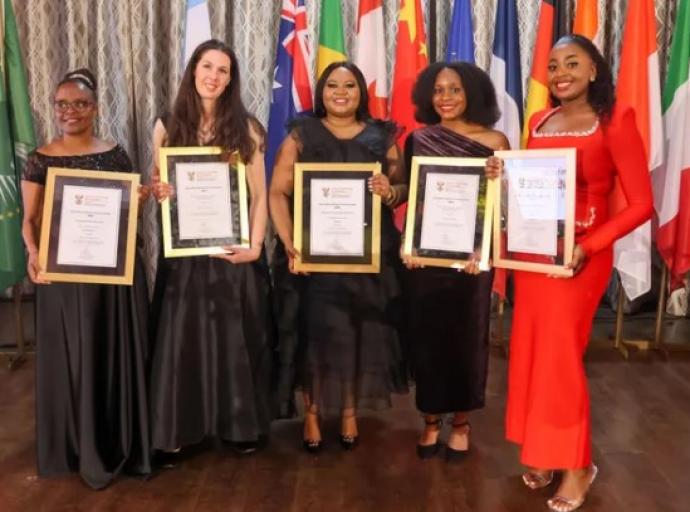
The University of Pretoria (UP) has cemented its position as a powerhouse for women in science, with five exceptional researchers earning recognition at the 2025 South African Women in Science Awards (SAWiSA). The accolades highlight not just individual brilliance, but the University's commitment to nurturing diverse talent across multiple disciplines.
At the forefront of this achievement stands Dr Maurine Musie, who won the Distinguished Young Woman Researcher Award in Human and Social Sciences. The youngest PhD holder in UP's Nursing Science Department, Dr Musie has dedicated her career to improving maternal and neonatal health through ground-breaking approaches that blend traditional and modern healthcare practices. Her work with midwives and traditional birth attendants in rural areas addresses real healthcare challenges facing South African communities.
Dr Musie's impressive portfolio includes 19 peer-reviewed publications and leadership roles spanning from the South African Young Academy of Science to the International Nursing Now Global Committee. Her selection as one of South Africa's top 10 scientists to represent the country at the BRICS Young Scientist Forum in Russia speaks to her growing international influence. She currently supervises six PhD, 13 master's and nine honours degree candidates, embodying the spirit of mentorship that defines true academic leadership.
Professor Nombulelo Sepeng secured the Distinguished Young Woman Researcher Award for Public Engagement with Research, a category that recognises scientists who build bridges between research and society. Prof Sepeng's journey began with an Atlantic Philanthropies scholarship in 2011, and her impact on UP's Nursing Science Department has been transformative. Under her research leadership, the department achieved unprecedented doctoral training success, graduating 15 PhD students in 2025 alone – the highest number in its history.
Her National Research Foundation (NRF) C2 rating reflects the quality of her scholarly work, which focuses on vulnerable populations including sexual assault survivors, HIV studies, and teenage pregnancy. Prof Sepeng's approach goes beyond academic research – her community-based initiatives include outreach campaigns, public webinars and school-based awareness programmes that directly improve lives. Her co-authorship of an R850 000 NRF grant to host a national conference on African epistemologies demonstrates her commitment to elevating indigenous knowledge systems.
Professor Lucy Moleleki earned recognition as first runner-up in the Distinguished Woman Researcher category for Natural and Engineering Sciences. Her research on potato–pathogen interactions might seem niche, but it addresses fundamental questions about food security and sustainable agriculture. Prof Moleleki's work on molecular virulence mechanisms helps farmers and policymakers understand how plant diseases spread and how to combat them effectively.
Since completing her PhD at the University of Dundee in Scotland in 2007 and joining UP in 2009, Prof Moleleki has built an impressive research profile with over 50 peer-reviewed articles, an h-index of 28, and more than 3 000 citations. Her international recognition includes keynote presentations at global conferences and editorial positions on leading journals. She has mentored five postdoctoral fellows, 10 PhD students, and 16 master's students, creating a ripple effect of scientific excellence.
The University's success extends to emerging researchers as well. Nadine Du Piesanie, a PhD candidate in Consumer Science, received a DSTI–Dr Ivy Matsepe-Casaburri Doctoral Fellowship for her innovative work on food literacy among Generation Alpha. Her development of ‘Sprouts’, a computer game that teaches food literacy, earned second place at the 2024 International E-Learning Excellence Awards in Porto, Portugal. This creative approach to addressing malnutrition demonstrates how young researchers are thinking differently about persistent social challenges.
Jacqueline Maphutha, a fellowship recipient pursuing a PhD in Medicinal Plant Science, represents the intersection of traditional knowledge and cutting-edge research. Her investigation into indigenous plants' effects on metastatic melanoma drug resistance showcases how South African researchers are leading global conversations about cancer therapy while honouring traditional healing practices.
The University of Pretoria congratulates these outstanding #WomenOfUP for their excellence in their respective fields of work. Their work contributes to the success of South African researchers who are taking research to new heights.
Fifty of the more than 300 children snatched by gunmen from a Catholic school in Nigeria have escaped their captors, a Christian group said on Sunday.
Gunmen on Friday raided St Mary's co-education school in Niger state, taking 303 children and 12 teachers in one of the largest mass kidnappings in Nigeria.
The abduction came days after gunmen stormed a secondary school in neighbouring Kebbi state, abducting 25 girls.
"We have received some good news as fifty pupils escaped and have reunited with their parents," said the Christian Association of Nigeria in a statement, adding they escaped between Friday and Saturday.
The number of boys and girls - aged between eight and 18 years - kidnapped from St Mary's is almost half of the school's student population of 629.
The Nigerian government has yet to comment on the number of students and teachers abducted.
"As much as we receive the return of these 50 children that escaped with some sigh of relief, I urge you all to continue in your prayers for the rescue and safe return of the remaining victims," CAN chairman in Niger State, Reverend Bulus Dauwa Yohanna, said in the statement.
Mounting security fears in Africa's most populous nation have sparked a wave of school closures across the country.
Since Islamist militants kidnapped nearly 300 schoolgirls from Chibok town more than a decade ago, Nigeria has struggled with a spate of mass kidnappings, mostly carried out by criminal gangs looking for ransom payments.
Gunmen often attack remote boarding schools where they know a lack of security presence will make for soft targets. Most victims are released after negotiations.
'DEEP SORROW'
Pope Leo XIV on Sunday made "a heartfelt appeal for the immediate release of the hostages".
He expressed his "deep sorrow, especially for the many young boys and girls kidnapped and for their anguished families," at the end of the Angelus prayer.
The two abduction operations and an attack on a church in the west of the country, in which two people were killed and dozens abducted, came as US President Donald Trump threatened military action over what he called the persecution of Christians by radical Islamists in Nigeria.
When asked about the recent attacks and kidnappings on Fox News Radio, Trump said "what's happening in Nigeria is a disgrace".
Nigeria is also dealing with a deadly Islamist insurgency in the northeast of the country, where the violence has killed more than 40,000 people and displaced around two million since it erupted in 2019.
*This article was first published by Eye Witness News
The Department of Basic Education has published proposed amendments to the School Calendar Policy ensuring a streamlined framework for determining school term dates across all nine provinces.
The South African Department of Basic Education has initiated a significant overhaul of the existing school calendar system, aiming to introduce a clear and modernised national framework applicable to all nine provinces.
One of the most noteworthy changes is the introduction of a singular national school calendar. This move marks the end of the previous staggered system where inland and coastal provinces operated on different academic schedules.
By harmonising the school start dates, the Department envisions a streamlined educational experience for South African learners, regardless of where in SA they reside.
In a bid to enhance operational efficiency, the Department has also decided to eliminate consideration of holiday traffic when planning school holidays. Historically, the timing of school breaks was influenced by traffic patterns to ease congestion on major routes.
However, the proposed changes will now allow the calendar to focus solely on educational needs, ensuring that the school year aligns more closely with academic requirements rather than external factors.
Additionally, the reforms promise to discard archaic rules and unnecessary clauses that hinder the clarity of the School Calendar Policy. The intention is to remove outdated definitions and redundancy, making the calendar more user-friendly and accessible to all stakeholders.
While the school year will continue to commence on a Wednesday, a consistent opening in the third week of January is set to become the new norm. Teachers are expected to report two days prior to the learner start date, maintaining a familiar rhythm to the academic year while allowing for readiness and preparation.
Importantly, the need for provinces to have equal school days has been deemed unnecessary in this new framework, as the implementation of a national calendar inherently addresses this concern.
Furthermore, the introduction of a new section detailing how term dates will be established will replace the previous cluster-based method of organisation, bringing about a simpler set of principles to guide schools in scheduling their terms.
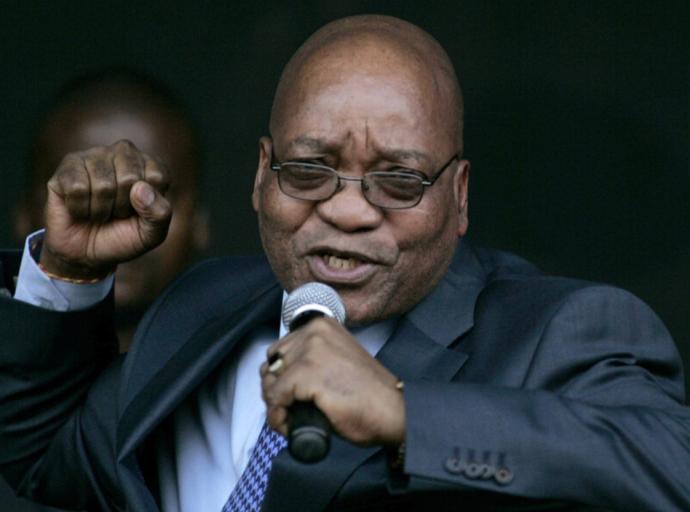
Former president Jacob Zuma is expected to ask for leave to appeal next month after he was ordered to pay back R28.9 million in legal fees
Former President Jacob Zuma will turn to the Gauteng High Court, Pretoria, on December 1, 2025 in a bid to obtain leave to appeal last month’s judgment ordering him to pay back the money incurred during his private litigation over the years - all of them slightly more than R28.9 million.
Judge Anthony Millar earlier ordered Zuma to make this payment to the State Attorney, as well as pay interest as calculated at the prescribed rate, which runs into more millions. But Zuma’s legal team indicated shortly after the judgment that they will not leave matters here, as they maintain that he should not face the hefty legal bill, as the State Attorney from the start agreed to foot this bill, until it reconsidered the matter and decided he was not entitled to State funding.
Zuma’s counsel, Advocate Thabani Masuku, last month told the high court that it is strange that the Presidency and the State Attorney, who previously defended the funding of Zuma's legal woes vociferously, now turn around and want him to repay the same money.
He told Judge Anthony Millar that Zuma is a victim of “unconstitutional violence". Judge Millar gave Zuma 60 days in which to settle his debt. Failing to do so, the State Attorney is directed to have a writ of execution issued by the Registrar of the Court for the attachment and sale of his immovable and/or movable properties to satisfy the judgment debt.
This includes his presidential pension benefit, or portion thereof, if required and subject to an order of court authorising that such attachment order can be issued. Judge Millar also ordered that the State Attorney is required to report to the court on affidavit within three months from the date of the order, and thereafter every three months until Zuma’s debt is paid.
Zuma’s appeal bid, however, places these orders on ice, pending the outcome of appeal proceedings. Even if Judge Millar turns his application for leave to appeal down, Zuma will still have the option to turn to the Supreme Court of Appeal (SCA) to ask for leave.
Last month’s application by President Cyril Ramaphosa, the State Attorney and the Democratic Alliance, followed a 2024 SCA ruling that found Zuma was not entitled to taxpayer-funded legal support and that the state must be reimbursed.
Masuku argued that the Presidency and the State Attorney are under the wrong impression that the payment obligation flowing from the SCA ruling places Zuma under a legal duty to reimburse the state.
He further submitted that the state “is the perpetrator of this unconstitutional violence.". According to Masuku, while the SCA said the money must be paid back, it never expressly said it had to come from Zuma’s pocket.
Masuku described the Presidency and State Attorney’s actions as “mean and vicious,” arguing that it was unjust for the state to pursue Zuma for repayment. It could recover this money from a number of people who were beneficiaries, including the attorneys, he said.
Masuku concluded that Zuma was “just an innocent recipient of the money". The R28.9 million was allocated to cover Zuma's legal expenses during his defence against charges related to the 1999 arms procurement deal. These funds were used for legal representation and associated costs throughout the protracted legal proceedings.
Zuma’s leave to appeal bid next month before Judge Millar is expected to be heard virtually.
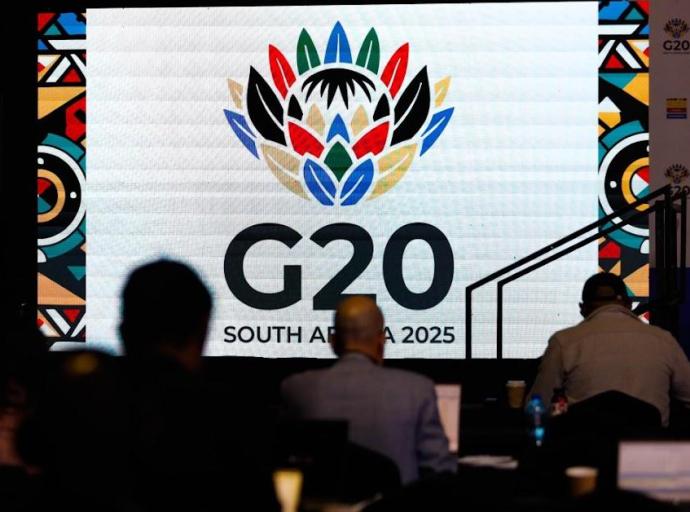
On the last day of the 2025 G20 Summit hosted in South Africa, more than 40 countries and institutions gathered to tackle an array of urgent global challenges, including climate change, debt sustainability for low-income countries, and peace efforts in conflict zones such as Congo, Palestine, and Ukraine.
Despite the absence of the United States delegation, led by President Donald Trump, who boycotted the event, citing South Africa’s policies as discriminatory, the summit moved forward with a declaration that placed Africa and the Global South’s priorities front and center.
The G20 leaders, under the stewardship of South African President Cyril Ramaphosa, adopted a sweeping declaration reaffirming the group’s commitment to multilateralism and cooperation amid the “polycrisis” confronting the world.
Central to the declaration was an unprecedented focus on the continent hosting the summit, with Africa mentioned over 80 times - a symbolic milestone underscored by South African officials.
Ramaphosa reflected on the summit’s progress in his closing remarks at the Johannesburg Expo Centre as a success.
“This is the first G20 summit hosted on African soil, and it has placed urgent global priorities at the centre of discussions. We appeal to all world leaders to confront our shared challenges together, ensuring that no one is left behind in our pursuit of global prosperity.”
Ramaphosa dismissed Trump's claims of discrimination against South Africa, reaffirming the country’s leadership in championing Africa's and the broader Global South's development agenda.
Key Outcomes of Day Two
Peace and Security: The leaders committed to promoting sustainable peace in conflict-ridden regions, including Congo, Palestine, and Ukraine, acknowledging the critical nature of these conflicts on global stability.
Climate Action: The declaration emphasised the urgency of tackling climate change, calling for enhanced adaptation measures and accelerated transitions to renewable energy, despite opposition and the absence of the United States delegation from the climate-related language.
Debt Relief: Global leaders acknowledged the pressing debt crisis faced by many low-income countries, particularly in Africa, linking debt sustainability directly to economic stability and inclusive growth.
Italy’s Prime Minister Giorgia Meloni pledged to halve the debt owed by African countries over the next decade, reinforcing international support for economic recovery in developing nations.
Energy Access: The summit recognised the severe energy access deficits across Africa, where over 600 million people lack electricity and about 1 billion lack access to clean cooking facilities.
The G20 endorsed recommendations from the South African G20 Africa Expert Panel report, which urges greater productivity and investment, facilitated by institutions such as the African Development Bank.
Global Governance Reform: Leaders stressed the importance of amplifying the voice of the Global South in international institutions, endorsing reforms to fair trade rules, global financial institutions, and broader development paradigms that view African and developing nations as active economic players rather than mere raw material exporters.
Minister in the Presidency Khumbudzo Ntshavheni reflected on the summit’s landmark role in placing Africa at the centre of global policy discourse.
“For us, our success is that we have put the African agenda firmly on the map. Africa is mentioned in the declaration 80 times, according to those who counted. This isn’t just about Africa, but about the developing world’s priorities and challenges. It is our time. We have demonstrated Africa’s capacity to engage as an equal partner on the international stage.”
Maxim Oreshkin, deputy head of the Russian presidential administration, highlighted systemic issues in the global economic order.
“The international economic order is in crisis, failing to incorporate new global realities. Sanctions, trade barriers, and technological restrictions fragment economies, destabilise global architecture, and undermine the United Nations’ Sustainable Development Goals,” Oreshkin said.
Addressing Africa’s development, he warned that “Africa's total debt will reach $3 trillion this year, according to the IMF. Notably, the World Bank has provided more aid to Ukraine in the past three years than to all African countries combined.
“This summit must reinforce multilateralism and bolster Africa’s growth trajectory to meet the needs of its young population.”
Security Incidents: Operation Dudula Clashes
The summit was not without unrest. Outside the Nasrec Expo Centre on Saturday - the summit venue - police engaged protesters affiliated with Operation Dudula, a South African activist group known for its controversial stance on immigration and social issues.
Supporters attempted to block G20 motorcades on Baragwanath and Nasrec road, prompting police to intervene.
Brigadier Athlenda Mathe, national police spokesperson, confirmed the arrest of two Operation Dudula members after a police officer sustained injuries during a violent protest.
“We have registered cases of public violence, assault, and contravention of a court order against Dudula members,” said Mathe. Police had previously announced a “ring of steel” around the venue, vowing zero tolerance for security threats.
Looking Ahead: Transition to US Presidency
As South Africa prepares to hand over the G20 presidency to the United States, Minister Ntshavheni expressed optimism about the legacy of the summit.
“We have placed the African agenda on the table in a way never done before. Africa’s interests and challenges are now integral to global conversations. This is proof of our capability to lead and represent the continent’s aspirations on the world stage.”
The summit underscored shifting dynamics in global leadership, highlighting a growing role for the Global South in shaping multilateral solutions to economic, environmental, and security crises.
The absence of the United States - traditionally a leading G20 power - cast a shadow but did not stall progress, as countries redoubled efforts to address urgent issues inclusively.