Months of uncertainty surrounding the controversial Bodulo Mothong housing project could come to an end today when the Free State High Court delivers judgment in a closely watched legal battle that could determine the future of hundreds of vulnerable families awaiting relocation to safer living cond...
CCTV footage shows Marius van der Merwe, "Witness D" at the Madlanga Commission, who was gunned down outside his Brakpan home this weekend, talking to his killers and attempting to draw his own weapon before he was killed.
He was shot multiple times in full view of his family outside their Brakpan home on Friday.
Van der Merwe gave testimony before the Commission about the torture and interrogation of a Mozambican suspect at an unofficial site in Brakpan.
He alleged that a group of EMPD officers with private security had been involved in the death of the man using methods, including tubing, regarded as torture and Van der Merwe said he was forced to dump the body into a dam.
President Cyril Ramaphosa led the tributes, calling on law enforcement agencies to establish the circumstances 'leading to his heinous act'.
"I am appalled and saddened by this attack on a former public servant who recently served the cause of justice and integrity by testifying at the Madlanga Commission,” Ramaphosa said.
“My thoughts are with the deeply traumatised family who came under attack last night. They faced death in circumstances that suggest Van der Merwe’s brave testimony angered elements in our society who want to undermine the rule of law and set back the quest for truth and consequences in the fight against corruption."
“The Commission has noted with profound sadness the brutal killing of one of its witnesses, Mr Marius van der Merwe. (He contributed) towards uncovering serious allegations of criminality and corruption in the EMPD,” its spokesperson, Jeremy Michaels, said in a statement.
The police have activated a NATJOINTS structure, the highest security structuring, including officers and intelligence at the most senior levels, to investigate Van der Merwe’s murder. He was a Brakpan-based security industry member and former Ekurhuleni Metro Police Department (EMPD) official.
On Sunday, (EMPD) Superintendent Jacques Vorster said his good friend died with a lighter heart because he felt guilty about his role in dumping the body of a suspect in a dam, and he wanted to get it off his chest.
Vorster, broke down in tears speaking about Van der Merwe’s assassination.
He said his friend always felt guilty about the suspect’s death and his role in disposing of the body, and he was keen to get it off his chest before the Madlanga Commission. In fact, Vorster said, shortly after he was ordered to dispose of a body in Spaarwater Dam, he told Ipid as well as the police about what happened but not much came of this.
Vorster and Van der Merwe knew each other for several months as they worked together to chase the Zama Zamas from Plastic City, an unregistered squatter camp in Brakpan. Vorster said he and Van der Merwe, the owner of a security company, worked day and night together to get rid of the illegal miners. They met through work and became close friends, an emotional Voster said. "We were relatively tight, and he did not have a scared bone in his body.”
According to Vorster, Van der Merwe did speak to him about giving evidence before the Madlanga Commission, but he only told his friend what needed to be said. “He took things as they came. He knew his life was in danger, but Marius was a courageous person. He was also a person who knew what is right and what is wrong. And he knew it was right to confess all before the Commission, and he dearly wanted to do this".
Vorster said that from the day he was forced to dump the body of a Mozambican citizen into the dam, his friend played open cards about his involvement.
“It had bothered him, and he had sleepless nights about his involvement. He felt guilty that he could not do more to save the man’s life. But he was not in a position to do anything, else he would have also ended in the dam".
Van der Merwe told him that he had participated under duress, but he had to do it as he had no choice. “But he got it off his chest before the Commission, in which he dearly believed. He believed that now, after all these years, eventually something will be done.”
Van der Merwe knew his life could be at stake. Although he testified under the name of Witness D, there were so many people involved, and they could also identify his voice. “He knew it was his duty because what had happened was against his religious beliefs. Unfortunately, it did not end well for him, but he felt better for it.”
He suspected that Van der Merwe knew that something would happen to him. There are also suspicions that he knew his attackers as CCTV footage showed him talking to people outside his home seconds before he was killed. “It can be seen that he reached for his gun, but it was too late.”
Speaking about his friend’s death, Vorster said it is like losing a brother. “I am broken". He did not want to divulge much about Van der Merwe’s family, other than to say that they are struggling to cope with his death. His wife has always been behind him divulging the full truth and she knew he was living on the edge. They have two small sons.
“None of us saw this coming. We thought now that he had concluded his evidence before the Commission, he was no longer in direct danger and that the next step would be to testify later in court.”
"Those involved know who they are, and they know they will be going to hell. He will be deeply missed. He was such a good person who did a lot of good deeds for the community".
Vorster concluded that he spoke to his friend a few days before his death, as they were discussing another Zama Zama operation.
The decision follows investigations and recommendations by national intelligence structures, which found there was a deliberate and ongoing abuse of the 90-day visa exemption.
The Department of Home Affairs has withdrawn the 90-day visa exemption granted to Palestinian travellers carrying ordinary passports.
The decision follows investigations and recommendations by national intelligence structures, which found there was a deliberate and ongoing abuse of the 90-day visa exemption.
In November, the arrival of two charter flights transporting Palestinians raised red flags when it was discovered that they had one-way tickets into South Africa and lacked the necessary documentation.
“Investigations into the recent arrival of two charter flights transporting Palestinian passport holders revealed systematic abuse of this exemption, with travel designed not for the purposes of tourism or short stays as intended, but to relocate Palestinians from Gaza. Rather than using ordinary commercial flights, entire airplanes were chartered not by the travellers themselves, but by intermediaries,” said Home Affairs Minister Leon Schreiber
Schreiber said the South African government believes more Palestinians were expected to land in the countryin what has been described as an attempt to relocate them from the Gaza Strip in the ongoing territorial dispute.
“In the wake of the withdrawal of the visa exemption, the department will duly process any asylum applications submitted by the travellers who arrived on the two charter flights, while upholding the terms of the 90-day exemption for those who do not seek asylum. Going forward, visa applications from bona fide Palestinian travellers will be processed accordingly to enable them to visit South Africa, while any further attempts at abuse will be rejected.”
*This article was first published by Eye Witness News
A new chapter in African housing development is taking shape, with thousands of Ghanaian families set to see real change.
This marks the official signing of an agreement between Afribiz Invest (Pty) Ltd, a South African-founded infrastructure investment company, and Ghana’s National Home Ownership Fund (NHF), a government-backed body focused on making homeownership more accessible.
The agreement was signed on Friday at the Seven Villa Hotel & Spa in Sandton.
This project shows what African collaboration can achieve when it is done with intention, says Afribiz Invest CEO Pongo Pule.
Partnership impact
She says people need homes, not promises.
“This partnership allows us to take real steps towards building communities that work for families. We are proud to bring our experience and expertise into a project that will make a long-term difference to Ghana’s urban landscape,” she said.
She added, “Africa has the talent and the capability to build by itself for itself. This partnership proves that.”
The partnership is said to be more than just a business deal, reflecting a shared vision to make housing more affordable, to support economic growth, and to strengthen ties between South Africa and Ghana.
20 000 housing opportunities
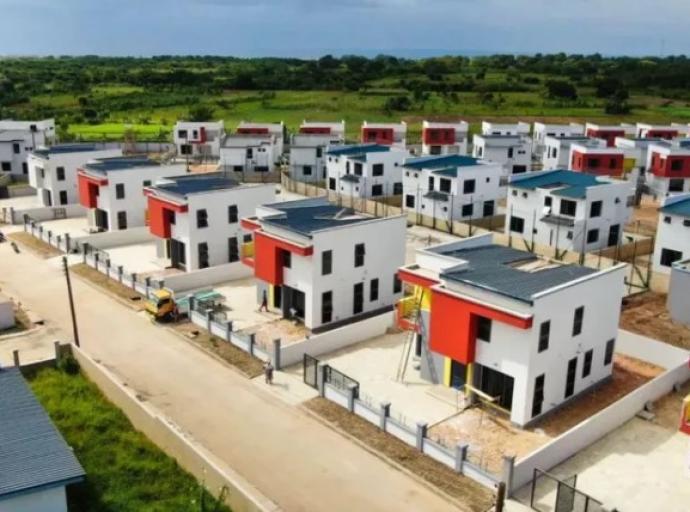
The project, valued at R27 billion, will deliver 20,000 housing opportunities. These homes will form part of a modern mixed-use development designed to meet the needs of Ghana’s fast-growing urban communities.
The plan includes smart, practical and sustainable living spaces that ordinary families can call home.
The project comes at the right time for Ghana’s growing cities and landscape, says Prosper Hoetu, who serves as CEO of the NHF.
“Our focus is simple: families must be able to own safe, dignified and affordable homes. This partnership gives us the scale and expertise to make that a reality for thousands of Ghanaians. We value the collaboration with Afribiz Invest because it brings practical solutions, not just plans,” he said.
He added that the project will “support jobs, empower local businesses and uplift communities for years to come.”
The partnership is said to be made possible through Black Knight Advisors, a leading advisory and management consulting firm. Their work brought all the key players together and ensured that the project has the financial and strategic backing it needs to succeed.
Sharing of skills
This collaboration goes is said to go beyond building houses creating room for shared skills, shared investment and shared growth between the two countries. For Ghana, it is said to mean thousands of new homes, more jobs, and business opportunities for local suppliers.
For Afribiz and South Africa, it said to reinforce their role in shaping sustainable urban development on the continent. The signing marks a major step towards reshaping access to housing, while building stronger economic and diplomatic ties between South Africa and Ghana, they said.
Afribiz Invest is a South African company with a strong track record across engineering, property development, construction, energy, ICT, logistics, security, training and financial services.
Increased housing problems
According to the Centre for Affordable Housing in Africa(CAHF), in Ghana, housing problems are becoming increasingly evident as the population continues to grow, particularly in urban areas.
The independent think tank in South Africa, pursuing its mission of making Africa’s housing finance markets work, says housing supply has not kept pace with the increasing demand for housing, resulting in a large deficit, in turn escalating costs of renting, and proliferating slums and informal settlements.
“It is estimated that 33% of Ghanaian urban residents live in slums. The absence of a holistic solution to the housing shortage remains a problem as existing interventions remain a piecemeal approach from diverse players.”
Key interventions have focused on mass housing projects, the establishment of the National Homeownership Fund (NHF), public-private partnerships and the creation of an enabling environment for private developers.
With an increase in unemployment rates and high currency volatility, living standards are continually declining, inducing a surge in poverty, particularly in urban areas.
Two million housing units deficit.
The World Bank estimates that Ghana’s annual housing need ranges between 70 000 and 133 000 units, with the housing deficit estimated at approximately 2 million.
Only 33% of the country’s housing needs are delivered annually. Statistics showed an oversupply of luxury accommodation targeted at high-income earners and a persistent shortage of low-income housing.
This follows an order from President Cyril Ramaphosa that directed the SIU, under Proclamation R23 of 2020, to investigate corruption, maladministration, and unlawful payments by state institutions related to PPE procurement.
The interim order prevents the respondents from selling or dealing with the properties in Kimberley and Bryanston, which are suspected to have been bought with the proceeds of the fraud.
In June 2020, Macronym 37 (Pty) Ltd was awarded a contract to supply the department with 50 000 coveralls, 250 000 surgical masks, and 250 000 masks.
The contract, valued at R26 960 025, was allegedly authorised by the department’s former Chief Financial Officer, Daniel Gaborone, and approved by former Acting Head of Department, Dr Dion Theys.
The SIU spokesperson Kaizer Kganyago, said: “The preservation orders placed on these properties are intended to facilitate the recovery of financial losses suffered by the state due to corruption or maladministration.”
Kganyago said investigators revealed that the procurement was fraudulent and premeditated. .
He says the order quantities were inflated, with the department’s own submission requesting only 30 000 N95 masks and no coveralls, yet the contract included 50 000 coveralls and 250 000 masks, creating an over-expenditure of over R8 million on masks alone.
He further said forensic analysis showed that invoices from sub-contractor Masedi Star were fabricated in 2022, with two contradictory versions existing.
Kganyago also said bank records indicated Macronym paid R2 million instead of the R13 248 million claimed.
According to Kganyago the financial tracing revealed that within days of receiving the state funds, the company used the money for personal enrichment, including property purchases, transfers to related parties, cash withdrawals, and luxury items such as a jacuzzi and a high-end sound system.
He added that the investigation found that Macronym was not tax-compliant and was not registered as a medical supplier at the time of the contract award.
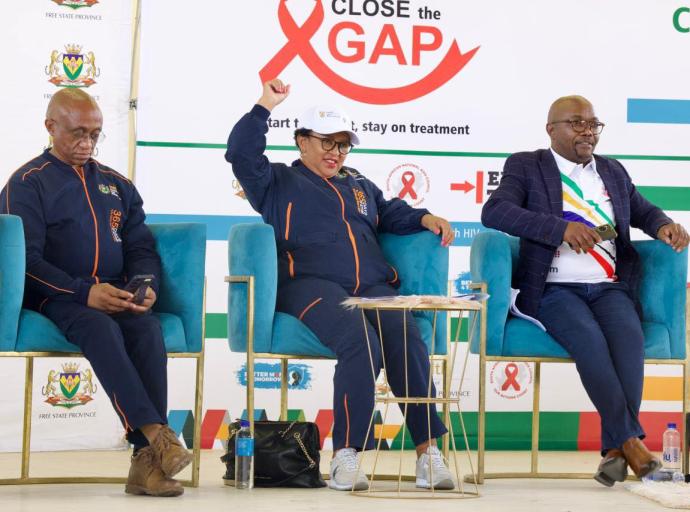
The Xhariep District in the Free State province is currently having difficulties retaining HIV-positive patients on treatment. This information was shared by Xhariep District Director Dr Ntshieleng Caka during the World AIDS Day celebrations held at Lepetla Secondary School in Petrusburg, under the theme “Renewed Efforts and Sustainable Commitments to End HIV.”
Caka said that, although the Xhariep has made improvements towards achieving the 95-95-95 target which means that 95% of people living with HIV know their status, 95% have access to antiretroviral therapy, and 95% of those on treatment achieved viral suppression.
She said the district's current rates are 94-86-94 which indicates that only 86% of HIV-positive individuals in the province are retained on treatment.
Despite this, Xhariep ranks second in the country for its performance against the 95-95-95 targets.
To address the retention issue, the Department of Health has launched the "Close the Gap" campaign, aimed at identifying 1.1 million people who are HIV-positive but not receiving treatment. This figure has been broken down by province, district, and even facility, with everyone working diligently to close their respective portions of the gap.
According to the Human Sciences Research Council, the Free State had the highest HIV rate in the country at 15.6% in 2022, an increase from 17% in 2017, which translates to approximately 450,000 people living with HIV in the province.
Professor Khangela Zuma, the principal investigator of the study, highlighted that HIV prevalence in the province was consistently higher among females compared to males across all age categories above 15 years. He expressed concern over the stable prevalence of 3.9% among children aged 0 to 14 years, as well as an increase in rates among youth aged 15 to 20 in 2022 compared to 2017. Notably, prevalence more than doubled among those aged 15 to 19 during this period.
In an interview with to Journal News, Civil Society Chairperson Simphiwe Moloena emphasized that the day was an opportunity to remember the achievements made in the HIV response and to encourage those affected by the virus. “Many have lost their lives due to AIDS and tuberculosis, and the government has provided antiretrovirals for free to save countless lives. However, unfunded programs aimed at ending HIV need urgent attention,” Moloena said.
He noted that civil society’s interventions, including social mobilization and community outreach, have significantly contributed to behavioral change, especially in combating stigma against those who test positive. “Despite this progress, stigma and discrimination persist within communities, particularly among those unaware of their status,” Moloena added.
He highlighted that the stigma surrounding HIV hampers community health, as men often hesitate to access health services and get tested. Unemployment and food insecurity are also significant challenges that further complicate the response to HIV.
“Therefore, I call upon the government to invest more domestic resources into HIV programs and to create employment opportunities without prioritizing specific age groups,” Mokoena added.