Lerato Mutlanyane
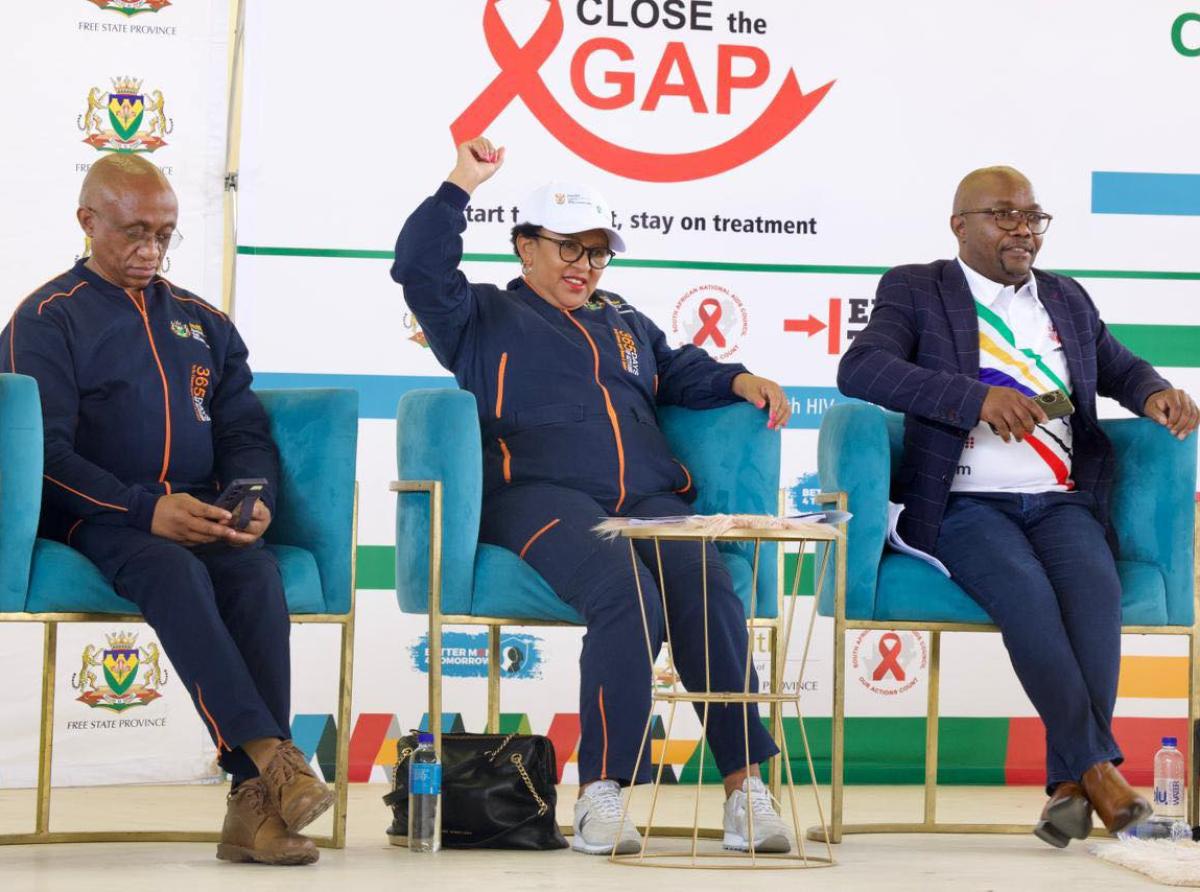
The Xhariep District in the Free State province is currently having difficulties retaining HIV-positive patients on treatment. This information was shared by Xhariep District Director Dr Ntshieleng Caka during the World AIDS Day celebrations held at Lepetla Secondary School in Petrusburg, under the theme “Renewed Efforts and Sustainable Commitments to End HIV.”
Caka said that, although the Xhariep has made improvements towards achieving the 95-95-95 target which means that 95% of people living with HIV know their status, 95% have access to antiretroviral therapy, and 95% of those on treatment achieved viral suppression.
She said the district's current rates are 94-86-94 which indicates that only 86% of HIV-positive individuals in the province are retained on treatment.
Despite this, Xhariep ranks second in the country for its performance against the 95-95-95 targets.
To address the retention issue, the Department of Health has launched the "Close the Gap" campaign, aimed at identifying 1.1 million people who are HIV-positive but not receiving treatment. This figure has been broken down by province, district, and even facility, with everyone working diligently to close their respective portions of the gap.
According to the Human Sciences Research Council, the Free State had the highest HIV rate in the country at 15.6% in 2022, an increase from 17% in 2017, which translates to approximately 450,000 people living with HIV in the province.
Professor Khangela Zuma, the principal investigator of the study, highlighted that HIV prevalence in the province was consistently higher among females compared to males across all age categories above 15 years. He expressed concern over the stable prevalence of 3.9% among children aged 0 to 14 years, as well as an increase in rates among youth aged 15 to 20 in 2022 compared to 2017. Notably, prevalence more than doubled among those aged 15 to 19 during this period.
In an interview with to Journal News, Civil Society Chairperson Simphiwe Moloena emphasized that the day was an opportunity to remember the achievements made in the HIV response and to encourage those affected by the virus. “Many have lost their lives due to AIDS and tuberculosis, and the government has provided antiretrovirals for free to save countless lives. However, unfunded programs aimed at ending HIV need urgent attention,” Moloena said.
He noted that civil society’s interventions, including social mobilization and community outreach, have significantly contributed to behavioral change, especially in combating stigma against those who test positive. “Despite this progress, stigma and discrimination persist within communities, particularly among those unaware of their status,” Moloena added.
He highlighted that the stigma surrounding HIV hampers community health, as men often hesitate to access health services and get tested. Unemployment and food insecurity are also significant challenges that further complicate the response to HIV.
“Therefore, I call upon the government to invest more domestic resources into HIV programs and to create employment opportunities without prioritizing specific age groups,” Mokoena added.