Months of uncertainty surrounding the controversial Bodulo Mothong housing project could come to an end today when the Free State High Court delivers judgment in a closely watched legal battle that could determine the future of hundreds of vulnerable families awaiting relocation to safer living cond...
A coalition of public service unions affiliated with the Congress of South African Trade Unions (COSATU) is expected to protest against the 9.8% increase in the Government Employees Medical Scheme (GEMS) on the National Day of Action on Thursday, 26 February.
The bodies include the Democratic Nursing Organisation of South Africa (DENOSA), National Education, the Health and Allied Workers' Union (NEHAWU), and the South African Democratic Teachers Union (SADTU).
DENOSA President Simon Hlungwani said the increase was unjustified and would significantly ‘erode’ the income of public servants, making it difficult for them to cover basic needs like school fees, transportation, and food.
He added that 9.8% is above the average compared with contributions from other medical schemes.
“We reject with the strongest contempt the increase by GEMS of 9.8%, which is coupled with the reality that they increased by 13.4%.
“In November, we engaged when they [the government] were attempting to increase for this year. But they seem be listening but not hearing us.”
Members are expected to gather in Pretoria, the Western Cape, and other provinces across the country
Hlungwani emphasised that the National Day of Action is not intended to disrupt essential services, but rather to demonstrate the power of public servants and their commitment to their cause. Eye Witness News
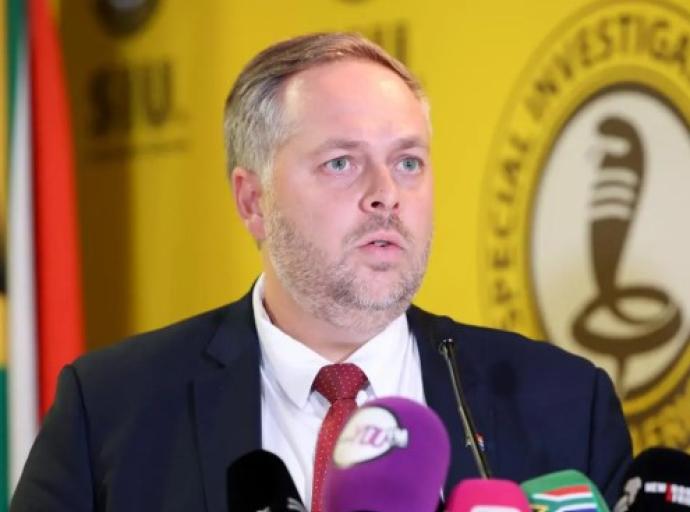
Home Affairs Minister Leon Schreiber said active steps have already been taken against officials singled out in a visa corruption probe by the Special Investigating Unit (SIU).
On Monday, the anti-corruption agency revealed that one official even built a road to her house from the bribes paid to her by foreign nationals to illegally facilitate their stay in South Africa.
Schreiber said contrary to what would be expected, the number of dodgy officials involved in the scam is relatively small.
The SIU said the permit and visa racket its uncovered within the Department of Home Affairs has cost the State around R180 million.
Four officials used the bank accounts of their spouses to extract bribes of around R16 million over a 10-year period from 2014.
Schreiber said once all visa applications go through a new electronic system, which is already operational for tourist visas, it will limit corruption through human interaction.
“Perhaps the single most extraordinary and important finding of the SIU’s work, is that the bulk of the malfeasance was allegedly committed by a handful of officials.”
Schreiber added that disciplinary processes against the implicated officials are ongoing.
Twenty officials have already been dismissed since April last year.
“I have also requested the Director-General to write to the Department of Public Service and Administration, as well as to the Department of Cooperative Governance and Traditional Affairs, to ensure that these former employees are flagged, and that they are not reemployed elsewhere in the State while they undergo criminal proceedings.”
Schreiber said the department has also uncovered 2,000 fraudulent study visas issued by these syndicates - which are in the process of being cancelled. Eye Witness News
Suspended SAPS Deputy National Commissioner Shadrack Sibiya has rubbished "malicious" allegations that crime kingpin Vusimuzi "Cat" Matlala brought R300,000 cash to his home in September 2024, where a surprise engagement party for his son was underway.
The allegations are based on a transcript of a discussion involving male speaker 1, male speaker 2, Witness C, and Matlala.
Matlala admitted in a chat that he arrived at the party after withdrawing R500,000, intending to give R300,000 to Sibiya, and was driving a Rolls Royce at the time.
Testifying at the Madlanga Commission of Inquiry on Monday, Sibiya disputed the claim of Matlala's alleged contribution, saying he has evidence of a family WhatsApp group showing various family members who pledged contributions towards the event.
"This thing of R300,000 I am throwing it away. I am rejecting it right away from the onset," he said.
Sibiya reiterated that deny this thing of the electronic funds transfer (EFT), R500,000, saying "it is just being malicious".
He challenged the commission's investigators to verify whether Matlala actually withdrew the large sum of money as alleged.
During the engagement party Sibiya testified that he sent a WhatsApp message to Sergeant Fannie Nkosi, saying: "Ask Cat to make a turn."
Nkosi, who recently testified as Witness F, had his cover blown by Sibiya's testimony, prompting Justice Mbuyiseli Madlanga to allow his identity to be revealed
Sibiya’s request to Nkosi was made while Matlala's wife Tsakane and acting deputy commissioner Lieutenant-General Hilda Senthumule were also among the attendees at the party.
He explained that he told Nkosi to invite Matlala after being asked if he would have a problem with Matlala fetching his wife who had had too much to drink.
He denied inviting Matlala, but Justice Madlanga noted Nkosi had told him he was dropping off elderly women and would then come to the party. Madlanga pointed out Sibiya's "Ask Cat to make a turn" message seemed to contradict his claim.
"To an ordinary reader it sounds like you were inviting Mr Matlala. This idea that he was coming to pick up his wife who had taken a lot of liquor doesn't make much sense. All you needed to say was Mrs Matlala needed to be picked up. You don't say 'ask him to make a turn'. You were inviting him," Madlanga said.
Sibiya responded: "It is the chair's viewpoint on this thing. It is not a fact that I think I should take any further when the chair says it doesn't make sense."
When asked by co-commissioner Advocate Sesi Baloyi SC why he did not personally speak to Matlala, Sibiya initially replied: "Like I indicated chair, I never made it my practice to actually communicate with him."
But, Baloyi suggested that his answer contradicted a January 2024 encounter where Sibiya allegedly wanted Nkosi to be a middleman between Matlala and Sibiya.
"I didn't need him to be a go-between," Sibiya said.
Earlier on he vehemently denied allegations that he received impalas as gifts from Matlala and distanced himself from Nkosi, who claimed to be a go-between linking Matlala and Sibiya.
Nkosi testified that about four years ago Sibiya instructed him to fetch Matlala, who was waiting downstairs. Matlala allegedly told Nkosi he was there to discuss a R360-million SAPS contract with his company, Medicare 24 Tshwane.
Sibiya, however, shot down Nkosi's testimony, saying he met Matlala in January 2024 at his office, where Matlala was brought by Sibiya's personal assistant.
He insisted Matlala who was accompanied by his lawyer visited him seeking help with a tender issue, despite commissioners questioning how this could be given the tender was only awarded in June 2024, four months after their meeting.
He told the commission that no impalas were delivered at his plot because he "was not going to accept anything from a service provider".
According to him, he had told Nkosi he did not need impalas, citing that they die fast and he could not afford the upkeep, having previously spent around R12,000 a month on them.
He said: "I expressly requested that Sergeant Nkosi ensure that the correct animal, namely a bleskop, be delivered. He later indicated that he had been under the impression that I was seeking an impala. As a result of this misunderstanding, no animal was delivered to my property.” IOL NEW
The former National Director of Public Prosecutions (NDPP) Advocate Shamila Batohi’s decision to walk out of the Nkabinde Inquiry without permission from Justice Bess Nkabinde has been correlated to the actions of President Jacob Zuma, with experts and analysts calling on the inquiry to take action against Batohi.
Legal experts argued that Batohi, like Zuma, also left the ongoing inquiry without the chairman’s permission while still under an obligation to testify.
Batohi, who is believed to be in the Netherlands, did not respond to a request for comment.
She officially retired from her position as NDPP on January 30, 2026.
Zuma, walked out of the State Capture Commission during a tea adjournment, without permission from Chief Justice Raymond Zondo, following the dismissal of his recusal application against Zondo in November 2020.
Zuma was later arrested for a 15-month prison sentence for contempt of court.
This was after the Constitutional Court (ConCourt) found him guilty of contempt for defying a court order that compelled him to appear and testify before the commission on January 28, 2021.
The Nkabinde Inquiry was established in September 2025 after Batohi requested President Cyril Ramaphosa to establish the inquiry to probe Advocate Andrew Chauke, the head of the National Prosecuting Authority (NPA) in Gauteng.
During intense cross-examination by Advocate Tembeka Ngcukaitobi on December 15, 2025, Batohi informed the panel that she would not return after the lunch break, stating that she was not prepared to continue until she received independent legal counsel, rather than being represented by the NPA’s legal team.
Although Nkabinde criticised her actions as disrespectful, Batohi denied that she had walked out or was “delinquent”, maintaining she was simply seeking legal counsel.
During the cross-examination, she also admitted that she did not personally study the 23 dockets before deciding to withdraw racketeering charges against former KwaZulu-Natal Hawks head Johan Booysen and his unit, arguing that National Directors are not legally required to read entire dockets and that she relied on internal memos and reports instead.
Politician and lawyer Zwelethu “Mighty” Madasa said this is a similar action to Zuma, who left the Zondo Commission proceedings without permission, adding that there must be consequences against Batohi.
Madasa said the action should come from Nkabinde.
“But the questions should also be raised about inconsistencies when dealing with problems and issues in the government -the selective justice, the untouchables and touchables, and how this is compromising the system of the administration of justice, which evidently, has been seriously compromised from these inquiries,” he said, adding that Batohi should be held accountable.
The inquiry's spokesperson, Tiyisela Mpuzana, said Batohi remains under oath and her testimony has not been concluded, adding that the panel retains the authority to regulate and manage its own proceedings, including determining the manner and circumstances under which a witness continues to testify.
“It would be inappropriate to speculate further,” Mpuzana said.
Batohi is currently embroiled in several legal and oversight processes. While she has not been criminally charged, she faces significant legal scrutiny.
ActionSA formally requested the Justice Minister, Mmamoloko Kubayi, to suspend Batohi and has considered court action for contempt of court related to the Lily Mine tragedy. The party is also calling for a full parliamentary inquiry into the 'NPA’s dysfunction'.
The Truth and Reconciliation Commission (TRC), Commissioner Yaskim Sooka, recently urged an inquiry to investigate Batohi for “dereliction of duty” regarding the stalling of apartheid-era prosecutions.
Madasa said even though Batohi is retired, the law should not stop.
Another legal expert, who asked for anonymity due to an ongoing case against the government, said the ConCourt judgment against Zuma is clear that anyone who refuses to appear before a commission is in contempt and should serve a jail term.
The lawyer added that Nkabinde should approach the ConCourt and apply the jail term against Batohi.
“The moment she is found guilty, it means she can be impeached. Remember that impeachment can take place even after retirement.”
Meanwhile, the NPA's head of communication, Bulelwa Makeke, said it would not be appropriate for the NPA to comment on any issues coming out of the inquiry, as it is currently underway.
“Any recommendations of the inquiry for action to be taken will be considered and acted on,” she said. IOL NEWS
There is a story doing rounds in tabloids about the appointment of Zongezile Zumane as CEO of Sinorita Nhlabathi Hospital in Ladybrand in July last year. The story was sparked by a regrettable recording of a conversation between the Premier and a journalist of Sunday World.
I do not want to speak about the cruelty of secretly recording a conversation with the Premier and turning her into a permanent target for cheap political ends. That’s a story for another day. I think we need to reflect on what we say must happen to offenders who have served time in prison. And this conversation must be located with the context of a society that claims to believe in justice.
There seems to be a strange cruelty that lives among us in this country. A cruelty of people who believe that once a human being has fallen, they must remain on the ground forever. A cruelty of those who whisper “criminal record” deliberately to condemn people to a permanent curse. And today, that cruelty has found a new target in the person of Mr. Zumane.
We are told that the provincial government has committed an unforgivable sin by appointing someone with a criminal record to serve as CEO of Sinorita Nhlabathe hospital. We are told that this appointment is flawed and morally reckless. We are essentially told to panic. But all I can say is that you must run for your life when a naked person offers you a shirt.
Because those leading the outrage are themselves unclothed morally and intellectually. They have nothing to offer but indignation and yet they want to dress society. What exactly do we believe prison is for? Is it a hell where people are thrown to burn forever and a dungeon where souls are permanently discarded? Didn’t we claim that prisons in a democratic reality must be rehabilitation centres meant to mend souls? We cannot build a society on the lie of redemption and then deny redemption when it arrives at our doorstep. Zumane served his sentence and paid his debt to society, why must he be destroyed? Last time I checked there was no dustbin for human beings.
The logic of unending punishment is the logic of a society that has lost its own self-worth. It is the hypocrisy of people who secretly believe that if they were to fall, they would not deserve to be discarded. It is people who believe only they deserve second chances. I am reminded of the biblical wisdom, “let the one without sin cast the first stone”. Who among us has lived a life of spotless perfection? Who among us can say we have never erred and never stumbled? The difference between many of us and Zumane is simply that his mistakes were prosecuted and ours remain hidden.
Many of our hospitals are collapsing. Corridors smell of neglect. Patients wait for hours, sometimes days. Infrastructure is crumbling. We are facing a serious crisis that requires skilled and experienced administrators not saints. Zumane brings precisely that. He brings with him years of experience as a healthcare professional and seasoned public service administrator. The decision of government to appoint him must not be judged by moral panic but by his performance. If Zumane fails, we will hold him accountable. If he succeeds, we shall have the humility to admit that rehabilitation does indeed work.
Let it be known that some of us refuse to join this chorus of engineered outrage, we are ready to defend the ethic of forgiveness and reintegration. Prisons are not hell-holes where people are sent to burn incessantly. Those walls are meant to be bridges back to society. If we tear down those bridges, then we are the ones pushing people into permanent criminality. We must have the courage to allow people to rise after they have fallen. Anything less is hypocrisy dressed up as virtue.
In the end, you must never applaud the generosity of a naked person offering you a shirt. Just simply ask why they have none themselves…
*Tshediso Mangope moonlights as a social commentator and writes in his own personal capacity.
** The views expressed do not necessarily reflect those of this publication (Journal News).
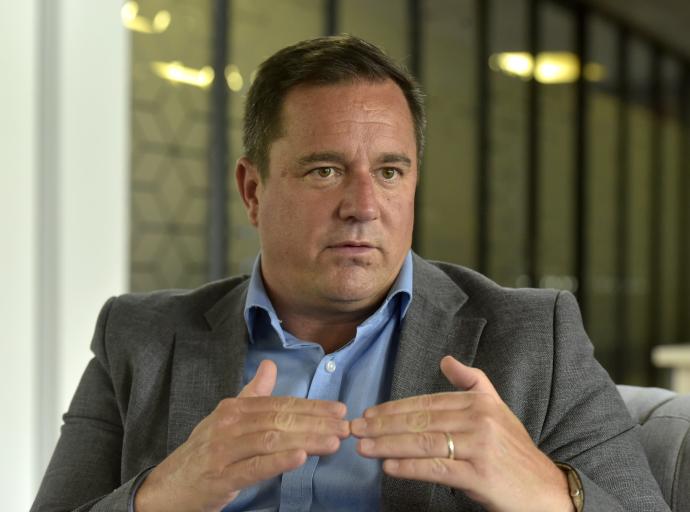
Internal tensions within the Democratic Alliance are intensifying ahead of the party’s April federal congress, with senior leaders coalescing around Western Cape agriculture MEC Ivan Meyer as a possible successor to John Steenhuisen in the national agriculture portfolio.
Several party figures say momentum is building for a broader reshuffle of the DA’s cabinet positions in the Government of National Unity, driven largely by dissatisfaction with the handling of the foot-and-mouth disease (FMD) outbreak and concerns about the party’s credibility among farming communities.
The outbreak, which has disrupted livestock movement and unsettled export markets, has become a focal point for internal criticism. Insiders argue the crisis has dented confidence in the agriculture department and weakened Steenhuisen’s standing, particularly after he confirmed he would not seek a third term as DA federal leader.
One senior party leader, said there was now “broad agreement that agriculture needs a reset,” arguing the response to FMD had harmed the party’s reputation. The disease has been declared a national disaster, with agricultural organisations warning of serious economic consequences if it is not contained.
Steenhuisen has defended the department’s response, noting the outbreak predates his tenure and pointing to improved coordination with provinces. He also acknowledged the strain on producers, saying: “To our farmers who have watched their livelihoods disappear before their eyes, I hear you,” while pledging that the government would “stop at nothing” to eradicate the disease.
Despite this, farmers and industry bodies remain uneasy. AgriSA chief executive Johann Kotzé warned of “the cumulative economic impact” if the outbreak is not swiftly brought under control, particularly for rural towns reliant on livestock.
Within DA structures, Meyer is increasingly seen as the frontrunner to assume the portfolio once a new party leader is elected. Supporters cite his academic background in agricultural economics and experience in the Western Cape, saying he could help rebuild confidence with producers and export partners. Attempts to obtain comment from Steenhuisen and the DA were unsuccessful.
Reports indicate provincial leaders from Gauteng, North West and Limpopo have discussed his candidacy in internal forums. The proposed reshuffle could also affect other DA ministers in the Government of National Unity, including Siviwe Gwarube (Basic Education), Dean Macpherson (Public Works and Infrastructure), Leon Schreiber (Home Affairs), Willie Aucamp (Forestry, Fisheries and the Environment), and Solly Malatsi (Communications and Digital Technologies).
Publicly, the party has sought to downplay talk of succession, projecting an image of unity. However, recent media engagements by some members suggest a more complex internal picture. Earlier in February, IOL reported that Steenhuisen’s future as a minister was uncertain after he announced he would not contest the party leadership.
Political analysts warned that the decision could weaken his position in government. Kedibone Phago, a professor at North-West University, argued that relinquishing the party’s top post reduces Steenhuisen’s leverage within the GNU.
“Stepping down as DA leader in order to focus on being a minister actually weakens his position. Without control over the party, he won’t have influence over who serves in government and he can easily be reshuffled,” Phago said.
Another analyst, Dr Levy Ndou, said South Africa’s political dynamics make it difficult for non-party leaders to retain senior executive roles.
“I don’t see him remaining a minister if he is no longer part of the top leadership,” Ndou said. “In South African politics, cabinet positions are typically reserved for party leaders. If Steenhuisen stays on, the DA would be doing something we have not seen before.” IOL NEWS