The newly elected Mayor of Maluti-A-Phofung Municipality, Tumelo Thebe, has wasted no time in setting the tone for his administration, unveiling an ambitious plan to restore dignity, improve service delivery, and rebuild public confidence in a municipality that has struggled with governance and infr...
The National Prosecuting Authority (NPA) has confirmed being served with petition by legal representatives of Dr. Nandipha Magudumana seeking leave to appeal the majority judgment of the Supreme Court of Appeal delivered last month.
The NPA spokesperson Mthunzi Mhaga says they will defend the matter when it’s heard at the Constitutional Court.
Last month, Magudumana suffered a legal blow when the Supreme Court of Appeal (SCA) dismissed her application to nullify her arrest in Tanzania.
Magumana approached the SCA to reverse the decision of the Free State High Court, which also dismissed her application to nullify her arrest, on the basis that she had consented to be brought back to the country.
Four Justices dismissed the case with a dissenting judgment in her favour.
“We will oppose the application because we strongly believe that her deportation from Tanzania to South Africa was above board. Therefore, her application has no merit and stands to be dismissed by the Apex Court,” Mhaga explains.
The South African government is implementing stronger measures to combat smoking by introducing legislation that will require tobacco companies to display graphic health warnings on cigarette packaging. Deputy Minister of Health Dr. Joe Phaahla announced the proposed bill during a World No Tobacco Day event in Midrand, Johannesburg, emphasizing the need to highlight the serious health risks associated with tobacco use.
Under the new regulations, cigarette packs will display graphic images of health issues related to smoking, including damaged lungs, amputated limbs, and mouth cancers. This initiative aligns with global efforts to discourage smoking through plain packaging and visual deterrents.
Concerns Over New Smoking Trends
Dr. Phaahla also raised alarms about the increasing popularity of electronic smoking devices, such as vaping and hookah pipes, warning that they may pose even greater risks than traditional cigarettes.
“These new emerging products are actually harmful,” he said. “They use synthetic nicotine, which travels faster to the brain and is highly addictive. Young people may start with these expensive products and later switch to cheaper, conventional cigarettes.”
The Department of Health plans to collaborate with other government bodies to enhance anti-smoking education campaigns, especially in schools, to deter youth from starting to smoke.
Community and Youth Response
Civic organizations that support tobacco control welcomed the initiative, emphasizing the necessity for increased public awareness. Young attendees at the event shared their concerns about tobacco’s effects on their generation.
“I came here because I want to encourage people my age to understand the harmful effects of tobacco,” said one participant. “The tobacco industry is ruining our youth, and we need to come together to change that.”
Health experts reiterated that tobacco use continues to be one of the leading preventable causes of cancer, respiratory diseases, heart conditions, and pregnancy complications.
Next Steps
Once passed into law, the bill will require compliance from all tobacco manufacturers, marking a significant step in South Africa’s public health strategy. The government aims to reduce smoking rates, particularly among young people, through stricter regulations and education.
As the legislation progresses, health advocates urge communities to reject all forms of smoking, emphasizing that no tobacco product is safe.
Dr. Phaahla concluded, "We must educate our people—these products are not cool, they’re deadly."
The draft bill is anticipated to undergo further review before being presented to Parliament for approval.
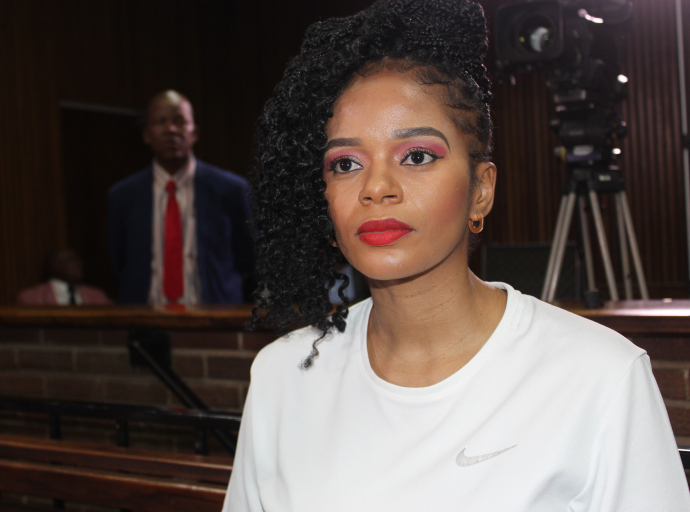
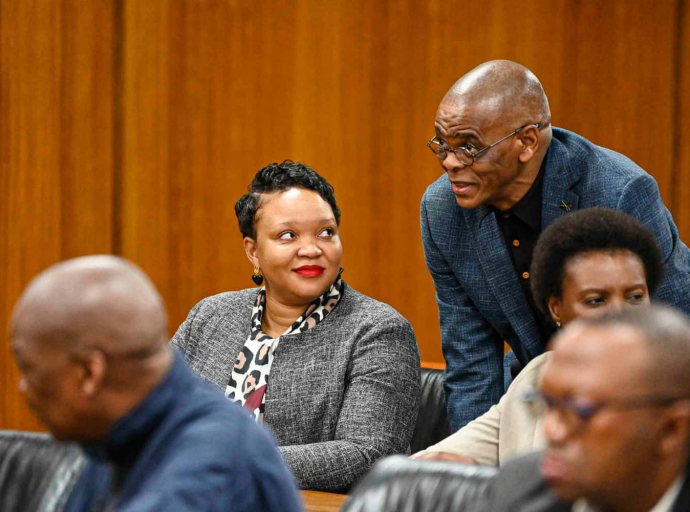
BLOEMFONTEIN - The Free State High Court in Bloemfontein delivered judgment in the trial within a trial ex-personal assistant to former Free State Premier, Ace Magashule.
Moroadi Cholota on Tuesday, 3 June challenged her extradition from the United States of America (USA) to the Republic of South Africa (RSA) claiming that it was unlawful.
The court under the leadership of Judge Phillip Loubser, declared the extradition as unlawful saying that the court did not have the jurisdiction to try Cholota on the offenses that she had been accused of.
Loubser questioned whether the High Court had the jurisdiction to trial Cholota and responded that due to the state’s fabrication or misrepresentation to USA authorities, there was reasonable or probable cause for charges brought against Cholota.
Cholota then stated that fabrication or misrepresentation is retaliation by the state because she refused to implicate her former employer, Ace Magashule and therefore was threatened by the state that she would have to stand trial alongside Magashule but the state saw this threat as a fair warning.
“The state lied or misrepresented that Cholota was a fugitive from justice and that there were grounds for Cholota refusing to return to South Africa, this was all proven to be false on August 14, 2024,” Loubser said.
Loubser further stated that the court does not need to determine the request for the extradition as this was not done by the relevant minister in his capacity but rather by the National Prosecuting Authority (NPA).
Loubser finally declared that the extradition of Cholota from the USA to South Africa was done unlawfully and that the court did not have the jurisdiction to trial Cholota on charges of fraud, alternative fraud, and corruption offenses.
Cholota wept as she was set free to go by Judge Loubser.
Among these are changes to the bill of rights on provisions related to housing, healthcare and education.
ActionSA is proposing a raft of amendments to the Constitution aimed at stemming the country’s immigration problems.
Among these are changes to the Bill of Rights on provisions related to housing, healthcare and education.
The party’s Athol Trollip says that for too long, the country’s hospitality and limited resources have been exploited.
The deadline for submissions to Parliament’s constitutional review committee closed on Saturday, with it having already received more than 200 submissions by late last month.
ActionSA says amendments to the Constitution should start with the preamble, which has been used to extend constitutional protections even to those residing in the country illegally.
The party says this deliberate misreading has placed undue pressure on limited public resources.
Parliamentary leader Athol Trollip says amendments should also be made to Chapter 2 of the Bill of Rights in respect of Sections 26 and 27, related to housing and healthcare, respectively.
"This is an area of exploitation that has a massive impact on our economy, and our municipality’s ability to deliver the services required by people living in this country."
Trollip says more than 70% of patient files at Johannesburg clinics belong to foreign nationals, while there’s also pressure on schools to find placements for learners, prompting a recommendation to also amend Section 29 on education.
"To provide only citizens, legal immigrants, and legally recognised residents, rather than all people living in South Africa, because this is where the illegal immigration crisis impacts our country so dramatically."
It will now be up to the parliamentary committee to hold oral hearings and to debate whether to propose amendments to the house, which will require a two-thirds majority to pass.
*This article was first published by Eye Witness News
In a written legislature response, Health MEC Nomantu Nkomo-Ralehoko said persistent water shortages have also led to postponements of major operations.
The Gauteng Department of Health said that a high number of patients and load shedding were among the reasons it had over 34,000 patients on its waiting-list for surgeries at its public hospitals.
In a written legislature response, Health MEC Nomantu Nkomo-Ralehoko said that persistent water shortages had also led to postponements of major operations.
Affected surgeries included cataract procedures, hip and knee replacements, and gynaecology surgeries.
The hardest hit facilities include the Steve Biko Hospital, followed by the Chris Hani Baragwanath Hospital, George Mukhari Hospital, and Charlotte Maxeke Hospital.
Waiting times differ depending on the surgery, with some patients waiting up to two years for a cataract removal at the Mamelodi and Yusuf Dadoo hospitals, while others wait only one to two months at Leratong Hospital.
Similarly, patients at Kalafong Hospital can wait up to five years for hip surgery, while others wait three to six months for the same procedure at the George Mukhari Hospital.
The Democratic Alliance (DA)’s health spokesperson in Gauteng, Jack Bloom, said that more needed to be done to address the issue.
"People are in pain, they are suffering. The Gauteng Health Department needs to do something radical to make sure these terribly long surgery waiting lists are cut as soon as possible."
Nkomo-Ralehoko said increasing staff capacity had helped to reduce waiting times.
*This article was first published by Eye Witness News
There are not enough beds in South Africa’s 13 psychiatric hospitals.
People who are found unfit to stand trial or be held criminally liable for a crime due to their psychiatric state are supposed to receive specialised care in the health system. But hundreds are being kept in prisons.
And while the Department of Correctional Services and the Department of Health haggle over who should take responsibility, the number of these state patients is increasing.
In Parliament earlier this month, Correctional Services Minister Pieter Groenewald said he had sent multiple letters to the Minister of Health, requesting the department to make room for the state patients in designated health facilities.
“If the minister responds tomorrow and says, ‘send them’, we will send them almost that same day,” said Groenewald.
He said that much of the Department of Correctional Services’ (DCS) overspending — about R690-million in 2023/24 — was due to legal obligations such as caring for state patients, for which the overcrowded system does not have the budget. “I will continue to follow up with the minister of health again, but unfortunately, I can’t just take [the patients], go to a facility and offload them as if they are not my responsibility.”
Health Department spokesperson Foster Mohale said correspondence from the DCS had been received and responded to.
Mohale said “ideally” a state patient should be transferred to a psychiatric hospital within 30 days. This is the time it takes to complete the required paperwork if it is initiated as soon as the person is declared a state patient by the court.
But the law is unclear about who is responsible for state patients and how long they need to remain in state care. According to the Mental Health Care Act, state patients should be transferred to healthcare facilities within two weeks of their designation. But a 2017 amendment to the Criminal Procedure Act (CPA) states they can be held in prisons, possibly indefinitely, or temporarily in the prison’s health wing.
PRISON RATES RISING
Regardless of how the responsibility is supposed to be shared, the current number of state patients in prisons appears to be increasing significantly.
Groenewald said there were 331 state patients in prisons as of 7 May. The figure has been confirmed by the Judicial Inspectorate for Correctional Services (JICS). The health department puts the number of state patients in prisons at around 400.
This is a massive increase from March last year, when the number was about 200, according to the DCS annual report. It is also the highest number of state patients in prison since statistics were first published in 2019.
But these numbers are constantly in flux. In the 2023/24 reporting year, 185 state patients were transferred to health department psychiatric hospitals, but the number of new patients declared mentally unfit to stand trial was higher. The DCS annual report noted that state patients were remaining in prisons because there are not enough psychiatric hospitals, all of which have long waiting lists.
Mohale says there are currently 3,765 declared state patients nationally. This implies about 10% or less are in prisons. The rest were housed across 13 psychiatric hospitals that have a total of 1,937 beds. The shortfall of about 1,500 beds in health department facilities is due to psychiatric hospitals admitting more patients than they have space for, and state patients being deemed stable enough to leave the hospital under particular guidelines.
The health department states there has been an overall increase in psychiatric patients.
“These facilities were able to cater for the need in the past,” said Mohale. He said there are now more state patients overall, and fewer of them are being reintegrated into their communities.
TREATMENT VS PUNISHMENT
Figures gathered by JICS, obtained from a source, show that while some state patients are held in prisons for a few days or weeks, the vast majority have been kept in prison for months or even years. Three patients have been kept in prison for more than four years.
Whether or not this is within the bounds of the law is unclear, as Parliament’s subcommittee on correctional services noted three years ago.
Keeping a state patient in prison may not be best for patients or prisons.
“The purpose of referral of state patients to a psychiatric institution is not punishment, rather treatment and rehabilitation, while simultaneously monitoring and managing their potential risk to the community,” states the DCS in its annual report.
A 2015 study found that the majority of state patients who received treatment over three years at Sterkfontein Hospital in Gauteng were reintegrated into communities and did not reoffend, although a quarter of patients absconded. Similar studies on state patients in prisons have not been conducted.
“If the Department of Health knows of [state patients], they must make space, but obviously, a plan has not been made,” said Janho Engelbrecht, DA MP on the Portfolio Committee on Correctional Services.
PLANS IN PLACE
Mohale said the health department is trying to remedy the situation, with infrastructure projects being implemented at some psychiatric hospitals — some of which are more than 100 years old — and plans to build a new facility in Mpumalanga.
The department is also looking to contract non-profit organisations to accommodate state patients when they are reclassified from state patients to outpatients, and to match state patients with custodians early to facilitate their reintegration.
A significant step is also to address the shortage of psychiatrists at Eastern Cape facilities. “This is largely due to the rural nature of the province, resulting in fewer psychiatrists willing to work there, especially at Komani Hospital,” Mohale says.
He said two additional psychiatrists have been appointed to the province through international recruitment.
The department is also considering joint appointments with universities to increase the number of psychiatrists working in some capacity with state patients. Along with expanding the capacity of psychiatric hospitals, this may address current gaps in the system.
*This article was first published by Eye Witness News