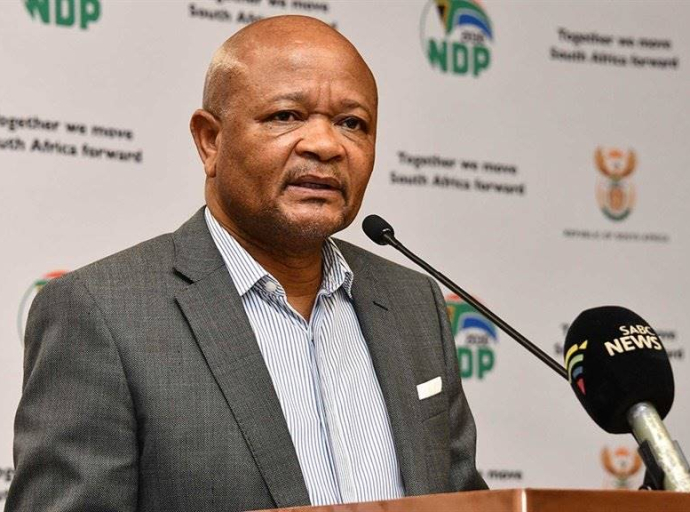
The newly elected Mayor of Maluti-A-Phofung Municipality, Tumelo Thebe, has wasted no time in setting the tone for his administration, unveiling an ambitious plan to restore dignity, improve service delivery, and rebuild public confidence in a municipality that has struggled with governance and infr...
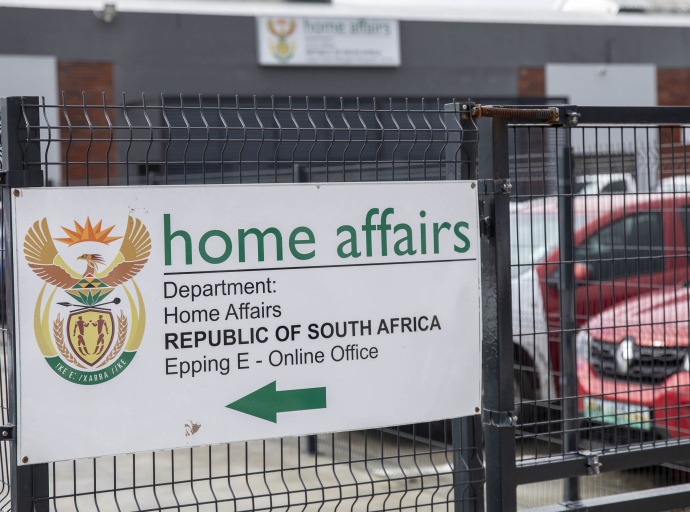
Hundreds of people marched to the Department of Home Affairs’ head office in Pretoria on Thursday to demand that their identity documents be unblocked. Some say they have been able to use their IDs for nearly two decades.
The march was organised by the civic group Soil of Africa. Many of the protesters travelled overnight by bus from other provinces and slept outside the department’s offices.
The protesters said their identity documents were blocked without notice or reason. Without IDs, they are unable to access social grants, the health system, employment, and other services.
The department has said that they block ID numbers to prevent identity fraud and irregular migration. But the Gauteng High Court in 2024 declared it unconstitutional for the department to block IDs without notice, timeous investigation and appeal processes. About 700,000 people are affected by blocked IDs.
Protesters say that despite the court order, their IDs are still blocked.
“This is inhumane, unconstitutional and unlawful,” reads a memorandum handed over to the department on Thursday.
Samuel Shirindza said he was unable to get a job because his ID had been blocked. He was told by Home Affairs to get proof from his former primary school that he had gone there. He did this, but his ID is still blocked.
Another protester, Sam Sibiya, said his ID was blocked in 1998, and he was unable to register the births of his two children.
The department’s head of communications, Paseka Mokhethea, told the crowd, “The department is busy with the process of verification of the blocked IDs.”
“If we can unblock them without properly checking them, we may end up with people who are not supposed to receive them, especially those who are illegally in the country.”
Mokhethea said that verifying blocked IDs takes time, and the department needs to ensure no one gets an ID fraudulently. A response to the memorandum is expected within seven days.
*This article was first published by Eye Witness News
Anywhere between 5% and 30% of gold in South Africa – once the world’s top producer – is mined illegally, laundered, and shipped as legitimately mined precious metal.
However, it’s impossible to really quantify the extent of the damage to the economy caused because of these illegal shipments, according to a new report from SWISSAID, an NGO based in Switzerland. Although gold output is declining, it still contributes billions to South Africa’s economy.
SWISSAID’s report stated that, because South Africa is clinging to an opaque gold trade reporting system dating back to apartheid, there is no quantifiable way of completely and accurately determining total imports and exports, as well as the origin, of the yellow metal.
As a result, it states, this “opacity makes the identification and calculation of illicit gold flows almost impossible”.
However, through data provided by industry players as well as Rand Refinery, Africa’s largest precious metals refinery, SWISSAID said it was able to circumvent deficiencies in gold trade statistics and arrive at “what is arguably the most realistic picture of the South African gold trade to date”.
This enabled the NGO to determine that, while the South African industrial gold sector is declining, illegal/informal gold production is on the rise and that South Africa plays a key role as a transit hub in the gold trade, including for smuggled gold.
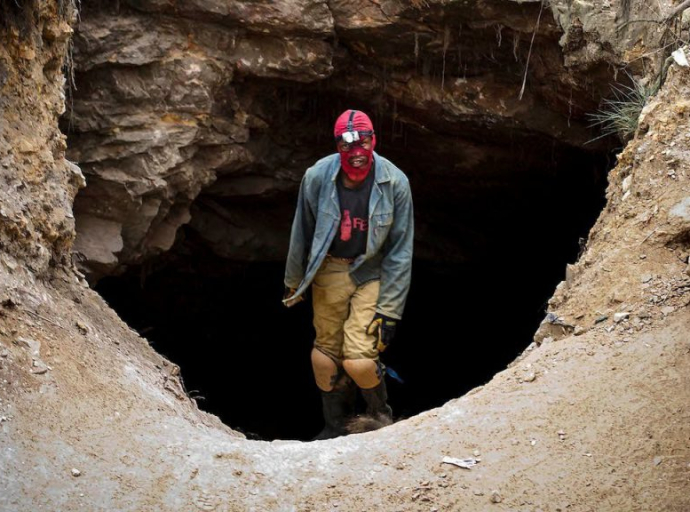
“Artisanal and small-scale gold mining in South Africa takes place mainly in abandoned or unused industrial mines. The activity is illegal, largely controlled by syndicates, and involves mainly undocumented migrants from neighbouring countries,” it stated.
Estimates of gold production from artisanal and small-scale mining (ASM) vary widely, ranging from 5% to 30% of total production, it said. Moreover, this illegally mined gold is “laundered into formal supply chains through local refineries and may be exported legally”.
South Africa is a known destination for smuggled ASM gold from neighbouring countries, particularly Zimbabwe, the report stated. That gold is also laundered locally before export.
“Consequently, there is a high risk that reprocessed, unprocessed, melted or scrap gold from South Africa may in reality contain in freshly mined ASM gold associated with smuggling, money laundering or human rights violations,” the report found.
Police Minister Senzo Mchunu says South Africa's policing system is undergoing a strategic overhaul aimed at improving crime prevention, restoring public trust, and modernising police operations.
Tabling the Budget Vote for the 2025/26 financial year in Parliament, Mchunu laid out a R120.89 billion allocation for the South African Police Service (SAPS), Civilian Secretariat for Police Service, and the Independent Police Investigative Directorate (IPID).
''While we welcome and appreciate the allocation, we are under no illusion about the scale of the task ahead. Crime is adaptive, dynamic, and, in many cases, well-financed — and so must our response be.”
Mchunu outlined nine key crime-fighting priorities, including reducing the murder rate, fighting gender-based violence, tackling illegal firearms and drugs, and rooting out corruption within the SAPS.
"Our commitment is to lead a police service that protects the vulnerable, disrupts criminality, and restores trust," he said.
Mchunu noted that four provinces, Gauteng, KwaZulu-Natal, Western Cape, and Eastern Cape, remain the primary focus due to high crime levels.
''It is clear that identified high crime zones in all four provinces require intelligence-led targeted deployment of specialised units to combat criminality.” He also confirmed that 225 hotspot police stations have been identified for synchronised interventions.
Mchunu said visible Policing will receive over 53% of the total budget, while Detective Services will account for nearly 20%. Compensation of employees remains the largest cost driver, making up more than 80% of the budget.
He also confirmed that 5,500 new police trainees will be enlisted in January 2026 to maintain the personnel complement of 188,000.
A total of R219.2 million has been allocated for securing the G20 conference in November 2025, R400 million for the 2026 Local Government Elections, and R34.8 million for costs related to the appointment of an additional Deputy Minister. Furthermore, R150 million is being shifted to the Directorate for Priority Crime Investigation (DPCI) to support its anti-corruption partnerships.
Community policing is also getting a boost, with R28 million allocated to Community Policing Forums and R8.5 million for public awareness campaigns, he said.
To address Gender-Based Violence and Femicide (GBV+F), a total of R1.6 billion will be spent, including R1.5 billion for Family Violence, Child Protection and Sexual Offences (FCS) Units. Mchunu said, “The country is gripped and aggrieved by GBV+F, as its prevalence has reached distressing levels.”
Moreover, Mchunu said to modernise operations, R670 million will be invested in building and upgrading police stations, while R20 million will fund mobile Community Service Centres. and R45 million on police station maintenance.
Mchunu highlighted the role of partnerships with the private sector, particularly with Business Against Crime South Africa. Projects include piloting automated police stations, expanding forensic labs, and integrating SAPS systems with private sector technologies.
SAPS will also roll out drones, body-worn cameras, and digital tools to enhance public safety and investigative capacity, he said.
Mchunu highlighted the role of partnerships with the private sector, particularly with Business Against Crime South Africa. Projects include piloting automated police stations, expanding forensic labs, and integrating SAPS systems with private sector technologies.
"The SAPS continues to advance its modernisation agenda through the deployment of strategic technology solutions aimed at improving operational efficiency, situational awareness, and public safety," Mchunu said.
Addressing corruption within police ranks, Mchunu confirmed, “We have taken a defined stance against corruption within the SAPS and we unequivocally state that there is no tolerance for corruption.” This includes recent arrests of senior officials in Crime Intelligence.
Human resources are being restructured, with new recruitment strategies, leadership development, and incentives. A new Detective Critical Skills Allowance of R1,000 per month will be introduced from October 2025 to retain skilled investigators. Additionally, 200 former detectives will be re-enlisted and more contract appointments made, said Mchunu.
Furthermore, the DPCI will ramp up efforts against corruption, cybercrime, and unresolved Truth and Reconciliation Commission cases.
Mchunu said, “The DPCI plays a pivotal role in safeguarding justice and upholding the integrity of democratic institutions.” The directorate plans to hire 300 experienced detectives internally and bring in 250 police trainees with specialist qualifications. Another 260 posts are open to attract forensic, legal, and financial investigation expertise.
Mchunu acknowledged the dedication of SAPS members and called on all South Africans to play their part in creating safer communities.
“A safer South Africa is possible. But it will not be achieved by the police alone. It requires partnerships, unity of purpose, and the unwavering commitment of everyone in this House and every citizen outside of it,” he said.
He reaffirmed the Ministry's commitment to transforming the SAPS into “a service that is effective, efficient, responsive, and professional , a service that inspires public trust and delivers safety and justice to all South Africans.”
A doctor escaped with injuries after he was shot while travelling to work on Friday morning.
The doctor, believed to be a gastroenterologist, came under fire while on his way to work in the Westville area.
According to KZN police spokesperson Constable Thenjiswa Ngcobo, a case of attempted murder has been opened.
"This follows an incident in which a 65-year-old man was attacked by unknown men while on his way to work.
"He was able to escape but suffered multiple gunshot wounds. The motive of the attack is unknown."
In another shooting incident, a man was killed in Avoca, north of Durban, on Thursday.
The victim had been exiting his driveway in his vehicle when gunmen travelling in a white Toyota Etios stopped and an armed suspect opened fire on him.
The man died on the scene. Police said a hunt was underway for the suspects.
Eskom has announced decisive new actions to protect its customers following a major breach of its Online Vending System (OVS), which was exploited to generate and distribute fraudulent prepaid electricity tokens.
The breach, revealed in Eskom’s full-year 2024 financial results released in December, exposed critical weaknesses in both the physical and cybersecurity layers of the utility’s infrastructure.
The fraudulent activity, which threatened to undermine public trust in Eskom’s prepaid electricity system, prompted an immediate and robust response from the state-owned utility.
“We uncovered weaknesses in physical and cybersecurity components on our OVS system,” said Monde Bala, Eskom’s Group Executive for Distribution.
Eskom has since launched a comprehensive review and intervention strategy to address these security gaps and strengthen its operations against future threats.
“Earlier this year, Eskom successfully strengthened the protection of its current systems against potential threats. All system enhancements are managed through a robust Change Management process that spans all divisions, ensuring consistent oversight and control,” explained Len De Villiers, Eskom’s Chief Technology and Information Officer.
To address the vulnerabilities that allowed the token fraud to occur, Eskom has reinforced its physical infrastructure and limited both physical and digital access points.
Eskom has also strengthened internal controls to combat electricity theft and enhanced monitoring capabilities to ensure greater transparency and timely detection of suspicious activities.
In parallel, Eskom has been working closely with law enforcement agencies to support ongoing investigations and ensure accountability. As part of this effort, internal employees who have been implicated have been placed on precautionary suspension pending further review.
Furthermore, Eskom has engaged an external IT firm to strengthen in-house capabilities and improve risk management. The utility has also fast-tracked the acquisition of a new, secure vending system designed to replace the compromised OVS and prevent similar incidents in the future.
Throughout this process, Eskom has maintained regular reporting to its board, which continues to provide oversight of all remediation efforts.
“We are fully aware of the challenges that have emerged within the OVS environment, and we have taken clear steps to address them. Our focus is on restoring trust, strengthening our systems, and ensuring that our customers can rely on a secure and efficient service," said Eskom’s Group Chief Executive, Dan Marokane.
"This is not just a technical fix, it is part of a broader commitment to transparency, operational excellence and accountability.”
While the investigation into the token fraud continues, Eskom has pledged to share the findings once the process is concluded and the appropriate time for disclosure has been determined.
In the meantime, the utility has called on customers and stakeholders to remain vigilant and report any suspicious activity related to prepaid electricity tokens.
As Eskom moves forward with its efforts to protect its infrastructure and rebuild public confidence, it reassures South Africans that their electricity, and their trust, remain top priorities.
The South African economy in bleeding jobs at an alarming rate and what was once a crisis is turning into an unemployment emergency, with experts warning of resultant civil instability.
Nearly 75,000 formal sector jobs lost in the first quarter of 2025 alone, and 95,000 compared to the same time last year, according to Stats SA. Key sectors like trade, mining, construction, and community services were hardest hit, with only manufacturing showing slight growth.
The figures have prompted alarm from economists, labour unions, and mental health experts, who warn that without urgent reform, the country faces entrenched unemployment and broader social fallout. Slow economic growth, policy uncertainty, skills mismatches, and restrictive labour regulations are all seen as major contributors.
Abigail Moyo, spokesperson for the trade union UASA, said the latest figures are alarming.
“The Quarterly Employment Statistics reported by Stats SA indicate a contraction in employment, reversing the progress made towards the end of last year. Formal sector employment lost 74,000 jobs in the first quarter, and year-on-year data reveals that 95,000 jobs were lost between March 2024 and March 2025.”
She added: “The industries most affected include trade, community services, mining, electricity, construction, and business services. Only manufacturing showed slight growth, with a gain of 2,000 jobs.”
Moyo warned that this will worsen already dire conditions for many workers.
“The current economic outlook is not encouraging and fails to inspire hope... This situation exacerbates the insecurity faced by workers who are already under pressure from high living costs.
“We cannot continue to operate on the brink of a failing economy without any prospects for a better future. We urge both the government and employers to collaborate with trade unions and other stakeholders to rebuild the labour market, focusing on decent work, fair wages, and sustainable employment.”
Economist Ulricht Joubert pointed to a range of interlinked problems, beginning with poor economic growth.
“We had a growth rate in total of 0.6% last year compared to a growth in the population of one would guess around about 2%.”
He warned that migration and an inflexible labour dispensation were worsening joblessness:
“There is still an influx of people from the rest of Africa into South Africa and that increases the availability of labour in South Africa. If we look at the labour dispensation, where the government tries to instruct and regulate who can be employed in South Africa, and that has a limiting effect.
“The economy never asks you, how old are you? What sex are you? What race are you? The economy only asks, are you capable of doing this specific job in such a way that it is competitive,. domestically and internationally.”
He also criticised the cost pressures created by unions and minimum wage regulation:
“If we have to employ people at these minimum wages - Why should I employ a person when a machine can do the job? The productivity has declined from the time that the minimum wages have been imposed on the agricultural sector.
“We have to get the education and training system in South Africa on a footing where employers will say, oh, but you know, if we employ this person because of his qualifications, because of his training, we’ll be able to do the job in a competitive way.”
He further raised concern over low investment.
“Yes, it’s at an unfortunate, very low level if we don’t invest, then it creates a problem down the line. Government policies create an uncertain environment and because of that, especially international companies say, "but why? Why should I invest?”
Economist Dawie Roodt was unequivocal in placing the blame on the ruling party.
“Why are we losing the jobs in the South African economy? Well, agriculture, is a very volatile sector, so it doesn't really tell us much. So don't look at agriculture, it's all over the place.”
“Manufacturing is much more important because manufacturing is an indicator of where we want economic growth, that's where we can create a relatively large number of jobs, and that is not growing. In fact, we are de-industrialising, we are losing our factories in South Africa.”
“And there's one reason and that's the ruling party. They are simply following the wrong macro-economic policies, and as long as they keep on doing that, the economy is not gonna grow, and as long as the economy is not growing, we're not gonna create jobs in the economy.”
Roodt believes the focus needs to shift entirely.
“Actually, we should forget about job creation, and we should put all effort into growing the economy and jobs will look after themselves.”
“The underlying reason is just a government that's not doing what it's supposed to be doing and that's to create an environment that's conducive to economic growth. We certainly do not have that. That's the reason.”
Professor Renata Schoeman, head of the MBA in Healthcare Leadership at Stellenbosch Business School, highlighted the emotional cost of rising unemployment.
“Seeing what's going on around them and being faced with colleagues losing their jobs, there is definitely an increase in disengagement.”
“People work harder and harder because they are so scared of losing their jobs, they do not actually take the necessary breaks.”
“The fallout of this additional stressor, the financial stresses, the sense of failure as a provider and especially if they are unsuccessful in finding employment again.”
“Make sure that you don't expect other people to do the work of two or three employees, you burn them out as well.”
“It is very difficult to keep focusing on mental health when someone is in survival strategy... that you do invest in the mental health of your employees.”
“It's just your ethical obligation in terms of leadership, take care of those remaining and those that's going.”