Months of uncertainty surrounding the controversial Bodulo Mothong housing project could come to an end today when the Free State High Court delivers judgment in a closely watched legal battle that could determine the future of hundreds of vulnerable families awaiting relocation to safer living cond...
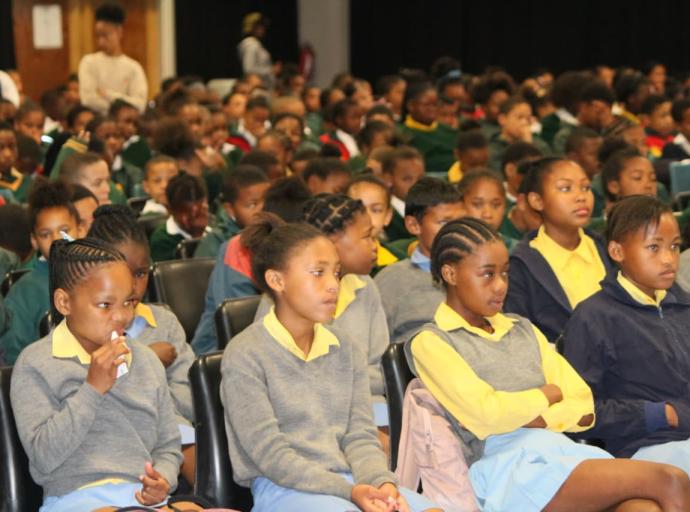
Learners from across the Motheo and Mangaung Metro districts gathered at Heide Primary School in Heidedal, Bloemfontein, to celebrate World Milk Day, an event highlighting the role of milk in fighting malnutrition and promoting accessibility for children in disadvantaged communities.
The event saw Grade 4 to 6 pupils showcase creative art and fashion made from recycled milk cartons, depicting South African landscapes, law enforcement uniforms, and cultural designs.
Motheo District Director, December Moloi, said the decision to involve primary schools was deliberate, as nutrition education at an early stage is crucial for healthy brain development.
“A balanced meal that includes milk keeps our learners physically fit, mentally sharp, and healthy. Milk is a staple food that supports this,” he said.
Moloi emphasised that the National School Nutrition Programme prioritises milk in daily meals, adding that if budgets are constrained, schools should cut back on luxury foods rather than exclude milk. He praised Heide Primary principal, John Page, for his commitment to feeding underprivileged children with nutritious meals.
Dietician Phozia Jansen, from the South African Processing Organisation, said such initiatives are vital for teaching children proper nutrition from an early age. “Dairy is an essential part of a healthy diet. It is important that children learn its value, where it comes from, and how to incorporate it into their daily meals,” she said.
Jansen applauded schools for integrating nutrition into their curricula, saying this approach strengthens healthy eating habits in disadvantaged communities and challenges the misconception that starch is the only staple food.
A recent court ruling allowing married couples to decide freely on adopting either spouse’s surname has been labelled “uncultural” (sic) by critics, who argue that it undermines long-standing African traditions around marriage and family identity, while others oppose it on religious grounds.
The ruling came as a result of a lawsuit against the Department of Home Affairs by Henry van der Merwe, who was denied the legal right to take the surname of his wife, Jana Jordaan, and Andreas Nicolas Bornman, who could not hyphenate his surname to include the surname of his wife, Jess Donnelly-Bornman.
The parties asked the judges to confirm an order of constitutional invalidity granted, which was ratified by the High Court in Bloemfontein.
The Congress of Traditional Leaders of South Africa (Contralesa) condemned the ruling as “uncultural,” further calling it a continuation of colonial influence.
Speaking exclusively to Journal News, Contralesa secretary-general, Zolani Mkiva, said the Constitutional Court’s ruling would destroy not only lineages but also traditions that form the core of South African identity.
“I strongly believe that judges should not interpret equality simplistically, because this narrative will cause more damage than colonialism itself.”
Mkiva described the ruling as devastating and symbolic of the ‘continuation of colonialism’.
While some view the decision as a step towards dismantling patriarchal traditions and advancing gender equality, Mkiva insisted that communal structure, identity, and lineage are defined through current cultural practices.
“When two people get married, it is a union of families; therefore, the ruling by the Constitutional Court shows pure ignorance of the depth of our cultures,” he argued.
Mkiva further urged the judiciary to consult heritage experts in cases touching on cultural identity.
“African heritage experts need to educate judges on the depth of African culture and offer more insight and clarity. If that happens, such rulings will not see the light of day,” he concluded.
Journal News also spoke to community members who also rendered their views on the controversial ruling.
Avuile Mthombeni echoed Mkiva’s sentiments, adding that the decision undermines the dignity of men, particularly those who traditionally pay dowry – commonly known as lobola.
“I would never do that to myself. This law is designed for foreigners who want to get green cards through marriage, where the woman doesn’t have to take her husband’s surname. That makes sense.
“But I don’t think any South African man with logic and common sense would accept this,” Mthombeni added.
He added that he had seen, on social media and reality shows, cases where women who took foreign husbands’ surnames suffered difficulties later.
Nathan van Wyk opposed the ruling on religious grounds, saying it contradicts biblical teaching on family authority.
“I am against the Constitutional Court’s decision to let a man legally adopt his wife’s surname because God made Adam first and gave him authority to rule his household. A man’s surname must be carried forward, as the Bible says a son is an inheritance from the Lord (Psalms 127:3-5). Authority was given to Adam, not Eve,” van Wyk explained.
Saskia Bruintjies, however, expressed her commitment to tradition, saying she prefers to use her husband’s surname.
“I am a firm believer in lineage and traditions. Taking my husband’s surname feels like there is a blessing in the union,” she said, half-joking that if her husband were wealthier, she would “definitely” take his surname.
In contrast, Thabo Khetele said he would have no issue taking his wife’s surname.
“The same way I’d wear your gown or slippers, I’d share the same sentiment with a surname - as long as there is mutual love and respect,” Khetele remarked.
The Northern Cape government has invested R37.8 million into tourism programmes aimed at job creation, product development, as well as sustainable practices that will prospectively form part of efforts to position the sector as an economic growth catapult.
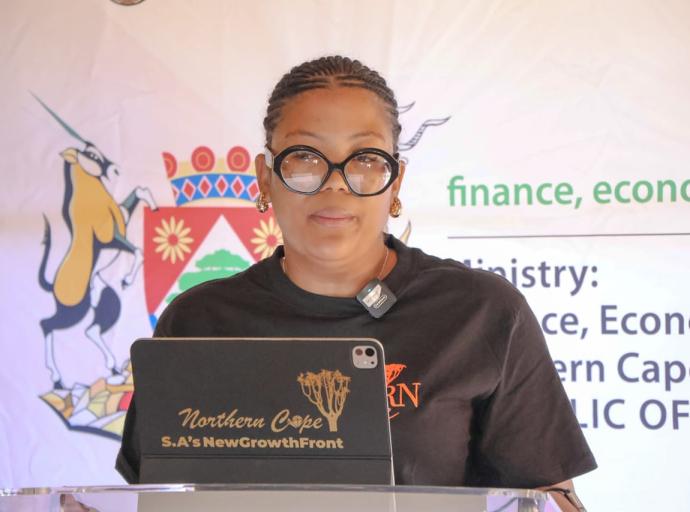
MEC for Finance, Economic Development and Tourism, Venus Blennies-Magage, launched Tourism Month at Witsand Game Reserve on Tuesday under the theme “Tourism and Sustainable Transformation.” The Provincial Tourism Day Celebration will follow on 26 September in Kuruman.
Blennies-Magage said the province is shifting from traditional tourism promotion to an experience-driven approach, showcasing its cultural heritage, natural attractions, and adventure opportunities.
She also acknowledged challenges such as poor road access and declining domestic arrivals, but expressed confidence in the sector’s growth potential.
The province has supported 16 small tourism enterprises through the investment, including four youth-owned businesses. The funding also enabled five enterprises to exhibit at the Africa Travel Indaba in Durban, established seven Astro-tourism ventures, incubated seven tour operators with Sol Plaatje University, and enhanced nine tourism experiences.
Blennies-Magage called for greater investment in smaller provinces, saying tourism can rebalance national growth and drive job creation.
“Tourism is transformation in action. When done right, it creates dignity, inclusion and sustainability,” she said.
The Northern Cape will host a series of tourism and cultural events this month to promote the sector, which the MEC described as a catalyst for regional development and a meaningful contributor to the national economy.
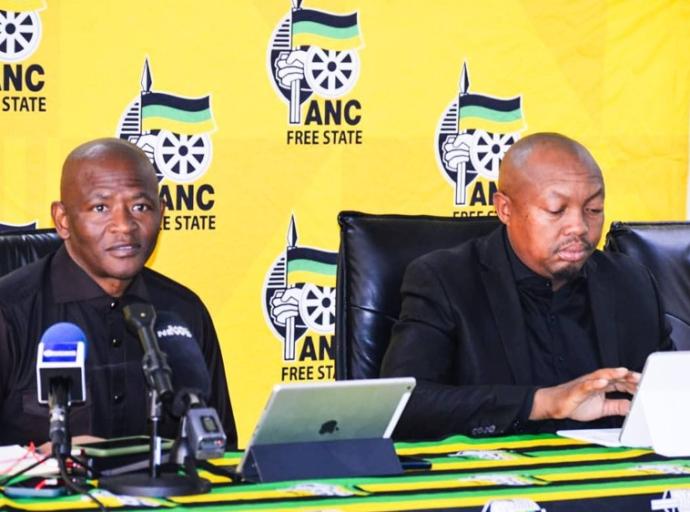
The African National Congress (ANC) in the Free State has stamped its authority against defiant mayors it sought to recall from office.
Journal News can reveal that the seven mayors who were ordered to step down from office have now been served with immediate suspension letters of their party membership by the Provincial Working Committee (PEC). This follows their refusal to obey the provincial leadership’s instruction to resign.
According to the letter – seen by this publication and signed by Provincial Secretary Polediso Motsoeneng on 16 September 2025 – the mayors will “attend the Council Caucus and council sittings” as directed by Motsoeneng or the regional secretaries until the disciplinary process is concluded.
Last month, the ANC provincial leadership announced the removal of seven troikas - comprising mayors, speakers and chief whips - from the Mafube, Moqhaka, Letsemeng, Nketoana, Nala and Masilonyana local municipalities, as well as the Lejweleputswa District Municipality. The decision was justified on grounds of poor performance and failure to deliver services.
The affected officials, however, have since written to ANC Secretary-General Fikile Mbalula appealing for intervention. This prompted Mbalula to summon the provincial executive committee (PEC) to the party’s headquarters, Luthuli House.
According to a memo from Mbalula – also seen by this publication - the PEC meeting will deliberate on the “redeployment” of the mayors, scheduled for today (19 September 2025) at 13:00.
A source within the PEC, however, revealed that only three of the seven mayors have received suspension letters so far.
“Only three mayors have received their letters, while others are still waiting. The process was halted by Mbalula’s call for a meeting, which could see it reversed,” the source said.
When contacted by Journal News on Thursday, Mafube mayor, Tlhoare Motsoeneng, declined to confirm or deny whether his ANC membership had been suspended.
“The rules of the ANC stipulate that, once the matter has been finalised, the province will release a statement on whether the mayors’ memberships have been suspended. I therefore cannot confirm or deny my suspension,” he said.
Similarly, Letsemeng mayor Bonolo Mocwaledi would not confirm if she had received a suspension letter - but instead referred this publication to the ANC’s provincial office.
Provincial spokesperson, Thabo Meeko, explained that the process of managing communication with deployees from the seven municipalities was still underway, adding that the ANC “has its own processes to manage redeployment.”
“The ANC cannot be inhumane towards its own members, so the decision to redeploy the mayors takes into account the constitutional requirements of the organisation.”
Meeko stressed that the seven mayors should not be treated as though they had committed individual offences, noting that the ANC views their failures as a collective, with the respective mayors serving as ‘commanders-in-chief’. He also emphasised that the process is about reconfiguration, not suspension.
“We don’t act arrogantly. We are a disciplined organisation, and once a decision is taken, its implementation requires that the ANC convene before reconfiguration.”
Meeko, however, confirmed that some members were resisting the decision and cautioned them against openly defying the party.
“That is why we are considering invoking clauses dealing with ill-discipline, particularly after members leaked internal letters into the public domain, knowing the ANC does not discuss such matters publicly.
“When people say they will not be removed, we remind them that they were deployed by the ANC. We urge members of the media to wait for us until the process is concluded,” Meeko added.
…after Ramaphosa’s public criticism of ‘incompetent’ ANC councillors
By: Refilwe Mochoari
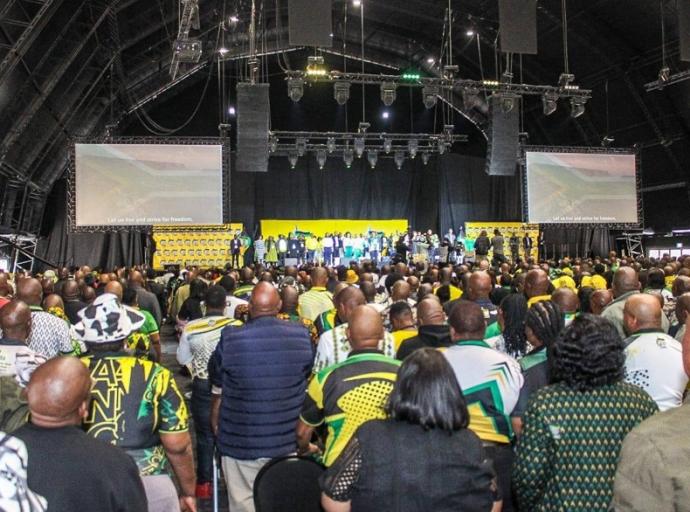
The controversy surrounding ANC President, Cyril Ramaphosa’s remarks has set the stage for a potential explosive showdown at the fifth National General Council (NGC) meeting scheduled for 8 to 12 December at Nasrec in Johannesburg.
The party’s internal dynamics will be tested, and members will need to navigate their differences and find ways to move forward for the organisation's future.
The NGC is held every five years and serves as a platform for ANC members to debate and discuss the party’s future, and Ramaphosa’s remarks are likely to be a major topic of discussion.
Ramaphosa ignited a firestorm earlier this week when he made explosive comments during a councillors’ Roll Call, where over 4,000 councillors convened for a local government plan at the FNB Stadium in Soweto. He said that DA-led municipalities are better run than ANC-led municipalities.
This gathering was part of efforts to ensure its councillors remain aligned with the ANC mandate.
In his address, Ramaphosa singled out the Maluti-a-Phofung local Municipality in Free State and the Ditsobotla local Municipality in North West as the worst-performing municipalities in the country comparing them to the City of Cape Town and the Stellenbosch municipality both in the Western Cape Province a DA-led province.
Ramaphosa urged ANC councillors to learn from DA-controlled municipalities.
“It is usually painful each time when the Auditor General comes to report to cabinet and they put up their report and those municipalities that do best are not ANC-controlled municipalities and I can name it here because there is nothing wrong with competition, they are often DA-controlled municipalities, Ramaphosa said.
Ramaphosa challenged the party to learn from its rivals asking councillors to consider what the DA was doing differently in places such as Cape Town and Stellenbosch.
“And there is nothing wrong with us saying we want to go and see what Cape Town is doing, we want to go and see what Stellenbosch is doing, how they craft everything.
“We need to be moving up the ladder or being good at what we do, we cannot forever stay at the bottom,” the President said.
But political analysts say Ramaphosa has committed political suicide and might expert some nonchalant behaviour from members.
They say that the words he used, are unwise, while ANC councillors and members came out guns blazing and expressed their dissatisfaction saying that the President’s comments have undermined the organisation.
Political analyst from the University of Free State Professor Sethulego Matebesi says apart from angering many of his comrades, Ramaphosa has acknowledged that there are capacity issues in the ANC which are added on top of the corruption by its own members.
“This is also an acknowledgement that cadre deployment is not working, but you do not go in public like that against an organisation that you are leading.
“You cannot publicly acknowledge the success of another party.
“Remember that people’s alliances change and members will use this against him, especially because they know that he is not coming back as the president.
“He might experience some booing during his speeches at the NGC because these kinds of statements are not good for a bleeding organisation,” said Matebesi.
Another political analyst Prof Ntsikelelo Breakfast from the Nelson Mandela University said these comments have landed Ramaphosa in hot water.
He says the President’s utterances could well backfire with the DA likely to use his words against him as part of their own political campaigning.
“There are things that you can acknowledge in private, but I think it was unwise to say that.
“Politics is a game of competition, so how do you tell your troops to look up to your political competitor? You might as well tell them to vote for that political party,” Breakfast said.
One ANC councillor who prefers to remain anonymous attended the gathering has expressed his dissatisfaction to Journal News.
“In recent years, the ANC has faced internal struggles and a growing divide among its members. This has come to a head with the upcoming NGC where the political and ideological standoff within the ANC will finally be addressed and hopefully resolved.
He says the NGC is also expected to address the growing dissent against Ramaphosa within the ANC. While many see him as a strong and capable leader, there are some who question his policies and decisions which have led to a clear divide within the party.
“The stakes are high for the ANC at the NGC, as the decisions made will shape the party’s future and its ability to lead South Africa, said the ANC councillor.
As the 2026 municipal elections approach, the Executive Mayor of Maluti A Phofung Local Municipality, Malekula Melato sat down with Journal News to unpack the challenges, progress, and priorities that shape the region’s political landscape. The mayor discussed service delivery, youth unemployment, infrastructure development, and the municipality’s plans to improve transparency and community engagement.
Thank you for your time Mayor. In your view, how would you describe the position of a mayor in local governance?
I cannot speak on behalf of my colleagues, but I firmly believe that I am a public servant for the people of Maluti-A-Phofung, and it is my duty to advocate for the community. Wherever I go, I carry and represent the pride of my municipality — and to me, that is the true embodiment of a mayor.
Maluti-A-Phofung has been in the headlines for a long time due to service delivery challenges. How do you navigate that?
The municipality is rural, yet it is one of the largest in the province and contributes significantly to the Free State’s overall votes. That alone highlights the weight of the responsibility I carry on my shoulders.
Can we look into the specific challenges faced by the municipality? What exactly are these issues, and how are you addressing them?
I face a number of challenges, but my top three priorities are service delivery, roads, and infrastructure. These are the areas I dedicate most of my focus to. I am, however, supported by the interventions of the national department, which strengthens our capacity to respond to these pressing issues.
It has been some time since we last heard of violent protests in your municipality. Would it be correct to say there has been progress in service delivery, or is it still too early?
Maluti-A-Phofung is currently undergoing significant change, and residents can already see positive and visible improvements. Although I am relatively new, I believe the turnaround strategy is beginning to show real impact. There was a period when Maluti-A-Phofung had no electricity at all, and we had to develop an intervention strategy in collaboration with both the provincial and national departments. Those efforts are now bearing fruit.
In these processes you are engaged in, are there any proud moments you can share with the public?
Indeed, one of the milestones I take great pride in was my visit to China in pursuit of investment opportunities for Maluti-A-Phofung. The scale of our service delivery challenges is such that the municipal budget alone cannot sufficiently address the levels of poverty within our communities. Recognising this, I took the initiative to position our municipality on an international platform, where the response was encouraging.
Among the notable outcomes was an agreement with two universities in China, which committed to offering opportunities for our youth to undertake short courses aimed at enhancing their skills and improving their livelihoods. This partnership not only strengthens our capacity to empower young people but also lays a foundation for future investment and job creation within Maluti-A-Phofung.
What are those courses, Mayor?
Our agreement is focused primarily on agriculture, as we already have an agricultural school within the municipality. We are placing greater emphasis and building more capacity in this sector to ensure that our young people are exposed to meaningful opportunities.
In addition, my team and I visited a TVET college, where discussions on cultural exchange were held. This was particularly exciting for us, given the presence of our traditional leaders, the Marena, in Maluti-A-Phofung. I also had the opportunity to attend a Chinese Film Festival, which created a platform to promote tourism in our municipality.
While engaging there, I ensured that the spotlight was not only on national filmmakers but also on our local creative industry. I highlighted that we have many talented young people who are eager to learn and participate in cultural exchanges between China and our community. It gives me great pride to cultivate and nurture the potential of our youth.
What is an exciting project that you have worked on since the inception of your mayoral position?
One of the projects I take pride in is the transformation of our community hall into an amphitheatre. Such refurbishments are particularly meaningful to me because they are directly linked to the development and empowerment of the youth.
In addition, I have introduced a six-month day-to-day working programme designed to equip young people with workplace skills, ensuring that they are prepared once they complete their short courses. I am also in discussions to implement a unisex beautician course, as part of a broader effort to provide diverse training opportunities for the young men and women of Maluti-A-Phofung.
Furthermore, our Special Economic Zone (SEZ), based in Harrismith, remains a priority. I am working on attracting investment into the firms and factories located there, with the goal of strengthening the rural economy and creating sustainable job opportunities.
You are relatively new as a mayor; are you intending to run for a second term?
I believe I am motivated and well-positioned to serve a second term. The infrastructure I have set in motion, coupled with the fact that I have represented Maluti-A-Phofung on international platforms, speaks to my tenacity and dedication. The organisation that deployed me has recognised my potential and the work I have undertaken. As a proud member of the African National Congress (ANC), I will always strive to raise our flag higher and serve our people with commitment.
What are your plans for the local government elections?
While I do have several plans in place, I prefer not to focus solely on organisational matters at this stage. My primary focus is on implementing initiatives that will improve the overall economic well-being of our youth, as they are the cornerstone of Maluti-A-Phofung’s future.