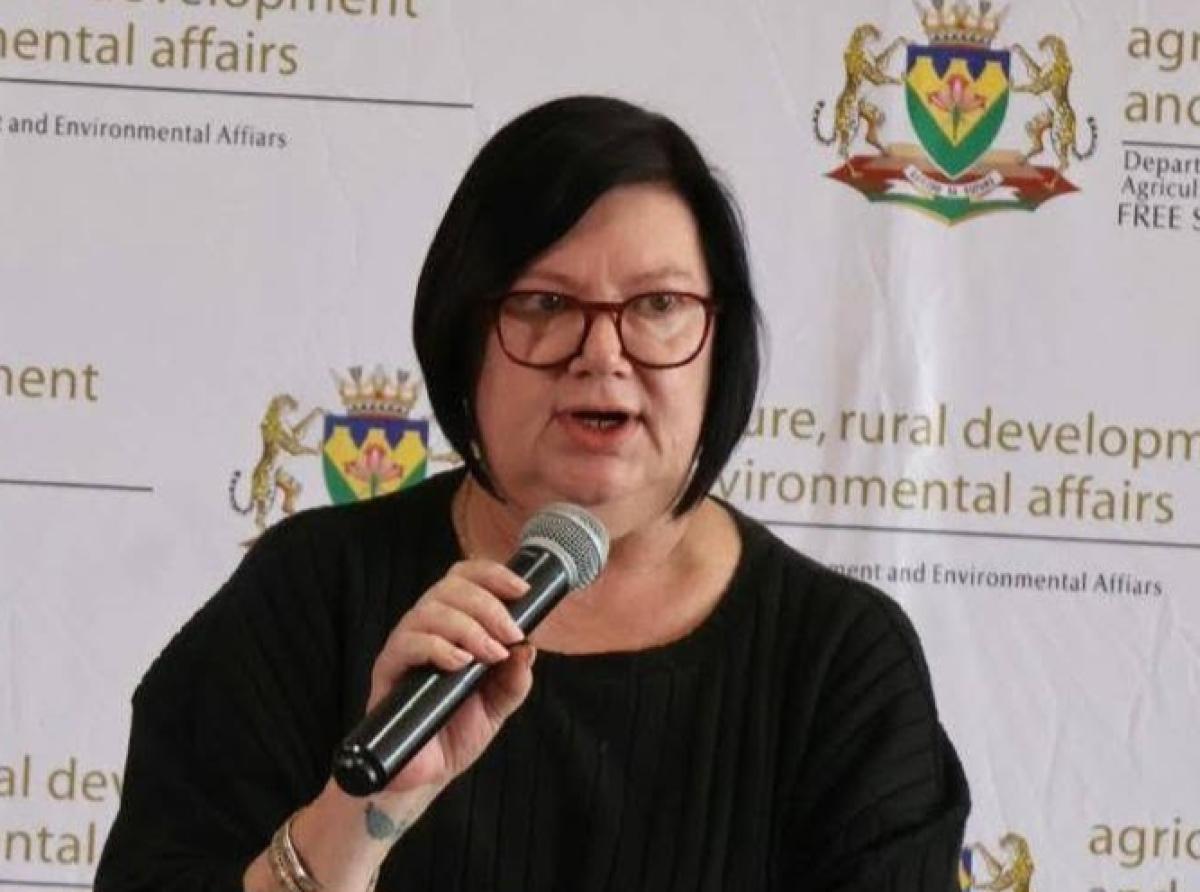
Women farmers across Mangaung assembled at Simon Sifuthi Hall in Botshabelo on Tuesday for a Women in Agriculture Imbizo hosted by the Free State Department of Agriculture, Rural Development and Environmental Affairs.
The gathering aimed to address core industry challenges facing female producers who remain largely restricted to small-scale farming within a male-dominated agricultural market
Delegates representing diverse farming sub-sectors showcased processed goods and fresh produce at display stalls while sharing operational strategies.
Modulaqhowa Primary Cooperative Manager, Lindiwe Ludada, who operates a plant nursery in Botshabelo, highlighted the educational value of peer engagement for emerging enterprise leaders.
“We specialise in shade trees, fruit trees, indoor and outdoor flowers, succulent plants, and vegetable seedlings. We came here to learn from other women’s experience, which most emphasized patience and not expecting immediate results because things take time and sometimes you can wait close to three months to harvest,” she said.
Ludada noted that networking provided crucial guidance on maintaining business resilience during early growth phases.
Servreca Farming owner, Sheilla Malefane, who launched a vegetable enterprise in Thaba Nchu during COVID-19, shared expansion plans following a recent land acquisition.
Her operations focus on high-yield vegetable crops including cabbage, spinach, pumpkin, and potatoes.
“Recently we got a lease agreement of 5ha for ten years that we will be using to produce more vegetables than what we are currently making.
“We came here today to be with other women in farming to find motivation and also learn how they overcome their fair share of challenges in this industry,” said Malefane.
Malefane emphasised that unpredictable weather conditions present continuous operational risks to crop quality and harvest yields.
Addressing attendees, Agriculture MEC, Elzabe Rockman, reaffirmed government commitments to enforce strict funding allocation quotas for designated demographic groups.
She highlighted that the Comprehensive Agricultural Support Programme (CASP) enforces targeted resource allocation to accelerate transformation across local supply chains.
“As much as we have CASP, the Comprehensive Agricultural Support Programme, which determines that a minimum of 50% of CASP funding must go to women. In the past, it was difficult, and often that was neglected. “But we have taken a stance in the last two or three years to say we’re not going to compromise on the 50% for women and the 40% for youth. We are still struggling to meet the 6% for disabled farmers,” said Rockman.
Rockman concluded that strict quota enforcement ensures both financial resources and practical technical training directly reach target beneficiary groups.