By Bernell Simons
As winter tightens its grip, families in Gatvol, an informal settlement in Heidedaal, are facing more than just the cold — they are confronting a painful choice between warmth and survival. The latest R11 hike in paraffin prices has sent shockwaves through this struggling community, leaving households already on the edge scrambling to make ends meet.
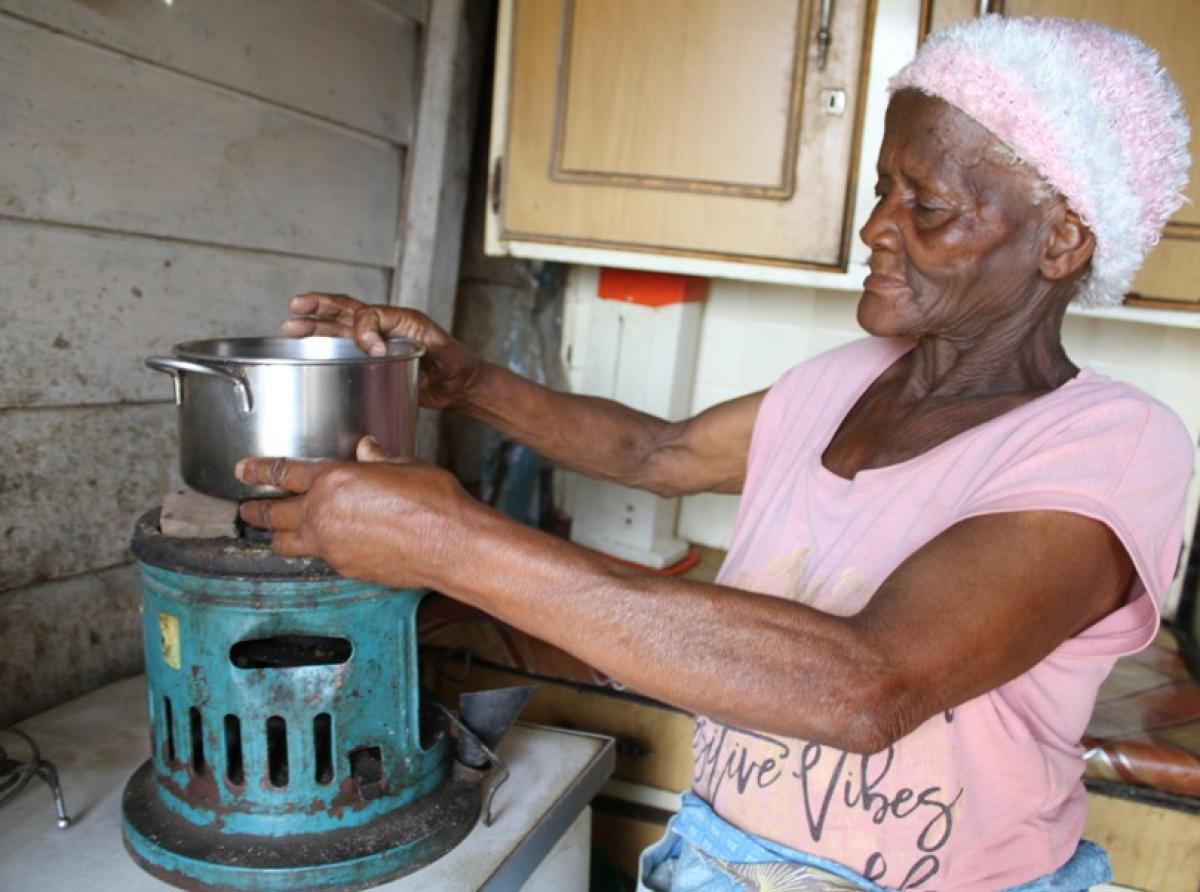
For many, the simple act of cooking a meal or keeping the children warm has become an impossible burden. Despite the government’s recent announcement of a temporary R3 reduction in the fuel levy for April 2026, residents like 72-year-old Josephine Maboe describe mornings spent in darkness and evenings shivering in their homes, forced to decide whether to pay for paraffin or stretch what little money they have on food and other essentials.
“Sometimes we go without,” Maboe says, her voice heavy with worry. “We can’t pay our accounts, we can’t buy food, but we need paraffin to survive the cold. How are we supposed to live like this?”
For Maboe and her family, who depend entirely on her old-age pension, the spike in paraffin costs has already started to bite. She says the current price, R35 per litre, already stretches her budget thin — and the R11 increase will make daily heating and cooking nearly impossible.
“I buy a litre of paraffin every day just to cook pap and boil water. Sometimes it’s not enough, and now it will be even harder,” she explains.
For some residents, the desperation has forced them into dangerous alternatives. Sixty-six-year-old Jan Belie De Wee says that when money runs out, he is left with no choice but to scavenge firewood from nearby dumping sites to cook.
“We have to go there to collect wood to make a fire. It’s not safe, but we need to eat,” De Wee says. The R11 increase comes at a time when food prices are already soaring, leaving families like the Maboes and De Wees caught between freezing in their homes and going hungry.
De Wee fears the upcoming winter will be the harshest yet. “This winter is going to be the hardest because we are already struggling to make ends meet. One can only imagine what it will be like when it gets colder,” he says. For families with children, the challenges are even greater. The De Wee family has converted a small, dilapidated outside room into a makeshift space to bathe their children in the mornings, trying to keep them warm despite holes in the walls and a lack of proper heating.
“It’s not perfect, but at least they are not freezing,” he says. Residents also point out that the paraffin available to them is of poor quality, burning fast and emitting smoke that has caused respiratory prob lems in the community.
“The doctors have warned against the smoke from paraffin. I already have lung problems, but we have no other option,” De Wee explains.
In Gatvol, paraffin is not a luxury — it is survival. It fuels cooking, heats homes, and lights the darkness of long winter nights. With each price increase, families face an impossible balancing act: paying for fuel, food, or basic household necessities. As the winter season approaches, Gatvol’s residents are left with a stark reality: cold, hunger, and uncertainty.
For them, the R11 hike is not just numbers on a shelf — it is the difference between warmth and suffering. “We’re suffering,” Maboe says simply, summing up the daily battle for survival in a community pushed to the brink. Meanwhile, the Motor Industry Staff Association (MISA) has called for government intervention to address rising paraffin prices in South Africa. MISA spokesperson Phakamile Hlubi-Majola told the SABC News, “The price of paraffin has gone up by a whopping 11 rand, and this has had a very direct impact on our poorest communities, people who depend on paraffin.
We’re entering the winter months now, paraffin is something that the use of increases around this time, and we really think that the government needs to intervene”.
“This is why MISA is pushing that the government must implement targeted subsidies on paraffin. We believe that a targeted subsidy would be much more effective than, for example, relying on a fuel levy cut,” adds Hlubi-Majola. Like in many other areas, winter in Gatvol will not wait — and neither will the struggle to survive it.