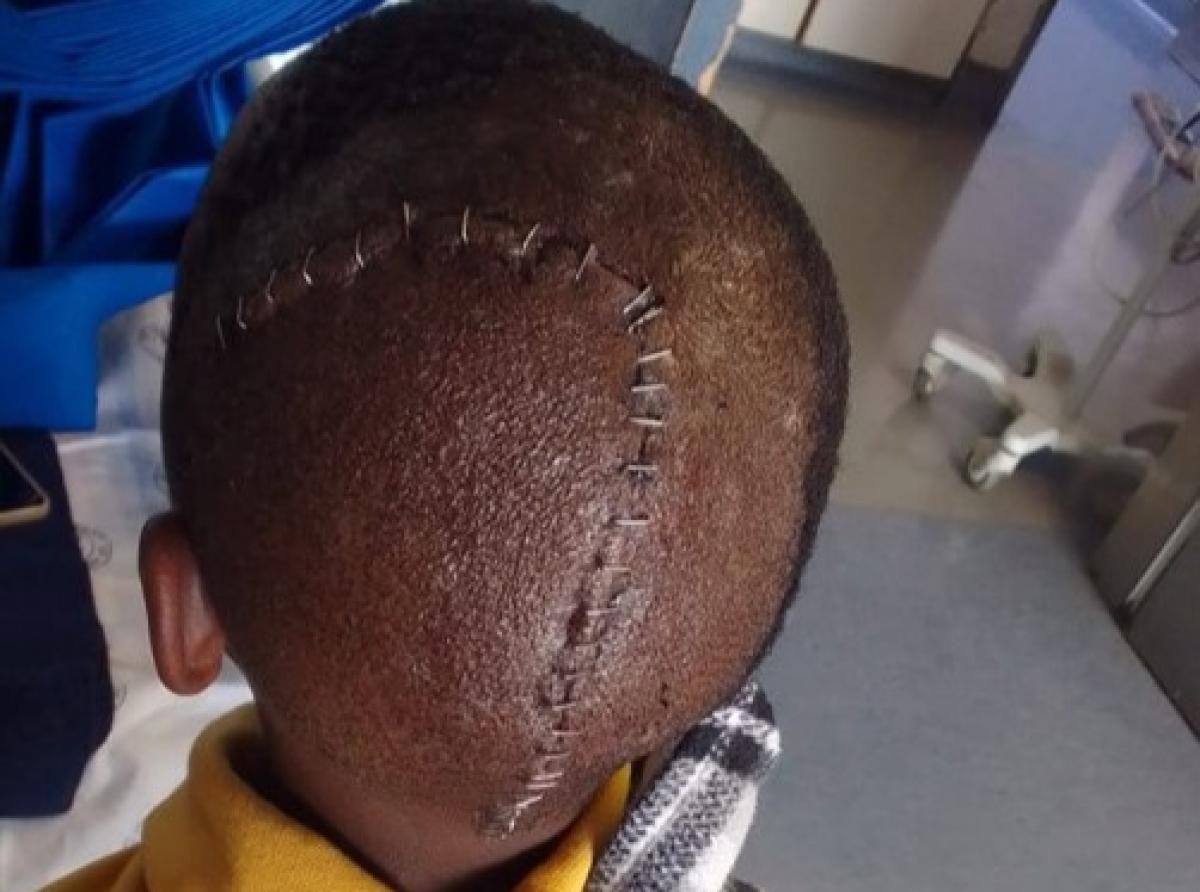
A cracked skull, 36 stitches, seven days in hospital, and an emotional scar that may never heal. Bullying in South African schools is no longer the harmless teasing during break time once dismissed as ‘boys will be boys’. It has mutated into severe verbal abuse, cyber-attacks, physical assault, and in some cases, death.
Thabang Mogoeng*, a learner from Rouxville Primary School in the south-eastern Free State is one of the latest victims. The 8-year-old pupil was hospitalised for a week after a brutal classroom attack left him with a fractured skull - a tragedy his mother, Maki Mogoeng*, says she saw coming.
“No one listened to me. No one cared, and I kept complaining that my son was being bullied by his classmates,” she told Journal News Network this week, in her narration of how her son survived a near fatal ordeal at the hands of his schoolyard tormentors.
Mogoeng told this newspaper how she had duly alerted her son’s teacher of the bullying her son was enduring at school last month but was met with a lacklustre response. This blatant inaction by the school provided a gap for the situation to escalate rapidly.
“On Monday 26 May (this year), I wrote a letter to the teacher asking her to reprimand the bullies because my child was afraid to go to school.
“On Tuesday 27 May, when he came back from school, he told me that he had a headache and I just gave him medication. The following day he went to school but was sent back home because he had been vomiting the whole day. When he arrived at home, he told me that he had been beaten up by his classmates,” Mogoeng detailed.
According to Mogoeng, the severity of Thabang’s injuries required immediate medical intervention and transferrals between provincial health facilities.
“I took him to the Smithfield hospital, but when we arrived there, we were taken to Pelonomi Hospital in Bloemfontein, and that is where the scans revealed that his skull was cracked and he had to undergo an emergency surgery,” she said.
An official Pelonomi Hospital discharge summary, shown to us by Mogoeng, revealed the terrifying extent of eight-year-old Thabang’s injuries. The medical report confirms that the young boy was admitted with a fractured skull on the back-left side of his head following a severe impact.
The report further details that the trauma caused extensive internal bleeding between his skull and brain, resulting in life-threatening pressure and severe swelling.
To save Thabang’s life, neurosurgeons performed an emergency craniotomy - a surgical procedure where the skull is opened for work to be done to halt the active bleeding and relieve the pressure on his brain.
Following a stint in the Paediatric Intensive Care Unit (PICU), Thabang made an exceptionally strong recovery and was later discharged fully alert, responsive, and walking independently. He, however, remains on strict anti-seizure medication and close monitoring at home as his surgical wounds continue to heal.
Department Admits to System Failure
Spokesperson for the Free State Department of Education, Howard Ndaba, says the department is deeply taken aback by Thabang’s incident.
According to Ndaba, the education department relies heavily on teachers to supervise school premises, but the educator in question was entirely absent from the classroom when Thabang faced the near-death experience.
Whilst conceding that the system failed the young learner, Ndaba appealed to the parents to return the child to school, committing fully to his ongoing physical safety.
“Unfortunately the teacher was not in the classroom when the incident happened, but we have given her a written warning for failure to supervise the class,” Ndaba revealed.
He further stated that administration has also initiated interventions for both the victim and the aggressive perpetrators.
“The perpetrators have been enlisted with the support of a social worker to assist them with behavioural change.
“We are doing something about this, and we are trying to put these learners in a program and hoping that they will get assistance.
“We will also assist the victim to get the psychological support that he needs,” Ndaba continued.
A Systemic National Crisis
Thabang’s experience is not an isolated case. In April last year, 13-year-old Mbali Mlaba, a Grade 7 learner from Vulindlela Primary School in Harrismith, committed suicide after being repeatedly targeted by a classmate who accused her of cheating during a test.
The teenage girl left a heartbreaking letter to her mother expressing the severe emotional distress she experienced daily at school.
Research conducted by the Human Sciences Research Council (HSRC) indicates that in the first month of the 2025 school year alone, 548 incidents of bullying had already been officially reported.
The data paints a grim picture of the scale of the problem nationally:
- 3.2 million learners are victims of bullying annually.
- 67% of targeted children choose not to report the abuse.
- 160 000 learners skip school daily specifically to avoid being synthesised into targets.
- 1 in 10 learners will eventually drop out of school entirely due to ongoing harassment.
The review of 28 separate studies further established that victims experience increased depression, anxiety, severe peer rejection, and a complete lack of connectedness at school.
Additionally, South African bullying experiences correlate directly with significantly lower academic achievements in primary school learners.
Sidebar: Critical Warning Signs for Parents
If you suspect your child is being targeted by bullies at school, monitor them closely for these behavioural changes:
- Sudden decreased interest in school (wants to stay at home)
- Loss of interest in favourite school activities
- Drop in academic performance or the quality of school work
- Demands parents to take her to school instead of taking scholar transport
- Seems happy on weekends, but unhappy, preoccupied, or tense on Sundays
- Suddenly prefers the company of adults
- Frequent illnesses such as headaches and stomach aches
- Sleep issues such as nightmares and sleeplessness;
- Comes home with unexplained scratches, bruises, and/or torn clothing
- Talks about avoiding certain areas of the school or neighbourhood
- Suddenly becomes moody, irritable, or angry and starts bullying others (for example: siblings, children in the neighbourhood, etc)
- Seeks the wrong friends in the wrong places (e.g., drug users, gangs, etc)
- Talks about being sad, anxious, depressed or having panic attacks
- Wants to stay home on weekends
- Talks about suicide
(Source: Department of Basic Education)
*Names changed to protect the identity of the minors.