Months of uncertainty surrounding the controversial Bodulo Mothong housing project could come to an end today when the Free State High Court delivers judgment in a closely watched legal battle that could determine the future of hundreds of vulnerable families awaiting relocation to safer living cond...
…Claims ‘mission accomplished’ as he prepares to step down at national party congress
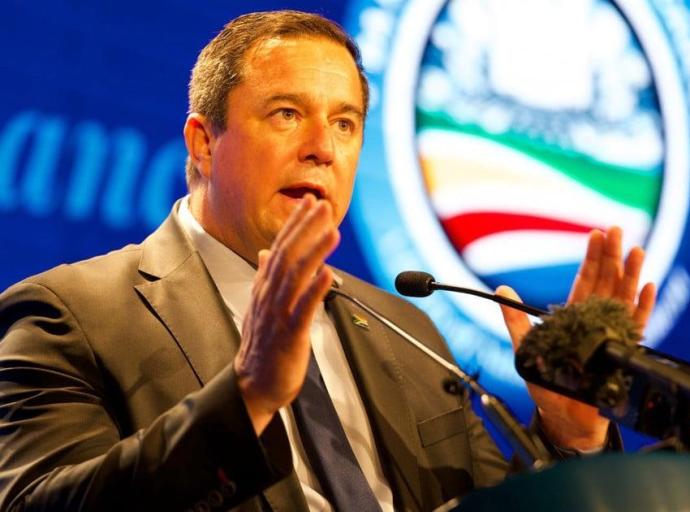
“It’s mission accomplished”…These words were echoed by the Democratic Alliance (DA) Leader, John Steenhuisen, as he announced that he will not be standing for re-election as the party’s leader at the upcoming National Congress in April 2026.
Steenhuisen took the stage in eThekwini, KwaZulu-Natal, on 4 February, to formally announce that he will not be standing for re-election at the end of his term in April. Speculations and various media outlets speculate that the leader’s poor financial decision may be the root cause of his decision, especially since an ambitious Steenhuisen has only held the position for six years.
Various reports revealed that Steenhuisen had suffered a default judgment of R150 000 for credit card debt, subsequently prompting Dion George, DA’s former federal finance chair, to revoke the card.
In typical Steenhuisen style, the leader boasted about the achievements he has collected in terms, mentioning that during his term, he led the DA into national government and further secured cabinet seats such as Minister of Agriculture, Minister of Basic Education, Minister of Public Works and much more.
“I have delivered everything that I promised my party when I was first elected as Federal Leader back in 2019.
“I proudly picked up the party’s banner when its internal polling was down to just 16% and after the media declared the ‘Death of the DA’,” said Steenhuisen.
Steenhuisen mentioned that for the rest of this term of office, he will be placing all his time and effort as Minister of Agriculture on defeating the catastrophic Foot-And-Mouth disease to pursue mass vaccination and to ensure that this is the last outbreak the country sees.
“The DA I inherited was reading its own obituary in a country that was in rapid decline. The DA I leave behind, co-governs a country that is firmly on the up,” concluded Steenhuisen.
Brian Molefe will now be the MK Party’s Treasurer General (TG) after resigning from the party’s Member of Parliament (MP).
This was announced by the party in a statement on Wednesday.
The party said the decision was made by the leader, Jacob Zuma.
“This emphasises the strategic importance of strengthening organisational capacity, financial discipline and resource mobilisation as central pillars in advancing the mission of the movement,” the party said.
The party affirmed that this transition is in full alignment with that directive and with the collective interests of the organisation.
The MKP commended Molefe for the disciplined manner in which he has served in Parliament and for his unwavering commitment to the revolutionary programme of the movement.
In a statement, the party said his redeployment to focus on the critical task of building the financial sustainability of the party reflected the organisational principle that cadres must be placed where they are most effective in serving the people and advancing the struggle for economic liberation.
“We reiterate that all members and public representatives of the MKP remain bound by organisational discipline and by the guidance of the President and the leadership collective.
“The unity, coherence and effectiveness of the party remain paramount as we continue to champion the aspirations of our people,” it said.
The MKP wished Molefe success in the execution of his new role.
It further called upon all structures to extend their full support to ensure the strengthening of the party in preparation for the decisive tasks ahead.
An IOL investigation has revealed that outgoing Democratic Alliance (DA) leader John Steenhuisen repeatedly failed to pay his compulsory financial contributions to the party in 2015 – a violation of DA policy that ordinarily results in termination of membership.
According to internal DA policy, members who fall into arrears on tithe payments for more than two months are no longer considered members of the party.
Yet Steenhuisen remained in office, despite defaulting on more than R12,000 in 2015.
Tithes are mandatory monthly contributions by elected officials to the party. Leaked internal correspondence from the time suggests Steenhuisen’s arrears were known within DA leadership circles but not acted upon.
In one email dated 19 August 2015 – allegedly from Steenhuisen to the then KwaZulu-Natal finance chair Francois Rogers – he pleaded for leniency, citing an unexpected SARS deduction:
“I apologise for not settling my tithe account on the 15th as discussed. I had every intention of settling the amount in full on my pay date. Unfortunately SARS has unexpectedly debited my salary without any reference and despite an appeal, with an amount of R14,000, leaving me in a significantly cash-strapped position. I will be in a position to bring the 60-day amount up to date by next Friday.”
But in a follow-up email dated 18 September 2015 – allegedly from DA provincial bookkeeper Marie Boshoff to Rogers with Steenhuisen copied – she writes simply: “John has not stuck to his arrangement to pay his tithes by last Friday.”
When asked by IOL whether he currently owed any tithes or had defaulted in the past, a visibly irate Steenhuisen accused the publication of spreading falsehoods and threatened legal action: “You should get your word from reputable people, not bitter sacked individuals,” he said.
He did, however, provide evidence of his current tithe status showing a due amount of R3,870 – not in arrears.
Pressed again on whether the party had pursued him for payment in the past, Steenhuisen doubled down, stating: “I’m going to immediately litigate against you if you publish these falsehoods.”
IOL has viewed multiple internal emails from the 2015 period in which DA officials appear to raise concerns about the outstanding payments. One such email, allegedly from Rogers, proposes escalating the issue to the Federal Finance Committee. In the same message, he adds: “This responsibility will soon be removed from province and will be managed at a national level… hip hip hooray!”
Zwakele Mncwango, then provincial chair of the DA in KwaZulu-Natal, confirmed Steenhuisen had defaulted on his tithes. “Yes, he did default, and I tried to raise it at a senior level within the party but nothing was done about it. John was always protected. The party always looked the other way when it came to him,” Mncwango told IOL.
Another senior DA insider echoed this sentiment. “He is always protected because he picks those who will defend him in positions of power. Him not running for re-election most likely came from instructions from donors who did not want him re-elected because of his past financial issues. Dion George sounded the alarm and funders must have demanded change,” said the source.
Steenhuisen maintains his withdrawal from the leadership race was his own decision, taken to allow him, in his current capacity as Agriculture Minister, to focus on combatting the foot-and-mouth disease affecting South African farmers.
THREE police officers involved in a legal battle with former acting police commissioner and divisional head of forensic sciences Khomotso Phahlane, on Wednesday claimed that they were ignored for their efforts to report glaring acts of criminality within the SAPS.
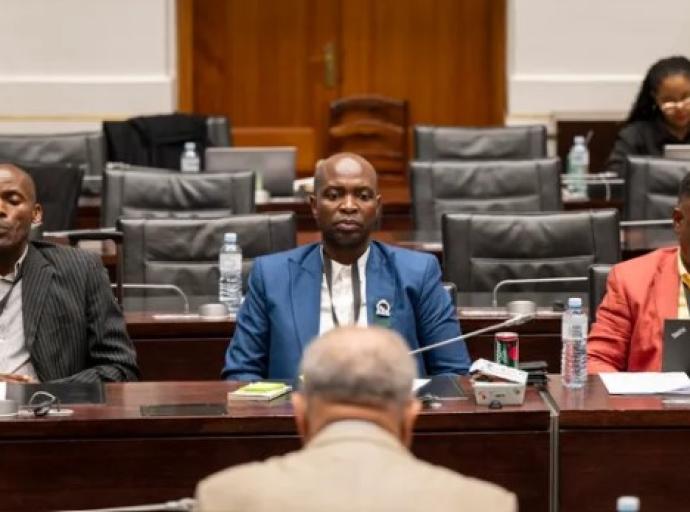
Testifying before the Ad Hoc Committee, Colonel Darius Ramolobe, Captain Edwin Malatjie and Captain Samuel Ramalepe said they had been reporting theft of drugs, irregular appointments, irregular procurement and corruption or maladministration.
“Our efforts were ignored or not supported. As a result we suffered occupational detriment, physical and psychological harm. This is the price we pay for reporting crimes committed by police officers,” said Ramalepe.
He was giving testimony while being led by evidence leader, Advocate Norman Arendse before the inquiry probing allegations that were made by KwaZulu-Natal Police Commissioner Nhlanhla Mkhwanazi.
They told the MPs that their problems started in 2010 when Popcru submitted a memorandum to the management of the Forensic Sciences Laboratory (FSL) with a list of grievances to express frustration on inaction around issues.
Ramalepe said they were instead arrested and detained at Sunnyside police station.
“We were released on bail and the case was withdrawn without any explanation,” he said.
A meeting was subsequently held with Khomotso Phahlane, who was the divisional commissioner, in November 2011 and a subsequent meeting with other senior managers two months later.
The complaint was escalated to then acting national commissioner Nhlanhla Mkhwanazi, who had shown appetite in tackling the matter but was removed from office.
Ramalepe also said when former national commissioner Riah Phiyega was at the helm, she appointed an independent forensic firm, CPN Forensic, in 2013.
It was around this time that Phahlane apparently instituted a defamation case against the Popcru members after accusing them of ill-discipline after they issued a press statement.
Ramalepe said they were not happy that Phahlane was suing them and at the time they had a problem with Popcru when they had asked for the intervention with the then minister.
“The case as far as we know is not concluded,” he said referring to the appeal they lodged after Phahlane was awarded damages.
He stated that after CPN conducted its investigation, Phiyega shared with them only the findings and recommendations in 2014.
Ramalepe said Phiyega had instructed a certain 'Nkuwa' to implement the recommendations and also undertook to instruct Phahlane to withdraw the defamation case.
However, Phiyega was suspended before the recommendations were implemented. “Till today, nothing happened.”
While the report apparently made no findings against Phahlane, it had called for further investigations into some matters at FSL.
Ramalepe told the committee of attempts last year to discuss criminal activities at FSL with Deputy National Commissioner Shadrack Sibiya.
The MPs heard that the officers were awaiting a report after National Police Commissioner Fannie Masemola instituted another investigation last October.
“That is our plea to the committee, to get that report,” said Malatje.
Ramapele said matters arising from the CPN report were submitted to the Public Service Commission, SARS and IPID, but there was no apparent response.
“We did everything in our power but never got any assistance,” he said.
He told the committee that they have requested Masemola to assist in the finalisation of the legal matter with Phahlane.
Ramolobe said the Ad Committee was their last hope.
“We have been to different platforms without any assistance. What we get is victimisation and as a result we are really suffering from depression due to work-related issues, because we are reporting theft of drugs in the laboratory.
“This has been for a very long period of time. We have been raising this issue, following internal processes,” said Ramolobe.
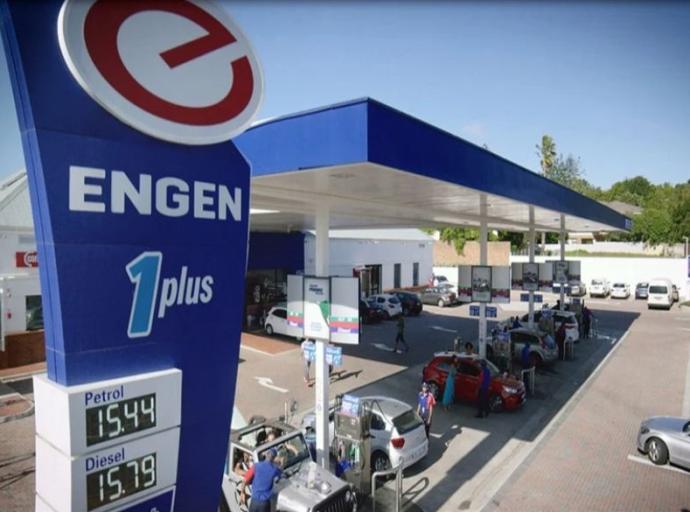
Fuel prices are set to fall again this week, with a significant price decrease expected for both petrol and diesel from Wednesday, February 4. Data from the Central Energy Fund (CEF) is pointing to a petrol price cut of around 64 cents per litre, while diesel is set to fall by between 50 cents (500ppm) and 56 cents (50ppm).
The price of 95 Unleaded will go down to around R19.28 at the cost and R20.11 in Gauteng, however the cheaper 93 Unleaded will retail for around R20.00. Recorded to be the lowest petrol price since January 2022.
The wholesale price of 50ppm diesel will reduce to around R17.20 at the coast and R17.96 inland.
Bearing in mind that these predictions are based on unaudited data, and the final price adjustments are due to be announced by the Department of Mineral and Petroleum Resources early this week which could differ from the above. This follows January's fuel price decreases of up to 66 cents for petrol and R1.50 for diesel.
The over-recovery on petrol and diesel prices comes as a result of lower international product prices and a stronger South African rand, which is contributing around 36 cents to the predicted petrol price reduction.
Last week, the local currency broke below R16 to the US dollar for the first time in almost four years, supported by a weaker US currency and rising investor confidence in South Africa.
This comes after the World Bank reported that South Africa’s economy expanded by around 1.3% in 2025, largely thanks to a more reliable electricity supply, improved business confidence and a strong agricultural harvest. While international oil prices remained stable during the early part of January, the latter part of the month saw increased volatility, and if this continues, it could put an end to South Africa’s fuel price-cutting cycle. After surging to the $68 mark late last week, Brent Crude oil slipped to $64.95 on Monday morning after Donald Trump gave signals that US-Iran tensions may be easing.
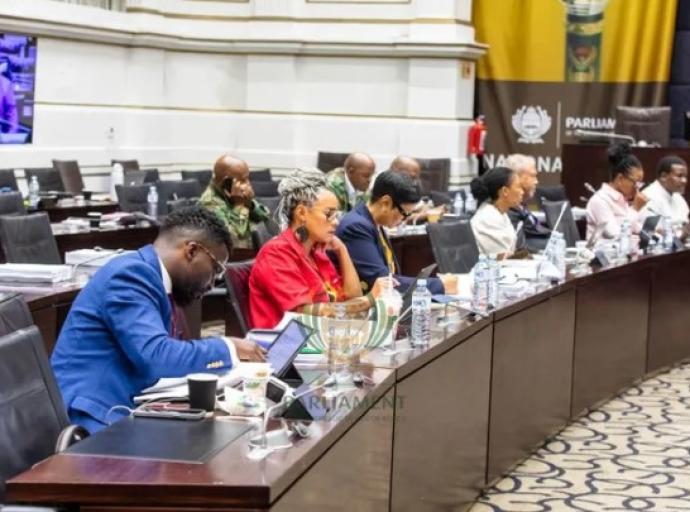
Members of Parliament of the ad hoc committee descended into a heated debate over witness appearances, security demands and Parliament’s authority, as sharp disagreements emerged over whether Paul O’Sullivan and Brown Mogotsi should be compelled to testify physically before the committee.
The dispute arose as the committee considered its programme for the week and correspondence from the Office of the Speaker advising that Parliament pay particular attention to how it responds to security concerns raised by the two witnesses.
The chairperson urged members to focus on appearances scheduled for the current week, noting that later dates could only be shaped once further deliberations had taken place.
ANC MP Khusela Diko said her party had no objection to the programme as presented, noting that the public submissions listed were ones the committee had already approved.
She raised concern about a late request for anonymity by a witness, but accepted that it was within the individual’s rights.
Chairperson Soviet Lekganyane clarified that the witness would introduce themselves publicly on Tuesday, having requested anonymity only for travel and security arrangements.
Diko questioned the absence of a senior SAPS general, a female general who had written to the committee seeking to respond to issues raised by Advocate Andrea Johnson, from the programme. “It’s not a new name. It had been agreed that we would afford her that opportunity,” she said, suggesting the omission may have been an error.
She warned that the committee was under severe time pressure, reminding members that it had agreed to submit its report by 20 February.
“As the African National Congress, we are operating on the understanding that this committee ideally should be wrapping up its work this week or maybe early next week,” Diko said.
On the Speaker’s correspondence regarding O’Sullivan and Mogotsi, Diko said it was “quite disappointing” that Parliament’s legal advisers had not provided clear guidance.
She said the Speaker was correct that Parliament had to formally respond to concerns raised by witnesses, even if those concerns were rejected. “We would be anticipating litigation and we would want to protect Parliament as much as is possible,” she said.
However, Diko said the ANC’s position remained unchanged. “The decision stands that these two witnesses must present themselves before the committee, physically,” she said, arguing that neither had demonstrated extraordinary circumstances.
She said Parliament should spell out what security it could provide and warn that failure to appear would result in a request to the Speaker to concur with issuing summonses.
ANC MP Xola Nqola supported this position, saying the committee had already considered the merits of O’Sullivan’s application.
“There is no less evasive way that we think can be applied to secure the attendance,” he said, accusing the witnesses of deliberately frustrating the committee’s work. “If they say it’s security, we can provide for them appearing. So how are they living now?” he asked.
MK Party MP Sibonelo Nomvalo said the committee could not use a previously adopted witness list to block further names triggered by new testimony.
On O’Sullivan, Nomvalo said the committee should not “nurse people who want to come to Parliament to receive a standing ovation”, adding that O’Sullivan’s demand to appear virtually while refusing to engage with certain parties was unacceptable and would undermine the authority of the chair.
MK Party MP David Skosana said virtual testimony would be “very problematic”, recalling remarks O’Sullivan had previously made about members of the committee.
He raised concerns about consistency and fairness, warning that other witnesses who had already appeared or were still expected to appear should not be treated differently.
Meanwhile, DA MP Ian Cameron said that while physical appearances were preferable, Parliament needed to consider whether a summons would withstand scrutiny if a witness had indicated willingness to testify virtually, including from a South African embassy. Cameron said this created a narrative that the witness was cooperating, making it difficult to justify compelling a physical appearance.
DA MP Damien Klopper said that if any witness appeared virtually, all parties had to be allowed to participate fully. “They cannot be selective answering just to certain parties,” he said.
EFF leader Julius Malema launched a blistering attack on both the witnesses and the Speaker, accusing Parliament of being pressured into granting special treatment. He said O’Sullivan and Mogotsi had shown “no regard for Parliament” and were attempting to dictate terms to the legislature.
“They want private chefs, they want houses and not hotels, they want this and that,” Malema said, adding that such demands amounted to intimidation.
Malema openly rejected the position advanced by the Democratic Alliance, saying Parliament should not accommodate virtual appearances or special security demands. He warned that doing so would amount to capitulating to intimidation and privilege.
“I don’t agree with the DA,” Malema said, appealing to members of the committee “to completely reject this privilege that is being proposed by the DA and the Speaker”.
Malema said accepting these demands would create a dangerous precedent. “You’re going to create a situation where anyone who doesn’t want to come before Parliament simply says, ‘I’ve got security concerns,’” he warned.
He questioned the absence of any security assessment backing the claims. “Where is the security report that confirms this guy has got security threats?” he asked.
He accused Parliament’s legal team of protecting O’Sullivan and Mogotsi, saying, “The protection of Paul O’Sullivan is continuing - now it’s happening in Parliament.” Malema rejected the notion of exceptional circumstances, saying none had been demonstrated, and warned that Parliament should not “succumb to being intimidated”.
EFF MP Leigh-Ann Mathys questioned why the Speaker had only responded at the end of January, despite the committee raising the issue months earlier. She asked whether the Speaker would provide a written explanation for the delay.
Patriotic Alliance MP Ashley Sauls aligned with this position, rejecting any suggestion that Mogotsi’s demands be accommodated.
Sauls said Mogotsi’s demand that Parliament pay for private security was “disrespectful and unreasonable”.
He said witnesses should accept the security Parliament provides to everyone. On O’Sullivan, Sauls said, “It’s no longer a request. It’s now a legal mandate,” arguing that virtual testimony would not serve the interests of justice because the witness could disengage at will.
He warned that O’Sullivan would effectively control his own appearance, saying that if he did not like the questions, “all he can do to leave the meeting is just press a button”.
Freedom Front Plus' MP Wouter Wessels cautioned that while the frustration with O’Sullivan was understandable, the committee had to decide whether it wanted his testimony before the deadline.
He warned that if O’Sullivan was overseas, a summons would likely result in litigation that could delay proceedings beyond 20 February.
“If we summon, we should accept the fact that he’s not going to appear before the 20th of February,” Wessels said, warning that taxpayers could ultimately bear the cost of a legal battle.
He said members needed to weigh whether making a point was worth excluding the testimony from the final report.