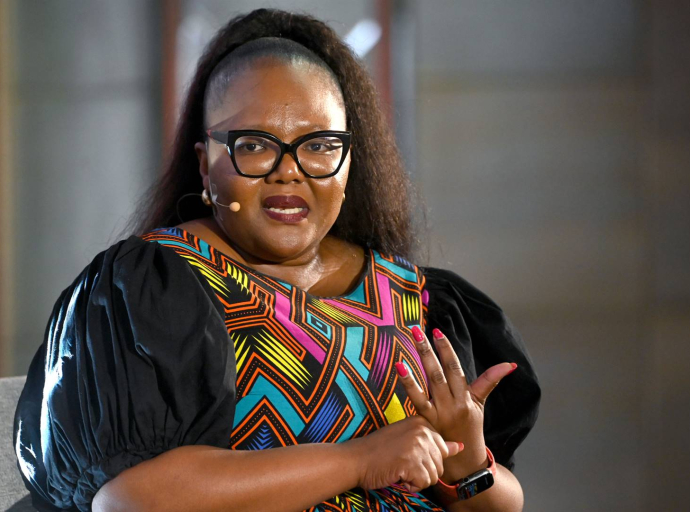
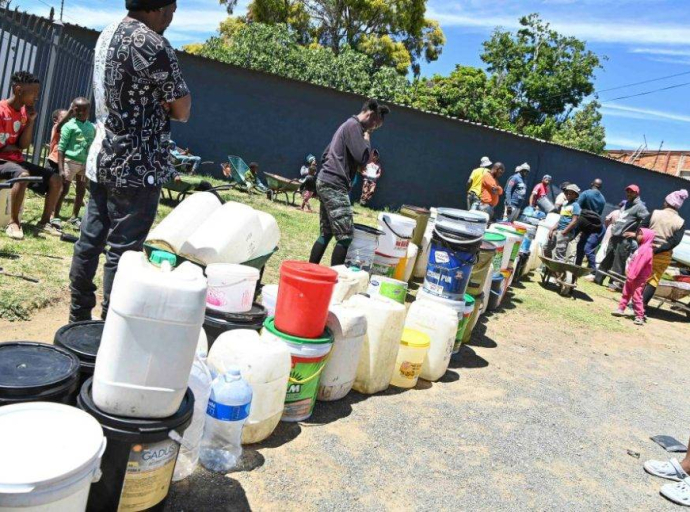
The newly elected Mayor of Maluti-A-Phofung Municipality, Tumelo Thebe, has wasted no time in setting the tone for his administration, unveiling an ambitious plan to restore dignity, improve service delivery, and rebuild public confidence in a municipality that has struggled with governance and infr...
Basic Education Minister Siviwe Gwarube says the government of national unity (GNU) has a mammoth task of ensuring that more job opportunities are created for the country’s youth.
She says it is heartbreaking that many young graduates are still unemployed.
Gwarube was part of President Cyril Ramaphosa’s engagement with beneficiaries of the Presidential Youth programme in Pretoria.
“It’s heartbreaking, and that is the reality of our unemployment crisis in SA. There are people who are educated, who find themselves applying just to be educators’ assistants. And it’s heartbreaking because those people should be in full-time employment. And so, we celebrate this opportunity for young people to be able to be upskilled and be in places of work for six months.
“But ultimately, this is not the permanent solution. The permanent solution is for young people to find work. That seven out of 10 young people who are without work today is an indictment and we have to work harder as the seventh administration to create jobs and permanent employment for people.”
World Bank has approved a $1.5 billion (R26 billion) loan to support South Africa's key reforms aimed at making the country’s infrastructure more efficient and sustainable.
According to the bank, the loan will address South Africa’s twin economic challenges of low growth and high unemployment by easing infrastructure constraints in the energy and freight transport sectors.
Earlier this year, IOL reported that the International Monetary Fund (IMF) has revised its forecast for South Africa's economic growth in 2025, lowering it from 1.5% to 1%.
The government has also committed to modernising state-owned enterprises and introducing private sector competition in the power and freight transport sectors, with the goal of attracting new technologies and investment.
The bank said the loan supports this effort by improving energy supply, making freight transport more efficient, and helping South Africa move toward a low-carbon economy while protecting communities affected by the changes.
Finance Minister Enoch Godongwana said the "loan represents another important milestone in our government's commitment to transforming South Africa's infrastructure into a more efficient, competitive, and sustainable foundation for growth".
"Our ongoing partnership with the World Bank will assist us to move forward with greater speed on the reforms vital to transforming our infrastructure landscape," Godongwana said
Satu Kahkonen, World Bank Division Director for South Africa said the reforms could create up to half a million jobs by the early 2030s and are key to attracting investment and improving services
“The World Bank supports these reforms which tackle longstanding bottlenecks and have the potential to create 250 000 jobs by 2027 and about half a million jobs by the early 2030s. They are essential for attracting investment and enhancing public service delivery,” said
Department of Water and Sanitation director-general Sean Phillips said of the 446 allegations the internal audit investigated, 326 were confirmed to be true, 120 were unfounded and 73 allegations were currently under investigation.
The Department of Water and Sanitation disclosed on Tuesday that its internal audit unit investigated a total of 446 allegations of financial misconduct over the past five years, between the 2019/20 and 2024/25 financial years.
Briefing the Standing Committee on Public Accounts, the department’s director-general Sean Phillips said the investigation confirmed 326 of the allegations while 120 were deemed unfounded and 73 were currently under investigation.
“Seven cases have not yet been investigated as they were received recently,” he said.
Phillips also said finalised cases were referred to the department’s employee relations unit to take disciplinary action against official who committed financial and other acts of misconduct, and SAPS and the Hawks for criminal investigation.
There were also cases referred to the department’s legal services for civil recovery in instances where the department suffered financial loss.
Phillips stated that for the 326 cases confirmed to be true, most of the disciplinary processes have been completed and the remainder was still in progress.
“The disciplinary processes resulted in various sanctions against the transgressors. These sanctions included dismissal, demotion, suspension without pay and written letters.”
He added that the internal audit has conducted 140 awareness sessions during the five year period and 4,307 officials were trained about anti-fraud and corruption measures.
Regarding the audit outcomes for 2024/25, Phillips said the department has implemented its financial recovery plan.
This saw the department move from near-bankruptcy in 2016/17 to a healthy financial state and moved from qualified audits to unqualified audits with findings.
“We are not satisfied with an unqualified audit with findings,” Phillips said.
He told Scopa that the problem of high under-expenditure on both the department’s budget and grants has been addressed.
The department is now achieving over 99% expenditure in its budget and grants.
This was ascribed to strengthened controls, and reducing irregular and unauthorised expenditure compared to the 2017/18 period.
Phillips said improving the implementation and monitoring of the department and municipal grant-funded projects was the key area requiring further improvement to achieve clean audit.
“Department of Water and Sanitation is engaged in the required process to regularise past irregular and unauthorised expenditure through taking disciplinary action, implementing improved controls and approaching the National Treasury for condonation.”
However, Phillips noted that the Auditor-General issued nine material irregularities in the 2024/25.
“Three of these material irregularities have been resolved while six are still in progress.”
Phillips said they were taking disciplinary action against the implicated officials, recovering funds in instance where financial loss has been suffered and improving procurement and contract management processes.
Quizzed by ANC MP Helen Neale-May about guaranteeing that financial statements were prepared adequately, Minister Pemmy Majodina confirmed that the Auditor-General raised concerns in terms of full compliance.
Sinoxolo Kwayiba and Ashley Cupido scored second half goals that helped Bafana Bafana beat Mozambique 2-0 at the Peter Mokaba Stadium in Polokwane on Tuesday night.
South Africa’s men's senior national team should have won the match by a much bigger margin such was their domination and numerous chances they created.
Not that coach Hugo Broos would have complained, the victory, better than what transpired at the same venue on Friday when Bafana drew goalless against Tanzania.
As he’d promised, Broos gave every player he selected a chance to play and Chippa United’s Kwayiba scored his first goal in national team colours and even walked away with the Player-of-the-match award.
His goal came three minutes after the break as he headed in a corner kick by Mohauu Nkota.
Kwayiba could have scored a hat-trick actually as he incredulously side footed the ball way off target when Oswin Appolis set him up on 86 minutes. He’d also missed another on 21 minutes.
Ashley Cupido made it 2-0 with his first goal for Bafana after ten appearances by just lobbing the ball into the open net after the Mozambique defence had given the ball away on the left side of their box. Nkota was again responsible for the assist.
The match could well have been over as a contest by half time, such was the domination Bafana enjoyed and their ability to pierce the Mambas’ defence open.
The hosts had no less than seven shots on target at the break but they found Ivanne Urrubal in an uncompromising mood, the Mozambique goalkeeper playing a blinder.
Relebohile Mofokeng could easily have had a first half hat-trick had it not been for the brilliance of the number one who plays his club football for Sombo in Mozambique.
The Orlando Pirates star was in imperious form as he hovered around the top of the box, switching flanks and varying his attempts at goal – shooting from range, trying to dribble his way past defenders and getting into good position to receive passes.
He had his initial chance on 17 minutes when he made a fantastic break to receive a through ball and watched in disbelief as Urrubal used his outstretched leg to block his low shot that was headed in.
Later on the Mambas keeper stopped Mofokeng’s shot from range but the young South African did not give up.
Late in the half, he tested the keeper with a sweetly-struck high shot but Urrubbal was equal to the task, showing his agility to fling himself up and punch the ball away.
There were chances for Kwayiba and Nkota on ten and 21 minutes respectively but Urrubal was uncompromising, ensuring the scores were level when the referee blew his whistle for the break
Yet there was no way just one man was going to withstand such relentless pressure as what the goalkeeper endured and it was just a matter of time before Mozambique were breached.
And it took just three minutes after the break for the resistance to crumble, Kwayiba heading in Nkota’s corner almost unchallenged.
The Pirates man could have made it 2-0 on 54 minutes but Urrubal again came to the Mambas’ rescue with a good save pushing away Nkota’s left-footed piledriver after he’d cut in from the right.
Mozambique had one chance late on but Ricardo Leaner pulled off a fantastic save as Bafana left Broos smiling from ear to ear, confident that he now has a much larger pool of players to pick his squad from.
As climate change continues to wreak havoc on South Africa’s agricultural landscape, the future of food security hangs in the balance. With predictions indicating a potential 50% decline in agricultural production by 2050, the spectre of hunger looms ever larger for the 18 million households, or roughly 21% of the population, who are currently grappling with food insecurity.
Recent studies forecast a 25% increase in maize yield variability due to shifting weather patterns, including reduced rainfall and soaring temperatures. As the staple food source for many low-income households, maize is already feeling the pinch, with prices climbing by 30% in recent years, exacerbated by the impacts of climate change on agricultural productivity.
According to Roscoe van Wyk, a research fellow at Stellenbosch Business School, the agricultural sector must be restructured to effectively address these challenges. He argues that integrating enterprise development with climate adaptation strategies is crucial to ensuring that more people have access to adequate, affordable, and nutritious food.
“Growing the agricultural sector should be a key economic priority, particularly if we are to achieve the National Development Plan (NDP) goals of an integrated and inclusive rural economy and the creation of one million new jobs in agriculture by 2030,” van Wyk stresses.
Historical data indicates that agricultural productivity growth significantly reduces poverty, demonstrating that growth in this sector is often two to three times more effective than in others, such as mining or manufacturing. This is especially pertinent as rising food prices disproportionately affect low-income households that spend a considerable portion of their income on basic necessities.
Van Wyk’s research highlights a stark correlation: a mere 1% increase in food prices can diminish household welfare by over 20%, subsequently limiting access to essential services like healthcare and education. The progress made in reducing poverty levels since South Africa's transition to democracy is now reversing, a trend further exacerbated by the Covid-19 pandemic and intensifying climate impacts.
“Climate change is manifesting itself not only through decreasing rainfall and higher temperatures but also through extreme weather events, leading to floods and prolonged droughts,” van Wyk elaborates. These conditions wreak havoc on crop and livestock health, thereby disrupting the agricultural supply chain and driving prices upward.
Compounding the problem, crop production has failed to keep pace with population growth over the last two decades. As the population continues to grow, the prospects for alleviating food insecurity diminish further. Van Wyk insists that simply maintaining current agriculture levels will not suffice; productivity improvements are essential to meet the needs of a burgeoning population while contending with climate challenges.
The link between food security and the agricultural value chain is profound, particularly in rural areas where poverty is most entrenched. Enhancing support for both large-scale commercial and small-scale subsistence farming can create a pathway out of poverty for many. “By empowering individuals to feed themselves, whether through gainful employment or viable farming, we can address the inequality gap and combat unemployment,” he claims.
Van Wyk advocates for a transformative approach to support small-scale farmers by merging enterprise development with sustainability. He argues that as these farmers often lack the resources for advanced agricultural technologies, financial backing must be coupled with education on climate adaptability and sustainable farming practices.
Moreover, he emphasises the importance of practical implementation of existing policies, as well as incentivising established farmers to mentor emerging counterparts. This cooperative model can pave the way for scaled-up production and increased employment opportunities as South Africa navigates an uncertain agricultural future.
COGTA Committee chairperson Dr Zweli Mkhize has lambasted the deepening governance and financial crises in South African municipalities.
Speaking at a committee briefing, Mkhize cited widespread failures in financial management, leadership, and service delivery. He called for urgent and coordinated action across all tiers of government.
Describing local government as “under immense strain,” Mkhize referenced the Auditor-General’s 2023/24 report, which found that 59% of municipal financial statements contained material misstatements - despite more than R1.4 billion being spent on consultants.
“It’s unacceptable that such exorbitant spending yields so little value,” Mkhize said, noting that municipalities already employ permanent staff for this work.
He revealed that 113 municipalities are operating with unfunded budgets. “This amounts to planning for failure. It undermines infrastructure delivery, leads to poor project execution, delays, cost overruns, and often substandard workmanship,” he said.
Only 16% of municipalities met basic governance standards, while 84% failed to meet the conditions of a national debt relief programme.
“This is not just an audit report. It’s a mirror held up to our governance structures,” Mkhize said, blaming poor audit outcomes on political failures, lack of accountability, and a growing culture of impunity.
He criticised the continued use of uncompetitive procurement practices and illegal awarding of contracts to government employees:
“The rules exist, but enforcement is failing. This must stop.”
Mkhize announced that Parliament will intensify oversight, especially in the worst-performing municipalities.
“The community is no longer interested in excuses,” he said. “We are calling for performance, consequences, and the prioritisation of quality service delivery.”
Mkhize also highlighted the need for structural reform over crisis management:
“We cannot afford to normalise failure. We must shift from analysis to action, from recognition to consequence.”
Mkhize noted that the Portfolio Committee on COGTA will continue to lead efforts to restore the credibility, capability and constitutional purpose of local government through firm oversight and unwavering commitment to service delivery.
In a statement and response to the 2023/2024 audit outcomes, the South African Local Government Association (Salga) welcomed the Auditor-General’s report and praised municipalities showing improvement.
Salga spokesperson Tebogo Mosala said: “The increase in clean audits from 34 in 2022/23 to 41 in 2023/24 is commendable and reflects the commitment of municipal leadership to uphold financial discipline.”
SALGA noted that 55% of municipalities received unqualified or clean audits, accounting for over R378 billion (66%) of the local government budget, an indication that a majority of public funds are handled with “a degree of accountability.”
However, Mosala was clear that serious problems remain: “Salga remains deeply concerned that 45% of municipalities received audit outcomes that fall below the standard. The non-submission of financial statements and recurrence of fruitless and wasteful expenditure must be decisively addressed.”
Salga echoed the call for stronger leadership, highlighting that improved audit outcomes correlate with capable and ethical appointments in key roles like municipal managers and CFOs. Mosala added that municipalities must also address the R405 billion owed to them by consumers, including other government departments, which severely compromises their financial health.
Salga also stressed the need to reform the fiscal framework, pointing out the mismatch between municipalities’ responsibilities and the only 9.1% of nationally raised revenue they receive.
Adding to the concern, Matthew George, ActionSA’s Parliamentary Head of Media, criticised the chronic over-reliance on external consultants:
“ActionSA has consistently expressed our opposition to the widespread use of external consultants to perform functions that should be carried out by professionals employed within municipalities. The continued reliance on such consultants is a damning indictment of the failure to build and retain internal capacity in local government.”
George argued that the solution is already available through existing frameworks:
“The solution is clear: the employment of skilled financial administrators, as already provided for in existing frameworks, and an end to the appointment of unqualified and unscrupulous individuals. These appointments often serve only to obscure financial reporting and shield financial mismanagement from proper scrutiny.”
While supporting legislative and oversight reform, George emphasised enforcement as the real missing link:
“While ActionSA recognises the potential value of legislative or oversight reforms, we believe that the greater issue lies in the lack of enforcement of existing mechanisms, which for too long have been treated as suggestive rather than obligatory.”
He added that ActionSA is committed to pursuing legislation on consequence management, along with further measures aimed at professionalising and depoliticising the public service.
Dr Harlan Cloete, Research Fellow at the Centre for Gender and Africa Studies at the University of the Free State, provided deeper insight into the systemic nature of the crisis.
On municipalities’ reliance on consultants, Cloete said:“There’s a genuine crisis of confidence within municipalities. You have people in positions who are not necessarily qualified. Political instability spills over into the administration, creating more dysfunction. There's a lack of both capacity and capability.”
He noted that despite the Skills Development Act being in place since 1998, municipalities have failed to cultivate talent from within.
“That we cannot grow our own is really an indictment on the system.”
On building internal capacity, Cloete pointed to integrated development plans (IDPs) and workplace skills plans as existing tools.
“You have to start with what you have. I’ve seen people move from interns to CFOs through structured internal development. The frameworks are there,the problem is execution.”
Cloete stressed that training alone is not enough:“Training is often seen as the beginning and end. But what’s needed is coaching, mentoring, and long-term institutional development.”
He warned of the consequences for sustainability and credibility:“You cannot outsource responsibility. It's easy to bring in consultants to solve short-term problems, but the Skills Development Act calls for a long-term view. Leadership matters. Where there’s a committed CFO, municipal manager, or mayor, things can turn around.”
Cloete also referenced his recent research into the Municipal Staff Regulations of 2021.
“We conducted 240 interviews across 32 municipalities. These regulations aim to professionalise local government. But many municipalities aren’t listening or acting. There’s little consequence management.”
He noted the review of the White Paper on Local Government, but added: “It identifies nine key challenges. What’s missing is the tenth: the institutional ability to manage the development of people. We have good people, but they don’t get the opportunities. This lack is what perpetuates the dependency on consultants.