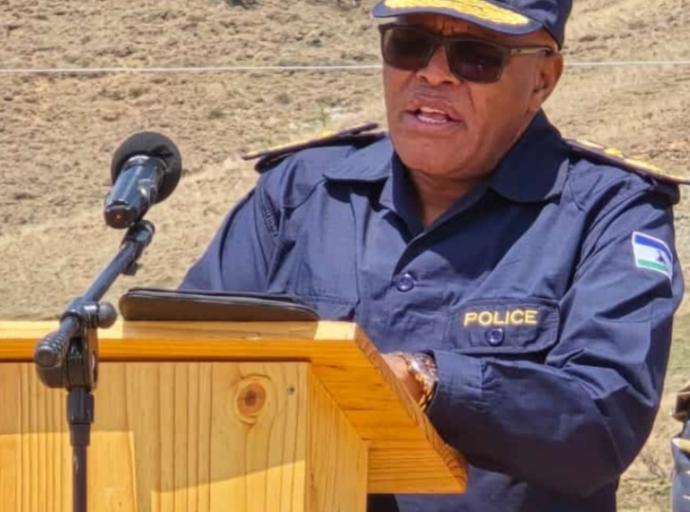
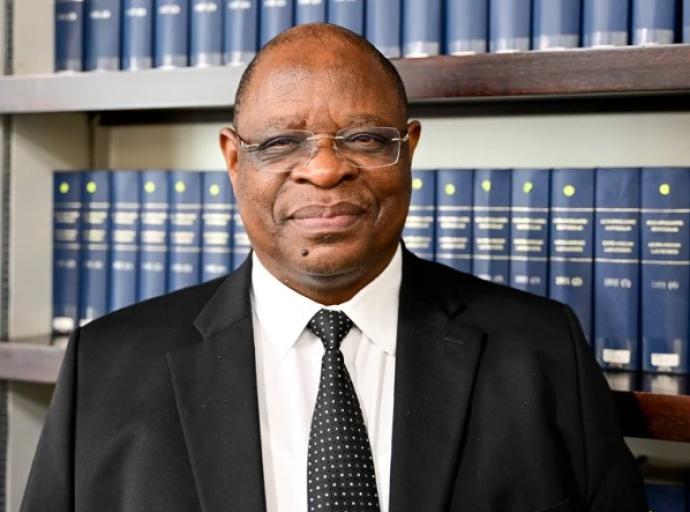
The newly elected Mayor of Maluti-A-Phofung Municipality, Tumelo Thebe, has wasted no time in setting the tone for his administration, unveiling an ambitious plan to restore dignity, improve service delivery, and rebuild public confidence in a municipality that has struggled with governance and infr...
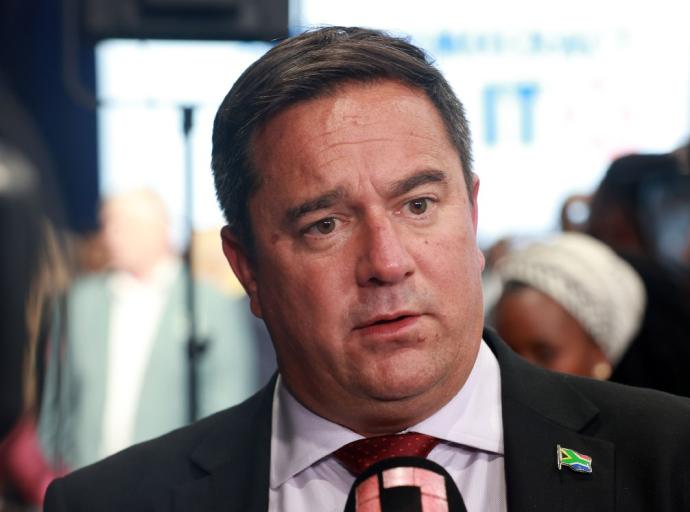
Democratic Alliance (DA) leader John Steenhuisen has described the passing of the Government of National Unity (GNU)’s first budget on Wednesday night as a good balance of compromise.
Just four weeks ago, Steenhuisen was threatening to tank the budget if President Cyril Ramaphosa didn’t act against two compromised ministers, after Ramaphosa fired one of the DA’s own.
But while the DA is claiming a win for the firing of Nobuhle Nkabane as higher education minister, less than 48 hours before the budget vote, it remains adamant it won’t participate in the upcoming national dialogue.
Relenting on one of its demands that Minister of Human Settlements Thembi Simelane should also face the chop, the DA walked back their threat to vote against the budget, instead supporting the budget votes of all departments.
Steenhuisen said although the party has to accept it can’t always get what it wants, it won’t let up on the insistence that more ministers be removed from the executive.
“There are other people within the GNU that we believe have deep clouds over their heads and we will continue to use our position within the GNU to make sure they are held accountable.”
But while it balances compromise and trade-offs, the party remains steadfast it’s not about to do a U-turn on opting out of the upcoming National Dialogue.
“It’s not a dialogue, it’s a monologue. It’s nothing about the country. It’s about the ANC [African National Congress] trying to revive their own electoral fortunes.”
Steenhuisen said unless proven otherwise, his party will rather concentrate on delivering in their portfolios rather than participate in yet another talkshop.
With the ANC-led government of national unity, having passed its first major test; getting the budget approved, what’s clear is that many other challenges lie ahead, with the ANC and DA expected to continue in their current trajectory.
It’s their clashes, which have threatened the 1-year-old partnership, as two diametrically opposed parties seek to work their way, alongside 8 others, through the 7th administration.
The ANC and DA have had public spats over foreign policy, the Basic Education amendments law act, the National Health Insurance act as well as the Expropriation Without Compensation act amongst many others, with the most recent being a fallout over the axing of deputy Trade and Industry minister Andrew Whitfield.
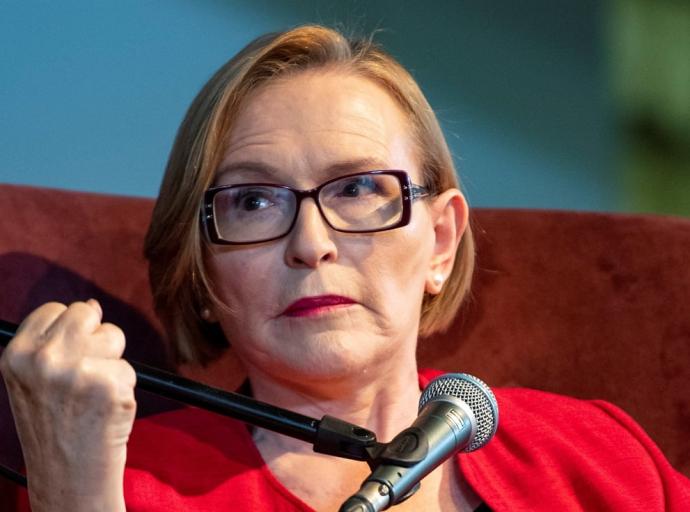
Whitfield’s axing saw the DA give President Ramaphosa a failed ultimatum, which didn’t lead to the blue party walking away but instead withdrawing from the national dialogue, a chapter, which its federal council chair Helen Zille said was outrageous as “he did what he was supposed to do, as per the ministers’ handbook, while the president didn’t do what he was supposed to do.”
The 74-year-old journalist turned politician, who has very little good to say about journalists has described the past year as a “culture shock.”
“We believe that people give their word and then they stick to their word. We believe that people sign a document and then they fulfil the obligations under that document. We believe that we agree on certain mechanisms of meetings and others, and people will bring their part responsibly and with commitment to the process,” she said.
She said the DA was still reeling from the realisation that none of this is true in their current government relationship, claiming they could be accused of being naïve, for expecting certain elements to be taken for granted in relationships.
But walking away is not the answer.
“Walking away (will happen), when it’s the least bad option,” she said.
Zille believes if the president had not sacked the minister of Higher Education, Dr Nobuhle Nkabane,that moment would have been a reality.
This as she insisted the firing of the minister was a DA victory despite EWN’s own awareness from insiders in the ANC that Nkabane’s fate was sealed a long time ago, for her own disdain for parliament and constant refusal to be held accountable.
“We were going to be very well there, if the President said we're kicking out Andrew, who's an honourable, hard worker and committed person who did exactly what he was supposed to do, and then keeping about Nkabane in the cabinet, then we would have walked away,” she said.
“We can't bear that level of hypocrisy,” she added.
The DA had demanded that the president fire two ministers, Nkabane, as well as Human Settlements’ Thembi Simelani, who remains in her post, which Zille simply explained to be the nature of coalitions, as one doesn’t always get everything they want.
When asked if the decision to support the appropriations bill isn’t the DA rescuing the ANC, once more, she vehemently disagreed.
“Excuse me? … it’s the public that rescues the ANC, the voters rescue the ANC,” she said.
This, despite the DA announcing several red lines that its walked back on since joining national government, for Zille, the only real loss was on the Bela act, with it having taken other matters including expropriation and NHI to the courts.
“We won’t be the ANC’s lapdog,” she said.
And while she has often opined on happenings in the ANC, she refused to allow the opinions of those in their coalition partner on the state of her organisation to carry to weight, including questions around the effectiveness of their federal leadership.
John Steenhuisen has been criticised by both DA and ANC insiders for how he plays his role, commentary Zille dismissed as she emphasised her own belief in his leadership. She refused to assess his performance on public platforms.
She said Steenhuisen fulfils his role as a federal leader of the organisation.
Zille also disagreed with a view that relations with the ANC and Ramaphosa would be better with a different leader.
“I don't think it's got anything to do with a leader. It's got absolutely nothing to do with the DA. I mean, the DA has been trying to get up at regular meetings forever. We are supposed to have had, I think, 12 meetings by now. I've had four meetings with Fikile Mbalula. We're supposed to meet every second month with the president. That meeting hasn't happened yet,” she said.
“We'd love to talk more to the ANC, if they just come to the meetings that are arranged,” she continued.
And of her own ambitions, she dismissed talks of trying to return to the helm as a federal leader. Zille who has suggested a willingness to remain on the grind, said she won’t be making a play for the DA’s number one position, even suggesting should her application to become Johannesburg mayor succeed she will step down from the national stage.
“If it so happens that I am chosen as the DA’s mayoral candidate for Johannesburg, then I will step down as chair of the Federal Council,” she said.
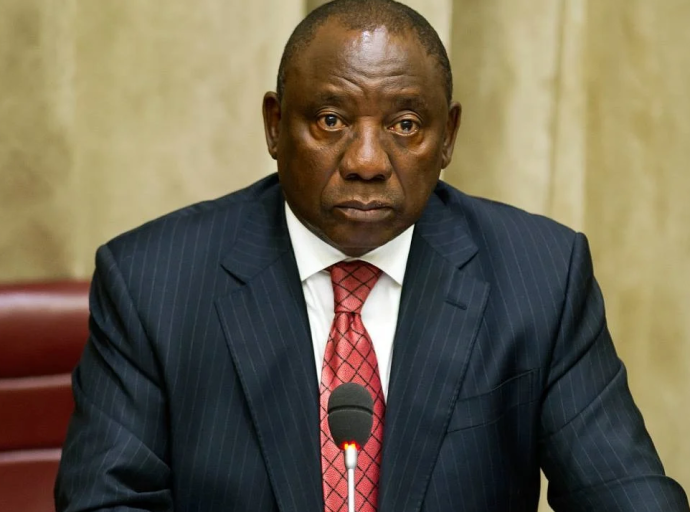
President Cyril Ramaphosa has lauded BMW’s latest investment in its Rosslyn plant as a "powerful symbol of trust" in South Africa’s industrial future, calling it a major step in the country’s green industrial revolution.
Speaking at the plant in Pretoria on Thursday, Ramaphosa celebrated the start of local production of the BMW X3 Plug-in Hybrid.
The president praised the German carmaker’s R4.2 billion investment, saying it underscored South Africa’s growing role as a competitive global hub for electric vehicle (EV) manufacturing.
“BMW’s roots may be in Bavaria, but its beating heart is South African. You are building more than cars. You are building a legacy of excellence, inclusion, and hope,” he said.
The automotive sector contributes nearly 5% to GDP and supports over half a million jobs.
As global markets shift toward clean mobility, Ramaphosa said South Africa must seize the opportunity to drive localisation, scale EV innovation, and deepen value chains through critical mineral beneficiation.
“We are finalising incentives for battery cell localisation, EV components, and clean mobility,” Ramaphosa said.
“South Africa is perfectly positioned to lead the mobility of the future.”
Ramaphosa urged BMW and other industry players to expand their footprint ahead of the upcoming South Africa Investment Conference, noting the urgency of diversifying export markets in light of rising US tariffs.
Ramaphosa also commended BMW’s long-standing commitment to skills development.
The Rosslyn Training Academy has trained over 2,000 artisans since 1978, with 300 new apprentices each year. BMW’s Youth Employment Service programme has placed over 3,500 young people in jobs nationwide.
“BMW’s investment is not only economic — it’s transformational,” Ramaphosa said.
With BMW celebrating over 50 years in South Africa, the President called the latest milestone a testament to resilient partnerships between business, labour, and government.
“As a GNU, we welcome your role in inclusive growth, transformation, and job creation,” he stated.
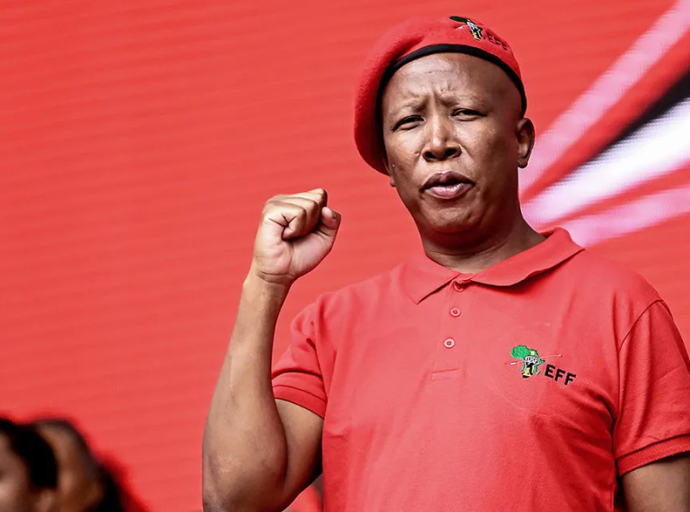
Economic Freedom Fighters (EFF) leader Julius Malema says Patriotic Alliance (PA) deputy leader Kenny Kunene's journalist story is a “pure lie,” including his claim that he doesn’t know the Sandton businessman alleged to be DJ Sumbody’s killer, Katiso “KT” Molefe.
“Taking a journalist is not a secret operation. Who's that journalist? Who's that journalist? he asked.
“Why would you take a journalist to someone who just came out of prison, who's on bail, as an MMC?” Malema said that during the party’s press conference on Thursday afternoon in Cape Town, Western Cape, regarding the party’s 12th anniversary.
Malema said that when he heard Kunene, a former member of the EFF, was caught up in Molefe's home, he was on cloud nine.
“I'm very happy, you know, I dance even at night. Things are looking good. We told you these things are criminals. They are nothing else but mapantinti. (referring to criminals).
“He says he doesn't know that guy, he knows that guy. I know that guy. Not from a personal point of view…He's a well-known businessman. Until now, we knew him as a businessman.
Malema said that even though he knows Molefe as a businessman, he doesn’t have any relationship with him.
“But I don't have a relationship with him like that, where I can call Patrice Motsepe or go to his house, take my wife to Patrice Motsepe’s house. Patrice Motsepe's wife knows my wife. I don't know a guy like that,” he said.
However, the red berets leader claimed that Kunene was lying when he said he didn't know Molefe.
“But for Kenny to behave like that in public office and say he doesn't know that guy, that's a lie.
“It's a pure lie. And that's how thugs 26, 28 gangs succeed. They lie…they think they can outsmart everyone. They are just lying and they don't care whether you are convinced or not, they tell their story. It's done.”
“Kenny's story is not coming together,” Malema added.
IOL News previously reported that Kunene later confirmed that he was at Molefe’s house at the time of the arrest.
He said he was there with a young journalist from his media company to allow Molefe to respond to the murder allegations.
On Wednesday, IOL News reported that ex-convict-turned-politician Gayton McKenzie, leader of the Patriotic Alliance, defended Kunene, insisting that his longtime ally was “set up” after being found at the home of DJ Sumbody’s alleged killer.
“If there’s a murder that happened and there are only two suspects - me and Kenny - I must be the main suspect,” McKenzie said on the sidelines of the National Assembly in Cape Town.
“Kenny could’ve had a gun, had a fly.”
McKenzie described Kunene as too accessible for his own good.
“That guy has such a soft character. That’s my fight with him always - he’s too accessible. One minute he’s in a squatter camp, the next he’s in the suburbs. He’s never at home,” he said.
McKenzie, who also serves as Minister of Sports, Arts and Culture, said only a full investigation would determine the truth.
“People must also know we’ve worked very hard to rebuild our reputation after prison,” he said.
“We will never risk that by associating with criminals, even if they did this thing.”
“I want to congratulate the cops again. I’m glad they caught them. You will not find me or Mr. Kunene in the company of such people. What happened was very unfortunate.”
McKenzie confirmed that a law firm would be appointed on Friday to investigate Kunene’s presence at Molefe’s home.
He also revealed that he spoke to Kunene, who insisted he had done nothing wrong.
“He said, ‘Yeah, I went there.’ He was supposed to meet someone, and that person told him to meet at that house and sent a location pin. It was his first time at the house,” McKenzie said during a Facebook Live session Tuesday night.
According to McKenzie, Kunene told him he didn’t know Molefe.
He said Kunene only knew the individual who sent the location.
When police arrived, they told everyone to get on the floor and Kunene complied, McKenzie said.
Police searched his phone, found no communication with Molefe, and later apologised, allowing him to leave.
McKenzie has since placed Kunene on a 30-day leave of absence from his role as MMC and from all party duties pending the outcome of the investigation.
McKenzie added that a law firm to investigate Kunene’s involvement would be announced on Friday.
Authorities in the Kingdom of Lesotho insist they have credible information about Basotho undergoing military-style training in certain farms within South Africa, as part of the growing campaign to fight for the contentious land in South Africa's provinces.
The land being claimed includes parts of Free State, Eastern Cape, Mpumalanga, Northern Cape and KwaZulu-Natal provinces.
Earlier this month, a Lesotho member of parliament, Dr Tshepo Lipholo, leader of the Basotho Covenant Movement, a political party that has been leading the charge in demanding the return of Lesotho’s "stolen land" which is part of current-day South Africa, was arrested and charged in the mountain kingdom.
Lipholo faces serious charges, including sedition and incitement. He is also accused of violating the dignity and reputation of Lesotho's royal family by allegedly declaring himself the “paramount chief of Basotholand” and encouraging young Basotho to prepare for armed struggle.
It is alleged that audio clips circulating on social media platforms prove these claims.
Lipholo has been leading the charge, calling for certain sections of South Africa to be declared Lesotho's territory. Limpholo wants the land to be returned to the governance of Lesotho.
Earlier this year, Lipholo travelled to the United Nations, where he submitted a claim that seeks to reclaim land lost during the colonial era.
However, Lesotho’s Ministry of Foreign Affairs and International Relations distanced itself from Lipholo, stating he was acting on his own agenda, and the UN trip was not sanctioned by the Maseru government.
Matsoso said the militant group calls itself Malata Naha (land reclaimers) is active within the borders of South Africa and seems to be “ready to take over”.
“It is not necessarily young Basotho, but Basotho nationals of different ages, we have discovered that they have been recruited to join this military training in some of the farms in South Africa. This is what we have come across.
He added that the programme has the possibility of disrupting peace and security in the region.
Some South African citizens, according to Matsoso, have been sucked into the military-style training programme at unidentified farms.
Last week, Prime Minister of Lesotho, Samuel Matekane issued a statement following the arrest of Lipholo, adding that his government had uncovered that the ongoing actions were intended to disrupt peace, security, and national stability.
The land at the heart of the contended areas was historically inhabited by Basotho, people from southern Africa’s Bantu ethnic group, who represent the ultimate majority of Lesotho nationals.
Last year, a motion was put before parliament in Lesotho, seeking to reclaim large swaths of land from South Africa. The motion seeks to have the Lesotho parliament declare the entire Free State province, which borders Lesotho, and other areas in South Africa, as part of the small mountain kingdom, surrounded by South Africa.
With the country's anti-corruption fight reflecting a worrying trend, former Chief Justice Raymond Zondo and the South African Council of Churches (SACC) have voiced their widespread condemnation of South Africa's endemic graft, which has now reached critical crisis levels.
This comes on the back of a high number of high-profile corruption-related arrests implicating some of the country's leading political figures.
The SACC stated that pastors who live and show off their lavish lifestyles at the expense of poor congregants are no different from corrupt politicians.
This is as the SACC continues to reflect on the scourge as part of its National Anti-Corruption conference currently under way in Johannesburg. Opposition political parties and analysts have weighed in on the country's dismal attempts at reigning in the scourge.
Zondo, speaking during his address to the conference's delegates on Wednesday, indicated that the bending of rules to favour certain important people was at the heart of the country's corruption problem.
"We bend the rules when we have done something wrong because that has happened when it should not have happened. The church must be the one that leads us. It must tell the rest of us not to bend the rules. The rules apply to everybody," he stated.
Zondo also questioned the resolution taken by the ANC in 2007 to disband the Scorpions in favour of the Hawks, currently tasked with investigating high-profile cases.
The Activists and Citizens Forum, through its spokesperson, Denis Bloem, said corruption will be hard to beat as long as the ANC still holds power.
"The country believed that under former president Jacob Zuma's administration, corruption was at its peak. However, the country was mistaken. Corruption is worse now and out of control under President Cyril Ramaphosa's administration.
"The reason why there is no end to corruption is that the government is infiltrated by criminals masquerading as political leaders. Meanwhile, they are the biggest thieves.
"General Nhlanhla Mkhwanazi told the country a few weeks ago that the South African Police Service is infiltrated by criminal syndicates and that some politicians are also on the payroll of these syndicates. Activists and Citizens Forum believe that corruption will not end as long as the ANC is in power. We know this so-called Government of National Unity is just a rubber stamp for the ANC," said Bloem.
Reflecting on the excessive levels of corruption and fraud in the country, Rise Mzansi national spokesperson, Mabine Seabe, said the country's problems are not new, adding that all societies are affected by corruption.
"Corruption is not a recent phenomenon, nor is it unique to a particular sector of society. What is of alarming concern is that it has taken hold of every aspect of life, where almost every service requires or can be extracted through corrupt means. The Zondo Commission illustrated the industrial nature of corruption with both the private and public sectors lubricating corrupt actions," he said.
As for the recent bombshell by KZN Police Commissioner, Lieutenant-General Mkhwanazi, which has implicated senior politicians and the SAPS, Seabe welcomed the recently established Judicial Commission of Inquiry to look into the criminal elements in the country's political elite and the police.
"Moreover, the allegations made by Lieutenant-General Mkhwanazi point to a nexus between powerful elites and organised crime.
"We believe that the Madlanga Judicial Commission of Inquiry and Parliament's Ad Hoc Committee to probe Mkhwanazi's allegations are well-placed to probe the alleged collapse and capture of South Africa’s safety, security, and justice apparatus; hold those responsible accountable; and recommend the necessary reforms," Seabe added.
Attempts to get a comment from the ANC, which has been accused of failing to root out corruption among its leaders, were unsuccessful at the time of going to print.
However, this week, ANC Secretary-General, Fikile Mbalula, addressed the recent developments affecting Senzo Mchunu during the ANC’s National Working Committee (NWC) meeting with the Provincial Executive Committee, saying the party welcomed Ramaphosa's decision to establish a judicial commission of inquiry to probe the allegations against Mchunu.
"Senzo Mchunu has an opportunity now, in terms of the audi alteram partem principle, to also present his side of the story. Once we listen to that, it is also evaluated in terms of facts by a competent, independent judge, and a judicial commission, like the president appointed, then we can pass judgment," he said.