THE popular adage goes that war is the continuation of politics by other means, or at least that’s what Carl von Clausewitz, the Prussian general is posthumously published to have said in 1832.
He probably had conventional war in mind and its routines. In such conventional setting, the vicissitudes of politics tend to dictate the rhythm of war. In a battle of wits, however, where the party with more leverage tends to dominate, the sophistication of negotiations is the natural continuation of the battles of leverage by other means.
It may have been the verbosity of Trump or the cunning of the successor Ayatollah, no matter. But someone or some fortuity has led to the uniqueness of this happenstance. A kinetic war has quickly mutated into a war of leverage.
As such, it has quickly altered the calculus of victory by the US/Israeli led coalition, if ever there was one.
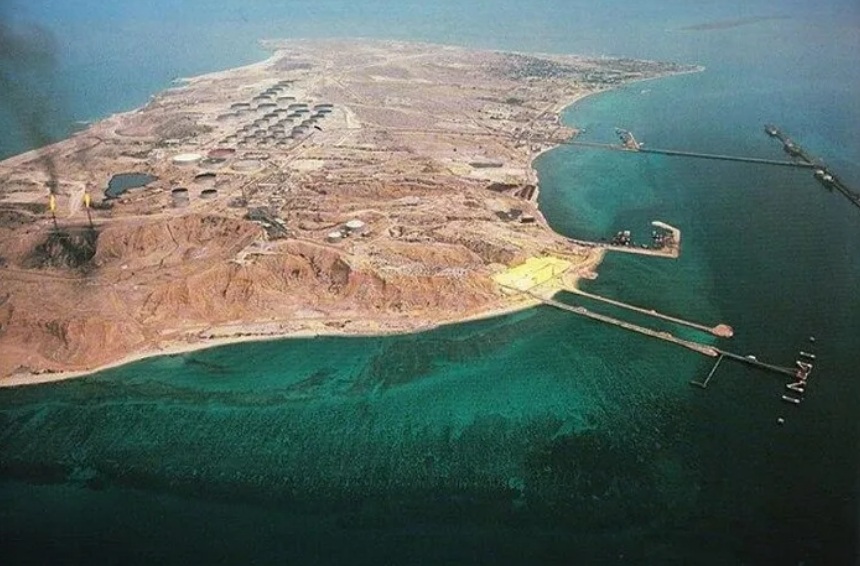
The sudden mutation from a war of muscle to a battle of wits had melodramatic consequences. A lot of calculations became imponderable permutations. A direct assault on the Kharg Island would be irreducibly suicidal.
There would be no sustainable logistical supply lines for the expeditionary assault units. Neither would there be adequate cover against an unceasing barrage of unmanned attack drones and bombardment by ballistic missiles from impenetrable jagged folds of the Zagros Mountains.
Besides, there are no convenient approach lines to the Kharg Island that would not expose the airborne divisions and the paratrooper forces to mortal harm. Every simulated attack scenario keeps revising the required forces from modest figures to ridiculously high numbers. From a modest number of 5000, the estimates are now sitting at 50 000.
In fact, the true scale of the plan as staggering as it is absurd, is borne of the realisation that there could be no attack on the Kharg Island without first implementing a regime change in Iran. Or put simply, the assault on Kharg Island would be a mission creep to eventually achieve a regime change.
Given the size of the Iranian landmass, even 200 000 Iraqi forces could not subdue an Iranian force half their cumulative strength. The US, therefore, will require a massive force approximating half a million men and women to achieve the absurdity called regime-change!
The Iranians had long understood that in all the projected war scenarios, from opening salvos to escalatory peaks, the curiosity of the politics of the United States will inevitably get mired in Iran’s political economy, especially of its production of oil and gas.
Particularly, when the hydrocarbon molecule is produced, to enquire where it is destined, if for no other reason than to determine which points of Iran’s economy or those of its partners, could be rendered militarily vulnerable.
Further that, the point of loading of these commodities in the Kharg Island and their passage through the Strait of Hormuz, present the attacking forces with strategically sensitive targets which by a single stroke, could cower the Iranians to a humiliating surrender.
This means therefore that the internal politics of the US and its regime change ambitions, were bound to dictate how its war against Iran, would be the continuation of its politics by other means.
The Iranians for their part, understood their leverage from day one. Or to be sure, they invested in the prescient identification and broad definition of such leverage. For one, the United States is too far away an adversary, located thousands of miles across the pond.
At any rate, they are too big to confront directly, renowned as they are for their apex dominance in the hierarchy of blue water navies. And in a conventional confrontation, they would immediately assume escalatory dominance.
From a long and acrimonious history with the United States and its allies, the Iranians had somehow learnt that all military power has definitive limits. Given all that dominance, the Americans could not master the tempestuousness of a Vietnamese bamboo jungle, nor were they endowed with enough patience to.
The expanse of the bamboo green shoots for their part, resplendent in their turgidity and intelligence, were empathetic to the plight of the Vietnamese hands that have nurtured them over the ages. That is leverage, so vast, so mysterious and indomitable.
Iran had to define its own leverage which would, in all probability, take critical factors into account. The primary consideration for Tehran, is that Israel as an attacking force, should be within reach and striking distance of their ballistic missiles’ stockpiles, and in that distance, must bear the brunt of their retaliation.
Second, the US military forces and forward mission assets including aerial defence batteries, are located all over the Persian Gulf and other proximate locations in the Gulf of Oman. Any retaliation should portend a commensurate effect both visually and politically, with surprising and demoralising effect, especially to the US electorate.
Third, that any pain suffered by the people of Iran because of the US/Israeli bombing campaign, shall in like manner, be horizontally extended to the Gulf states who are collaborating with the US and Israel in prosecuting this unprovoked and illegal war against them.
The Trump administration for their part, had to juggle many balls in the air to contrive a counterpoint to such capabilities, especially the most vantages of them all, the Strait of Hormuz. Any greater harm they could conceive to punish the Iranians, could in retaliation, be the same harm Iran will visit on its Gulf neighbours, including far removed Israel.
It would be as if Iran found the switch first. A little pain for Iran, a little pain for its neighbours. The conundrum for the invaders is fairly pronounced. The Strait of Hormuz is closed except for those ships that pay tribute of two million dollars equivalent in Yuan to Iran. Iran proposes to share that toll with Oman.
Trump contrived a plan. If he had one eye patch, he would be called Pirate Trump. For, the scheme involves blockading a blockaded strait. This time, the US blue water navy would lie in wait in the Indian Ocean, targeting ships passing through the Strait into the Gulf of Oman.
The thinking, it would seem, is that if Iran is blockading the Persian Gulf through the Strait of Hormuz, the US will blockade the Gulf of Oman, of any ship that passes through the beleaguered Strait.
This thinking posits a battle of tactic against leverage. If only the US president would have perused the translated pages of Sun Tzu’s war epic written circa 544 BC. But then again, Sun Tzu and his legacy is indubitably Chinese.
In that wise, why would Donald J. Trump be relying on the wisdom of the Chinese art of war to asphyxiate the Chinese oil economy? Make it make sense. After all, he has Netanyahu as his own personal Sun Tzu!
There could be no doubt that leverage, is a concentration of advantages. And what, pray tell, could be the difference between advantage and leverage.
From the lessons drawn out of this unfolding crisis, it would seem as if advantage, properly defined, is some tactical facet of a military strategy. Leverage on the other hand, is a facility provided by the quirks of the universe.
Much as General Vo Nguyen Giap of Vietnam enjoys the distinction of having been a master war tactician, combining minimalist resources with the leverage of a vast jungle, King Moshoeshoe II emerges as one of the greatest war strategists ever lived.
He had the ultimate leverage. He bivouacked his forces on the commanding heights of Thaba Bosiu. He vanquished all his enemies who tried to reach him at the zenith by liberally rolling down massive boulders on their advancing calvary.
Somehow, and this may not be completely accurate, Donald J. Trump has awoken to the reality that a nature endowed leverage is impossible to dislodge. He has therefore announced an indefinite ceasefire.
Not surprising. He now knows that leverage, of the ilk of the Strait of Hormuz, is a permanent force marjeure!
* Amb Bheki Gila Esq is a Barrister-at-Law.
* The views expressed here do not reflect those of the Sunday Independent, Independent Media, or IOL.
This article was originally published by IOL news