South Africa’s largest asset manager, Ninety One, says the war in Iran dealt a heavy blow to early optimism for the South African equity market.
Markets across the world were rattled when the US and Israel attacked Iran in late February. The Persian nation responded by targeting Middle Eastern energy supplies.
The war caused oil prices to skyrocket and a rise in risk-off sentiment. It bruised equity markets when many nations were set to turn the corner.
Ninety One said that global equities fell in Q1 2026, with the MSCI All Country World Index down 3.2%, as a strong start to the year gave way to a sharp geopolitical shock.
The asset manager said markets rallied through January and early February on resilient growth and continued enthusiasm for AI-led investment, even as strain was emerging in US technology stocks.
The outbreak of the war on the last day of February led to a massive surge in oil prices. Brent crude prices rose 94% over the quarter.
Ninety One said the war delivered a stagflationary shock that forced a rapid re-pricing of inflation and interest rate expectations.
“March marked the most acute phase of the sell-off, as tighter financial conditions and rising macro uncertainty drove a broad-based risk-off move, with growth stocks particularly exposed,” it said.
It added that the global shift in sentiment was also felt in South Africa, where strong early-year gains, driven by resources and improved domestic optimism, were reversed.
Higher oil prices, a weaker rand and rising inflation expectations weighed on markets. While South Africa struggled, other international markets, such as the US and Japan, proved more resilient.
South Africa’s struggles
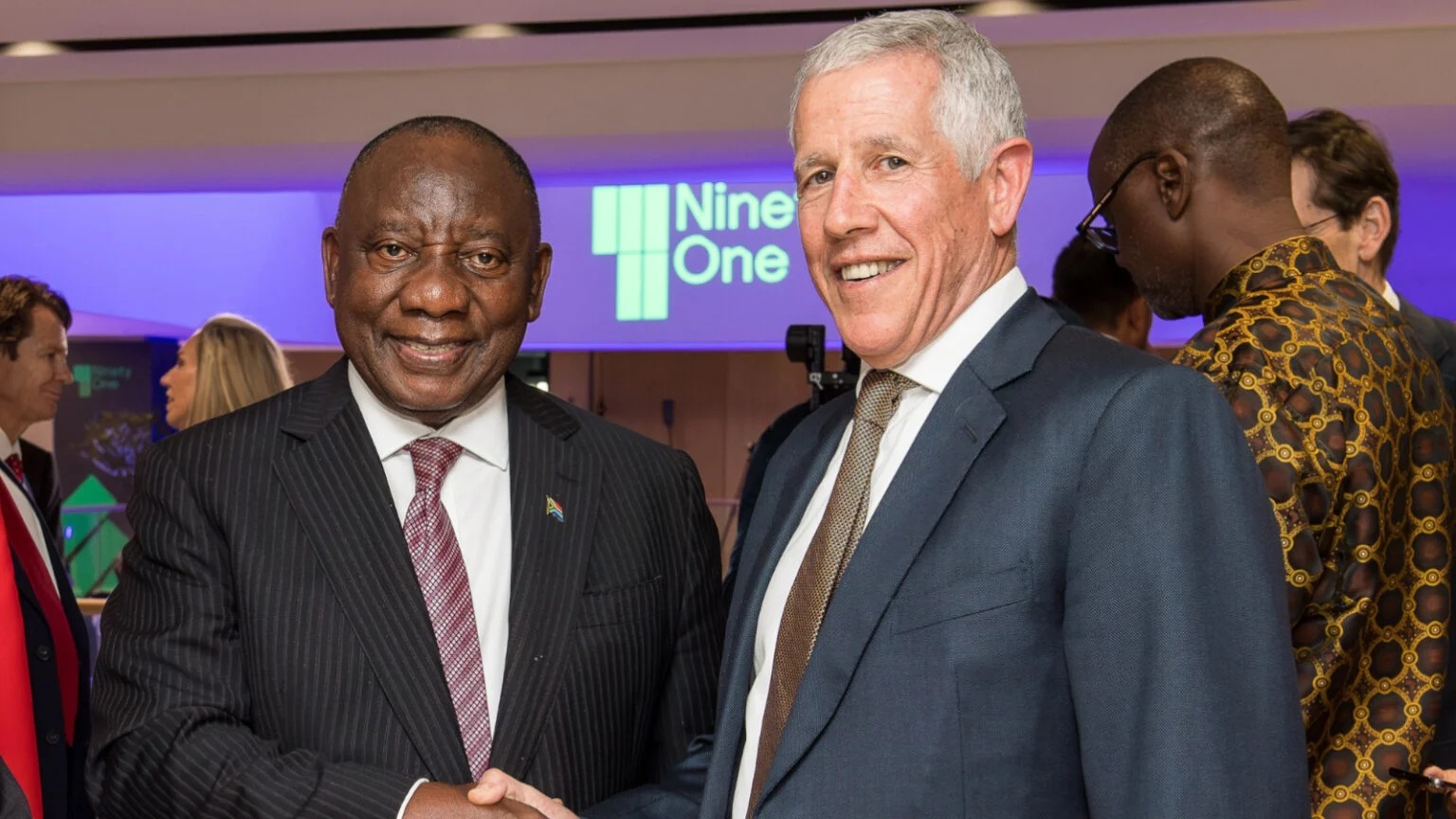
President Cyril Ramaphosa and Ninety One CEO Hendrik du Toit
“South African markets entered 2026 with strong momentum, but the first quarter proved to be a tale of two halves,” said Ninety One.
“A strong opening rally was followed by a sharp geopolitical shock that unsettled markets in the final weeks.”
The JSE All Share Index rose to a record high in late January and into February, driven by the resource sector, with gold and platinum seeing outsized returns.
Industrials, financials and selected hedge stocks also contributed to early gains. However, Q1’s trajectory shifted near the end of February, when the war started.
“Market sentiment deteriorated significantly in the following weeks, with the metals and mining sector giving back much of its earlier gains and weighing heavily on the broader index,” said Ninety One.
“By quarter-end, the index remained slightly below its starting level for the year and had retreated meaningfully from its peak.”
The rand followed a similar pattern, rising to around R15.73/USD in late January before reversing sharply. The quarter closed at R16.94/$.
The South African Reserve Bank said that higher fuel prices and the weaker currency were expected to push inflation higher in the coming months.
The 10-year government bond yield started the quarter on a strong footing after S&P’s credit upgrade, but rose to 9.32% by the end of Q1 as investors reassessed the inflation and monetary policy outlook.
“The SARB held the repo rate steady at 6.75% at both its January and March meetings, and the market is now pricing in rate hikes,” said the asset manager.
“On the positive side, inflation had reached the 3% target in February, and Finance Minister Godongwana delivered an encouraging Budget speech, projecting narrowing deficits and stabilising debt.”
Nevertheless, Ninety One warned that the Iran conflict quickly overshadowed these domestic positives, leaving markets in a more cautious mood as the quarter closed.
This article was originally posted by BusinessTech