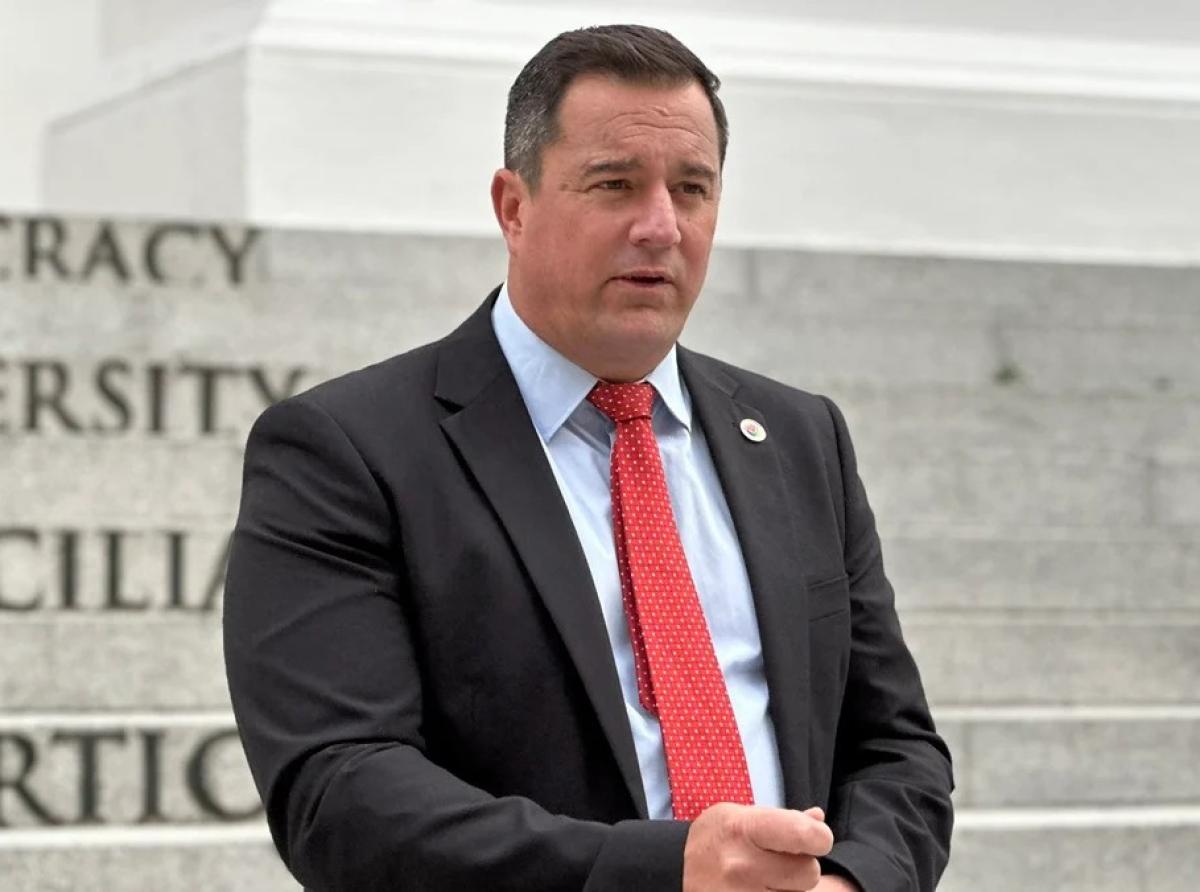
Agriculture Minister John Steenhuisen on Tuesday reiterated the department’s intention to vaccinate 80% of the national herd by December.
Speaking at the meeting of the Agriculture Portfolio Committee to give an update on Foot-and-Mouth Disease (FMD), Steenhuisen said they have more than enough vaccines to not only do the initial doses, but to do secondary doses.
“I do not want anybody to be under the illusion or misapprehension that there will not be enough vaccines. We are procuring vaccines at scale, and there will be plenty of vaccines to meet that target by the end of the year,” said Steenhuisen.
Dr Botlhe Modisane, chief director for animal health, said there was a total of 1,152 outbreaks of FMD mainly in the Free State, KwaZulu-Natal, and a slight increase in the Eastern Cape as of March 20.
The latest outbreaks were in KwaZulu-Natal, the North West, and Limpopo, and 35,000 doses were distributed to manage the latest outbreaks in the affected provinces.
Modisane ascribed the increase in the outbreaks to the detections as reports were received from provinces.
Suspicious cases remain unconfirmed at a feedlot in the Northern Cape and a suspected case has been reported in the Western Cape.
“Many highly suspected outbreaks are based on clinical signs and are still waiting for laboratory confirmation.”
Modisane also said of the 2.5 million doses of vaccines received, 1.17m have been used, and 1.35m were to be distributed.
“We have done over a million animals at this moment with the 2.5m doses we received.”
Modisane also said the department has placed an order for an additional two million vaccines with supplier Dollvet.
The South African Health Products Regulatory Authority issued a permit for the importation of the vaccines on Monday.
“We also placed an order already for 1.5m of vaccines. It will arrive anytime from tomorrow (Thursday) onward,” he said, referring to an order with supplier Biogenesis Bago.
Modisane added that there was an intention to do booster vaccination throughout the country after six months.
“Whenever there are challenges regarding potential reinfection, we must revaccinate the herds.”
MPs wanted a report on the economic impact of FMD, raised concerns about the shortage of land to quarantine infected animals, asked questions about the under-reporting of reported cases of infections, and the compensation of farmers who lost animals, among other things.
ActionSA parliamentary leader Athol Trollip said he was pleased to hear there were enough vaccines to handle the outbreaks and follow-ups.
“We discovered there is a shortage of vaccine and people who have not yet had herds infected were distressed that they will not access vaccines. When the minister says that we will meet our 80% target by the end of the year, that is reassuring,” he said.
“What is less reassuring is that organisations that were litigating against the department when they were instructed by a court to undergo arbitration,” said Trollip, adding that the arbitration was not successful and the litigation was set to proceed.
In response, Steenhuisen said the under-reporting was initially due to people not wanting to report for fear that animals would be quarantined in the absence of vaccines and the effect on production.
“With advent of vaccines arriving, we see greater level of reporting and people come forward to seek treatment.
“This is, obviously, a good thing and certainly part of the communication strategy the department and provinces roll out in encouraging people to report cases of FMD.”
He also said it might be worthwhile to invite Land Reform and Rura Development Minister Mzwanele Nyhontso to discuss the issue of access to land.
Responding to a question about payments for the vaccine, Steenhuisen said the department will adhere to the Public Finance Management Act guidelines for purchasing goods and services.
Director-General Mooketsa Ramasodi said the Animal Act has a provision for compensation of farmers when a person loses an animal due to the control of a disease.
“We are in discussions with the National Treasury on how we respond to the environment of lost animals,” said Ramasodi.
*This article was first published The Citizen