One cold morning in my hometown of Botshabelo, I chanced upon a group of young men sitting outside a modest RDP house around a fire made of broken crates and old campaign posters that adorned the faces of ANC leaders.
One of them, probably younger than twenty-five, spoke with the confidence of a seasoned politician. He had never held a job, never completed a qualification, never run even the smallest community initiative, but that morning, he was explaining how he would “take the region forward” once his slate wins.
Inside the house, his grandmother was boiling water on a paraffin stove. She has voted in every election since 1994. She still believes in the promise of the ANC, but she no longer attends branch meetings. “Ba a lwana bana baa,” she says. Not about ideas, not about the community interests; they fight for positions.
That, perhaps, is where the story of the ANC in Mangaung must begin, not in conference halls or party statements, but in the lived contradiction between the hope of the people and the movement that refuses to listen.
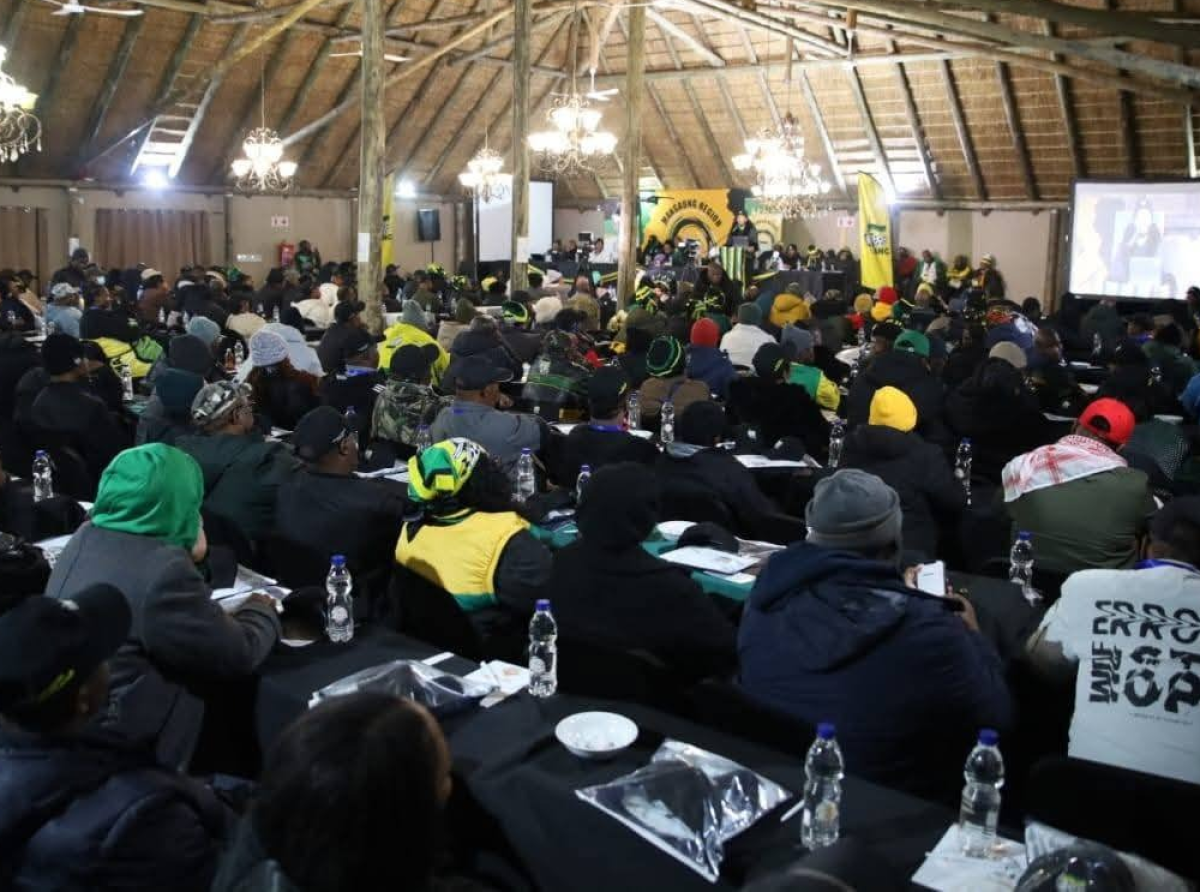
The decision by the ANC NEC to nullify the Mangaung regional conference this weekend is not simply an organisational correction. It is a diagnosis. A particular signal that something deeper is broken.
The real crisis in Mangaung is that we have mistaken ambition for leadership. We have created a political culture where everyone wants to lead, but very few are prepared to develop the ethic of building. Even those who would never qualify to be class representatives in primary school now see themselves as leaders of the ANC. Not because they have developed politically, but because the movement has, over time, lowered its own threshold for what constitutes leadership.
And so, conferences become theatres of irrationality. Branches appear and disappear like schedules of load shedding. Delegates materialise in numbers that defy logic, and credentials are reduced to bargaining chips in factional manoeuvring.
When the NEC intervenes, it is not disrupting a healthy process; it is interrupting a well-rehearsed chaos. But even this chaos is a symptom, not the disease.
The deeper problem is the absence of political coherence in the province. We no longer share a common understanding of what constitutes an ANC cadre, what the ANC stands for and where it is going. We invoke “unity” as a slogan, but unity without ideological clarity is just a temporary alliance of convenience. We speak of “renewal,” but renewal without confronting these uncomfortable truths is meaningless.
What we are seeing, increasingly, is the emergence of a cadre not shaped by struggle, discipline and/or intellectual development but by survival instinct. The ANC has become the default destination for those who have failed elsewhere. When school does not work, when business collapses, when even the SGB says “ntate sekete re kopa o emelle ka thoko; then the ANC becomes Plan B.
And once inside, politics is no longer about service but about access. Access to opportunities, to networks, to the possibility of economic relief. This is why the battles are so fierce. It is not just about leadership; it is about livelihood.
Now, let us be clear. The ANC was built by the poor. It has always been a home for those on the margins. But it was never designed to be an escape route from personal failure. It was meant to be a school of political development, a site of collective discipline and a movement grounded in ideas.
What we have instead is something almost comedic, if it were not so tragic. The comrade who cannot organise a family meeting without conflict suddenly becomes a champion of “organisational unity.” That one person who has never managed a spaza shop confidently outlines a provincial economic strategy. And of course, this would be hilarious if it were not happening in the people’s movement.
And so, the nullification of the Mangaung conference must be understood as something more than just a procedural matter. It is a moment of reckoning. A chance to confront the uncomfortable reality that the ANC in this region is struggling not just with processes, but with political purpose.
The grandmother in Botshabelo still votes. She still hopes. But her quiet withdrawal from branch meetings is a warning. When the faithful retreat, the opportunists advance. And when that happens, the movement loses both its soul and credibility.
So, as Mangaung prepares again for a conference, the question we must ask ourselves is not whether the credentials will be correct this time but whether the character of the organisation will survive beyond the conference.
Until we resolve the deeper crisis of too many leaders and too little leadership, of survival masquerading as service, we will remain trapped in this cycle.
A movement of everyone leading and no one going anywhere.
*Tshediso Mangope is an ANC member in Mangaung and writes in his personal capacity.
**The views expressed do not necessarily reflect those of this publication (Journal News).